by Arthipo Author | 9 April 2023 | History of Art
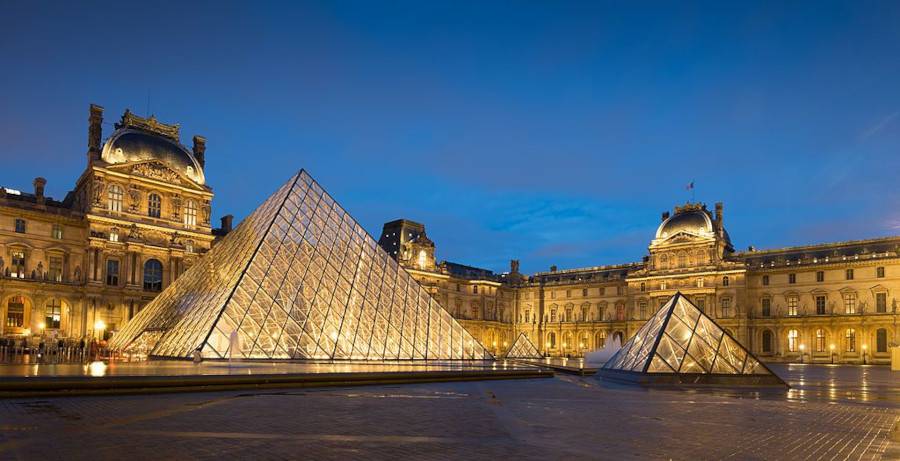
The Louvre Museum, French Musée du Louvre, officially called the Great Louvre or French Grand Louvre, France’s national museum and art gallery is located in a part of the large Louvre Palace in Paris, built on the right bank of the Seine. It is the most visited art museum in the world, with a collection ranging from ancient civilizations to the mid-19th century.
Louvre Museum History, Architectural Structure, Artifacts
In 1546 Francis I, a major art collector, razed this old castle and began building the Louvre, another royal residence added to it by almost every French monarch. During the reign of Francis I, only a small part of the current Louvre was completed under architect Pierre Lescot. This original section is today the southwestern part of the Cour Carrée. In the 17th century, major additions were made to the building complex by Louis XIII and Louis XIV. Cardinal de Richelieu, prime minister of Louis XIII, purchased large works of art for the king. Louis XIV and his minister, Cardinal Mazarin, purchased extraordinary art collections, including that of King Charles I of England. A committee of architects Claude Perrault and Louis Le Vau and decorator and painter Charles Le Brun planned the section of the Louvre known as the Colonnade.
When Louis XIV moved his palace to Versailles in 1682, the Louvre ceased to be a royal residence. The idea to use the Louvre as a public museum arose in the 18th century. The Count d’Angiviller helped build and plan the Grande Galerie and went on to acquire great works of art. In 1793, the revolutionary government opened the Musée Central des Arts in the Grande Galerie to the public. Under Napoleon, a wing was launched along the Cour Carrée and the rue de Rivoli to the north. In the 19th century, two large wings, galleries and pavilions extending to the west were completed, and the exhibition that opened them includes the III. Napoleon was responsible. The completed Louvre was a large complex of buildings forming two main quadrangles and surrounding two large courtyards.
The Louvre’s collection of paintings is one of the richest in the world and represents all periods of European art up to the Revolutions of 1848. Works made after this date, once hosted by the Louvre, were transferred to the Musée d’Orsay at its opening in 1986. The Louvre’s collection of French paintings from the 15th to the 19th centuries is unique in the world and also includes many masterpieces. Painters, including the Italian Renaissance, Leonardo da Vinci’s Mona Lisa Flemish and Dutch painters (c. 1503-1519) and works from the Baroque period.
The decorative arts section displays treasures of bronze, miniatures, pottery, tapestries, jewelry, and furniture from French kings, while the Greek, Etruscan, and Roman antiquities section features architecture, sculpture, mosaics, jewelry, and pottery. The Egyptian antiquities department was established in 1826 to organize collections acquired during Napoleon’s expedition to Egypt. The Near Eastern antiquities section is very important to the Mesopotamian art collection.
Louvre Museum Architectural Structure, Interiors
While it is the most interesting part of the museum, the building itself is an important exhibit. He said the building is primarily in the Renaissance and French Classical style. The first medieval elements of the old castle can still be seen underground, under the pyramid, around the lobby area.
In 1983, the Louvre went through a renovation plan known as the Grand Louvre. Part of the plan called for a new design for the main entrance. Architect IM Pei, who won the project, designed an underground lobby and modern glass pyramid structure in the courtyard. Inaugurated in 1988, the pyramid would become a famous element of iconic museum design. Combining traditional style with modern architecture, this building shows the timeless beauty of the Louvre.
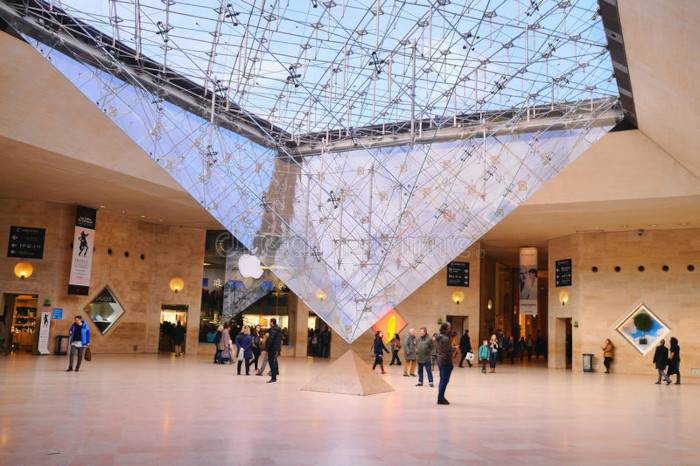
Louvre Museum Interior Inverted Pyramid
Louvre Museum Important Artifacts
The Louvre’s collection includes Egyptian antiquities, ancient Greek and Roman sculptures, paintings by the Old Masters (key European artists before 1800), and crown jewels and other artifacts from the French nobility. His works BC from the sixth century AD. It dates back to the 19th century. More than 35,000 works are on display. The exhibits are divided into eight sections: Near Eastern Antiquities; Egyptian Antiquities; Greek, Etruscan and Roman Antiquities; Islamic Art; statues; Decorative Arts; Pictures; and Prints and Drawings, according to the Louvre website.
The Louvre’s most famous work is undoubtedly Leonardo da Vinci’s “Mona Lisa”, which captivates visitors with its enigmatic smile.
Crowds also flock to see the sleeveless beauty of “Venus de Milo” and the ancient Greek sculpture “Winged Victory”, also known as “Nike of Samothrace”. Other popular works include a stele inscribed with the Laws of Hammurabi, da Vinci’s tragic sculpture “The Dying Slave” and Antonio Canova’s 18th-century sculpture “The Psyche Revived by Cupid’s Kiss.” Eugene Delacroix’s “Liberty, the People’s Leader,” depicting the bare-chested Freedom goddess leading an offensive in the French Revolution, and is thought to have inspired Victor Hugo’s “Les Misérables” and Jacques-Louis David’s “Napoleon’s Coronation”. It was built by the Flour himself and is a beautiful reminder of the history of the Louvre.
B.C. The “Archers’ Frieze” from the sixth century B.C. “Human-Headed Winged Bull” from the eighth century
Also very close to the Mona Lisa, another masterpiece by da Vinci, “The Virgin and Child With Saint Anne”
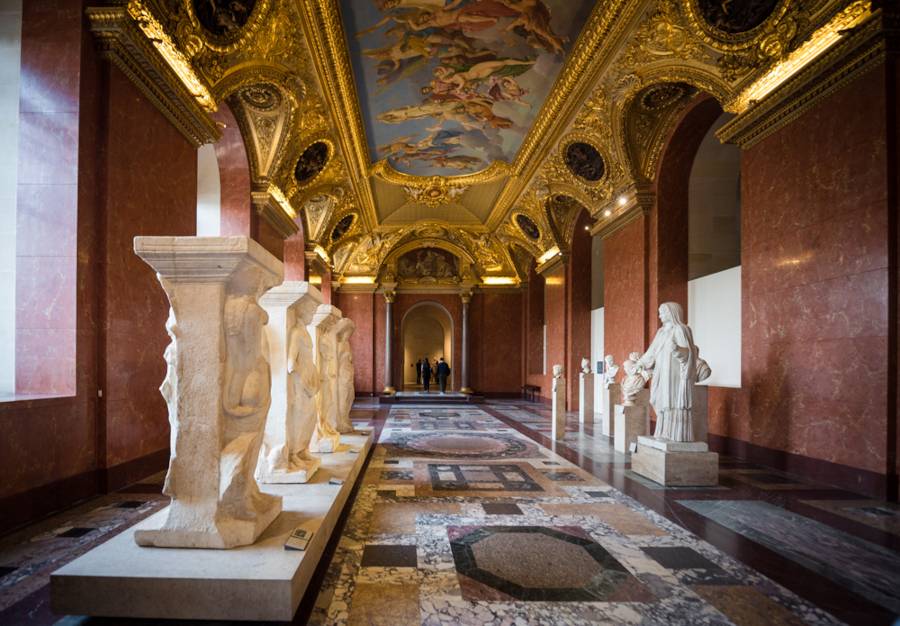
Louvre Museum Interior
Where is Louvre Museum, How to Get There, Directions, Visiting Hours, Entrance Fee
Address: Rue de Rivoli, 75001 Paris, France
By Metro: Line 1 – Palais-Royal/Musée du Louvre Metro Stop
By bus: bus n° 21,24,27,39,48,68,69,72,81,95 Paris l’Open Tour: Bus stop opposite Pyramid Velib near the museum: n°1015: 2nd place A. Malraux n °1023: 165 rue Saint-Honoré n°1014: 5 rue de l’Echelle n°1013: 186 rue Saint-Honoré
The Louvre is open every day except Tuesday and the following holidays: Christmas Day, New Year’s Day, and International Labor Day (May 1). Opening hours: Monday, Thursday, Saturday and Sunday from 9 am to 6 pm and Wednesday and Friday from 9 am to 9:45 pm.
Entrance fee 15 Euros
by Arthipo Author | 9 April 2023 | Actual Art, History of Art
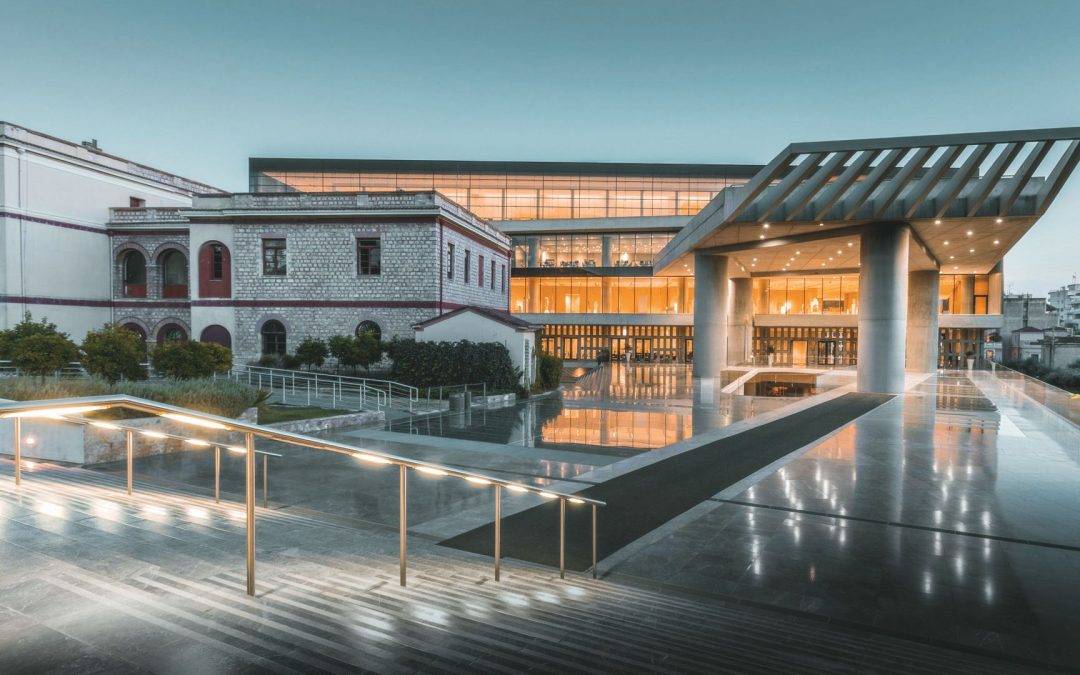
The Acropolis Museum, also known as the New Acropolis Museum, is the museum that houses the archaeological remains of the ancient Acropolis site in Athens, Greece.
Acropolis Museum, History, Architectural Structure, Artifacts
The original Acropolis Museum was founded in 1865 and opened in a building on the archaeological site in 1874. To house its growing collection of discoveries, the museum built another annex in 1888 and after World War II. Plans to build an even larger site away from the site began in the late 20th century, and in 2009 a 226,000-square-foot (21,000-square-meter) building opened at the foot of the Acropolis slope. Designed by Swiss-American architect Bernard Tschumi, the structure was intended to resemble the nearby Parthenon. Tschumi’s design included seismic technology that predicts the area’s frequent earthquakes, in addition to adjusting dimensions and modeling the pillars to accurately reflect those of the Parthenon. Among the many treasures of the museum are artifacts from the Archaic, Classical and Roman periods. All were found in the Parthenon, on the slopes of the Acropolis, or other existing structures in the area. Notable artifacts in the collection include the original caryatids, the Nike Adjusting Her Sandal relief, and parts of the Parthenon frieze. There are hundreds of marble sculptures in the museum.
Acropolis Museum Architectural Structure, Interiors
Although the Acropolis Museum was scheduled to be completed in time for the Athens Olympic Games in 2004, a number of archaeological discoveries at the site (including those of early Christian private houses containing artifacts such as marble busts, mosaic floor amphorae) have delayed its construction. The design plan has been altered so that visitors can see the artifacts beneath their feet through the transparent floor panels. In addition, an excavation site with the remains of an ancient village can be seen near the entrance of the museum.
Discussions continued over the ownership of the Elgin Marbles, a collection of ancient Greek sculptures unearthed from the Parthenon by the British ambassador, Thomas Bruce, 7th Lord Elgin, at the turn of the 19th century. The Elgin Marbles are currently in the British Museum in London, but the Greek government frequently requests their return. The Acropolis Museum was built largely to house these treasures, and in anticipation of their return, the gallery on the top floor of the museum, called the Parthenon Hall, was reserved for display.
Important Artifacts of the Acropolis Museum
Parthenon west frieze
Parthenon south area
Caryatids of Erechtheion
Head of Alexander the Great statue
Antenor Korea Statue
Kritios Boy Statue
Calf Carrier Statue
Parthenon west pediment: Kekrops and Pandrosos
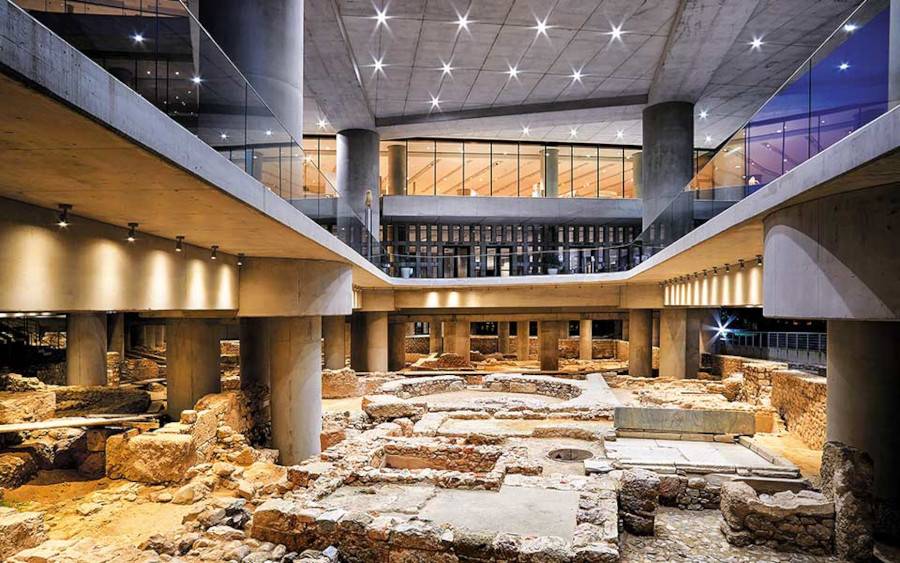
Acropolis Museum Underground Hall
Where is the Acropolis Museum, How to Get There, Directions, Visiting Hours, Entrance Fee
Transport
From the airport
By Metro: Take the blue line for Syntagma station and then the Red line (one stop) for the Acropolis station.
By car or taxi: 35km, 40 minutes
from the port of Piraeus
By Metro: Take the green line to Monastiraki station and walk 750 meters to the Acropolis via the Ancient Agora or Plaka site
By car or taxi: 15km, 30 minutes
Museums are open all year round and open earlier in the winter months.
It is closed on some public holidays.
It’s helpful to visit early to avoid crowds (before 10:00) or after 16:00 (just watch out for early midweek closing times during winter).
If you are in Athens on a Friday, take advantage of the 22:00 closing time. You can even combine it with a dinner at its restaurant, which is open until midnight. It usually has a three-piece orchestra accompanying the lighting scene of the Acropolis.
Ticket prices are between 5-10 € depending on the season (excluding the tour guide).
Some pre-bought tickets allow you to avoid long queues at peak times.
by Arthipo Author | 9 April 2023 | History of Art
Los Angeles Museum of Art (LACMA), museum campus in Los Angeles with outstanding collections of Asian (Indian, Tibetan and Nepalese), Islamic, medieval, Latin American, European and modern art. At the beginning of the 21st century, LACMA had approximately 147,000 works of art.
Los Angeles Museum of Art, History, Architectural Structure, Artifacts
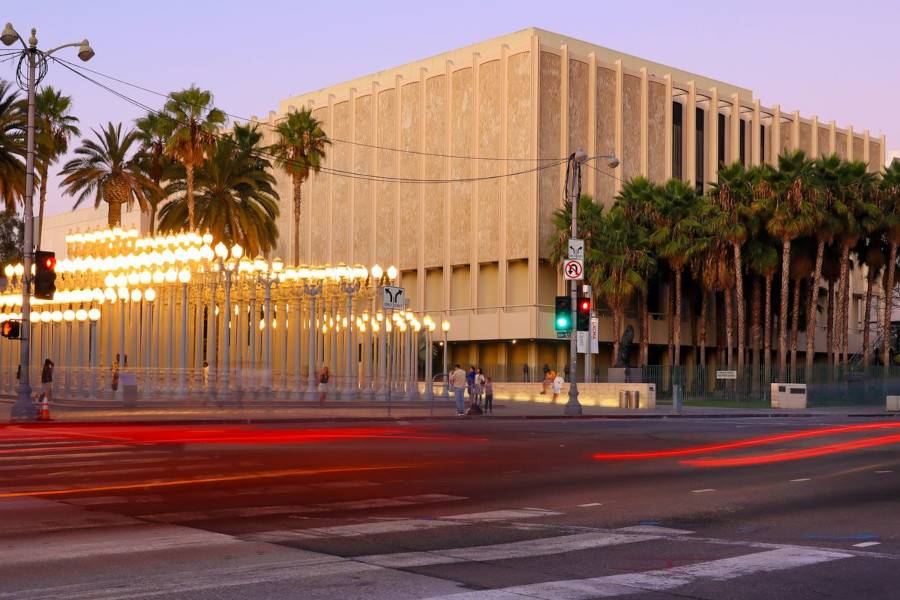
Founded in 1910, the museum was part of the Los Angeles County Museum of History, Science and Art until 1961, when it became an independent institution. It was moved to its present location in 1965. It consists of three buildings originally designed by William L. Pereira Associates. The largest of these was the four-story Ahmanson Building, which houses the museum’s permanent collection. Also in 1965 was built the adjacent Hammer Building, where special exhibits are displayed, and the Bing Center, which includes a research library, a children’s gallery, a 600-seat auditorium, and a cafeteria. The Art of the Americas Building (formerly the Robert O. Anderson Building, 1986) was designed by Hardy Holzman Pfeiffer Associates. It housed the museum’s collection of modern and contemporary art. Architect Bruce Goff’s Pavilion for Japanese Art opened in 1988. 21st century additions to the museum complex designed by Renzo Piano include the Broad Museum of Contemporary Art (BCAM; 2008) and the Resnick Pavilion (completed 2010). one-story 45,000 square feet (4,180 square meters) of space, as well as a number of utility structures. In 2013 the museum announced a controversial plan to raze the original 1965 Pereira buildings and the Art of the Americas Building to construct a new space designed by Swiss architect Peter Zumthor. The plan was approved in 2019 and demolition began in 2020.
Dutch paintings purchased by LACMA were chosen by Edward and Hannah Carter as a promised gift to the museum to complement the collection created between the late 1960s and 1985. Exhibited in Los Angeles, Boston and New York in 1982-1983, the collection of 36 Dutch landscapes, still lifes, seascapes, architectural interiors and cityscapes amaze with the high quality of his paintings and the incredible state of preservation. Edward Carter died in 1994; Following the death of his widow, Hannah, in April 2009, the paintings became part of LACMA’s permanent collection.
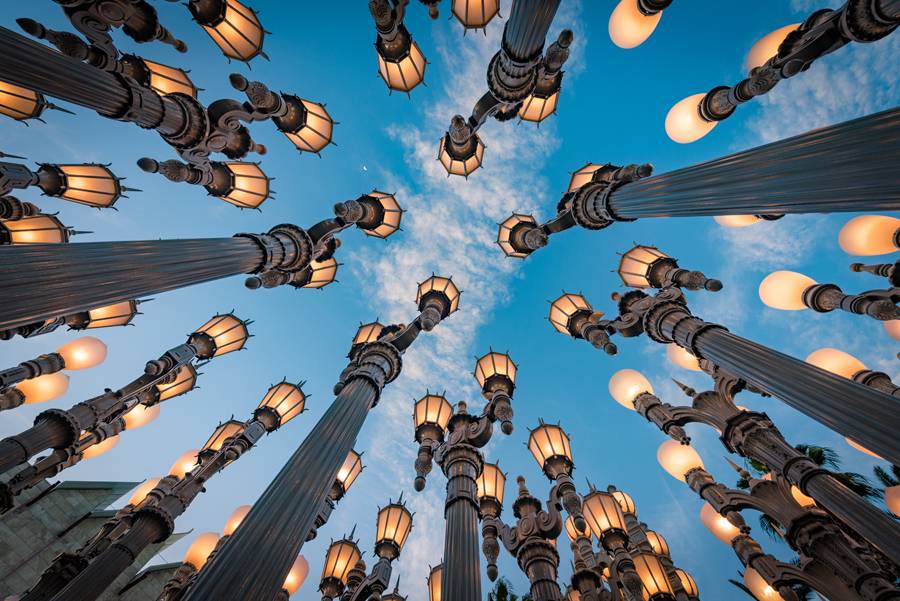
Los Angeles Museum of Art City Lights
Los Angeles Museum of Art Notable Works
LACMA’s more than 120,000 objects are divided among its numerous departments by region, media and time period, and are spread over various museum buildings.
Modern and Contemporary Art
Not to be confused with The Broad, another Broads-funded contemporary art museum in Downtown Los Angeles.
The Modern Art collection is displayed in the Ahmanson Building, which was renovated in 2008 to feature a new entrance with a grand staircase, designed as a meeting place similar to Rome’s Spanish Steps. The atrium at the base of the staircase is filled by Tony Smith’s colossal statue Smoke (1967). The galleries at the plaza level also house a gallery highlighting African art and the Robert Gore Rifkind Center for German Expressionist Studies.
The modern collection at the plaza level displays works from 1900 to the 1970s, largely populated by the Janice and Henri Lazarof Collection. In December 2007, Janice and Henri Lazarof produced LACMA 130 mostly modernist works estimated to be worth more than $100 million. The collection includes 20 works by Picasso, watercolors and paintings by Paul Klee and Wassily Kandinsky, and a significant number of sculptures by Alberto Giacometti, Constantin Brâncuși, Henry Moore, Willem de Kooning, Joan Miró, Louise Nevelson, Archipenko and Harp.
Modern Art galleries
Gallery of works by Alberto Giacometti
The Contemporary Art collection is on display at the 60,000-square-metre (5,600 m2) Large Museum of Contemporary Art (BCAM), which opened on February 16, 2008. BCAM’s inaugural exhibition featured 176 works by 28 artists from post-war Modern art from the late 1950s to 2008. Now. All but 30 of the works originally on display came from Eli and Edythe Broad’s collection (pronounced “brode”). Long-time trustee Robert Halff donated 53 contemporary artworks in 1994. Components of this gift include Joan Miró, Jasper Johns, Sam Francis, Frank Stella, Lari Pittman, Chris Burden, Richard Serra, John Chamberlain, Matthew Barney and Jeff Koons. He also provided LACMA with initial drawings by Claes Oldenburg and Cy Twombly.
Edward Kienholz’s Backseat Dodge ’38 (1964) is a sculpture depicting a couple engaged in sexual activity in the backseat of a truncated 1938 Dodge automobile chassis. The piece brought Kienholz instant notoriety in 1966 when the Los Angeles County Supervisory Board tried to ban the sculpture for being pornographic and threatened to withhold funding from LACMA if the piece was included in a Kienholz retrospective. A compromise was reached that the door of the statue’s car should remain closed and guarded so that it could only be opened at the request of a museum patron over the age of 18 and only if there were no children in the gallery. The turmoil led to more than 200 people lining up to see the job on the day the show opened. Since then, the Back Seat Dodge ’38 has drawn crowds.
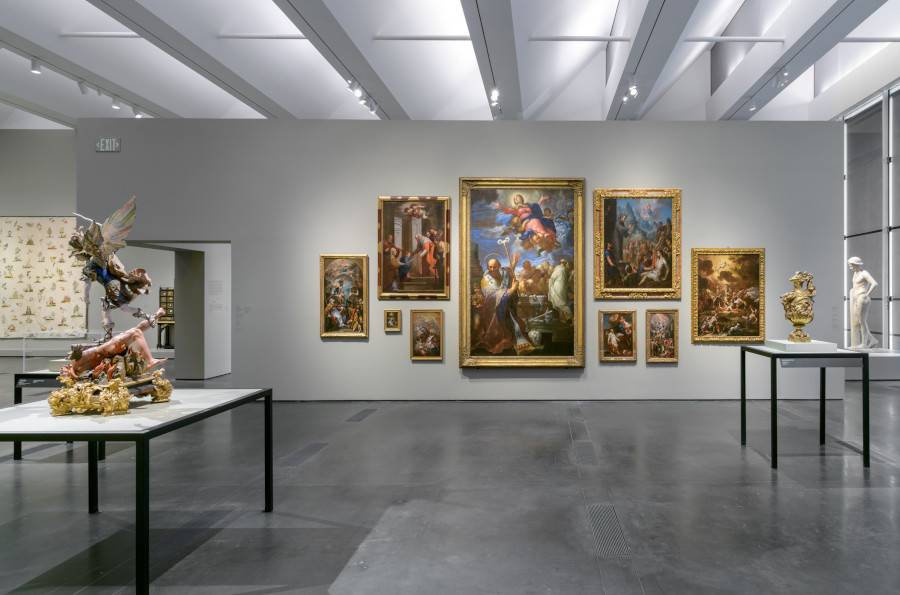
Los Angeles Museum of Art Exhibition Hall
Where is Los Angeles Art Museum, How to Get There, Directions, Visiting Hours, Entrance Fee
Address: Wilshire Blvd, Los Angeles, CA 90036, United States
Watches:
Tuesday 11:00–18:00
Wednesday Closed
Thursday 11:00–18:00
Friday 11:00–20:00
Saturday 10:00–19:00
Sunday 10:00–19:00
Monday 11:00–18:00
Metro Local 20 and Rapid 720 buses on Wilshire Blvd. and Fairfax Ave. Metro Local 217 and 218 and Rapid 780 buses stop half a block from the museum.
Wilshire/Western Station on the Purple Tube Line is 3 miles east of LACMA. From there, Wilshire Blvd. You can easily transfer to the westbound Local 20 and Rapid 720 buses on and get off half a block from LACMA.
La Cienega/Jefferson Station on the Metro Expo Line is 3 miles south of LACMA. From there, it’s Fairfax Ave, half a block from LACMA. and Local 217 northbound to Wilshire Blvd.
Entrance fee:
There is an entry fee of $20 for adults and free for teens (18+ students $16), LA residents $25 for non-LA residents, and $10 for teens (18+ students $21).
0-2 years old is free.

by Arthipo Author | 9 April 2023 | History of Art
The Hermitage Museum is an art and culture museum located in Saint Petersburg, Russia. The Hermitage Museum, one of the largest and oldest museums in the world, was founded in 1764 by Czarina II. It was founded by Katerina and opened to the public in 1852.
Hermitage Museum History, Architectural Structure, Artifacts
It was founded in 1764 by Catherine the Great as a court museum. It was adjacent to the Winter Palace and served as a private gallery for art collected by the empress. During the reign of Nicholas I, the Hermitage was rebuilt (1840–52) and opened to the public in 1852. After the October Revolution of 1917, the imperial collections became the public domain, and the museum was expanded in the 1920s as artworks were solicited from private institutions. collections. In 1930-34, during the pressure of rapid industrialization, some masterpieces were sold by the Soviet government to secure purchases of industrial machinery from the West. The museum’s collection of European art from the late 19th to the early 20th centuries, It was significantly expanded immediately after World War II. The museum is now housed in five interconnected buildings, including the Winter Palace (1754–62) and the Small, Old, and New Hermitage Sites.
The Hermitage collections include nearly three million items dating from the Stone Age to the present day. Among them is one of the world’s richest collections of Western European painting since the Middle Ages, including many masterpieces by Renaissance Italian and Baroque Dutch, Flemish and French painters. Russian art is well represented. The Hermitage also has extensive collections of Asian art; Particularly noteworthy is the Central Asian art collection.
Hermitage Museum Architectural Structure, Interiors
The complex consists of the Menshikov Palace Building, the General Staff Building, the Great (Old) Hermitage, the Hermitage Theatre, the New Hermitage, the Small Hermitage and the Winter Palace buildings.
Menshikov Palace
Menshikov Palace on Vasilyevsky Island was one of the first buildings in Saint Petersburg. Construction began in 1710 and was completed in 1727 due to a multi-stage construction process. Many Western European architects and masters have been involved in projects, including Francesco Fontana, Johann Gottfried Schädel, Domenico Trezzini, Carlo Bartolomeo Rastrelli, Georg Johann Mattarnovi and Jean-Baptiste Leblond.
The palace is an outstanding example of Petrine Baroque architecture, with its characteristic symmetry and simplicity of dimensions, high gabled roofs, two-tone façades and small glass windows. The outer walls are adorned with columns, and at the top of the risalites of the central building are shields with enormous magnificent crowns. The grand entrance takes the form of a stone portal accentuated by a portico with a balcony above it.
The rooms are decorated using marble, decorative paintings and moldings, sculptures, carved and inlaid wood, Dutch cobalt tiles and Russian glazed tiles, painted and embossed leather, and expensive drapery and tapestries. A. D. Menshikov, the first governor of Saint Petersburg, placed his collections of painting, sculpture, applied art, books and numismatic works in his grand palace.
The original Petrine interior of the Menshikov Palace was recreated in the exhibition “Russian Culture in the First Third of the 18th Century” using decorative and applied art from the State Hermitage collection.
Dvortsovaya Square. General Staff Building View
One of the most famous architectural monuments in Saint Petersburg, the General Staff Building was designed by architect KI Rossi and was built between 1820 and 1830. The project revolved around the architect’s idea of combining two separate buildings with a triumphal arch, a monument. To the victory of Russia in the war of 1812. This magnificent arch is a symbol of Russia’s glory and military glory; Forms an ax symmetrical with the central part of the Winter Palace.
The appearance of the General Staff Building has a certain strictness and conciseness. The lower floor is interpreted as a rustic basement, while the walls of the upper two floors are smooth. Modest cornices and architraves surround the windows of the third floor (Pass floor). Smooth walls clearly accentuate the raised frieze, and three Corinthian colonnades divide the building’s 580-metre length.
The eastern wing of the General Staff Building originally housed the Ministry of Finance, the Ministry of Foreign Affairs and several other ministries of the Russian Empire. From 1917, different institutions and organizations occupied the building, including the People’s Commissariat for Foreign Relations; The General Staff was located in the western flank, but nowadays it is the headquarters of the Western Military District.
Reconstruction of the General Staff Building started in 2008 and ended in 2014. The five large atriums were enclosed with glass roofs, thus creating the New Great Enfilade. After the restoration, the building displayed collections of Russian and European decorative art, paintings and sculptures from the 19th and 20th centuries (including Impressionist and Post-Impressionist paintings, Matisse and Picasso), and contemporary art. The exhibition includes the renovated historic interiors of the Ministry of Foreign Affairs of the Russian Empire and the personal apartments of Chancellor Count Karl Nesselrode.
The Great Hermitage Front. View from the Dvortsovaya embankment
In 1771-1787, by order of Empress Catherine II, a new building was built next to the Small Hermitage on the Neva River embankment. It was called the Great Hermitage because it was larger than the Small Hermitage and was supposed to house the palace collections and the library. Architect Yuri Velten managed to fit the new building into the existing palace complex. The simplicity and simplicity of the Great Hermitage followed the canons of 18th century Classicism. Although there are no elements showing the order such as columns and pilasters in the building, its structure is completely determined by the proportions of the classical order. The massive and rustic lower part of the building is offset by the lighter upper part. The decorative scheme of the facade is based on the rhythmic combination of horizontal partitions and vertical window openings.
In 1792, Giacomo Quarenghi, the Vatican built an extension to the Great Hermitage to house the Raphael Loggias, 18th-century copies of the original frescoes in Rome.
It is Italian Renaissance art exhibited in the Great Hermitage.
Hermitage Theatre. View from the Dvortsovaya embankment
In 1783, architect Giacomo Quarenghi was honored by Empress II. commissioned by Catherine to build the Hermitage Theatre; construction was completed in 1787. The balanced harmonic structure of the building makes it an outstanding example of late 18th century Russian Neoclassicism. The rustic windows of the ground floor are decorated with keystones with lion masks, one of Quarenghi’s favorite decorative elements. The cloisters of the second floor of the façade are surrounded by risalites with statues of ancient Greek playwrights and poets placed in exedra.
The auditorium has been interpreted as an amphitheater with six rows. Its walls are decorated with artificial marble and column capitals and theater masks. In the exedra, medallions bearing the profiles of famous playwrights are placed on the statues of Apollo and his muses. The stage is separated from the hall by a railing, behind which there are several rows of rows and two side boxes.
Since the 18th century, theatrical performances have become traditional and part of many celebrations. Today, shows are held in the theater and exhibitions are held in its foyer.
Front of the New Hermitage. View from Millionnaya Street
The New Hermitage was the first building in Russia built specifically to house museum collections. Emperor Nicholas I, I invited the German architect Leo von Klenze, whose work largely shaped the image of museum architecture in Europe, to come to Russia and build the Imperial Hermitage. Architects Nikolay Yefimov and Vasily Stasov, who were tasked with running Klenze’s project, made some significant changes to fit the new structure into the existing architectural environment.
The characteristic features of the New Hermitage, built in 1842-1851 in the style of Historicism, are the simplicity and monumentality of the building and the balance of architectural volumes. The entrance to the museum is accentuated by a magnificent portico supported by Atlantes figures cut from gray granite in Alexander Terebenev’s workshop. The building is also decorated with sculptures and reliefs depicting famous artists, architects and sculptors of the past. Classical, Renaissance and Baroque decorations give life to the massive surfaces of the building facades.
The rooms of the museum are designed in accordance with the collections to be exhibited here; For example, the Skylight Halls on the first floor, equipped with overhead light, housed the Picture Gallery, while the Classical architectural style decorated rooms on the ground floor housed collections of antiquities and sculptures, and various libraries. The ceremonial opening of the first art museum in Russia took place on February 5, 1852. Today, historically preserved rooms contain collections of ancient art, as well as European paintings, sculptures and decorative arts.
Winter Palace. View from Dvortsovaya Square
The elegant, monumental palace is a striking monument to the Baroque style of mid-18th century Russian art. The palace is a brilliant example of the synthesis of architectural and decorative plastic art. All facades are decorated with a two-tiered portico. Columns rise upward, forming an intricate rhythm of verticals, and this movement embraces the numerous statues and vases on the roof. The abundance of molded decoration – imaginary cornices and window architraves, mascarones, cartridges, arugula and various pediments – creates an extremely rich play of light and shadow, adding splendor to the building’s appearance.
Developing on the same architectural motif, Rastrelli brought a different structural rhythm to each of the four facades of the palace. The south façade facing the square has an official splendor. Here the architect pierced the building with three arches to create a grand entrance to the courtyard and accentuated it with vertical elements of double columns. The majestic north façade, which gives the impression of an endless row of columns, overlooks the vast expanse of the Neva. The west façade, opposite the Admiralty, resembles a rural palace composition with a small courtyard. The monumental east façade, with its massive side blocks, forms a grand presidential office and turns into Millionnaya Street, where the nobles’ mansions are located.
For 150 years, the palace served as the imperial residence. It was declared a museum after the October Revolution in November 1917.
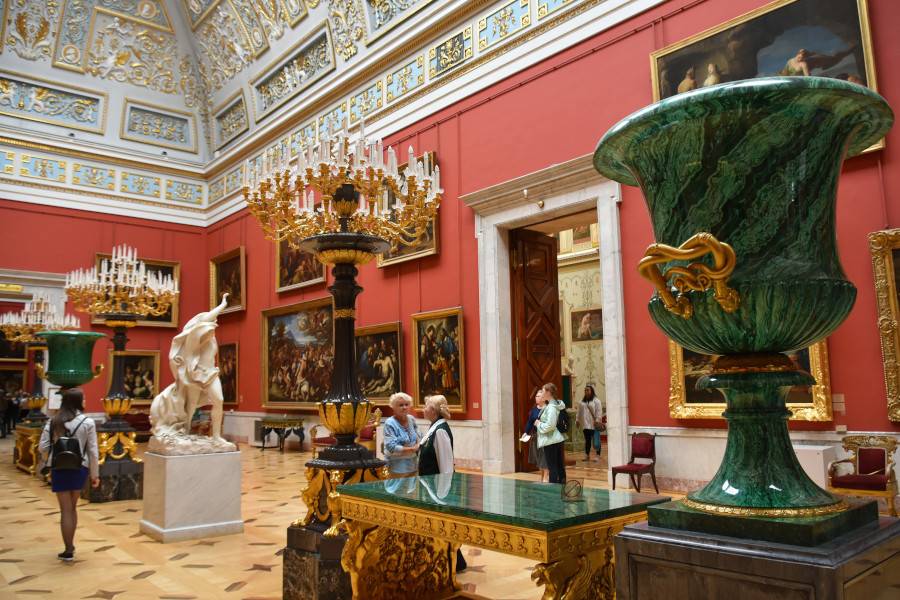
Hermitage Museum Interior
Hermitage Museum Important Artifacts
Antiquity, Eastern European and Siberian Archaeological Artifacts, Imperial Porcelain Factory Museum Collection, Treasure Gallery Collections, Arsenal Collection, Russian Art and Culture, oriental art, Numismatics, Mesopotamian Written Records in the Hermitage, collections are on display.
Some of the important works of the museum are as follows; Leonardo da Vinci – Mary and Child Jesus, Antonio Canova – The Three Graces, Camille Pissarro – Montmartre Avenue on a Winter Morning, Rembrandt – The Return of the Prodigal Son, Vincent Van Gogh – Spectators in the Arena at Arles, Rembrandt – Flora, Edgar Degas – Place de la Concorde, Leonardo da Vinci – Benois Madonna, Vincent Van Gogh – White House at Night, Giorgione – Judith
Where is the Hermitage Museum, How to Get There, Directions, Visiting Hours, Entrance Fee
Address: The State Hermitage Museum Russia, 190000, St Petersburg, Dvortsovaya Naberezhnaya 34
Museum, Tuesday, Thursday and Sunday 11:00 – 18:00
It is open on Wednesday, Friday and Saturday from 11:00 to 20:00. It is closed on Mondays.
Subway Admiralteyskaya, Nevsky Prospekt, Gostiny Dvor stations
Lines 7, 10, 24, 191 can be used by bus.
Entry must be obtained through the website.
Electronic entrance ticket 500 RUBLE
Heroes of the Soviet Union, Heroes of the Russian Federation, Full Members of the Order of Honor, Veterans of the Great Patriotic War*, members of ICOM*, staff of Saint Petersburg museums* are free for children under 7 years old.
Third Thursday of the month; Free for under-18s, students and cadets, families with three or more children under 18.
by Arthipo Author | 9 April 2023 | History of Art
d’Orsay Museum
The Orsay Museum (Musée d’Orsay) is the national museum of fine and applied arts in Paris, displaying mainly works from France between 1848 and 1914. His collection includes painting, sculpture, photography and decorative arts.
Musée d’Orsay Museum History, Architectural Structure, Artifacts
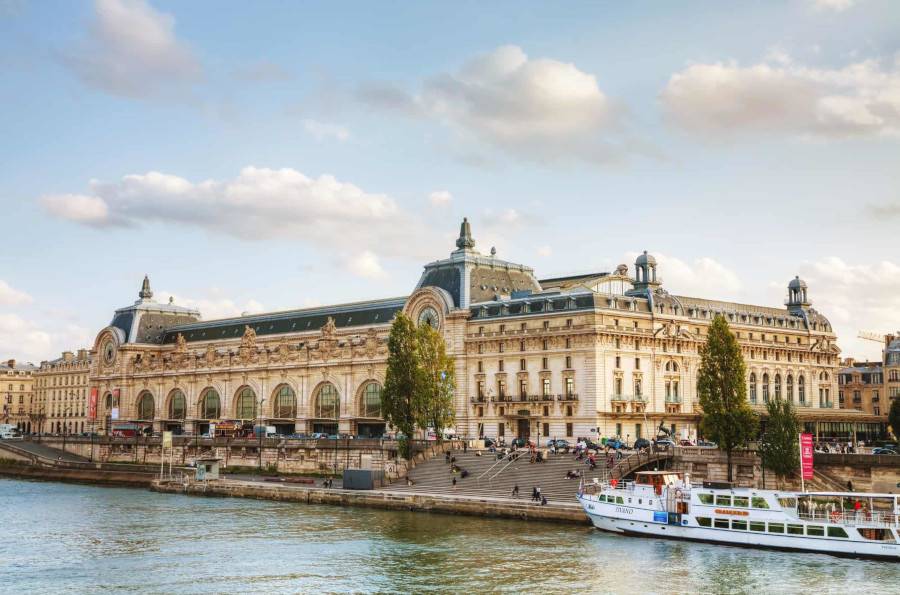
The Musée d’Orsay is located in the former Gare d’Orsay, a train station and hotel designed by Victor Laloux and located on the Left Bank of the River Seine, opposite the Tuileries Gardens. At the time of its completion in 1900, the building featured an ornate Beaux Arts façade, while the interior boasted metal construction, passenger elevators, and electric rails. However, due to changes in railway technology, the station soon became outdated and was largely empty in the 1970s. Talks to convert the building into an art museum began early in the decade and were concluded in 1977 at Pres’ initiative. Valery Giscard d’Estaing. With government funds, the building was restored and remodeled by the ACT architectural group in the early 1980s.
The decision to transform the Gare d’Orsay into an art museum came at a opportune time, as the works in the national collection needed reorganization. When the National Museum of Modern Art moved from the Palais de Tokyo building to the new Pompidou Center that year, it left works that did not fit the revised art program; The Jeu de Paume museum, home to France’s Impressionist collection since 1947, was overcrowded; and the Louvre Museum had resorted to storing selected paintings and sculptures from the late 19th-century Salons, France’s annual official art exhibitions, as there was no exhibition space. Most of the Musée d’Orsay’s paintings and sculptures therefore came from the inventories of these three institutions. The museum also sought to present a complex and comprehensive view of the late 19th and early 20th centuries, thereby starting its own photography collection and taking additional works from the national collection to form decorative arts and architecture collections. When the Musée d’Orsay opened in 1986, it had an extensive collection of illustrious avant-garde Realist paintings such as Courbet’s Bury in Ornans (1849–50) and Manet’s Olympia (1863). The Birth of Venus (1879) by William Bouguereau and works by previously unknown artists.
Orsay Museum Architectural Structure, Interiors
The interior was designed by Gaetana Aulenti, who created an intricate gallery layout that occupies three main levels that surround the atrium below the building’s iconic iron-glass barrel vault. On the ground floor, the former building’s train platforms, large stone structures divided the cavernous space, creating a central nave for the sculpture collection and gallery spaces for painting and decorative arts.
Encouraging better visitor circulation and safety, the museum renovated its interiors, including the Impressionist galleries and cafe, between 2009 and 2011. The Musée d’Orsay has become one of Paris’ most visited museums, typically receiving more than three million visitors a year.
The exterior of the museum is a massive stone facade with a huge clock. It has retained the appearance of the train station from the outside.
Once inside the museum, this impressive exterior won’t disappoint. The inside is as striking as the outside.
Italian architect Gae Aulenti designed the interior of the museum. He was responsible for the interior arrangement, decoration, furniture and equipment of the museum.
The old hall in the station has been turned into the main artery of the museum, while the large glass canopy serves as the main entrance.
The museum uses natural light from large glass windows in the ceiling.
Lucien Magne, Emile Benard and Victor Laloux were the three architects who designed this building. The building was completed in record time in 2 years.
The museum was opened in December 1986 by the President of the time, François Mitterrand.
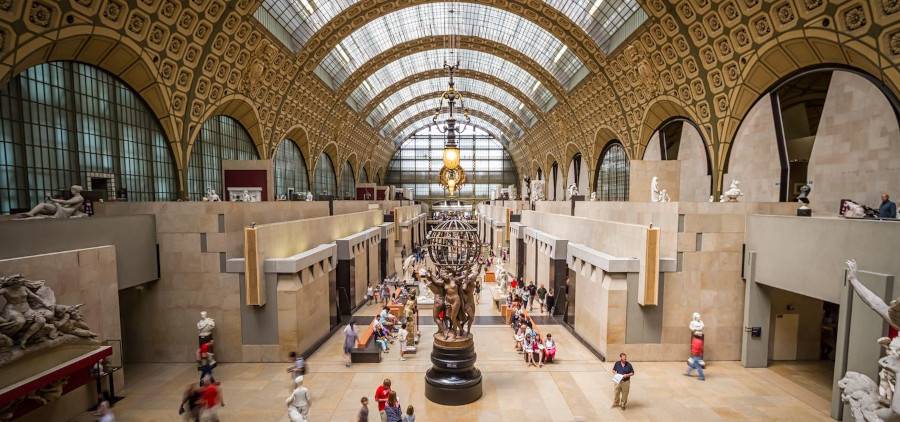
Orsay Museum Interior
Orsay Museum Important Artifacts
Vincent van Gogh‘s Starry Night Arles, James McNeill – Gray and Black Arrangement No.1 Whistler, Claude Monet – Coquelicots, Gustave Courbet – Artist’s Studio (1854–55), Édouard Manet – Le Déjeuner sur l’herbe (1863; On the Grass Luncheon) and Pierre-Auguste Renoir‘s Dance at Le Moulin de la Galette (1876; Bal du moulin de la Galette)
Where is Orsay Museum, How to Get There, Directions, Visiting Hours, Entrance Fee
Address: 1, rue de la Legion d’Honneur, Paris, France
Metro: Solferino, line 12.
Buses : 24, 63, 68, 69, 73, 83, 84 and 94
Train: Musee d’Orsay, line C.
Tuesday – Sunday 09:30 – 18:00 The museum is closed on Mondays.
Entry is 14 Euros, free for young, disabled and unemployed.