Leonardo Da Vinci
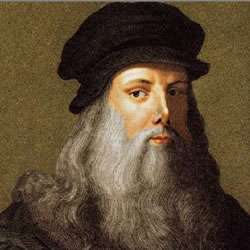 Leonardo di ser Piero da Vinci
Leonardo di ser Piero da Vinci (15 April 1452, Anchiano, Italy - 2 May 1519, Château du Clos Lucé, Amboise, France), was an important philosopher, astronomer, architect, engineer, inventor, mathematician of his time with vast knowledge in many different disciplines. He is an anatomist, musician, sculptor, botanist, geologist, cartographer, writer and painter.
Life, Biography of Leonardo di ser Piero da Vinci
Leonardo di ser Piero da Vinci, described as one of the most talented and creative men in history, was born in 1452 in a village near the Tuscan town of Vinci. Leonardo's parents were not married at the time of his birth. His father, Sir Piero, was a Florentine notary and landlord, and his mother, Caterina, was a young peasant woman who soon married a craftsman. Leonardo grew up on the estate of his father's family, where he was treated as a "legitimate" son and received the usual basic education of the day: reading, writing and arithmetic. Leonardo did not seriously study Latin, the primary language of traditional learning, until much later, when he acquired a practical knowledge of his own. He also did not apply himself to higher mathematics (advanced geometry and arithmetic) until he was 30, and began to study it with tenacious determination.
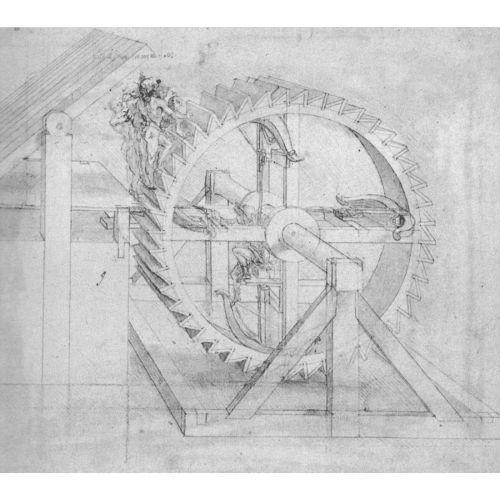
Leonardo's artistic tendencies must have emerged early. At the age of 15, his father, who was held in high esteem in the Florentine community, apprenticed him to the painter Andrea del Verrocchio. In Verrocchio's famous workshop, Leonardo received a versatile education that included technical-mechanical arts as well as painting and sculpture. He also worked in the workshop of the artist Antonio Pollaiuolo next door. In 1472, Leonardo was accepted into the Florentine painters' guild, but remained in his teacher's workshop for another five years, then worked independently in Florence until 1481. There are many excellent pencil and charcoal drawings from this period. Including many technical drawings (e.g. pumps, military weapons, mechanical apparatus) that provide evidence of Leonardo's interest and knowledge of technical issues even at the beginning of his career.
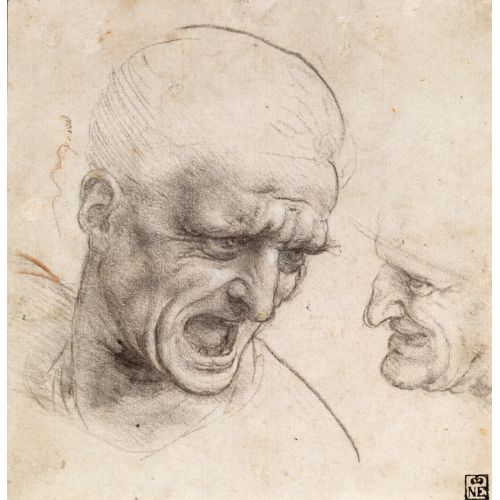
Leonardo worked at the Milan Palace from 1482 to 1499. As a noted perfectionist, he has spent a lot of time exploring human anatomy, particularly the way human bodies move, communicate, as well as gesture and express means, the way they are constructed and proportioned, and how they interact in their social environment.
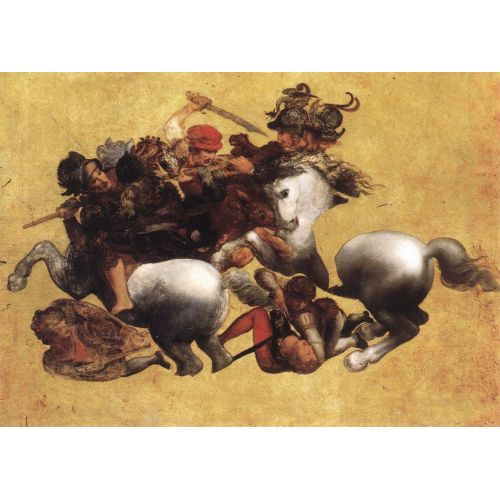
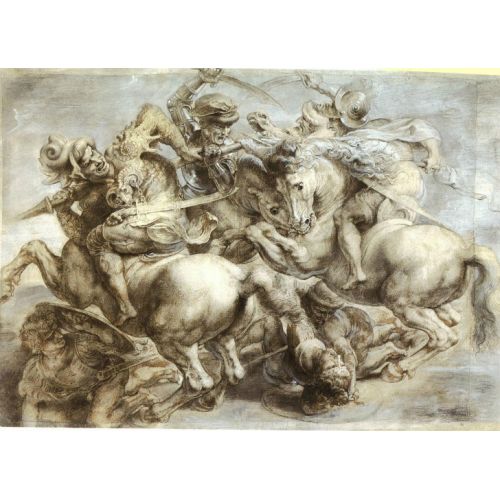
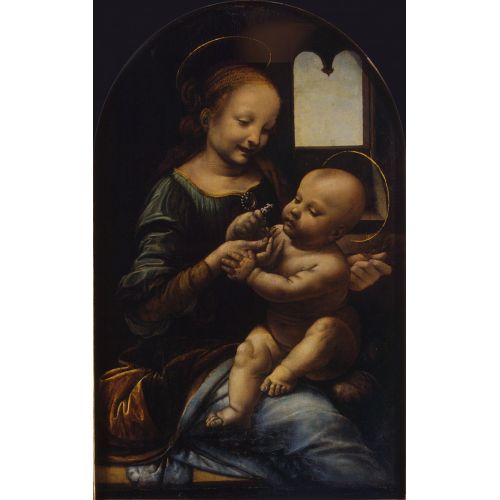
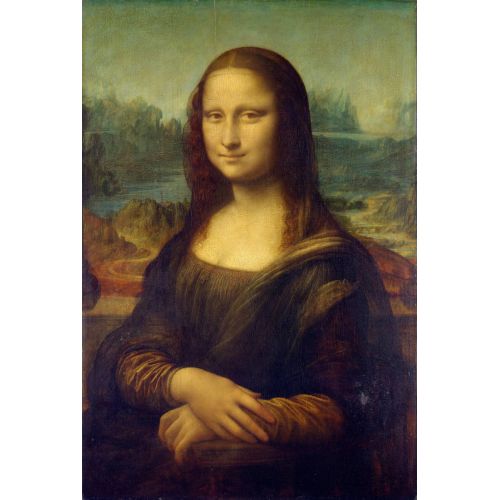
Leonardo returned to Florence for a second time in 1503, and was greeted as a celebrity when he joined St Luke's Guild again. This turn spurred one of the artist's most productive periods of painting, including the Virgin and Child with Saint Anne (1503-19), as well as the Mona Lisa (1503-19) and the unfinished Battle of Anghiari (1503-05).
In 1513, after the temporary expulsion of the French from Milan, Leonardo went to Rome, where he would spend the next three years. Leonardo devoted most of these last years to editing his scholarly papers and notes rather than painting, but his last painting, John the Baptist (1513), was most likely made during this time.
Representing the lifetime culmination of outstanding research work and talent in such a multitude of disciplines, this notebook collection has proven his most enduring legacy. His views on architecture, mathematics, engineering, science, and human anatomy, as well as his philosophy on art, painting, drawing, and humanism, presented the intellect so deeply that he was recognized as a true genius.
Leonardo died at Clos Lucé on May 2, 1519.
Leonardo di ser Piero da Vinci's Style, Art Movement
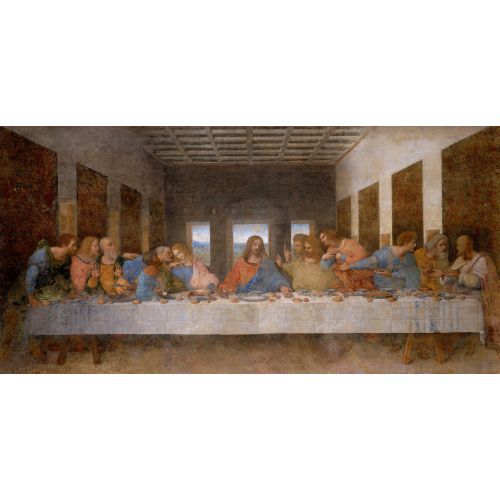
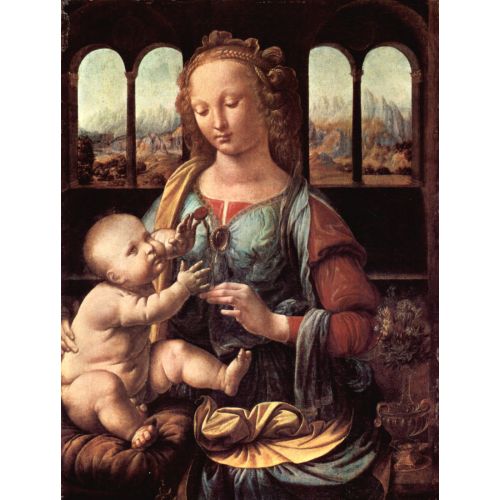
It is difficult to briefly describe the legacy of such a talented man as Leonardo da Vinci. He developed artistic techniques that are considered perfection. His use of the vanishing point, the soft blurring effect in the sfumato method, his understanding of the relationship between light and dark, and his enigmatic facial expressions gave his paintings a fascinating and realistic quality that had never been seen before. While much of his art focuses on religion and portraits, painted during the High Renaissance that heralded the end of the dark ages in Western civilization, it was his techniques along with masterful composition that contributed to the greatest impact in Western art. In fact, to this day, The Last Supper and the Mona Lisa remain some of the world's most recognizable and iconic works of art, being reproduced endlessly in posters and prints, and ingrained deep into contemporary popular culture as pieces of infinite historical significance.
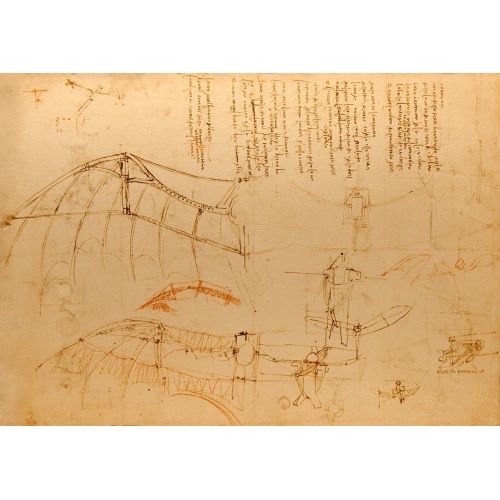
But what about his inventions, anatomical research, topographical drawings, and engineering, mechanical, and architectural achievements? While many of his inventions, such as the flying machine, helicopter, or parachute, were simply ideas and could not be realized in practice, this does not detract from the recognition that Leonardo's inquisitive mind was years ahead of its time. The same is true for the accuracy of his anatomical drawings, his research on blood circulation, topography, and other mechanical engineering marvels such as the miter lock, its contribution to accurate timekeeping, or the bobbin winder, which has an immediate impact on the local industry. on time. His research into developing military weapons heralded the tanks and machine guns so familiar to us today. He was indeed the first true 'Renaissance man'.
As Sigmund Freud said of him, he was a man who "wakes up very early in the dark while the others were still asleep."
Famous Paintings and Important Works of Leonardo di ser Piero da Vinci
Mona Lisa – 1503
Salvator Mundi – 1500
The Last Supper – 1498
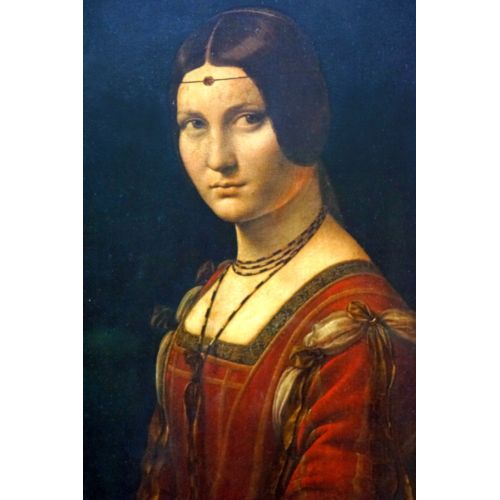
The Woman with the Erect – 1489
Vitruvian Man
The Virgin and Child with Saint Anne
John the Baptist - 1513