

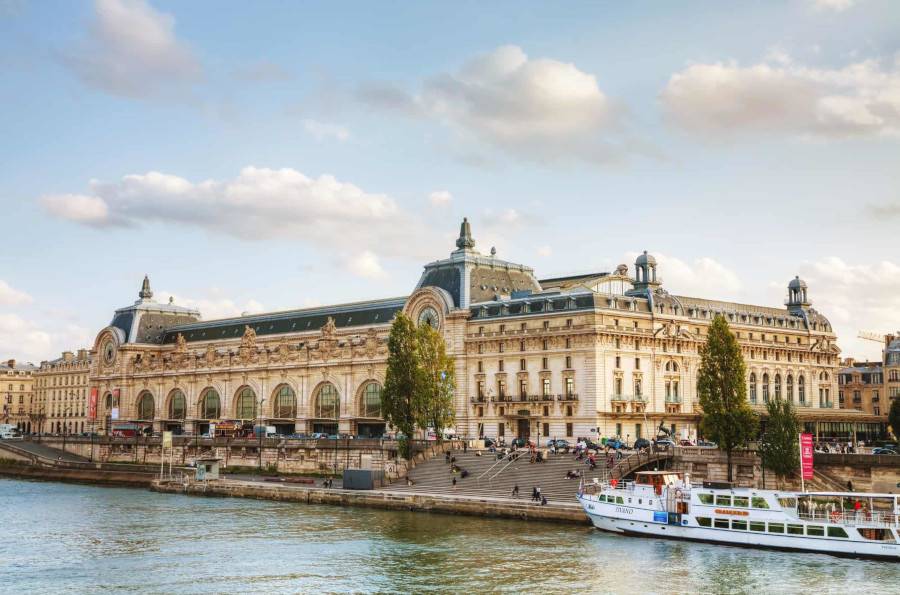
d’Orsay Museum
The Orsay Museum (Musée d’Orsay) is the national museum of fine and applied arts in Paris, displaying mainly works from France between 1848 and 1914. His collection includes painting, sculpture, photography and decorative arts.
Musée d’Orsay Museum History, Architectural Structure, Artifacts
The Musée d’Orsay is located in the former Gare d’Orsay, a train station and hotel designed by Victor Laloux and located on the Left Bank of the River Seine, opposite the Tuileries Gardens. At the time of its completion in 1900, the building featured an ornate Beaux Arts façade, while the interior boasted metal construction, passenger elevators, and electric rails. However, due to changes in railway technology, the station soon became outdated and was largely empty in the 1970s. Talks to convert the building into an art museum began early in the decade and were concluded in 1977 at Pres’ initiative. Valery Giscard d’Estaing. With government funds, the building was restored and remodeled by the ACT architectural group in the early 1980s.
The decision to transform the Gare d’Orsay into an art museum came at a opportune time, as the works in the national collection needed reorganization. When the National Museum of Modern Art moved from the Palais de Tokyo building to the new Pompidou Center that year, it left works that did not fit the revised art program; The Jeu de Paume museum, home to France’s Impressionist collection since 1947, was overcrowded; and the Louvre Museum had resorted to storing selected paintings and sculptures from the late 19th-century Salons, France’s annual official art exhibitions, as there was no exhibition space. Most of the Musée d’Orsay’s paintings and sculptures therefore came from the inventories of these three institutions. The museum also sought to present a complex and comprehensive view of the late 19th and early 20th centuries, thereby starting its own photography collection and taking additional works from the national collection to form decorative arts and architecture collections. When the Musée d’Orsay opened in 1986, it had an extensive collection of illustrious avant-garde Realist paintings such as Courbet’s Bury in Ornans (1849–50) and Manet’s Olympia (1863). The Birth of Venus (1879) by William Bouguereau and works by previously unknown artists.
Orsay Museum Architectural Structure, Interiors
The interior was designed by Gaetana Aulenti, who created an intricate gallery layout that occupies three main levels that surround the atrium below the building’s iconic iron-glass barrel vault. On the ground floor, the former building’s train platforms, large stone structures divided the cavernous space, creating a central nave for the sculpture collection and gallery spaces for painting and decorative arts.
Encouraging better visitor circulation and safety, the museum renovated its interiors, including the Impressionist galleries and cafe, between 2009 and 2011. The Musée d’Orsay has become one of Paris’ most visited museums, typically receiving more than three million visitors a year.
The exterior of the museum is a massive stone facade with a huge clock. It has retained the appearance of the train station from the outside.
Once inside the museum, this impressive exterior won’t disappoint. The inside is as striking as the outside.
Italian architect Gae Aulenti designed the interior of the museum. He was responsible for the interior arrangement, decoration, furniture and equipment of the museum.
The old hall in the station has been turned into the main artery of the museum, while the large glass canopy serves as the main entrance.
The museum uses natural light from large glass windows in the ceiling.
Lucien Magne, Emile Benard and Victor Laloux were the three architects who designed this building. The building was completed in record time in 2 years.
The museum was opened in December 1986 by the President of the time, François Mitterrand.
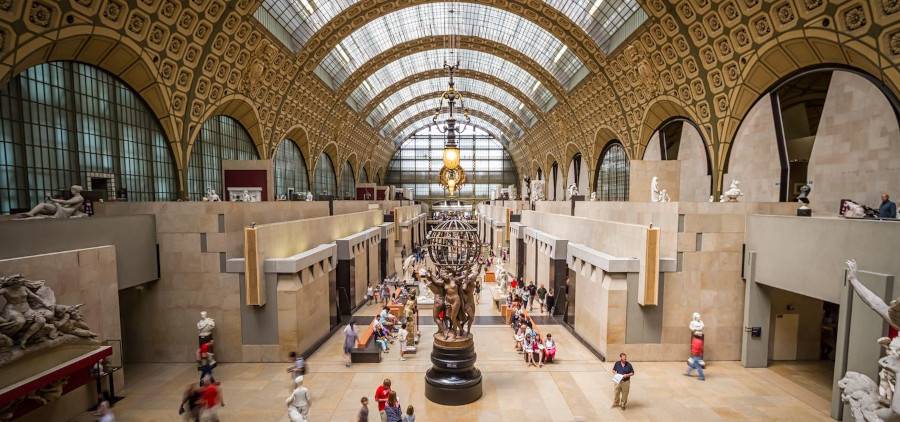
Orsay Museum Interior
Orsay Museum Important Artifacts
Vincent van Gogh‘s Starry Night Arles, James McNeill – Gray and Black Arrangement No.1 Whistler, Claude Monet – Coquelicots, Gustave Courbet – Artist’s Studio (1854–55), Édouard Manet – Le Déjeuner sur l’herbe (1863; On the Grass Luncheon) and Pierre-Auguste Renoir‘s Dance at Le Moulin de la Galette (1876; Bal du moulin de la Galette)
Where is Orsay Museum, How to Get There, Directions, Visiting Hours, Entrance Fee
Address: 1, rue de la Legion d’Honneur, Paris, France
Metro: Solferino, line 12.
Buses : 24, 63, 68, 69, 73, 83, 84 and 94
Train: Musee d’Orsay, line C.
Tuesday – Sunday 09:30 – 18:00 The museum is closed on Mondays.
Entry is 14 Euros, free for young, disabled and unemployed.