by Arthipo | 24 September 2021 | History of Art
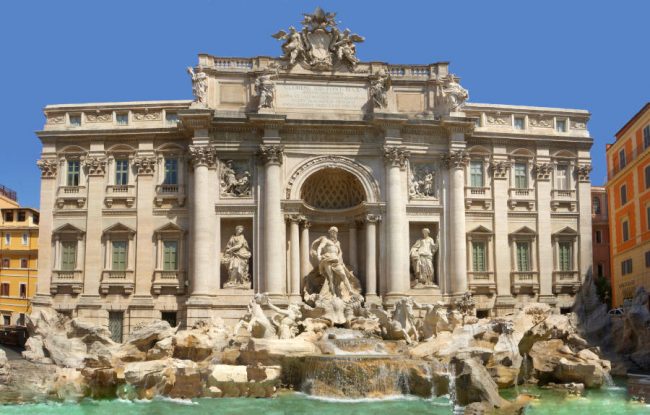
Trevi Fountain, Italian La Fontana di Trevi, is perhaps the most famous in the world and certainly the most beautiful fountain in Rome. The Trevi Fountain, built in the 18th century, with a width of 20 meters and a height of 26 meters, is also the largest fountain in the city of Rome. The baroque fountain in Piazza di Trevi square was first built by Bernini in the XII century. Designed for Pope Clemens. However, it wasn’t built until 50 years later, after a cheaper redesign by architect Nicola Salvi. Construction lasted from 1732 to 1762. The fountain’s reputation is partly the result of many movies featuring the Trevi Fountain, such as La Dolce Vita, Angels and Demons, and Roman Holiday.
The Story of Trevi Fountain (La Fontana di Trevi)
The Trevi Fountain is Rome’s most famous fountain and takes its name from the words tre vie (meaning three ways), which refers to the roads that converge where the fountain is now located. It was designed by Pietro da Cortona and Bernini, but in the VIII. Fountain due to the death of Pope Urban, XII. It wasn’t completed until 100 years later, when Clement held a competition for the design. Nine sculptors and several stonemasons worked on the fountain until it was completed.
Trevi draws water from the Acqua Vergine Antica aqueduct, which is almost entirely underground. This aqueduct was brought to Rome in 19 BC by Agrippa and the Pantheon from a spring about 20 km east of the city to provide water for their baths. It was medieval and still feeds the fountains of Piazza Farnese, Piazza di Spagna and Piazza Navona.
Architect Salvi’s design includes a background entirely composed of Palazzo Poli’s Neo-classical façade, completed in 1730. The fountain itself was completed in 1762 after Salvi’s death and was restored for the first time between 1989 and 1991.
The Story of Trevi Fountain Architecture Where is the Trevi Fountain
Trevi Fountain Architecture
The façade of the fountain and the sea reef are made of travertine, a type of limestone deposited by mineral springs. The statues are carved from Carrara marble. It is a Baroque style fountain that represents the sea god Oceanus in his act of taming the waters. The center of the fountain, carved by Pietro Bracci, is a chariot made of seashells, driven by two tritons commanding the sea horses. The central figure is Oceanus, the commander of the sea and a mythological personification of water. He drives two triton-winged chariots that surround him, one of which explodes the seashell. Horses, one calm and the other restless, mean constant movement and represent the choppy moods of the sea. To the right of the niches are “Salubrity” or “Health” and to the left is “Abundance” or “Blessings”. These statues depict the legend of Agrippa, who approved the aqueduct project to the virgin or Roman girl who showed the thirsty soldiers the source. The theatrical representations of the sculptures are characteristic of the more recent Baroque styles.
Representing the sea at street level, the basin is home to several rock structures made of tufo. The artistically carved fountain is never visible until you can see it fully from the street, creating an exciting contrast to the city around it. The apparent randomness of the rocks contrasts with the solid form of the structure behind them. Rocks, flowers and running water add an organic element to the sculpture, helping the architecture, sculpture and water to fuse as a whole, rather than separately. Fontana di Trevi fountain
Where is the Trevi Fountain (La Fontana di Trevi)
La Fontana di Trevi masterpiece is located in Rome, Italy, in the city’s Trevi District. It is in the city centre. It’s also one of the city’s most recognizable landmarks and probably tops any Roman itinerary list.
by Arthipo | 24 September 2021 | History of Art
Mausoleum at Halicarnassus, Story, Where is Mausoleum of Halicarnassus
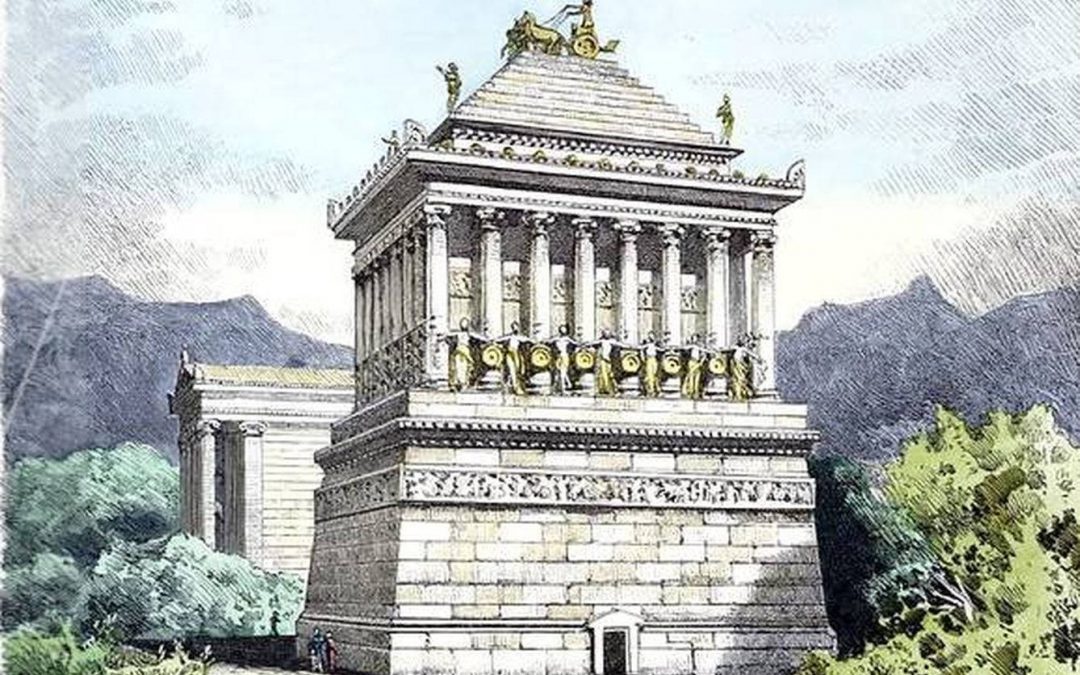
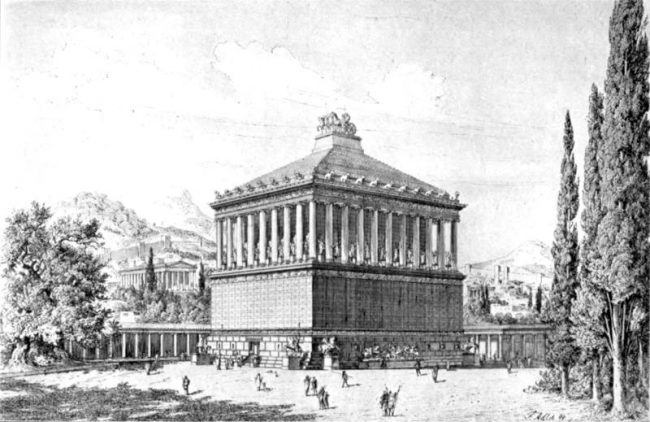
Mausoleum at Halicarnassus (or Mausoleum of Halicarnassus) was built for King Mausolos by his sister, wife and successor Artemisia in Halicarnassus. After the death of Mausolus in 353 BC, Artemisia became a part of Caria II. She succeeded him as her Artemisia and commissioned the best artisans of the time to build the magnificent tomb on a hill in her husband’s honor. Later, the tomb of Mausolos became the origin of the word “mausoleum” and one of the seven wonders of the ancient world. It was quite large, reminiscent of Greek and Egyptian architecture, with its columns and pyramidal roof.
Mausoleum at Halicarnassus, Story, Where is Mausoleum of Halicarnassus
Where is Mausoleum at Halicarnassus? In which country is the Mausoleum of Halicarnassus?
The stones of the Mausoleum of Halicarnassus are today located in Bodrum Castle, located in the city of Mugla in south-west Turkey. During the siege of the Persians against the army of Alexander the Great in 334 BC, Halicanassus was badly damaged. The tomb was also destroyed by earthquakes in the 13th century. Until 1404, only the base of the Mausoleum was still recognizable. In the 16th century, the mausoleum was plundered by the Knights of Rhodes. Today, some of the remaining parts of the tomb can be seen on the walls of the Bodrum castle.
Mausoleum of Halicarnassus Ruins, Today’s State
Parts of the surviving structure, including those with decorative sculptures, were used in the walls of St Peter’s castle, built in Bodrum by the Knights of St. John of Malta. Many sculpture fragments and other fragments from the Mausoleum were discovered during British excavations in the 1850s. Still other remains were unearthed from the walls of the Bodrum castle, many of which are now in the British Museum in London. These include the previously described large statue of a male figure, another statue of an unidentified woman, plates on the friezes, and several lions and horses in various forms of integrity. The place where the mausoleum was located today is the size of an earthen pit with a few stones and column drums scattered around.

Where is Mausoleum at Halicarnassus? In which country is the Mausoleum of Halicarnassus? Mausoleum of Halicarnassus Ruins, Today’s State The Story of Mausoleum at Halicarnassus
The Story of Mausoleum at Halicarnassus
It was built for Mausolos, the king of a city in Halicarnassus, and it is so big and so remarkable with all its decorations that the Romans call the extraordinary tombs in their country “Mausolea” because of their great admiration for him.
A multi-storey structure, about 45 m high and made mainly of marble, was designed by two Greek architects, Pythius and Satyrus. Along the outer wall of the tomb were many statues depicting gods and goddesses. Various artists from neighboring countries were employed for this project, including sculptors such as Bryaxis, Scopas of Paros, Timotheus, and Leochares. The interior of the tomb is decorated with many animal statues and sculptural parts of Greek and Amazonian warriors in battle. The roof of the mausoleum was in the form of a pyramid with 24 steps, and the statues of Mausolus and Artemisia in a chariot drawn by four large horses carved by Pytheos were placed on top of the structure.
The wealth accumulated in Caria’s royal vault was spent on one of the most lavish personal construction projects ever seen in the ancient world. It was finished for him and his grandchildren by his sister Artemisia. It was probably completed around 350 BC, although Artemisia herself died a year earlier; she was to be buried with her husband and the next generations of her family. Designed as a sacred monument to the city and the ruling dynasty, this monument is located in a large district in the very center of the city and is connected to the agora by a large monumental staircase.

by Arthipo | 22 September 2021 | History of Art
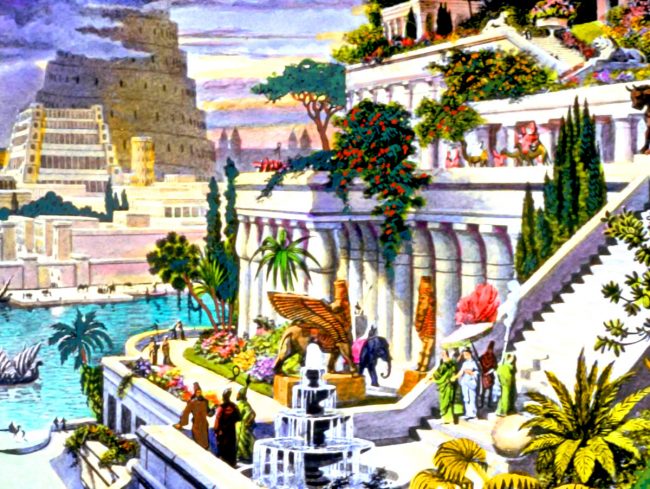
Hanging Gardens of Babylon, beautifying the capital of the Neo-Babylonian Empire, its greatest king II. They were legendary gardens built by Nebuchadnezzar (605-562 BC). One of the Seven Wonders of the Ancient World, the only ones whose existence is disputed among historians.
Where Are the Hanging Gardens of Babylon?
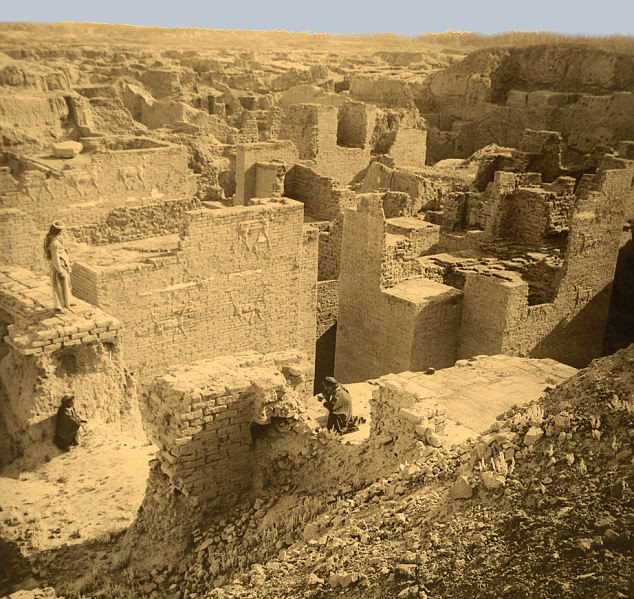
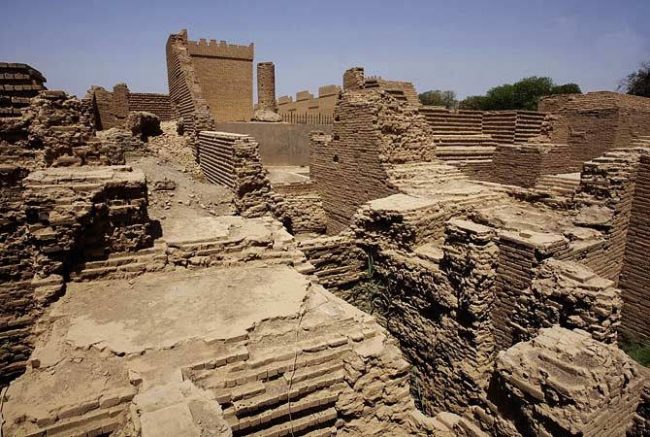
Concerning the whereabouts of the Hanging Gardens of Babylon, some scholars argue that the gardens were not in Babylon but in Nineveh, the capital of the Assyrian Empire, while others stick to ancient writers and expect archeology to provide positive evidence. Still others believe that gardens are only a figment of their imagination. Archeology in Babylon and ancient Babylonian texts are silent on the matter, but ancient writers describe the gardens as if they were in Nebuchadnezzar’s capital and still existed in Hellenistic times.
Where Are the Hanging Gardens of Babylon?
About 80 km (50 mi) south of modern Baghdad in Iraq, Babylon was an ancient city whose settlement dates back to the 3rd millennium BC. The greatest period in the city’s history dates back to World War II, when the city was the capital of the Neo-Babylonian Empire. It was during the reign of Nebuchadnezzar in the 6th century BC.
The Story of the Hanging Gardens of Babylon, Why Was It Made? Who Made it?
II. Nebuchadnezzar would go on to do even greater deeds, including the capture of Jerusalem in 597 BC. The Babylonian king then proceeded to make his capital one of the most magnificent cities in the world. The Ishtar Gate was built in honor of Ishtar, the god of war and love. In 575 BC, with its beautiful towers and depictions of both real and imaginary animals, its 7-20 km long brick double wall added the largest ever built and world-renowned pleasure gardens surrounding the city.

The Story of the Hanging Gardens of Babylon, Why Was It Made? Who Made it?
Babylonian king II. Nebuchadnezzar is said to have built the luxurious Hanging Gardens in the sixth century BC as a gift to his wife Amytis, who yearned for the beautiful vegetation and mountains of her hometown of Media (the northwestern part of modern-day Iran). It would take a marvel of irrigation engineering for the desert to bloom. The scientists speculated that a system of pumps, waterwheels, and cisterns would be used to extract and convey water from the nearby Euphrates River to the top of the gardens.
The Hanging Gardens of Babylon Archaeological Remains, Photos, Features
Greek and Roman texts paint vivid pictures of the luxurious Hanging Gardens of Babylon. Lush vegetation cascading like waterfalls from the terraces of the 73-meter-high garden amidst the warm, arid landscape of ancient Babylon. Exotic plants, herbs and flowers were dazzling and scents emanated from the high botanical oasis adorned with statues and tall stone pillars.
In the writings of Philo, a Greek engineer who lived around 225 BC: The Hanging Gardens were placed on a wide platform of palm beams rising on stone pillars: This trellis of palm beams was covered with a thick layer of earth and planted with all kinds of trees and flowers. a cultivation job that hangs over their heads. The wonderful nature of the gardens, besides its hanging appearance, lay in part in the diversity. All kinds of flowers, whatever is most tasteful, whatever is pleasing and pleasing to the eye, is there. The water collected high in many large vessels reaches the entire garden.”
The Hanging Gardens of Babylon Archaeological Remains, Photos, Features
Diodorus, a Sicilian Greek writer, left one of the most detailed descriptions of the gardens as part of his 40-volume monumental world history Bibliothecahistoria. Like Philo, he detailed an elaborate support system for the “beams”: they “consisted of a layer of reed laid with large quantities of bitumen. On top of that, two rows of baked bricks are laid, combined with cement, and as a third layer, it is covered with lead so that moisture from the soil does not get under it. According to Diodorus, these strata rose in ascending strata, “heavyly planted with trees of all kinds which, by virtue of their great size or other attractiveness, might delight the beholder” and were irrigated by “machines which raise a great deal of water from the river.”
The Hanging Gardens of Babylon Archaeological Remains, Photos, Features
We know where the 7 wonders of the ancient world are, except for one. His artistic visions are inspired by the writings of various classical authors.
The exotic nature of the Gardens, their location, and the mystery surrounding their disappearance have made the Hanging Gardens of Babylon the most fascinating of the Seven Wonders.
by Arthipo | 20 September 2021 | History of Art
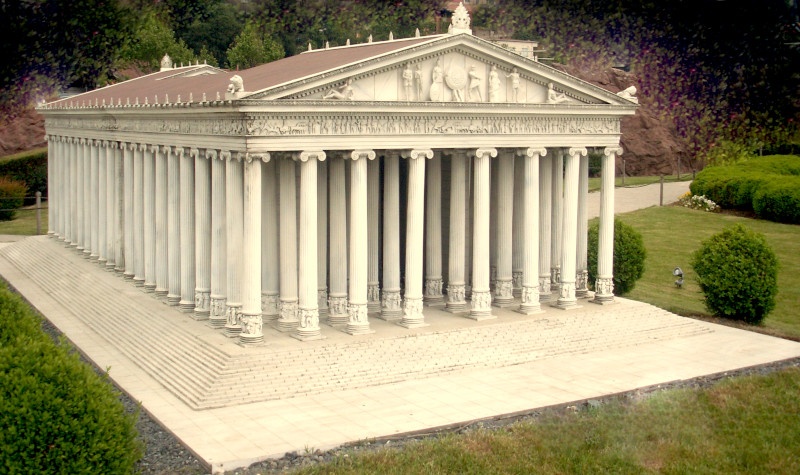
The Temple of Artemis (Artemis Temple) was a magnificent place of worship dedicated to the Greek goddess of the hunt, Artemis, in the city of Ephesus in modern-day Turkey. Previously destroyed and rebuilt, it was completed around 550 BC under the Achaemenid dynasty in the most famous phase of the Persian Empire. It was rebuilt several centuries later and survived until the end of the fourth century AD. It is considered one of the Seven Wonders of the Ancient World.
Features of the Temple of Artemis
Destroyed by a deliberate fire in the 4th century BC and later rebuilt, the great Ionic temple dates back to Late Antiquity and was rebuilt once again in 267 BC, the last time it was destroyed by a Christian mob in 401 AD. Today only the foundations and a single column stand as a reminder of where the ancient Mediterranean’s largest temple once stood.
Artemis Temple is known to be 377 feet (115 meters) long and 180 feet (55 meters) wide, made almost entirely of marble. The temple consists of 127 Ionic-style columns, each 60 feet (18 meters) high.
The Temple of Artemis has hosted many beautiful works of art. Statues and paintings by the well-known Greek sculptors Polyclitus, Pheidias, Cresilas and Phradmon adorned the gilded columns of gold and silver. Sculptors often competed to create the best sculpture. Most of these statues belonged to the Amazons, who are said to have founded the city of Ephesus.
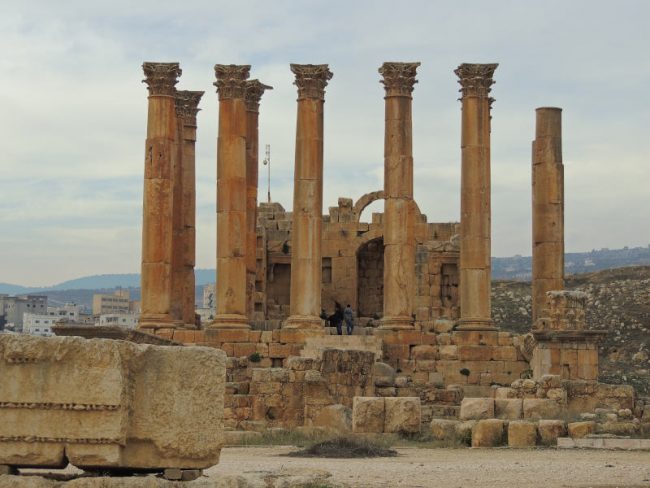
Features of the Temple of Artemis, Artemis Temple
It was located in an economically sound area. The temple was influenced by many faiths and was seen as a symbol of faith for many different peoples. The Ephesians worshiped Cybele and combined many of their beliefs with the worship of Artemis. Several versions of the temple already existed in Ephesus over the centuries, and Herodotus describes how the Ephesians tied a 1243 meters (4,081 ft) long rope between the old temple and the city, dedicating themselves in despair and in vain hope. The passing of the whole city to Artemis would save them from the Lydians.
The legendary splendor of the Temple of Artemis was such that it was the first ancient site in the 19th century AD that western archaeologists began deliberately excavating. It was discovered by John Turtle Wood in 1869. Excavations, which began under the auspices of the British Museum in London, discovered many important artifacts, such as the fine marble figures of Artemis Ephesia, dating to the 1st and 2nd centuries AD. Remains of the great temple were also found, and more details were uncovered during another series of excavations in 1904 AD. While several capitals and column fragments were discovered from the 6th century AD version of the temple, one of the best finds was the magnificently carved column drum from the Hellenistic version. Hades, Persephone and Hermes are now in the British Museum. Today all the ruins of the temple are its foundations, and a single pillar was erected from the compound ruins that gave the site once one of the greatest wonders of antiquity an air of melancholy instead of giving the impression of lost grandeur.
The Story of the Temple of Artemis
Artemis Temple had become a center of worship for people of all faiths from many countries, including an Ephesian sect that worshiped the Greek Mother Earth goddess Cybele. It was also known as the Temple of Diana, the Roman goddess equivalent to Artemis. The temple was said to be a fantastic structure made of marble, gold and silver decoration as well as fine art and age sculptures. The most beautiful building in the world was destroyed in BC by agents of a man named Herostratus, who sought worldwide fame. It was later rebuilt several times. Its final destruction was in AD 401, when the then archbishop of Ephesus, St. It took place by a Christian mob led by John Chrysostom.

The Story of the Temple of Artemis
The new and most famous temple was built around 550 BC by the Cretan architect Chersiphron and his son Metagenes. It is made of marble, with rows of columns that double to accommodate a wide ceremonial passage around the central structure of the classical temple. A new statue of Artemis was made of ebony or grapewood, and a small classical temple was erected to house her to the east of the open-air altar. This enriched reconstruction was supported by Croesus, the wealthy king of Lydia. The temple became a tourist attraction, visited by merchants, kings and tourists, many of whom paid homage to Artemis in the form of jewelry and miscellaneous goods. It was also a widely respected sanctuary, a tradition tied to legend with the Amazons who reportedly sought refuge there from both Heracles and Dionysus.
Artemis Temple entered the established list of the Seven Wonders because of its size and beauty; The location right next to the sea also added to the building’s enchanting effect. He was often referred to as the greatest of the seven wonders by those who saw him. The Story of the Temple of Artemis.

by Arthipo | 20 September 2021 | History of Art
Hellenistic art history has led to many works and currents of thought in Europe and Anatolia. Hellenistic (Ancient Greek) art history is a culture that includes many important people from Socrates to Pythagoras, from mathematics to philosophy.
Hellenistic (Ancient Greek) Art History
Hellenistic (Ancient Greek) art history; It is the period denoting Ancient Greek art, covering the period beginning with the death of Alexander the Great in 323 BC and ending in 146 BC, when the Greek mainland was taken by the Romans. It follows the period of classical Greek art. The Greco-Roman art that followed was largely a continuation of Hellenistic trends. The term Hellenistic refers to the spread and expansion of Alexander’s ideas after his death. The concept of the Hellenistic World covers a large time span at the same time, with Athens and Sparta, the focused cities of classical Greece, rather than the area spanning both sides of the Aegean. From an artistic point of view this means that there is great variety, often put under the heading “Hellenistic Art” for convenience.
One of the defining features of the Hellenistic period was the division of the empire founded by Alexander into small dynastic states.
Alexander was surrounded by three artists: the sculptor Lysippus, the painter Apelles, and the jewel-cutter and engraver Pyrgoteles.
After Alexander’s death, the Greek wealthy were in the midst of prosperity and waste. All the rich were spending their money on art and aesthetics. Sculpture, painting and architecture flourished. Vase painting was of great importance. Metalwork and a wide variety of luxury arts produced beautiful works. So much so that some types of popular art have become more and more complex.
There is a tendency in historiography to portray Hellenistic art as a decadent style following the Golden Age of Classical Greece. The terms 18th century Baroque and Rococo were sometimes applied to the art of this complex and individual period. In addition to the interest in historiography, some new discoveries such as the tombs of Vergina may provide a better appreciation of the period.
Hellenistic (Ancient Greek) Architecture
In the architectural realm, the dynasties that followed Hector gave rise to vast urban plans and large complexes that mostly disappeared from city-states in the 5th century BC. The Doric Temple city model is almost abandoned. This urban planning was quite innovative for the Greek world, instead of correcting mistakes and manipulating the space, they made building plans suitable for the natural environment. In city planning, the appearance of many entertainment and entertainment venues, especially the proliferation of theaters and parks, has drawn attention. Hellenistic monarchies were advantageous in this respect as they had large areas on the Tigris where they could build large cities such as Antakya, Pergamon and Seleucia.
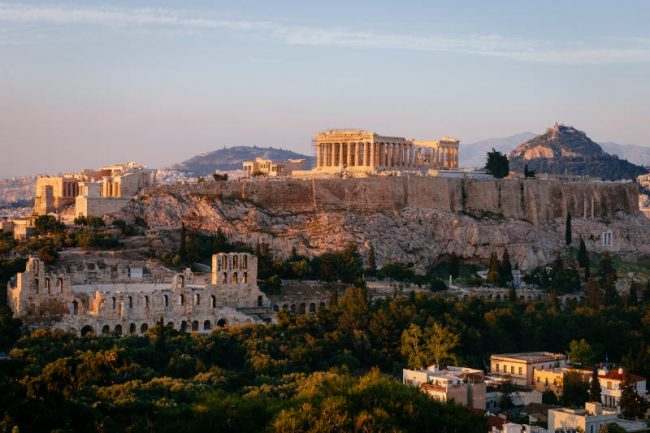
Acropolis
Hellenistic (Ancient Greek) Architecture Hellenistic (Ancient Greek) Art History
This was the time of gigantism: Miletus in Ionia (twenty kilometers from Didyma) was for the second temple of Apollo. It was designed by Daphnis, the city of Miletus, and Paionios, the city of Ephesus, at the end of the fourth century BC, but the construction, which was never completed, was only finished in the 2nd century AD.
This sanctuary is one of the largest ever built in the Mediterranean region and is surrounded by a double colonnade, about 20 meters high in a wide court, consisting of 108 lyon pillars with rich sculptural bases and capitals. The Corinthian order was used for the first time in a full-scale building with the Temple of Olympian Zeus.
Olynthus
The ancient city of Olynthus was one of the architectural and artistic keystones for connecting the Classical and Hellenistic worlds. More than 100 houses were found in the Olynthus city area. Interestingly, the houses and other architecture are incredibly well preserved. This allows us to better understand the activities that take place in the homes and how the space inside the homes is organized and used.
Houses in Olynthus were generally more square. The desired home was not necessarily large or extravagant, but rather comfortable and practical. This was a sign of civilization that was highly prominent in Greek culture during the Hellenistic period and beyond. Leading a civilized life involved maintaining a solid habitat. For this reason, many brick-like materials were used in the construction of houses. Stone, wood, adobe and other materials were generally used to construct these dwellings.
Another element that was increasingly popular during the Hellenistic period was to add a courtyard to the house. Courtyards acted as a source of light for the house, as Greek houses were sealed from the outside to maintain a level of privacy. Windows were found on some of their sites, but they are usually high above the ground and small. Due to the privacy issue, many people have had to compromise on light at home. Private areas of the house are dark and closed, while well-lit areas were used for entertaining or more public events.
Courtyards were often the focal point of the house, as they provided a fun space for the house and a source of light from within the house. It is most often paved with cobblestones or pebbles, but there have been discoveries of courtyards with mosaics. Mosaics were a great way for the family to express their interests and beliefs, as well as a way to add decor to the home and make it more visually appealing. This artistic touch to the homes in Olynthus also brings another element of civilized life to this Hellenistic society.
Pergamon, Hellenistic (Ancient Greek) Art History
Especially Bergama is a characteristic example of Hellenistic architecture. Starting from a simple castle located on the acropolis, various Attalid kings built an enormous architectural complex. The buildings are ventilated around the Acropolis to account for the nature of the land. Located to the south on the lowest terrace, the agora is bordered by galleries containing pillars (columns) or stoai. It is the beginning of a street that crosses the entire acropolis: it separates the administrative, political and military buildings on the east and top of the rock from the sanctuaries to the west, the most prominent among them, at mid-height. It houses the monumental Pergamon Altar. Known as the “twelve gods” or “gods and giants”, one of the masterpieces of Greek sculpture. A huge theater that can hold around 10,000 spectators has benches embedded in the sides of the hill.
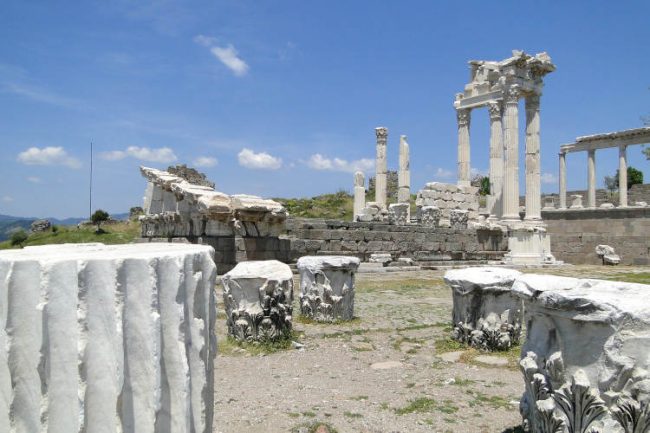
Hellenistic (Ancient Greek) Art History
Pergamon
Hellenistic (Ancient Greek) Sculpture Art
According to Old Pliny’s assessment, Cessavit deinde ars “then art disappeared”, in his book where he describes sculpture from the classical period, the sculpture declined significantly after the 121st Olympiad (296-293 BC). This was followed by a period of stagnation, a brief revival after 156 (156-153 BC), but nothing remained by the standard of previous times.
During this period, sculpture became more natural and expressive, and there was an interest in depicting extreme emotions. The Hellenistic artist sought to represent the character of his subject, including themes such as pain, sleep, or old age, along with anatomical realism. Ordinary people, women, children, animals, and types of domestic scenes became acceptable subjects for sculpture commissioned by wealthy families to adorn their homes and gardens.
Realistic portraits of men and women of all ages were produced, and sculptors no longer felt compelled to portray people as ideals of beauty or physical perfection. But seldom full-size sculpture, previous vase painting and figurines had been depicted. Many artifacts specific to Hellenistic art can be seen in the Istanbul Archeology Museum.
The drunken Munich woman was animated by the reservation without being old, thin, exhausted, holding herself a jar of wine.
For this reason, he draws attention with his period portraits. One of them is the Barberini Faun of Munich, which represents a sleeping satyr, perhaps the prey of nightmares, with a relaxed posture and a worried face.
Another famous Hellenistic portrait is Demosthenes of Polyeuktos, with a well-made face and wiped hands. Another phenomenon of the Hellenistic age, privatization occurs in sculpture. This technique is seen in the repetition of old public patterns in decorative sculpture.
The portrait is full of naturalism under the influence of Roman art. The new Hellenistic cities were spreading all over Egypt, Syria, and Anatolia, requiring statues depicting the gods and heroes of Greece for their temples and public places. Again, The Statue of Zeus at Olympia is an important work of Hellenistic sculpture. This has made ceramics sculpture like an industry, with consequent standardization and some quality declines. For these reasons, more Hellenistic sculptures have survived than in the Classical period.
Second Classicism Period
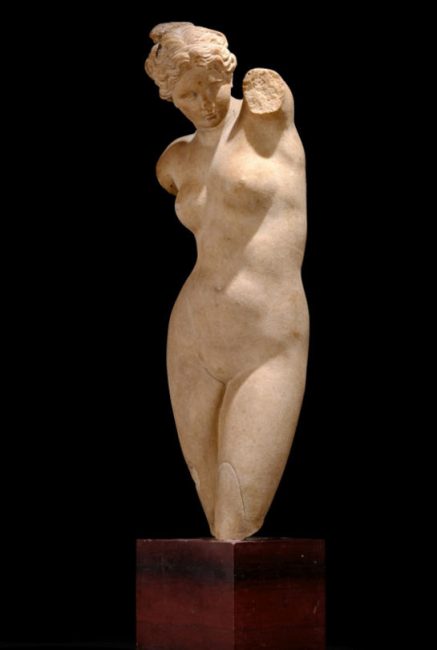
Hellenistic sculpture repeats the innovations of the “second classicism”. The nude statue inside this tour was enhanced by the effects of the transparency of the veil and clothing, and the flexibility of poses, while allowing the statue to be admired from every angle. Thus, Venus de Milo is distinguished by the bending of her hips, even when echoing a classic model.
Baroque
The multifigure sculpture group was a Hellenistic innovation, possibly dating from the 3rd century, that took the epic battles of earlier temple pediment reliefs from their walls and installed them as life-size groups of sculptures. Their style was often referred to as “baroque”, with exaggeratedly bent body poses and intense facial expressions.
Hellenistic (Ancient Greek) Art History Article.