by Arthipo | 20 September 2021 | History of Art
The global power of the early period from art to politics The Roman State: Ancient Roman art, architecture, activities of the Roman Empire is the main subject of the article.
Ancient Roman Art, Architecture
Roman art includes visual arts, architecture, painting, sculpture, and mosaic work, as well as metalwork, jewelery engraving, ivory carvings, and luxury objects made in the lands of Ancient Rome and the Roman Empire. However, for the Romans, sculpture was considered the highest form of art.
Features of Roman Art
Roman art took its realistic form of expression from the Etruscan art style, and the ideal form of beauty expression from the Hellenistic art style. Roman art can be considered an upper synthesis of these two cultures. The use of arches and vaults in architecture has become widespread. Realistic representations are included in the sculpture. Roman painting, on the other hand, has the characteristics of detail, color and precision.
Ancient Roman Art
The Romans benefited from the cultural heritage of the Etruscans, whose art was highly developed, and were influenced by the Greek aesthetic standards they admired. When the Romans conquered Greece, they admired their art and began to imitate the Greeks.
Ceramics were not considered a luxury item for the Romans. The ceramics decorated with reliefs as the final post-production process in Terra Sigillata were highly sought after by the majority of the society due to their affordable price. Roman coins were an important means of communication, and many have survived to the present day. Although artists of this period traditionally copied Greek examples, recent studies have shown that Roman art was also highly creative. The Romans formed a strong school of art with motifs based on Heavy Greek models, but also encompassing Etruscan, native Italic, and even Egyptian visual culture. Stylistic eclecticism and practical application are among the hallmarks of many Roman arts.
Pliny, the most important art historian of this period, noted that nearly all forms of art were sculpture, landscape, portrait painting, and that Greek art was in some cases more advanced than Modern Rome.
Ancient Roman Sculpture
Its foremost sculptors were in Skopje, Praxiteles, Phidias, and Lysippos. Sculpture The development of Greek style Sculpture was achieved with the arrival of sculptors from various cities of Greece to Rome and the rapid learning of the art of sculpture. Roman sculptors did not compromise on the quality of Greek sculpture while processing the Greek art they copied. For example, the statue of Venus is actually Aphrodite.
Many of the art forms and methods used by the Romans, high and low relief, free standing sculpture, bronze casting, mosaics, coins, Roman bath, fine jewelery and metalwork, tomb sculpture, perspective drawing, caricature, portrait painting, architectural sculpture, all developed by Ancient Greek artists or refined. The only exception to this situation is the Roman bust, which does not include the shoulders.
Traditional head and shoulder bust, preparation of an Etruscan animal sacrifice, marble, architectural relief fragment, first quarter of the 2nd century AD; It could be Roman, Italy, or an early Roman form. In part because Roman cities were much larger in power and population than Greek city-states, and were generally less provincial, art in Ancient Rome took on a broader and sometimes more utilitarian purpose. Roman culture absorbed many cultures.

Ancient Roman Sculpture, Ancient Roman Art, Architecture Many works specific to Roman art can be seen in the Istanbul Archeology Museum.
Roman art was commissioned, exhibited, owned, and adapted for more uses than in Greek times in far greater quantities. Wealthy Romans were more materialistic; they adorned their walls with art, their homes with decorative objects, and themselves with fine jewellery. Between 350 and 500 AD, the Christian period of the Late Empire, wall painting, mosaic ceiling and floor work, and tomb sculpture flourished, while round and panel painting glass-painted sculptures ceased to be made, most likely for religious reasons. Roman Forum is best examples for Roman architecure
As the western Rome lost its prestige and power, many sculptors, painters and artists moved to Constantine, the capital of eastern Rome. The best-known work of these artisans and craftsmen was the mosaics of the Hagia Sophia Church in Constantine and the San Vitale Basilica in Ravenne, by the order of Emperor Constantine.
Ancient Roman Empire Architecture
Architecture was the greatest of the Romans’ artistic expressions. The most prominent feature in it is the use of springs. Roman statues are essentially copies of original Greek statues. Realism in them is a striking feature. Divided into four styles, Roman painting is sometimes characterized by the color of the walls, and sometimes by the illusion or richness of detail. The Colosseum, a Roman amphitheater, hosted more than 40,000 people to watch the performances. The construction of portals, aqueducts, buildings, monuments and temples is prominent in Roman architecture. It was built with practicality and innovation, as in the use of arches and vaults in buildings. Almost every artistic technique and method used by Renaissance artists 1900 years later was inspired by Ancient Greek artists. Where Greek artists were held in high esteem in their society, most Roman artists were anonymous and considered artisans. As in ancient Greece, there are no records and almost signed works of the great masters of Roman art. Where the Greeks worshiped the aesthetic qualities of great art and wrote extensively on artistic theory, Roman art was more decorative and indicative of status and wealth.

Ancient Roman Empire Architecture
Nothing much remains of the Roman painting works and artifacts, except those made just before the collapse of the Empire. The best-known and most important works are those that adorned the walls of wealthy families in Pompeii, Herculaneum and nearby. After the eruption of Mount Vesuvius in 79 AD, these paintings, which were left under the ash and tuff pile, have been preserved until today. In addition, there is a large painting from the Roman Catacombs, which has been used about 400, starting from the 3rd century AD. In this work, a more modest life was depicted than the social life described in Pompeii. Apart from these, there are not many examples left other than the ones from the walls of the imperial palace of Nero, the Domus Aurea cave paintings, and the cayum nova portraits found in Egyptian Rome.
A painting in the city of Pompeii Nothing has survived from the Greek paintings imported to Rome in the 4th and 5th centuries, or the paintings on wood made in Italy at that time. In summary, decorative painting works are limited to only 200 years in the nearly 900-year history of Rome. Although most of the wall paintings were made using the secco “drying” method during the Roman Period, there are also some fresco paintings using mosaics. Ancient Roman Art, Architecture, Roman Empire Art and Architectural Activities.

by Arthipo | 19 September 2021 | Drawing Techniques
What is ceramic, how to make? What are the ceramic materials that are an indispensable part of our lives? What are the stages of ceramic shaping, pressing, drying, glazing and firing processes? In our article, we examined important issues related to ceramics.
What is Ceramic, How to Make?
Ceramic; They are inorganic and non-metallic solid materials formed by metallic materials that are chemically ionic and/or covalently bonded to each other with non-metallic elements. Ceramic is obtained by grinding raw materials and mixtures in certain particle sizes, drying after shaping, subjected to a heat treatment determined as glazed and unglazed, with the effect of heat and then cooling, giving them technical properties suitable for use. Ceramics are mechanically hard and brittle. Ceramics are classified into two groups as traditional ceramics and advanced technology ceramics.
What Are Ceramic Materials?
Traditional ceramics: consist of natural raw materials and generally three basic components; clay, quartz and feldspar. Clay is the most indispensable raw material of traditional ceramics. It has the feature of giving plasticity due to its layered structure and containing water between layers. Quartz cannot be shaped, but it provides strength to products. Feldspars, on the other hand, are raw materials formed by the deterioration of rocks. For instance; building ceramics (brick, tile), covering materials (floor and wall tiles), tableware, porcelain refractories and glass. Ceramic production in general; preparation of raw materials and mixtures, shaping, drying, glazing and cooking stages. The main processes in the production of ceramic materials are powder preparation, raw material preparation, shaping, drying, glazing and firing.

What Are Ceramic Materials? What is Ceramic, How to Make?
Powder preparation; ceramic raw materials are crushed, crushed, ground to certain grain sizes, classified and shipped to stock areas and stocked. Raw material preparation (Masse preparation – Ceramic mud); Ceramic raw materials, which are reduced to certain grain sizes, are mixed in mills according to recipe specifications, homogenized, dry or wet ground in certain grain size ranges, the slurry (sludge) whose wet grinding is completed is discharged from the mills, rested in pools and made ready for shaping.
How is Ceramic Shaped? What is Ceramic and How to Make?
Ceramics can be shaped by more than one method. Ceramic forming methods are explained below.
Use of Gypsum Mold
Casting mud (sludge rested in pools) is poured into plaster molds at a rate of approximately 25-30% water. The water in the mud is absorbed by the porous plaster mold. The mud takes the shape of a plaster mold at a certain wall thickness. Molding and drying time can be 1 day. Pressure casting method is the latest technological method. The casting mud is pressed into a resin mold consisting of many fine holes under pressure. Mud water is removed from the holes. Wall thickness is formed in the mold in 10-15 minutes in a fast time.

How is Ceramic Shaped? What is Ceramic and How to Make
Extrusion
For shaping with the extrusion (plastic forming) method, the moisture content of the mud (16-18%) is adjusted by passing it through filter presses. The ceramic paste is extruded by vacuuming the air. It is formed according to the mold mouth attached to the end of the extrusion device. Materials with fixed cross-sections such as perforated or non-perforated tube rods and bricks are produced. – For shaping with the press method, the mud is passed through spray dryers and turned into granules. Granules are kept in press-top silos to ensure homogeneous humidity (5-7%). Prepared granules are shaped by pressing at certain pressures in powder press molds.
Injection Molding Ceramic Forming, What Is Ceramics, How to Make?
Injection mold forming; Injection molding method is used to produce complex shaped products. No water is used. The ceramic mixture powder is mixed in polymers at a rate of 45-55% by volume by melting under vacuum and the polymer is turned into mud. This mud is injected under pressure into the mold to be shaped. The mud freezes and takes the shape of the mold. The ceramic product remains after the polymers are removed during the heat treatment.
Ceramic Pressing, Dry Pressing, Hot Pressing, Cold Isostatic Pressing, What is Ceramic and How to Make?
It is the shaping of a liquid or mud-like mixture by casting using a mold. Plastic forming: It is the process of forming semi-wet ceramics using pressure (Extrusion). Powder compaction: This method; It is based on the principle of shaping the powders (granules) filled in the mold cavity by applying unidirectional or bidirectional pressure.
The cooking process can be done in continuous or intermittent ovens. After the ovens are filled, the oven is turned off and the cooking process is started, when the cooking process is completed, the oven is cooled and new products are loaded again after the products are emptied. In continuous kilns, also called tunnel kilns, on the one hand, the product enters, on the other hand, the baked product comes out. The cooking process can take 20-50 hours. They can work with bottom or side heating. In the production of porcelain products, the products that come from shaping are subjected to a baking process at 1240 oC for 15-17 hours.
Here, the patterns are adhered to the relevant product and baked at 870 ᵒC for 2 hours on glaze, and for 2 hours at 1210 ᵒC on glaze. Pattern quality separation is made and the products are sent to the packaging department and stored.
Ceramic Dryer
Drying is the process of removing the physical water in the sludge at around 100 °C. It is the most important stage of production. There should be no cracks or deformation. Drying before cooking is done in order to prevent the material from breaking and cracking during transportation, the formation of water vapor during cooking, and the explosion of the material in the oven by giving the material the necessary strength.
Ceramic Glazing, Paint
Ceramic glazing gives the object a beautiful visual appearance and reduces water permeability. The glaze is actually a kind of painted glass sand. Glazed ceramic products have a longer life. All of the ceramic products used in the kitchen are actually glazed. Before applying glaze, you must clean the surface of the ceramic object. Smooth ceramic surfaces give better results in glazing. Because the dust on the surface prevents the glaze from covering the object, the defect becomes more obvious after it is baked. After glazing, cracks, scratches and bubbles may remain on the ceramic surface. Different methods of applying the glaze to eliminate these defects

Ceramic Glazing, Paint, What is Ceramic, How to Make?
you can try. You can use ceramic glazing processes such as applying the glaze with a sponge, using a compress, or dipping. After the glazing process, the ceramic object is fired. At high temperature, the glaze melts and a colored glassy layer is added to the ceramic surface.
Ceramic Baking
Ceramic baking; It is the process of reducing the pores, increasing the density and giving strength to the material by subjecting the grains in contact with each other to high temperature heat treatment in the shaped and dried ceramic material. The cooking temperature is kept below the melting point of the material and varies according to the usage area and recipe.
There may be slight differences between the production techniques due to factors such as the ceramic classes, the use of variable raw materials during the production phase, the use of additives, the variations in the processes, the temperature differences in the kiln sections, the methods applied specific to the facility, the production of the same products at different production temperatures and times.
Raw materials are generally stored in closed silos. Silicate raw materials can be used with their natural compositions in the production of bricks-tiles, floor-wall tiles; but it is used as enriched in porcelain and sanitary ware products. Tables showing the ratios of raw materials, additives and water used in the production of a ceramic product are called recipes. There are more than one raw material in ceramic production, especially traditional ceramics. Clay, feldspar and quartz minerals are mainly used in the production of ornaments, building materials, sanitary ware and porcelain.

Ceramic Kiln Baking
Material groups used in ceramic production All processes applied to turn ceramic raw materials into a masse (sludge) suitable for shaping separately or as a mixture are called “ceramic masse preparation”. Crushing, Grinding, Separating grain groups, Reducing the water or completely drying, Dosing (Recipe creation), Wet Grinding, Casting sludge, ceramic paste or granulating, Transporting the granules by means of belts, Stocking in silos above the press.
The operations to be performed are determined according to the forming method. While the dry method, that is, dry crushing and grinding, is used in the production of coarse ceramic products, the wet method is used in the production of fine ceramics. Masses with an average size of up to a few mm in coarse ceramics are prepared, while in fine ceramics, they must be ground to less than 0.1 mm. The amount of water in the wet-milled mass should be reduced by plastic (17%) for molding (30%) by pressing (7%). In the production of rough ceramic products, dryly crushed and produced masses are sieved, separated into grain groups and stored in silos. Dosed grain groups are made ready for shaping by adding water and additives to provide the targeted consistency depending on the shaping process. Various mixers are used at this stage. The most common type of mixer is ball mills. What is Ceramic and How to Make?
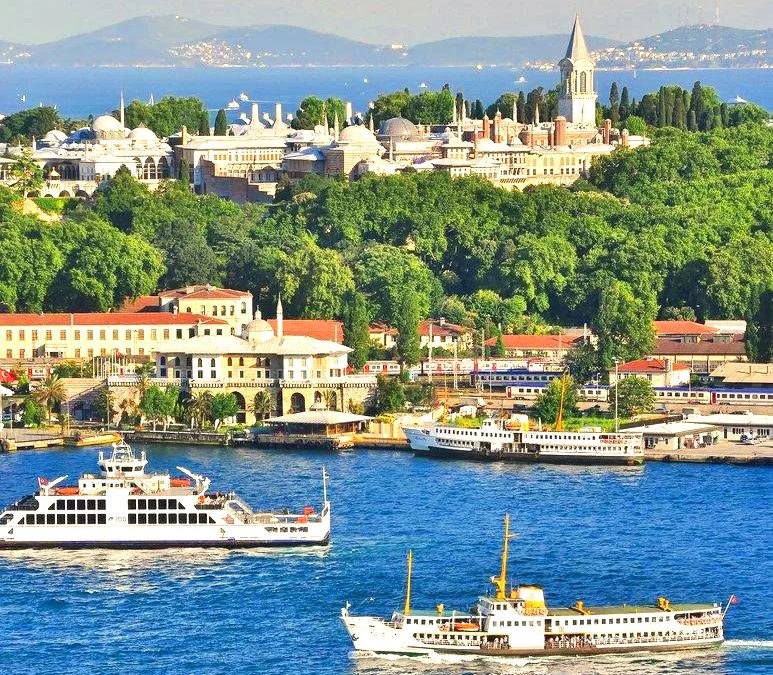
by Arthipo | 19 September 2021 | History of Art
Istanbul Popular Historical Places, The Most Beautiful Popular Touristic Palaces, Mosque To Visit
Istanbul historical places, architectural works, touristic places to visit are very popular for local and foreign tourists. Istanbul, which has been a bridge between Europe and Asia for centuries, has been one of the largest metropolises in the world. In this city, which has a glorious past, we come across a piece of history and art every step of the way.
Topkapi Palace
The residence of the Ottoman Sultans is the administrative and educational center of the state. Istanbul conqueror Sultan II. The Ottoman sultans and the people of the Palace lived in the palace, which was built by Mehmed between 1460-1478 and some additions were made over time, until the middle of the 19th century. After the Ottoman monarchy was abolished in 1922, Topkapı Palace was turned into a museum on April 3, 1924, by the order of Mustafa Kemal Atatürk.
II. Inspired by the Edirne Palace built by Murad on the edge of the Tunca River, the master of the period, Mimar Sinan, also contributed to the construction of a part of the palace, which consists of apartments devoted to state affairs among various courtyards and gardens, the buildings and mansions that were the residence of the ruler, and the buildings reserved for the officials living in the palace.
Collections in the Museum: Imperial Treasure, European Porcelains and Glasses, Copper and Tombak Kitchenware, Chinese and Japanese Porcelains, Silvers, Cardigan-i Felicity and Sacred Relics, Istanbul Glass and Porcelain, Sultan Dresses, Sultan portraits and painting collection, Weapons Valuable collections exhibited in the museum are exhibited here.

Topkapi Palace, Istanbul Popular Historical Places, The Most Beautiful Popular Touristic Palaces, Mosque To Visit
Hagia Sophia (Ayasofya), Istanbul Popular Historical Places
Hagia Sophia basilica, cathedral and museum. It is a basilica planned patriarchal cathedral built in the old city center on the historical peninsula of Istanbul by the Byzantine Emperor Justinian I between the years 532-537. After the conquest of Istanbul by the Ottomans in 1453, it was converted into a mosque in front of Fatih Sultan Mehmed. It was converted into a museum with the Decree of the Council of Ministers published in 1934, excavation and renovation works were started and it served as a museum between 1935-2020. In 2020, with the cancellation of the museum status, it gained the status of a mosque again.
After the church was converted into a mosque in 1453, the mosaics containing human figures were covered with plaster and remained under plaster for centuries. While the mosque was being converted into a museum, some of the plasters were removed and the mosaics were brought to light again. The Hagia Sophia building seen today is also known as the “Third Hagia Sophia” since it is actually the third church built on the same place.

Hagia Sophie, Ayasofya
Istanbul Popular Historical Places
Hagia Sophia Architecture
It is a domed basilica type building that combines the central plan in terms of architecture and is considered an important turning point in the history of architecture with its dome passage and carrier system features. Some of the columns, doors and stones used in the construction of Hagia Sophia were brought from structures and temples older than the building.
Basilica Cistern (Yerebatan Sarnici)
Istanbul’s largest closed cistern. It is entered from a small building in the southwest of the Hagia Sophia building. The ceiling of the place, which has the appearance of a column forest, is brick-built and cross-vaulted. It was built by Byzantine Emperor Justinian I (527-565). Due to the many marble columns rising from the water, it is called the Basilica Palace among the people. Since there was a basilica at the place where the cistern is located, the building is also called the Basilica Cistern. Besides being a museum, the cistern hosts many national and international events.

Yerebatan Sarnıcı, Basilica Cistern, Istanbul Popular Historical Places
Maiden’s Tower
The tower, which is the only artifact from the Byzantine period in Üsküdar, dates back to BC. It has a historical past dating back to 24 years. It was established on a small island where the Black Sea meets with Marmara.
This island, which hosted a tomb during the Greek period, was used as a customs station with an annex built during the Byzantine period. In the Ottoman period, many functions were loaded, from the demonstration platform to the defense castle, from the exile station to the quarantine room. It has never lost its primary function of guiding people with its existence for centuries, and the light that winks at passing ships at night.

Maiden’s Tower, Istanbul Popular Historical Places
Galata Tower, Istanbul Popular Historical Places
It takes its name from the Galata district where it is located. Built as a watchtower within the Galata Walls, the tower is now used as an exhibition space and a museum. It is one of the symbolic structures of both Beyoğlu and Istanbul.
It was built by the Genoese between 1335-1349. After the capture of Constantinople by the Ottoman Empire, the tower was included in the Ottoman lands. The tower, which was damaged in the earthquake in 1509, was repaired as of 1510. In the 16th and 17th centuries, the holding place for the prisoners of war and the supplies warehouse was used as a fire tower by the Mehterhane Hearth and fire watchers as of the 18th century. In 2013, it was included in the World Heritage Tentative List in Turkey by UNESCO.

Galata Tower, Istanbul Popular Historical Places
Khedive Pavilion
It is a structure on the Çubuklu ridges of Beykoz district. The title of Khedive is the title given to the governors of Egypt by the Ottoman Empire. Abbas Hilmi Pasha, one of the governors of Egypt, at a young age, had the Italian Architect Delfo Seminati built a magnificent pavilion in Art Nouveau style and a tower overlooking the Bosphorus on it, in accordance with the architectural fashion of that period, on an area of 1000 m² in 1907.
There is a magnificent and monumental marble fountain in the middle of the main entrance. Its ceiling rises up to the roof and is covered with stained glass. There are elegant fountains and pools in various parts of it. In plan, the building draws a circle around the pool through the connections between the halls. This circle is interrupted only by the entrance hall. The historical elevator in this hall is another remarkable detail. On the upper floor, there are private rooms.

Khedive Pavilion, İstanbul
Beylerbeyi Palace, Istanbul Popular Historical Places
It is the palace built by the architect Sarkis Balyan in the Üsküdar district between 1861 and 1865 by Sultan Abdülaziz. The palace, which burned at a time when Sultan Abdülmecid was also in it, was not used for a while, considering it unlucky.
Architecture
The interior of the palace is also decorated with wood carvings, gold embroidery, painting and writing. The plan of the two floors of the palace consists of rooms around a large hall in the middle. On the ground floor, there is a pool whose water is taken from the sea and covered with glass. Upstairs is the Reception Hall. Marble and Yellow Kiosks, which are the other structures of the palace complex, II. They are parts of the old palace built during the reign of Mahmud. The Marble Mansion is named after its facades, as it is covered with large marble slabs. The Yellow Kiosk, on the other hand, is a three-storey masonry building with its basement, located by the pool.

Beylerbeyi Palace, Istanbul Popular Historical Places
Grand Bazaar
The Grand Bazaar consists of two covered bazaars. Although the İç Bedesten, Cevahir Bedesten, is controversial among the authors, it is most likely a Byzantine building. The new Bedesten was built by Fatih Sultan Mehmet in 1460 and is known as Sandal Bedesten. The name Sandal Bedesteni was given here because the fabric called Sandal, which is woven one way from cotton and one way from silk, is sold here.
Like a giant sized labyrinth, the Grand Bazaar, with its 66 streets and 4,000 shops on 30,700 square meters, is a unique and must-see center of Istanbul. This site, which resembles a city and is completely covered, has developed and grown over time. Until recently, there were 5 mosques, 1 school, 7 fountains, 10 wells, 1 fountain, 1 fountain, 24 gates, 17 inns.
The two old buildings with thick walls from the 15th century, covered with a series of domes, became a shopping center in the following centuries by covering the developing streets and making additions. In the past, this was a bazaar where certain professions were located on every street and where the manufacture of handicrafts (manufacturing) was under strict control, and commercial ethics and customs were highly respected. All kinds of precious fabrics, jewellery, weapons, antiques were offered for sale with complete confidence by families specialized in their fields for generations. Although the Grand Bazaar, which suffered an earthquake and several major fires at the end of the last century, was restored as before, its past features have changed.
It is built in such a way that the width of all shops is the same. In each street, there were guilds of masters of different products (quilt makers, slippers, etc.). Competition among sellers was strictly prohibited. Even a master could not process products by taking his workbench in front of the shop and showing it to the crowd. It was a center where the price of products could not be higher than the state determined. Istanbul Historical Places, Architectural Works, Touristic Places to Visit, Important, Palaces, Mosques.

Grand Bazaar
Dolmabahce Palace
Dolmabahçe Palace is on the beach of Beşiktaş. It was a natural bay where small ships anchored in ancient times. In the Byzantine period, mansions were built in this region for high administrators. In the Ottoman Empire, it was a region where navy ships were anchored. This part was filled in the 19th century and it got its name from this process: It was named “Stuffed Garden”. In the 19th century, the family life of the Ottoman dynasty moved from Topkapı Palace to Dolmabahçe Palace. Dolmabahçe is the third largest palace in Istanbul.
Dolmabahçe Palace, which was started to be built during the reign of Sultan Abdülmecid (1839-1861), was opened in 1856. It has a magnificent view on the Bosphorus shore.
Mustafa Kemal Atatürk, the founder of the Turkish Republic, passed away in Dolmabahçe Palace. For this reason, the palace has a spiritual value for the Turkish Nation.

Dolmabahce Palace Istanbul Popular Historical Places
Sultan Ahmet Mosque, Blue Mosque
Sultan Ahmed Mosque, colloquially the Blue Mosque is located in Istanbul, Turkey. It is a historical imperial mosque from the Ottoman period. It continues to be used for worship today. Many tourists visit this place. It was built between 1609 and 1616 during the reign of Ahmed I. There is Ahmed’s tomb in its complex. There is also a madrasah and an almshouse. Hand-painted blue Iznik tiles decorate the interior walls of the mosque. For this reason, it is also known as the Blue Mosque in foreign languages. The mosque has six minarets and five domes. It is the most magnificent architectural structure belonging to Islamic culture. The Blue Mosque was included in the UNESCO World Heritage List in 1985 under the name of “Historical Areas of Istanbul”.

Sultan Ahmet Mosque, Blue Mosque, Istanbul
Istanbul Archeology Museums
Istanbul Archaeological Museums contains an important and beautifully presented collection of Greek, Roman and Byzantine artcrafts. The Istanbul Archeology Museum, which is the first regular museum to appear in the history of the Ottoman Empire and in Turkey, has approximately one million artifacts from various cultures brought from the imperial lands.

Istanbul Archaeological Museums
Istanbul Popular Historical Places, The Most Beautiful Popular Touristic Palaces, Mosque To Visit.
Suleymaniye Mosque
The construction of the Süleymaniye Mosque, which consists of fifteen sections, was completed between 1551 and 1557. The structure, which has a magnificent view overlooking the Golden Horn and the Bosphorus, managed to survive for 463 years without any damage.

Suleymaniye Mosque

by Arthipo | 19 September 2021 | History of Art
Spanish Art History
Spanish art history encompasses many famous artists over the centuries, from painters to architects to sculptors. Spanish art is recognized internationally by those studying Spanish in Spain and abroad as an important part of Spanish culture and history. Due to its geographical and historical location, Spain has been the recipient of many different artistic influences over the centuries.
Seven centuries of Moorish rule left its mark on the Spanish people. This can be clearly seen in the buildings produced by some of the most famous Spanish architects. The Catalan Spanish architect Lluisi Domenech often used Moorish ornaments to decorate his creations. Being part of the European continent also meant that Spain was subject to many European cultures and arts. Numerous Spanish painters have spent time in France, and particularly in Paris, where the art scene is booming. If you want to learn about art, Paris was the place to go. Pablo Picasso spent most of his time in Paris, where he met Spanish sculptor Pablo Gargallo. Spain also owes much thanks to the sculptors of Italy and its capital, Rome. Without them, one of the most famous Spanish sculptors would never have continued to sculpt. Mariano Benlliure was convinced that he would only concentrate on sculpture after seeing Michelangelo’s sculptures in Rome.
Prehistoric Spanish Painting
Both France and Spain are extremely rich sites for prehistoric cave paintings. In Spain, most of these paintings tend to be found in the Cantabrian region of the north of the country. Some of the earliest paintings from the Aurignacian period have been found here. One of the most famous and best examples of prehistoric cave paintings can be found in the Altamira cave in Cantabria, Spain. The paintings there date from about 12,000 BC.
Animals were the main subject of the art of these early peoples. The most frequently painted animals are bulls, horses, deer, goats, bears and mammoths. Animals began to be drawn during the Solutrean period, but they became much more common during the Magdalenian period, when drawings and pictures of animals were found in almost every cave. But human and human-like images have also been discovered. Images tended to be painted with black and ocher paints.
Other notable prehistoric Spanish paintings include those that can be seen at the Cingle de la Mola in Castellón. These paintings were painted using a technique that involves the artist blowing or spitting color pigments in the rock. These paintings appear to be highly stylized due to the overlapping of the figures, but they do not represent a 3D view. The paintings in the Cingle de la Mola have been dated to between 7000 and 4000 BC.
Romanesque, Spanish Art History
In the Romanesque period, the main type of painting was manuscript illumination. Manuscript lighting consists of highlighting certain letters on a page by painting them in detail. Such images were most common in handwritten editions of the Bible. Again in this period, architecture provided many opportunities to Spanish painters. Wide, bare walls abounded in the vaults of churches, and so frescoes and murals began to become a common place. The best place for the study of this type of painting is in the Basilica of San Isidro in Leon. The Crypt has some of the best preserved Romanesque paintings from the 12th century in the world. The paintings on the ceiling of the cellar depict scenes from the New Testament of the Bible, as well as some scenes from rural life of the 12th century. Other similar examples you can see in Spain include the frescoes in San Baudelio de Berlanga and Santa Cruz de Maderuelo.

Romanesque, Spanish Art History
Gothic
Gothic painting began much later than its precedent style in architecture, beginning around 1200 AD. Moreover, it was difficult to get rid of Romanesque traditions. Romanesque-style murals continued to be used in churches during the Gothic period. However, the figures in Gothic paintings began to have more expression and movement, and also became smaller relative to the background of the paintings. However, illuminated manuscripts are the most widely found pieces of Gothic painting and are a good record of the different styles that can now be found throughout Europe. Other Gothic artworks included panel paintings, frescoes, and stained glass. Oil on canvas painting became much more popular in the 15th and 16th centuries, at the very end of the Gothic period and the beginning of the Renaissance.
Spanish Art, Cubism
Pablo Picasso was one of the great Spanish artists who is considered by many to be the Father of the modern art style, Cubism. Picasso was the influence of other important Cubist painters such as Georges Braque and Juan Gris. Antoni Gaudi was another Spanish artist who was revolutionary in his own way. Gaudi furthered the Catalan Modernist movement in the 19th and 20th centuries, influencing many other young Catalan Spanish architects of the next century. Many painters used their artwork as a protest against certain events in Spanish history. Picasso showed his anger at the bombing of the small town of Guernica during the Spanish Civil War by painting ‘Guernica’.

Spanish Art, Cubism, Pablo Picasso Guernica, Spanish Art History
Renaissance Spanish Painting
The Renaissance was a time of great change as well as great art and paintings. It took about three centuries, from the 14th to the 17th century. Although the artistic focus was mainly on Italy, Spain also got its fair share of Renaissance painters. The paintings of the Renaissance period reflect the innovation that took place in the world at that time, such as the developments in science and technology. The development of the easel meant that painters had their own tools to work with and therefore no longer depended on architects for the spaces they would paint. The 15th and 16th centuries saw the rise in popularity of more portable panel paintings that could be easily hung and moved around the house. The High Renaissance period also gave birth to the artistic movement known as Mannerism, around the year 1490. Since this style is a particularly important style in Spain, its section is given below.
Mannerist
Mannerism was a style developed by artists, sculptors, and architects between 1510 and 1520, mainly in Italy and especially in Rome. Mannerism was a particularly intellectual style of art and therefore appealed to people of the higher Hispanic classes. However, Mannerism was more extravagant than previous styles because Mannerist paintings were not as natural as paintings from the previous Renaissance period, but instead aimed to be artificial and unbalanced. There are many famous Mannerist artists, including Michelangelo, who painted the ceiling of the Sistine Chapel in Italy. The most famous Spanish Mannerist painter is El Greco, originally Greek. El Greco was accepted into Spanish culture as he spent most of his life living and working in Toledo, Spain. Toledo was also where he produced his best works, such as ‘The Tomb of the Count of Orgaz (El entierro del Conde de Orgaz) and ‘The Intercession of Christ’ (El Espolio).
Baroque Influences for Spanish Art History
Baroque art also originated in Rome, Italy, and its development spanned two centuries, from 1590 to 1720. The Baroque style was present in painting, sculpture and architecture. Baroque artworks were commissioned mostly by Catholic monarchs to enhance the wealth of the expanding Catholic Church. For this reason, Baroque art became an important part of the Counter-Reformation. Baroque painting, unlike the rational paintings of the previous Renaissance period, was designed to evoke a kind of emotion in the viewers of the painting. The most famous Baroque painter is, of course, Carvaggio. But Diego Velazquez is undoubtedly the best known Spanish painter of this style. Diego Velazquez was a Spanish painter active during the Spanish Golden Age. Velazquez was a court painter and therefore made many portraits of the Spanish Royal Family in Madrid, the most famous being the interesting painting ‘Las Meninas’.
Romance Spanish Painting
Romanticism became a fully developed art at the end of the 18th century. Romantic paintings contain elements of nature, heroism, humanity and emotion. Romanticism marked a move away from the scientific approach to painting towards a more expressive form. Romanticist paintings enabled the painter to become free with his paintings and colors. Romantic painters also used their art to convey their feelings into their own lives. Francisco Goya was a master of Spanish Romantic painters. Goya produced several series of paintings, prints and engravings that conveyed his dark, distorted feelings. Goya’s ‘Los desastres de la guerra’ (The Disasters of War) was made as a protest against violence during the Dos de Mayo uprising of 2 May 1808. The ‘Black Paintings’ (Las pinturas negras) was also an expression of Goya’s dark inner feelings and troubles. Spanish Art History.
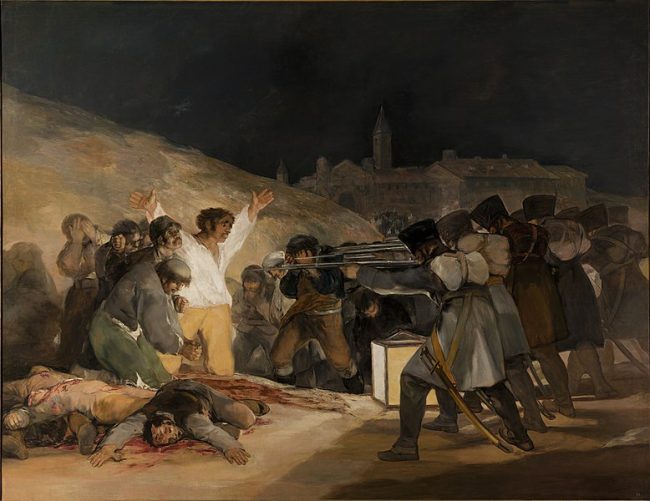
Romance Spanish Painting Spanish Art History, El Tres de Mayo, Francisco de Goya
by Arthipo | 19 September 2021 | History of Art
Japanese Art History
Japanese art history dating back to the 10th century BC, the first peoples who settled on the island produced different arts. Japanese art has been heavily influenced by war over the centuries; The invaders introduced new artistic techniques and styles. Historically, the Japanese have also borrowed heavily from the Chinese. But as Japanese art developed, it also developed its own styles and traditions. Japanese art covers a wide spectrum, with mediums and genres including painting, origami, woodblock prints, literature, ceramics, sculpture, calligraphy, architecture, and manga.
Historically, Japan has been subject to sudden invasions of new and foreign ideas (regarding its geographical and cultural characteristics, the country has almost always been a “world unto itself”), followed by periods of minimized prolonged contact with the outside.
The first examples of complex art in Japan were produced in the 7th and 8th centuries in connection with Buddhism. In the ninth century, as the Japanese began to break free from Chinese cultural influence and develop local forms of expression, the secular arts became increasingly important. By the end of the fifteenth century, both religious and secular art flourished. After the Onin War (1467 – 1477), Japan entered a period of social and economic political disintegration that lasted more than a century. In the state organization that emerged under the leadership of the Tokugawa shogunate, the religion factor began to play a much less important role in people’s lives.
While its elaborate and stylized architectural forms are a cornerstone of Japanese art, painting was also important to the Japanese since the late Heian period around 1000 AD. Artists hand painted scrolls and panels to reflect stories such as The Tale of Genji. Painting styles often changed as governing groups changed. Like the Chinese, many Japanese paintings reflect calligraphy as part of the design. Landscapes, portraits and life scenes are traditional subjects associated with Japanese painting.
Edo, Ukiyo-e, Quarters of Pleasure, Japanese Art History Painting Techniques
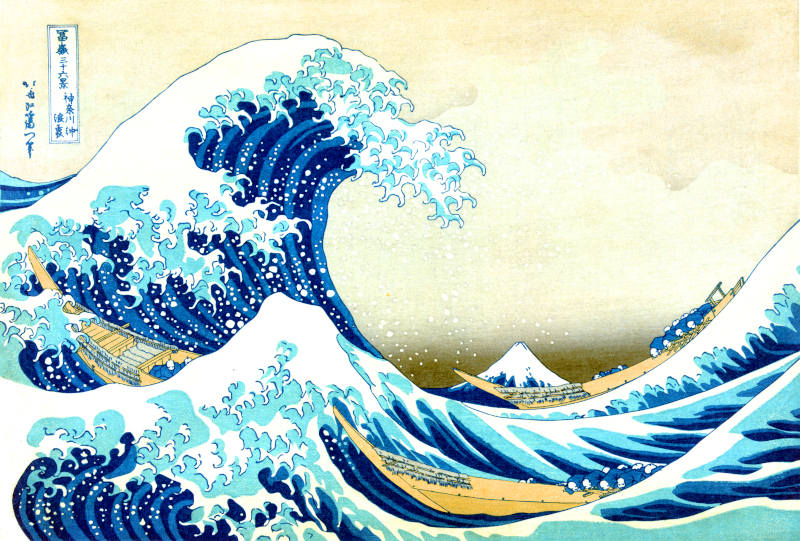
While various periods in Japanese history are famous for their particular art styles and contributions to the development of Japanese art and aesthetics, the Edo period is particularly famous for its Ukiyo-e woodblock prints and the art of Kyoto’s Pleasure Quarries. courtesans of the “floating world”. Many of these works are on display in the best museums in the world as well as in Japan.
Amateur and professional painting is the preferred artistic expression in Japan. Even today, as in ancient times, the Japanese wrote with a brush rather than a pen, and their familiarity with the use of brush techniques has made them particularly sensitive to the aesthetic values of painting. With the rise of popular culture during the Edo period, the ukiyo-e style of woodblock prints became an important art form, and its techniques were developed to produce color prints of almost any subject, from the daily news to the topics of schoolbooks. The Japanese have always thought of sculpture as a much less empathetic means of artistic expression: the use of sculpture in Japan has almost always been the prerogative of religion, and its use has waned with the declining importance of traditional Buddhism.

Ukiyo-e, Japanese Art History, Traditional Painting
The ceramics, which are among the best in the world, represent the first known works of Japanese culture. In architecture, the Japanese have always clearly expressed their ancestors’ preference for natural materials and harmonious interaction between interior and exterior.
Japanese Art History Formative Period
The arrival of Buddhism in Japan in the mid-6th century CE, and the iconography accompanying it serve as a dramatic dividing line in the history of Japanese visual expression. With the advent of Buddhism, a large number of already matured iconography and artistic techniques were assimilated at a comparative speed. This moment determined the course of the development of Japanese art. What preceded the emergence of Buddhism is a matter of the complex and constantly revised archaeological record. The new interest in collecting and categorizing data was due in part to the influence of Neo-Confucian thinking and the introduction of European methodology mainly through contacts with the Dutch. For the most part, however, Edo, like previous eras, was uncomfortable with the relative objectivity required to interpret archaeological findings. Indeed, an important intellectual trend of the period was kokugaku (national learning), a movement mainly of natives devoted to interpreting phenomena to underline Japan’s unique origins.
Statue
Except for the Shaka Triad, which was dedicated in 623 BC, the statue at the Horyu Temple was made sometime between 650 and 711. Created from the mid-century, the sculpture begins to reflect the influence of the Chinese Northern Qi dynasty (550-577) styles. While the structures of these temples have not survived, some important statues have survived and these images are often referred to as Kuratsukuri Tori (also known as Tori Busshi). Like her grandfather, who had immigrated from China, and her father, who was an ardent Buddhist, Tori was saddled up.
Japanese Painting Technique
Buddhist temples were decorated not only with statues, but also with religious paintings, tapestries and other objects. Most of such artifacts from the Asuka period have not survived. One exception is the Tamushi Shrine kondo made of Miniature, affixed to a rectangular pedestal or base. This ensemble of wood, metal, and lacquer provides an excellent view of what a conduit of the period looked like, and perhaps more importantly, it is decorated with the only known painting from the Asuka period.
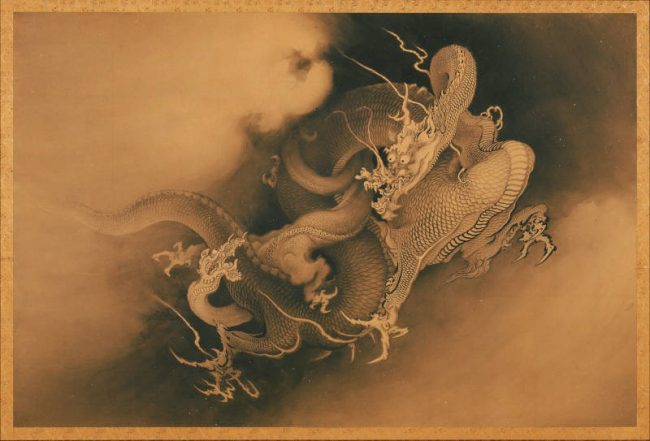
Japanese Painting Technique Japanese Art History
Apart from that, the Japanese painting style was a steady renewal process that took place in traditional painting, parallel to the intensive and systematic study of Western painting methods. Fenollosa was particularly influential in reorienting and rescuing the careers of two important late 19th century painters. Kano Hagai and Hashimoto Gaho. Fenollosa had specific ideas about how these traditional Kanō school painters could adapt their techniques to create a product that was more exciting and perhaps more marketable to Western eyes. Chiaroscuro encouraged the use of bright palettes, Western spatial perspective, and dramatic atmosphere, and these techniques were truly effective in arousing new interest in previously moribund forms of traditional Canoe painting.
Inspired by the success of Hogai and Gaho, a generation of painters sought to expand upon these masters’ technical adaptations. Shimomura Kanzan, Yokoyama Taikan, and Hishida Shunso, the nihonga (Japanese painting) movement that used traditional Japanese pigments but expanded a thematic repertoire. The format was no longer limited to scrolling or screen and included occasional Western framed pictures.
The Development of Western Painting in Japanese Art History
As early as 855, before the Meiji Restoration, the Japanese established a bureau. To study Western painting as part of an effort to master Western technology. Technical drawing is emphasized in the curriculum. Takahashi Yuichi, who graduated from this office, was the first Japanese artist of the period to express an artistic rather than strictly technical interest in oil painting. Through self-education and British illustrator Charles Wirgman intellectual discussions, he increased his mastery level. One of Takahashi’s seven known essays on the subject, Still Life with Salmon (1877), elevates this mundane subject to a magnificent study of form and color.
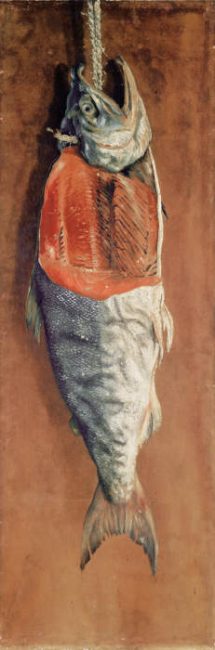
Takahashi Yuichi Somon, The Development of Western Painting in Japanese Art History
In 1876, a fine arts school was established and a team of Italian artists was recruited to teach Western techniques. The most influential among them, Antonio Fontanesi, the painter of the Barbizon school, who has been teaching in Japan for only a year, has built an extremely loyal following among Japanese students.
In general it can be observed that during the Meiji period there was an initially calculated strategy to study Western representational methods for the greater purpose of bringing Japan to a level of perceived modernity. However, a small but influential group of painters became involved in a cross-cultural exchange that could not be controlled by government planning.
Japanese Ceramic Art
In addition to the continuation of various traditional lineages, the most important development in modern ceramics was the return to folk tastes. Yanagi Soetsu embraced anonymity, functionality, and simplicity as a corrective to the industrialization and self-aggrandizement of the age. Along with potters such as the British artist Bernard Leach, Hamada Shoji and Kawai Kanjiro created a robust, attractive type of pottery reminiscent of products that appealed to the tea masters of the Yanagi, Muromachi and Momoyama periods. Kitaoji Rosanjin was the most important representative of highly ornate work in the Kutani and later kyoyaki traditions.
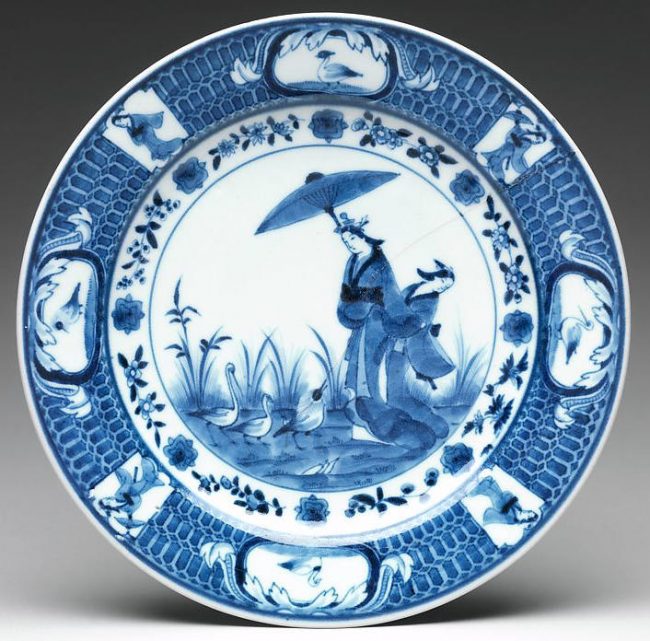
Japanese Ceramic Art, Japanese Art History
Contemporary Japanese ceramics follows both traditional and abstract lines. Advances were marked by extensive experience in form and a general movement from traditional, functional pieces to works of “art” or sculpture. The line between sculptor and ceramicist became increasingly blurred. Japanese Art History.