by Arthipo | 25 September 2021 | History of Art
Roman Forum
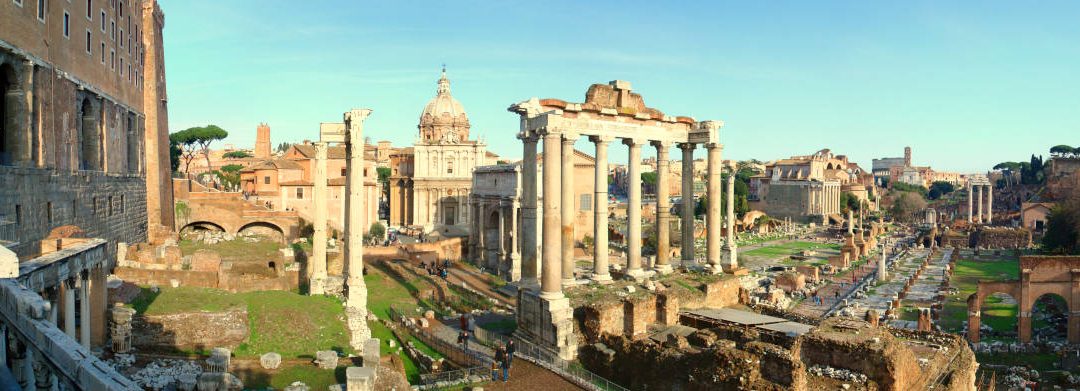
The Roman Forum or in Latin Forum Romanum was the bustling religious, administrative and commercial heart of Ancient Rome from the 7th century BC. Increasingly more majestic and ceremonial in its function during the imperial period, the Forum had become a monumental stone and marble symbol of Roman power and arrogance, with temples of deified emperors, dedicated pillars and colossal triumphal arches celebrating military victories from far corners of the empire. In a nutshell, it reminds us that the Forum Romanum was the political, ritual and civic center in the city of Rome.
Roman Forum Architecture
The Roman Forum was rebuilt many times during its existence. This allowed various architectural forms from different eras to come together. The influence of each era can be seen in the design and construction of buildings. Clearly demonstrating both elite function and investment in temples and sacred buildings, the architecture is adorned with terracotta painted plaques. It developed from the rough structures in the early stages to the stone-built architecture in the later stages. Roman architects were heavily influenced by classical Greek designs. But the Romans also created their own signature structures, such as basilicas, triumphal arches, domes, Roman baths, and amphitheaters, and the architecture became more imposing and ceremonial in function.
The reign of Augustus (27 BC – 14 AD) is the period when the Forum was repaired using marble and the sewers below were cleaned. In 10 AD, the Temple of Concordia Augusta, occasionally used for Senate meetings, was rebuilt, and the sum of this work was intended to create a shimmering new monumental Forum, surrounded by marble pillars with regular additions of temples, columns, and statues. The arches advertised the power, wealth and military achievements of the Roman emperors.
Today, the Roman Forum is a popular tourist attraction. Visitors can get a first-hand look at the ancient ruins and architectural pieces left behind. Excavations continue in and around the Forum to restore and preserve the remains. Historians are still trying to uncover new findings about the exact age of Ancient Rome that could answer them.
Roman Forum Romanum
Roman Forum Features
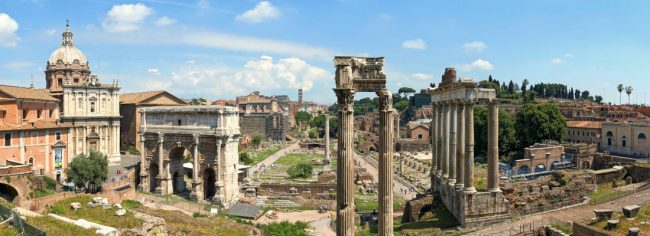
Historians believe that people first began meeting in public at the open-air Forum, where the Roman Republic was founded around 500 BC. During the Republic it was the scene of public meetings, courts and gladiator fights, as well as surrounded by shops and open-air markets. Located in the low land between Palatine Hill and Capitoline Hill, the rectangular area was home to many of the ancient city’s most impressive temples and monuments.
Today, the Roman Forum is one of the most famous tourist attractions in the world, attracting more than 4.5 million visitors annually.
Palatine Hill
Legend has it that Roman mythology speaks of the cave where the she-wolf Luperca lived, overlooking Romulus and Remus, located on the Palatine Hill. Legend has it that when the brothers grew up, they decided to establish a city on the riverbank, but when they could not agree on some points of the decision, Romulus killed Remus and founded the city of Rome.
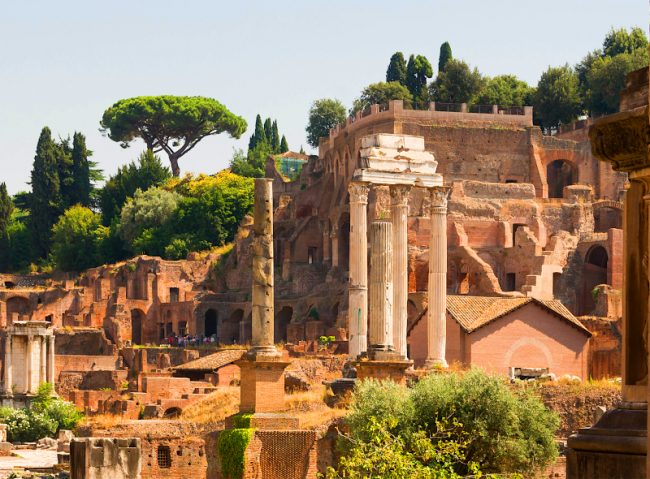
On the Palatine Hill you can see the remains of hundreds of imposing structures built for high Roman society in ancient times. Some of these spots are: Domus Flavia, House of Livia, House of Augustus, Farnese Gardens, Racecourse of Domitian, Palatine Museum. From the Palatine Hill, you can enjoy the best view of the Roman Forum from above.
Roman Forum Romanum Architecture Features Palatino Hill
by Arthipo | 25 September 2021 | History of Art
Colossus of Rhodes Statue
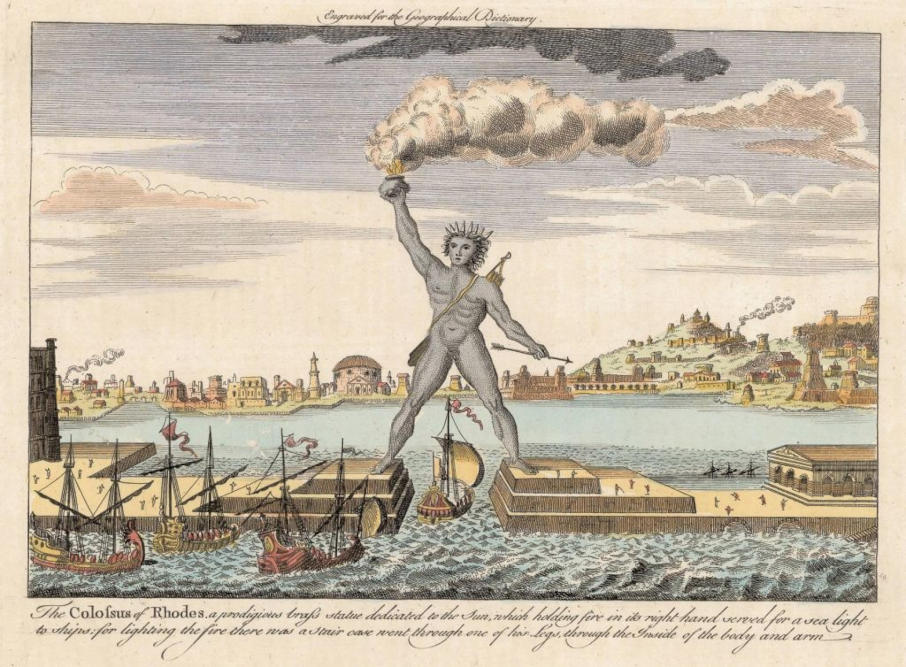
Colossus of Rhodes Statue was one of the Seven Wonders of the Ancient World. It represented the Greek God Helios and was built to thank the gods in honor of Demetrius Poliorcetes’ victory over the protracted siege of Rhodes (305 BC).
Rhodes Statue Ruins, Last Status
Broken pieces of the Colossus, made of bronze, remained there for nearly 800 years, as no one used the statue’s remains or tried to reconstruct it. All these years some tourists have visited the site. However, later in AD 654, Arab traders came to the island and bought broken bronze pieces and started trading. Metal scraps were brought to trade markets and sold.
Today, no one is quite sure what the Rhodes Statue looks like or what its stance is. One thing is certain, he did not stand with his legs stretched out to the harbor entrance, as depicted in many medieval drawings.
Unfortunately, the huge and tall Rhodes Statue, symbolizing victory and unity, ended up in the trade market for metal scraps alone. However, despite the destruction of the statue along with its remains, which are no longer found nowadays, one thing is for sure – this unique piece of ancient art will remain a true work of genius.
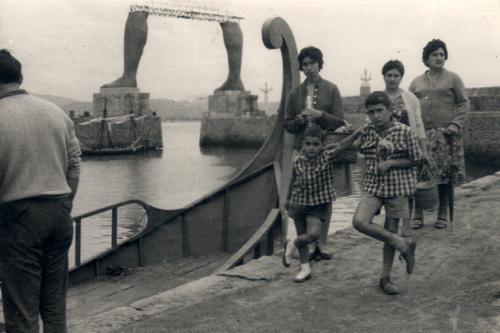
Rhodes Statue Ruins, Last Status
The Rhodes Statue was on the island of Rhodes, the largest of the Greek Dodecanese islands in the Mediterranean. Recent research indicates that it was erected either on the eastern promontory of Mandraki harbor or further inland.
Although we do not know the true shape and appearance of the Rhodes Statue, modern reconstructions of the statue standing upright are more accurate than older drawings. Despite its disappearance, the Old World Wonder has inspired modern artists such as the French sculptor Auguste Bartholdi, best known for his famous New York work ‘The Statue of Liberty’. Today, the Colossus is considered one of the Seven Wonders of the World and a masterpiece of art and engineering.
The exact location of the statue is unknown as no ancient writer bothered to mention it, but the east side of the harbor is the most likely location. In later periods, there were statues imitating the great example at Rhodes near the ports of Roman statues in ports such as Ostia.
Features of the Colossus of Rhodes Statue
The Rhodes Statue was 34 meters high and stood on the 15-meter-high floor. The sun god Helios was carved using bronze collected from Demetrius’ war machines. This crowned statue of Helios was naked and his left hand held a clock. His right hand was facing the sky, closing his eyes as if protecting the harbor from the sun’s rays. It wasn’t just the size of the Rhodes Statue that made it one of the seven wonders of the ancient world. In fact, it was the techniques used to create this monstrous replica of a god that put him out there along with the other wonders.
Sculptor Chares used iron beams and frames to help the statue stand and simultaneously support it. During the construction of the statue, Chares’ main concerns were location, visibility, and its foundation, which must be strong and sturdy enough for the statue to be securely attached to the ground. Bronzes collected from war machines used by Demetrius were used in the building. The siege towers served as scaffolding.
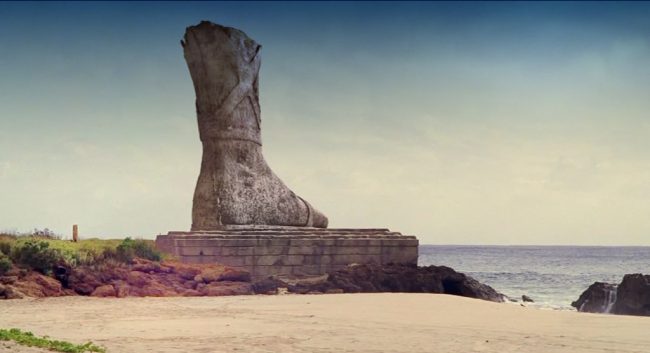
Features of the Colossus of Rhodes Statue
When the Colossus of Rhodes was completed, it was about 33 meters (110 ft) high. And that made it one of the largest statues of the ancient world, Pliny wrote, “few people can put their arms together around the thumb”.
People thought that the statue would stand forever. Like the Hellenistic Age itself, the statue had a short lifespan. The gigantic statue, like Alexander’s empire, would be torn into pieces and taken over by later cultures. If there’s only one piece of art that reflects culture, it’s the Rhodes Statue and its unfortunate fate.
by Arthipo | 25 September 2021 | History of Art
Cheops Pyramid
Cheops Pyramid is the largest pyramid, an identifying symbol of Egypt, and the last of the ancient Seven Wonders of the World. It was built over a period of twenty years during the reign of Khufu (2589-2566 BC, also known as Cheops), the son of Snefru, the king of the 4th Dynasty, the founding pharaoh of the Fourth Dynasty of Egypt.
The Greatest Pyramid; Cheops Pyramid Features
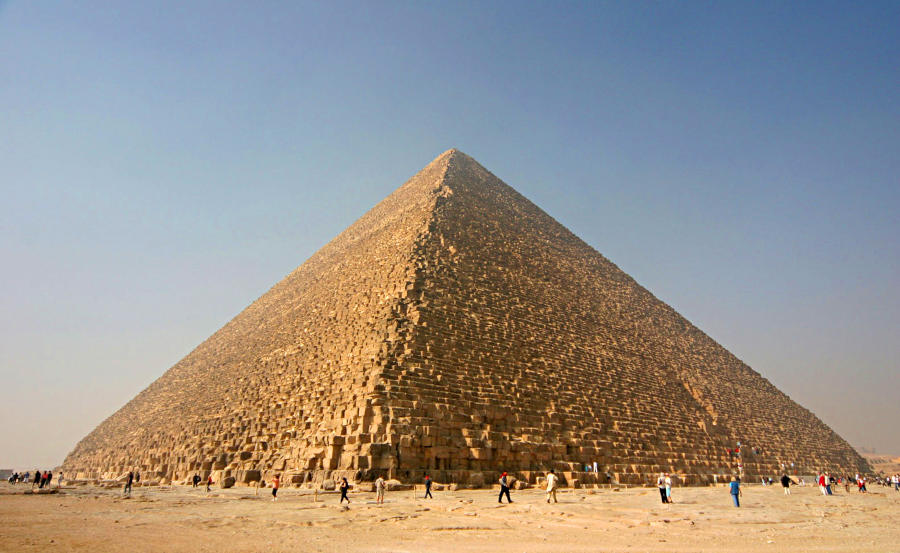
The Great Pyramid of Giza, also known as the Pyramid of Cheops or the Pyramid of Khufu, is the Egyptian identification symbol and the oldest of the three main pyramids on the Giza plateau. This pyramid was built around 2570 BC and is the oldest of the Seven Wonders of the Ancient World. In fact, it is the only Ancient Miracle that remains largely intact.
The last remnant of the Seven Wonders of the ancient world, the great pyramids of Giza are perhaps the most famous and controversial structures in history. These colossal monuments were unprecedented for thousands of years after they were built and continue to amaze and fascinate us with their overwhelming mass and seemingly impossible perfection.
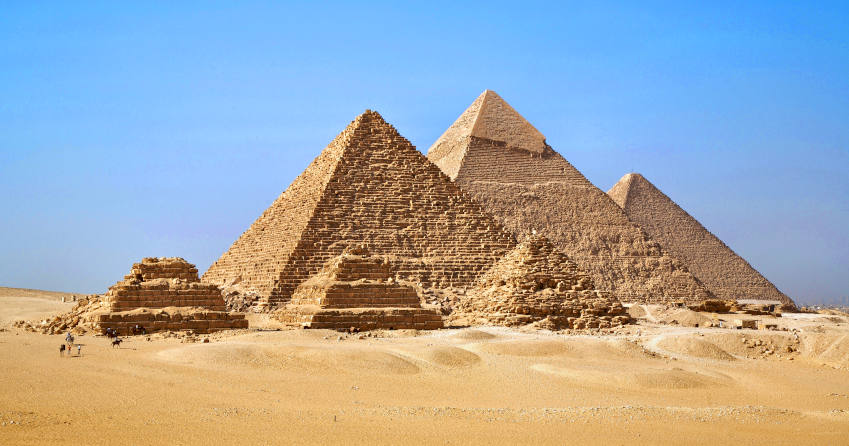
Measuring 146 or 147 meters (479 or 482 feet) high, the Great Pyramid consists of 300,000 blocks and more than two million tons of stone. When people talk of the “Pyramids of Giza” they are typically talking about the three great pyramids found in the Giza complex. These three pyramids include the Great Pyramid and its two neighbors, the Pyramid of Khafre and the Pyramid of Menkaure. The pyramids were built as the tombs of the Egyptian pharaohs. The inside of the pyramid is the “King’s Chamber” where the sarcophagus is located.
While many theories persist as to the purpose of the pyramid, the most widely accepted understanding is that the pyramid was built as a tomb for the king. However, exactly how it was built still amazes people today. It is thought to have been built by the Egyptians, most likely using technological tools so common to them that they did not need to register them. Contrary to popular belief that they were built using Hebrew slave labor, the pyramids of Giza and all other temples and monuments in the country were built by Egyptians, who were hired for their skills and rewarded for their efforts.
The best thing to do while on the Giza Plateau is undoubtedly to see the three colossal pyramids of Ancient Egyptian architecture that dominate the landscape. To fully appreciate its size, approach the Great Pyramid with its massive Limestone blocks and try to imagine its experience. Egyptian Pyramids.

The Greatest Pyramid; Cheops Pyramid Features Where is the Cheops Pyramid? What Country Is It In? How to go?
Where is the Cheops Pyramid? What Country Is It In? How to go?
It is located on the Giza plateau near Cairo, the capital of Egypt. It is a rocky plateau near Al-Jīzah (Giza) on the west bank of the Nile River. It is on the edge of the Western Desert, about 9 kilometers (5.6 miles) west of the Nile River and about 13 kilometers (8 miles) southwest of Cairo city centre.
By Private Taxi: The easiest and most popular way to get here for independent travelers is to hire a taxi for a half-day trip in Cairo. The taxi can then take you around the site (if you want) and then return you to the city centre. If you hire a one-way taxi, you can find a return taxi that will take you back to the city from the Sphinx entrance.
Urban Transportation: You can reach the pyramids by using the combination of Cairo Metro and minibus. Take the metro to Giza and then take a minibus (just outside the Giza metro station exit) or a taxi to the pyramids.
by Arthipo | 24 September 2021 | History of Art
Egyptian Pyramids
Egyptian pyramids The area around Egypt’s ancient capital, Memphis, contains dozens of pyramids built along the Nile River, just south of present-day Cairo, as burial chambers for kings during the third and fourth dynasties.
Egyptian Pyramids Names, Features, When and Where They were Built
The son, grandson, and great-grandson of Snefru, the founding pharaoh of Egypt’s Fourth Dynasty, would build on Snefru’s ideas and create the three famous pyramids near Giza. His son Khufu built what is known today as the Great Pyramid.
In addition to these large structures, several small pyramids belonging to the queens were arranged as satellites. A large cemetery of smaller tombs known as the Mastabas (meaning ‘bench’ in Arabic for their shape – flat roofed, rectangular, sloping-sided) fills the area east and west of the Khufu pyramid and dates back to the 4th century BC. It has a grid-like pattern for prominent members of the court. It was a great honor to be buried next to the pharaoh and was believed to help secure a valuable place in the afterlife.

Egyptian Pyramids Names, Features, When and Where They were Built
When Were the Egyptian Pyramids Built? Why? Features, General Information
The Egyptian Pyramids were built almost 5,000 years ago, at the beginning of human recorded history.
The Great Pyramid of Giza, also known as the Pyramid of Khufu or the Pyramid of Cheops, is the oldest of the three main pyramids on the Giza plateau. This pyramid was built around 2570 BC and is the oldest of the Seven Wonders of the Ancient World. In fact, it is the only Ancient Miracle that remains largely intact.
The last remnant of the Seven Wonders of the ancient world, the great pyramids of Giza are perhaps the most famous and controversial structures in history. These colossal monuments were unprecedented for thousands of years after they were built and continue to amaze and fascinate us with their overwhelming mass and seemingly impossible perfection.
Egyptian Pyramids Names
• Keops Pyramid
• Khufu Pyramid
• Khafre Pyramid
• Red Pyramid
• Twisted Pyramid
• Djoser’s Step Pyramid
• Pyramid of Menkaure
• Meidum Pyramid
• Unas Pyramid
• Teti Pyramid
• Pyramid of Havara
• Userkaf’s Pyramid
• Lahun Pyramid
The Interior and Architectural Structure of the Pyramids
Originally 146 or 147 meters (479 or 482 feet) high, the Great Pyramid required 300,000 blocks and over two million tons of stone. When people talk of the “Pyramids of Giza” they are typically talking about the three great pyramids found in the Giza complex. These three pyramids include the Great Pyramid and its two neighbors, the Pyramid of Khafre and the Pyramid of Menkaure. The pyramids were built as the tombs of the Egyptian pharaohs. The inside of the pyramid is the “King’s Chamber” where the sarcophagus is located. The Giza Pyramids are located on the Giza Plateau, also called the Giza Necropolis or the Giza pyramid complex. This plateau contains nine pyramids, the Great Sphinx, and a collection of smaller tombs.
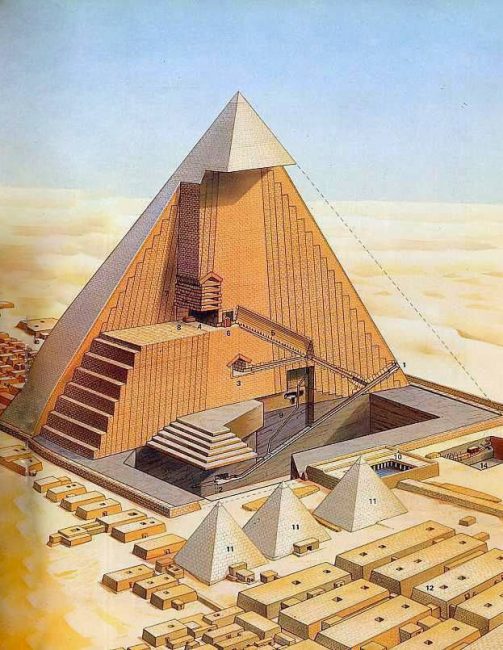
The Interior and Architectural Structure of the Egypt Pyramids
The shape of the pyramids was perhaps a solar reference, thought to be a solidified version of the sun’s rays. The texts speak of a ramp from which the pharaoh climbed into the sky with the sun’s rays, the earliest pyramids such as Djoser’s Step Pyramid at Saqqara were originally designed as a staircase. The Egyptian Pyramids were also clearly associated with the sacred Ben-Ben stone, a symbol of the primeval mound considered the site of the first creation. The pyramid was considered a place of regeneration for the deceased monarch.
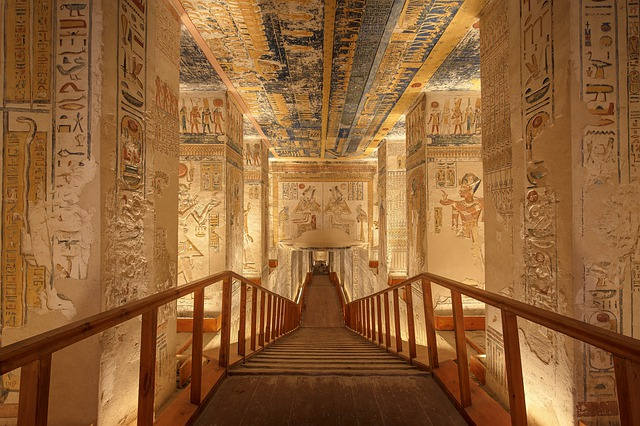
Egyptian Pyramids Interior Desing, Relief
The best thing to do while on the Giza Plateau is undoubtedly to see the three colossal pyramids of Ancient Egyptian architecture that dominate the landscape. Get up close to the Great Pyramid to fully appreciate its size. Limestone blocks are massive. Imagine the manpower required to build something like this. It’s even more surprising to think that humans built these pyramids almost 5,000 years ago.
Where are the Egyptian Pyramids, How to Go?
It is on the fringes of the Western Desert, about 9 kilometers (5.6 miles) west of the Nile in the city of Giza and about 13 kilometers (8 miles) southwest of Cairo city centre.
By Private Taxi: The easiest and most popular way to get here for independent travelers is to hire a taxi for a half-day trip in Cairo. The taxi can then take you around the site (if you want) and then return you to the city centre. If you hire a one-way taxi, you can find a return taxi that will take you back to the city from the Sphinx entrance.
Urban Transportation: You can reach the pyramids by using the combination of Cairo Metro and minibus. Take the metro to Giza and then take a minibus (just outside the Giza metro station exit) or a taxi to the pyramids.
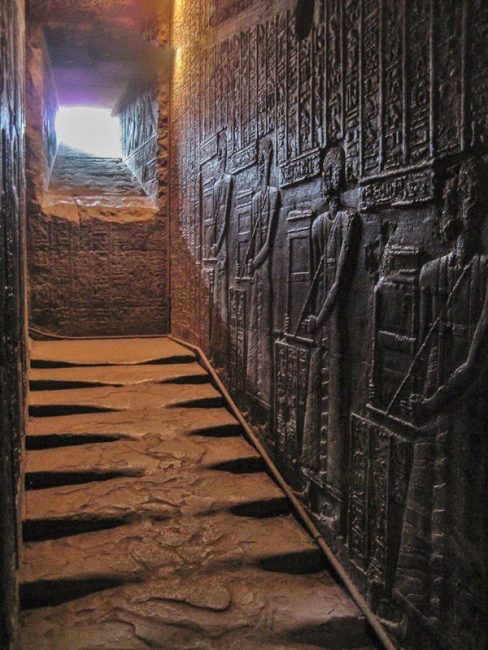
Egytian Pyramids Architectura
by Arthipo | 24 September 2021 | History of Art
Lighthouse of Alexandria
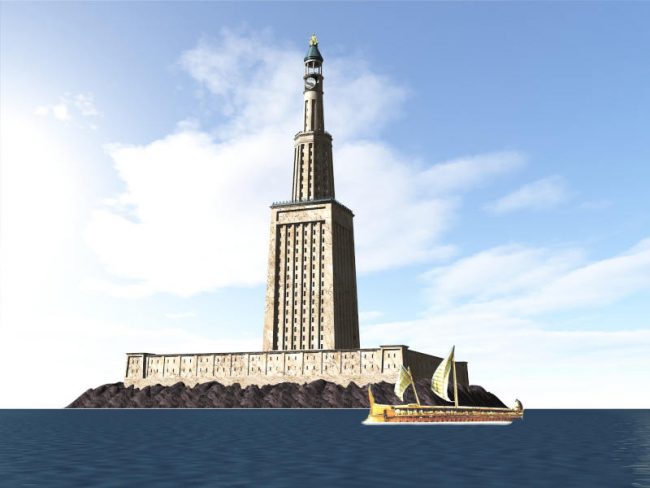
Alexandria Lighthouse is on the small island of Pharos in the Egyptian port of Alexandria and is the first of all lighthouses. It is one of the Seven Wonders of the Ancient World. It was one of the last of the original Seven Wonders to be destroyed after multiple earthquakes reduced most of the original structure to rubble and it was converted into a medieval fortress by the Sultan of Egypt around 1480.
Where is Alexandria Lighthouse
It was built on the small island of Pharos in the Egyptian port of Alexandria. Pharos was not actually a real island: it was connected to the mainland by a barrier called the Heptastadion. Thus, Alexandria had ports on both sides of the embankment. Alexandria was a thriving Greco-Roman city located on the Mediterranean coast of Egypt. It was founded by Alexander the Great and was home to a significant number of Greeks and Jews. It is known in the ancient world as an international center of culture and learning. The Alexandria Lighthouse was built in this city.
Where is Lighthouse of Alexandria Story
Lighthouse of Alexandria Story
The lighthouse was built by Ptolemy I (Soter) and his son, shortly after Alexander the Great conquered Egypt in the 3rd century BC. It was built during the reign of Ptolemy (Philadelphus) to divert ships to Alexandria. However , it also undertook the purpose of permanently reminding the power and greatness of the kingdom .
It was an impressive architectural marvel, visible from the central city, which includes the tomb of Alexander, the museum, the temple of the Serapeum, and the magnificent library.
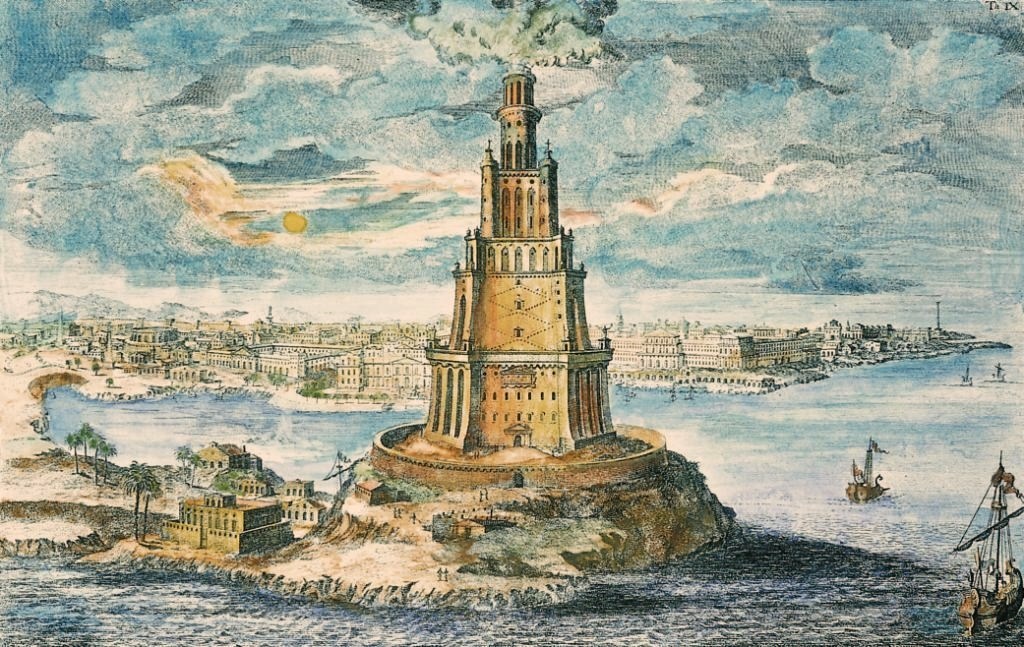
The lighthouse was built in three stages with shrinking dimensions and was 135 meters (440 feet) high with its base. It is the tallest of the lighthouses built in history. And it is the only artifact of the seven wonders of antiquity that is used for everyday life. It was made of white marble, admirably. Its base was a rock washed by the sea on all sides. The tower consisted of three stages: the lower square section in the center, the middle octagonal section and the upper circular section. A mirror was placed on top of it, reflecting sunlight during the day.
It was used as a lighthouse and landmark to aid sailors due to the dangerous waters of the Alexandria harbor. Although the Pharos performed both functions, it was built as a navigational aid to the port’s location rather than as a warning of dangerous shallows and submerged rocks. Because the shores on either side were low and harborless, full of reefs and shallows, a high and conspicuous sign was required to enable seafarers from the open sea to direct their course precisely to the port’s entrance.
The upper part of the lighthouse was destroyed by an earthquake in AD 955 and the body of the lighthouse was destroyed by another earthquake in 1302. In 1477, the Egyptian Sultan Kaitbay built a medieval castle on the old site of the building, using some of the fallen stones. The ruins, lost for centuries, were rediscovered at the base of the Alexandria harbor in 1994 and can be visited today by diving. It was called “Pharos” because of the island on which it was built, and this word has settled in many languages as “lighthouse”.