by Arthipo | 18 September 2021 | History of Art
Russian Art History
Russian art history; Visual arts in Russia developed more slowly than in Europe. With the exception of the portraitist Dmitry Levitsky, no great Russian painters of the 18th and early 19th centuries appeared. In the 19th century, Russia’s architecture flourished as the Slavic Revival focused on medieval art and affirmation of Russian heritage. New interpretive approaches came, in particular, with the massive construction of railway stations, such as the Moscow Train Terminal on Nevsky Prospect (1851) in St. Petersburg and by several of the old railway terminals dating from the second half of the 19th century in Moscow, including the Leningrad Station. The Cathedral of Christ the Savior (Moscow), consecrated in 1883, was a magnificent monument. It was destroyed by the Soviets in 1932 and rebuilt in the 1990s.
Developments in 20th Century Russian Art History
As with literature, the early 20th century saw a burst of creativity in the visual arts, and Russian painters played an important role in the European art scene. This period was considered a return from realism to primitivism, symbolism and abstract painting. Its members, the Jack of Diamonds artist group, defended Europe’s most advanced avant-garde movements in their paintings and exhibited works by European artists such as Albert Gleizes and Ernst Ludwig Kirchner. While Wassily Kandinsky created his highly influential lyrical abstractions during this period, Kazimir Malevich began to explore the rigid, geometric abstraction of Suprematism. Architecture has also often pushed the limits.
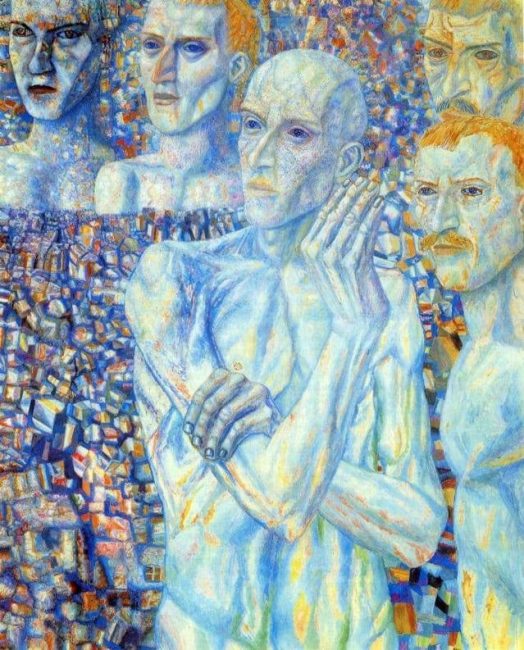
The 1920s were a period of continuous experimentation. Perhaps the most notable movement was Constructivism. Building on Tatlin’s previous experiments and led by El Lissitzky and Aleksandr Rodchenko, the Constructivists preferred solid geometric forms and clear graphic design. Many were also actively involved in the task of creating habitats and daily lifestyles. Non-Constructivist artists, including Pavel Filonov and Mariya Ender, also produced important works during this period.
Developments in 20th Century Russian Art History
But by the late 1920s, the same pressures that experimental writing faced moved into the visual arts. With the imposition of Socialist Realism, the great painters of the early 1920s found themselves increasingly isolated. Eventually their works were removed from museums, and in many cases the artists themselves were almost completely forgotten. Experimental art was replaced by numerous paintings of Vladimir Lenin (founder of the Russian Communist Party and first leader of the Soviet Union).
It wasn’t until the late 1980s that the greatest works of early 20th century Russian art were reintroduced to the public. A solemn, monumental Neoclassicism dominated architecture. It took longer for the visual arts to emerge from the Stalinist years than literature. A new group of artists emerged, all working “underground” until the 1960s and 70s. The main artists are Ernst Neizvestny, Ilya Kabakov, Mikhail Shemyakin and Erik Bulatov. They used various techniques such as primitivism, hyperrealism, grotesque, and abstraction. The architectural production of the post-war period was dominated by modest monumental housing projects. By the turn of the century, such structures were increasingly seen as standout structures, and a new generation of architects focused on creating buildings that fit their context, often combining elements of European and Russian traditions. Beginning in the mid-1980s, with the help of liberalization, artistic experimentation revived in Russia and many Russian painters enjoyed successful exhibitions both at home and abroad. A large number of Russian artists emigrated in the late 1980s, and most of them were well known in the world art scene. Particularly noteworthy was the team of Vitaly Komar and Alex Melamid, internationally acclaimed for a project in the 1990s where people around the world systematically and ironically documented what they value most in a painting.
Important Cultural Institutions for Russian Art History, National Galleries
Some of the most famous museums in the world are Moscow and St. It is located in St. Petersburg. The Pushkin Museum of Fine Arts in Moscow houses treasures of Western European art, while the Tretyakov Gallery has a strong collection of Russian art. The Moscow Kremlin palace, the home of communist power and the president of Russia, also contains a number of museums that include notable cathedrals. The Tolstoy Museum Estate in Moscow has an excellent literary collection. st. Petersburg’s Hermitage is one of the largest art museums in the world. The Russian Museum displays the world’s largest collection of Russian art, and the Russian Ethnographic Museum details Russian culture and daily life throughout history.
st. Petersburg is also home to the country’s oldest museum, the Kunstkammer (officially the Museum of Anthropology and Ethnography of Peter the Great), currently under the direction of the history department of the prestigious Russian Academy of Sciences. In addition, the former tsarist palaces in Pavlovsk, Pushkin and Peterhof in the suburbs of St. Petersburg were restored as museums. They are popular destinations for both Russians and foreign tourists. Elsewhere, there are also several important museums, many of which specialize in regional art, ethnography, and historical collections. For example, the Archangelsk State Museum, founded in 1737, houses collections focused on the history of the northern coast of Russia, and the State United Museum of the Republic of Tatarstan has a wide variety of decorative art and historical, archaeological and ethnographic resources. In addition, the Yaroslavl State Museum of History, Architecture and Art-Conservation Area presents a large collection focusing on Russian history and culture.
Peredvizhniki
The Traveling Art Exhibitions Association, founded in 1870, is commonly known as Peredvizhniki. It means “Travellers” or “Travellers”. He believed in representing everyday life with an accuracy and empathy that reflected their egalitarian social and political views. They worked in a variety of painting genres, from landscape and portrait to genre and historical painting, and by the end of the 19th century they had become the most famous art movement in Russia. In 1923 the group was disbanded, but its influence was felt in many subsequent genres of Russian art.
Russian Futurism
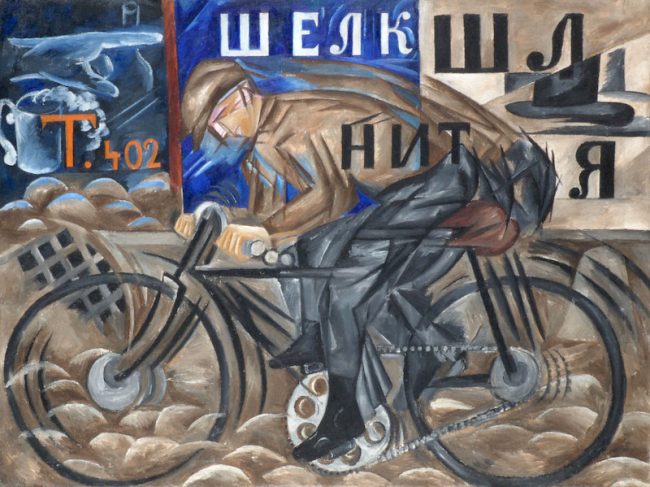
The phenomenon known as Russian Futurism is not an easily identifiable movement for Russian Art History and is completely separate from Italian Futurism, which was founded in Milan in 1909. As an ideological umbrella, Russian Futurism was deliberately flexible, and its diverse artists and practices spanned a roughly period from 1912 to 1916. st. Different collaborative Russian Futurist groups were formed in St. Petersburg and Moscow, publishing magazines, holding discussions and exhibitions of their work. Individuals who practiced futurists (whether self-defined or defined as such by critics and the press) shared a passion for exploring new modes of expression in poetry, visual art, music, and performance, while also breaking the divides between these mediums. Drawing on influences from the West and combining them with their own Russian heritage, the Futurists celebrated new concepts in psychology, color theory, and linguistics. One of its most unusual elements was a secret archaism, or devotion to Russian traditions, despite its heavy focus on new technologies and forms. The experiences of the First World War led many artists to movements such as Suprematism and Constructivism instead of Futurism.
Russian Futurism, Russian Art History
Arguably, since Russian Futurism first emerged as a predominantly literary movement, some of his most striking and original works are experimental books. These collaborations between poets and painters present his most distinctive legacy; this can be traced back to mid-century audio poetry artworks and Conceptual art.
In December 1911, artist and poet David Burliuk and his brothers Vladimir and Nikolai went to their childhood home in the countryside to spend the Christmas holidays. On this holiday, they became acquainted with the work of Pablo Picasso, where the brothers who discovered Cubism experimented with multiple perspectives on canvas, flattening objects into planes and using different color combinations to look for something new.
Suprematism
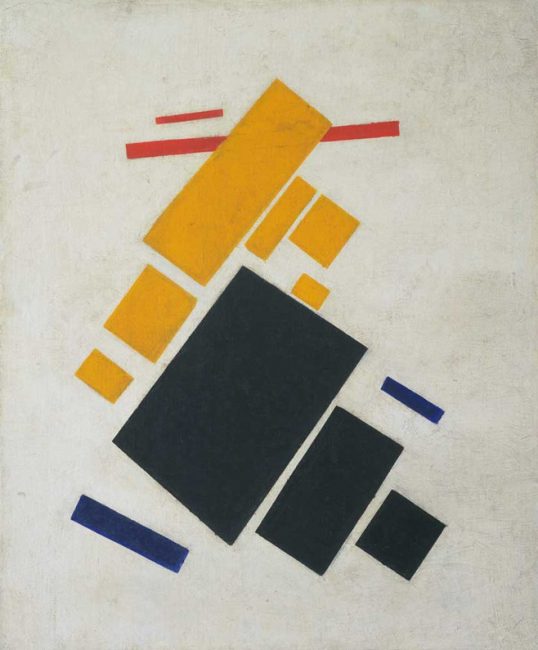
Suprematism, the invention of Russian artist Kazimir Malevich, was one of the first and most radical developments in abstract art. The name came from Malevich’s belief that Suprematist art would be superior to all the arts of the past, leading to “the superiority of pure emotion or perception in the pictorial arts”.
Suprematism, Russian Art History, Kazemir Malevich
Rayonism
Considered the pinnacle of avant-garde art by founders Mikhail Larionov and Natalia Goncharova, Rayonism developed new ways to express energy and movement. Rayonism drew on its insights as a subset of Russian Futurism, scientific discoveries, and theoretical concepts of the fourth dimension. Although the movement incorporated elements of traditional folk culture, it was consciously quite modern. The style and themes of Rayonism reflected contemporary scientific and metaphysical developments. The adoption of transparency and fragmented objects has been influenced by changing understandings of the material world through the discovery of x-rays and radioactivity. The world could no longer be considered completely solid and concrete. This strengthened the theories of fourth-dimensional space and experience as the continuum of our observable universe. By focusing on light as the subject, artists can dissolve objects into the space around them; these layers of transparency were thought to represent the fourth dimension.
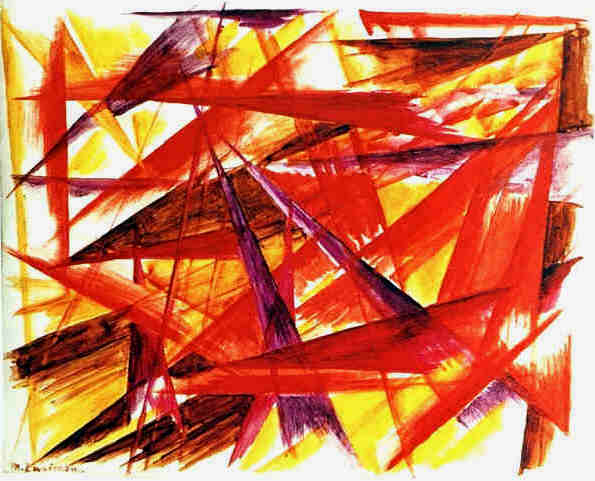
Rayonism, Russian Art History
Rayonists’ interest in popular culture and material (known as faktura) broke away from the expectations of the fine arts. Believing that their work addresses larger questions of existence and spirituality, Rayonists aimed to break down the boundaries between art and life. This would be reflected in the work of Suprematist and Constructivist artists who embraced faktura as a way to build spiritually charged spaces in the post-revolutionary years.
The brainchild of lifelong partners Mikhail Larionov and Natalia Goncharova, Rayonism deliberately synthesized elements of Russian avant-garde painting to create a modern style. Associated with the Diamond Knave (also known as the Diamond King) group, Russian Futurists experimented with Neo-primitivism, restoring traditional motifs in a style that sought to imitate the purity of Russian Cubic art. Futurism blending cubist distortion with movement depictions. In 1912, when Larionov and Goncharova left to stage the Donkey Tail exhibition with the group Knave of Diamonds, they rejected the idea of unity of style and included a wide range of works. This pluralism would remain part of Rayonism, even if artists began to define the general themes of the style.
Socialist Realism
Socialist Realism generally refers to the formally realistic, thematically artificial painting style that emerged in Russia in the years following the 1917 Communist Revolution, particularly after Josef Stalin came to power in 1924. The term also encompasses much of the visual art produced. Related movements in other communist nations from this period, as well as in sculpture, literature, theater and music. Russia had a history of realistic painting as social criticism, particularly through the work of Peredvizhniki artists such as Ilya Repin, and was also at the forefront of developments in avant-garde art. But the realities of socialist rule led him to present positive, propaganda images of cultural icons and everyday conditions in the Soviet Republic.
Like every art movement in history, Socialist Realism promoted artists with technical skills and vision. By the 1940s and 1950s, the younger generation of artists, many of whom were born under Soviet rule, were producing a more sober imagery. However, some continued to innovate in every way open to them, turning to lighting effects, such as the Impressionist technique, as ways to stamp individuality into their work. Russian Art History.
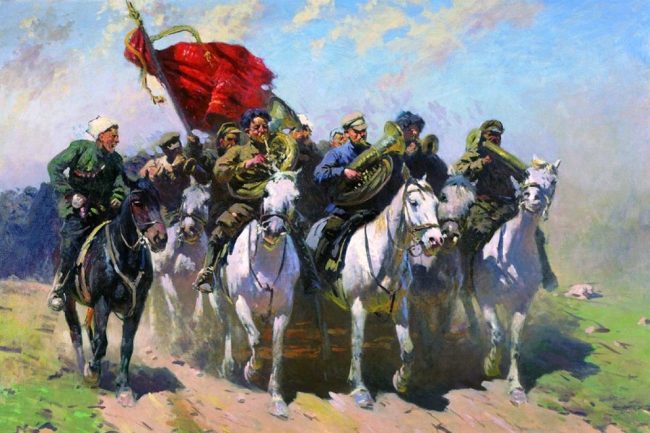
Socialist Realism, Russian Art History

by Arthipo | 17 September 2021 | History of Art
British Art History, Its Development, Important Periods, Art of the United Kingdom
British art history is a rich culture that continues on several different continents and carries the influences of many subcultures. Today, it is still one of the countries with the highest demand for works of art. We will examine the development of British art history by dividing it into several different periods. Art of the United Kingdom:
Early British Art Development Art of the United Kingdom
Some of the earliest examples of English art come from the magnificent metalwork of the Anglo-Saxon period and the stone churches, monasteries and castles of the early Middle Ages. Very rare, early decorative artifacts have also been found in churches in Saxon England, including the Lindisfarne Bibles (690-750 AD), famous for their intricately patterned lace. Buildings such as Exeter Cathedral (St Peter’s Cathedral Church) still stand today as an example of early Gothic architecture, although there are few remnants of their original interiors. The cathedral’s Norman Towers were completed in 1133, while the west facade image display is considered one of the greatest architectural features of Medieval England.
According to art historian EH Gombrich, artists (or rather artisans as they were then thought) began to create “copied from old books and rearranged” images of the apostles and the Virgin Mary. Yet most of the decorative and religious arts produced in the middle ages (410-1485 AD) were destroyed during the century of iconoclasm that began when King Henry VIII dissolved monasteries under the English Reformation. In founding the Protestant Church (and thus breaking with the rule of Roman Catholicism), the monarch sanctioned the destruction of the art housed in churches and cathedrals, and thousands of statues, paintings, carvings and stained glass windows were smashed and burned.
British Art History Renaissance Period
The period of the English Renaissance (circa 1520 – 1620) differed from the early Italian Renaissance in that playwrights and poets were given higher social status than visual artists. However, religious painting, widely demonized in the visual arts as a remnant of the Catholic church, was overtaken by portraiture (1485-1603), which played a dominant role in promoting the Tudor dynasty. But a German painter who actually worked in England became one of the greatest artists of the English Renaissance. Hans Holbein, Henry VIII’s court painter, was the artist who did the most to bring to life the Tudor era, which he did by idealizing the king.

Hans Holbein, British Art History Renaissance Period.jpg
The transition to the Elizabethan era (daughter of Henry VIII and Anne Boleyn, crowned Elizabeth I in 1558) brought with it a period of great social upheaval, though not reflected in her portrait. Indeed, as portrait painting grew in popularity, artists who found themselves previously employed in the church brought with them the serene hieratic quality of religious painting. There are numerous portraits of English ruling classes from this period, but relatively little is known about the men (or women) who painted them. Few portraits have been attributed to George Gower, the first Englishman appointed as the Queen’s Serjeant Painter in 1581. Gower’s work, though infused with all the gentle and subtle qualities of the best portraits; Elizabethan architecture tended to reflect a period in post-Reformation Britain seeking glory and inheritance.
The Effects of the Seventeenth Century and the Enlightenment on British Art History
The second half of the seventeenth century saw advances in science and (largely led by Christopher Wren) artists and thinkers began to look to the natural world as the source of all knowledge. C. Wren produced drawings of magnified creatures such as a flea and a louse, while Peter Lely shocked the public with his sensual nudes.
London of the 1690s The London of the 1690s, which had become the largest metropolis in the Western world, coincided with the birth of the age of “scientific reason” and travelers from all over the country began to live in the changing city. Fortune was documented by the portraitist and satirist William Hogarth. Hogarth is credited as the first to create a British Art School. His “modern moral issues” were groundbreaking, not only in their frank subject matter but also in the role of the artist. Indeed, Hogarth was the first artist to support himself financially (regardless of wealthy patronage), and his role set a precedent for many of the artists who followed him. Enlightenment philosophy can also be seen in George Stubbs’s anatomically precise horse paintings. Meanwhile, far from the capital, Enlightenment themes were openly explored by Joseph Wright of Derby, who aligns his art, if more theatrical, with the scientists, industrialists, and inventors of the Industrial Revolution. D. J. Wright was originally known for using industrial scenes and lighting for dramatic effect. (It has been said that D. J. Wright aspires to be a portrait artist but was discouraged from seeing Thomas Gainsborough’s work.)
Royal Academy, Art of the United Kingdom
The idea of the Academy dates back to the 4th century BC, when Plato founded a school to teach philosophy. Raphael did the same with the School of Athens in 1509. Shortly after its founding, their popularity and important links between the central academies and the state spread throughout Europe in the 18th century. Academies were vital to the development of national schools of painting and sculpture, and for most artists the aspiration remained the culmination. Although the academies also produced talented portraitists and still life painters, artists learned academic subjects such as history in addition to practical skills, as history painting was seen as the most in-demand genre, borrowing subjects from literature, mythology, and the Bible. Another and most important function of the Academy was to provide a regular exhibition space for artists.
In 1768, a group of 36 artists and architects, including four Italians, a French, a Swiss, and two women, joined King III to “establish a society to promote the Art of Design”. He signed a petition that was given to George. The Royal Academy of Arts, known as the RA – emerged as an independent institution run by artists, with an elected President, after gaining his approval. 18th century and Royal Scholars have included Angelica Kauffman, Mary Moser, Thomas Gainsborough, and John Everett Millais.
British Art History Romanticism
With the rise of Romanticism, many artists began to question the central authority of the Academy. Indeed, at the end of the 18th century, many artists were rejecting authority completely. The modernists formed an opposition to “academic” art, which they rejected as old-fashioned and moribund.
Welshman Richard Wilson is considered a pioneer among Romantic landscapers. A close acquaintance of the French painter Joseph Vernet, Wilson was influenced by the landscapes of Claude Lorrain and Gaspard Dughet and interpreted English and Italian landscapes in a style that earned him the nickname “English Claude”.

Galli Richard Wilson British Art History Romanticism
Romanticism flourished as a reaction to the unbiased objectivity of science and the restrictive rules of RA. At the end of the 18th century, artists began to turn inward, invoking the senses and emotions for inspiration. William Blake was one of the leading Romantic “rebels”, and his extremely exciting explorations in art and poetry paved the way for a new generation of artists, among them John Constable and JMW Turner, arguably the two greatest painters in British history.
The rise in British Romanticism would coincide with the new Regency Period in the history of British rule. While there is some disagreement as to when it began and ended, the entry to the Regency galleries at the National Portrait Gallery “describes a distinctive period in British social and cultural life spanning forty years from the start of the French Revolution of 1789.
Pre-Raphaelite Brotherhood and Arts and Crafts Movement
Founded in 1848 by John Everett Millais, Dante Gabriel Rossetti, and William Holman Hunt, the Pre-Raphaelite Brotherhood presented a stronger challenge to “official” art in British history than the Ancients. Opposed to the domination of the British Royal Academy and its narrow preference for Victorian subjects and styles, which owed it to the early Italian Renaissance and Classical Art, the Pre-Raphaelites looked to an earlier (pre-Raphaelite) era. The group believed that pre-Renaissance painters provided a better template for realistically portraying nature and the human body, and that medieval artists offered an alternative vision to the harsh and idealistic academic approaches of the mid-19th century.
Female Artists
Emily Mary Osborn was the foremost artist associated with the arts and women’s rights campaign in arts education during the Victorian era. She trained as an artist at Dickinson academy on Maddox Street and became a well-known figurative genre painter of “obscene characters” in the 1850s. She became associated with Barbara Bodichon’s Langham Place area and the Association of Women Artists, both of which fiercely fought for women’s rights. In 1859, Osborn was one of the signatories of the petition to have the Royal Academy of Arts open its doors to female students and the 1889 Declaration on the Suffrage for Women. Known for her pioneering photographic portraits, the images of Julia Margaret Cameron were considered innovative. His portraits were often deliberately out of focus.
British Museum
The British Museum was the world’s first public museum, housed in a seventeenth mansion called Montagu House in Bloomsbury, offering free admission to all “hardworking and curious people”. Opened in 1759, the museum owes its origins to the doctor and naturalist Sir Hans Sloane. After collecting around 70,000 artifacts during his lifetime, he put his collection to King II. He bequeathed to George and the state on the condition that £20,000 be paid to his surviving family. Parliament accepted his proposal and the British Museum was duly established. The original collection consisted of books, manuscripts, specimens from the natural world, and various coins, medals, prints, and drawings.
British National Art Galleries
The British Museum witnessed the founding of three of Britain’s most important national arts institutions. The National Gallery, the National Portrait Gallery and the National Gallery of British Art were all located in London. In April 1824 the House of Commons agreed to purchase John Julius Angerstein’s collection of paintings at a cost of £57,000. Consisting of just 38 paintings, this acquisition would form the core of a new national collection to be displayed publicly for the “entertainment and education of all”.
British Art History Impressionism Period
Americans John Singer Sargent and James Whistler may have inspired the British Impressionist movement. Arriving in London in 1863, Whistler taught Walter Richard Sickert and Wilson Steer, and between them they founded the New English Art Club (NEAC) in 1886. Three years later, Sickert (who would become a founding member of the post-Impressionist) Camden Town Group, along with Wilson and other members of NEAC, organized an exhibition of London Impressionists. Meanwhile, in 1885 Singer Sargent arrived from Paris, where he met the great Claude Monet. Over the next few years, Singer Sargent contributed greatly to Impressionism in England with arguably his most famous painting, Carnation, Lily, Lily, Rose (1885-6).
Fin de Siecle, New Art and Deco Art
Fin de Siècle, a French term used to describe symbolism, the Decadent movement and related styles, particularly Art Nouveau, reached the peak of its popularity in the 1890s. As the century drew to a close, the term denoted a sense of apocalyptic fear.
Bloomsbury Group
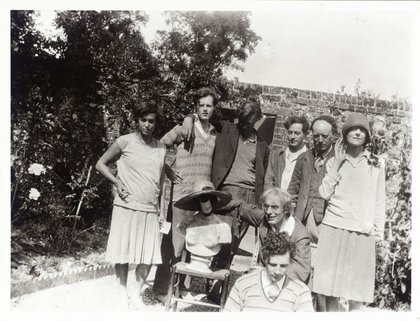
The Bloomsbury Group was a group of British writers, philosophers and artists in the Bloomsbury area of London, close to the site of the British Museum. Writers and artists would meet for a drink and a chat at the home of artist Vanessa Bell and her writer sister Virginia Stephen. Formed in 1905, the core group consisted of artists Duncan Grant, John Nash, Henry Lamb, Edward Wadsworth, and art critic Roger Fry.
Camden Town Group
Formed from the anti-establishment Allied Artists Association, The Camden Town Group takes its name from the cosmopolitan and vibrant area of north London where its members reside. Despite the fact that they produced some notable Post-Impressionist landscapes, the Group, made up of artists such as Gore, Harold Gilman, and Walter Sickert, aimed to reflect the realities of modern urban life.
Whirlpool
Named after the English painter, satirist, critic and philosopher Wyndham Lewis and the American poet Ezra Pound, the Whirlpools were Britain’s first radical avant-garde group.
British Surrealism
The emergence of fascism in Europe in the 1930s turned the contemporary art world upside down. As Chris Stephens notes, “discussions have arisen, not only between the avant-garde and academia, but also among modern artists over the appropriate response to the rise of fascism. Abstract artists, Surrealists, and Social Realists have all interpreted this political imperative. And British Surrealism is this ambiguity. British poet David Gascoyne withdrew to Paris in the early 1930s, mostly confined to two groups, one in London and the other in Birmingham.In the early 1930s, he made an accidental encounter with the British artist and historian Roland Penrose and the poet Paul Eluard, inspired by the French Surrealists. After meeting, he set out to forge concrete links between the British and French Surrealists.In fact, Gascoyne wrote the “First British Surrealist Manifesto” in 1935.
Euston Road School
Born from a left-wing political position in the mid-20th century by William Coldstream, Victor Pasmore and Claude Rogers, he treated traditional issues in a realistic fashion.
St Ives School
The St Ives school became the center of modern and abstract developments in English art. Inspiring the work of school artists, West Cornwall in the South West of England has also been a place of pilgrimage for many painters.
Art of War
The British War Advisory Plan, chaired by Kenneth Clark, Director of the National Gallery, under the direction of the Government Department of Information, was established in 1939. He chose his artists on the condition that they make more than just posters and brochures, with the main purpose of creating images for propaganda purposes. By the end of the war, the official war collection consisted of more than 5000 artifacts.
British Art History is examined in the article. Art of the United Kingdom.

by Arthipo | 16 September 2021 | History of Art
Chinese art history carries traces of historical periods of a society that has existed for thousands of years. China is a society with a diverse cultural background. Let’s take a look at the history of his artistic activities in China.
Chinese Art History
Two important areas of Chinese art history are traditional Chinese painting and Chinese architecture. The origin of Chinese painting goes back quite a long way.
Chinese Painting History
Chinese painting is one of the oldest art forms that continues to exist today. Like many forms of Chinese art, it began as an ornamental task but soon evolved into something purposeful. This article explains the origins and history of this artistic tradition and the techniques commonly associated with it.
In China, painting began as decorative patterns and shapes that typically adorned pottery; these include spirals, dots, squiggles and various animals. BC Chinese painters began to use paintings to summarize the world around them. It wasn’t until 400. During the Han and Tang Dynasties, which occurred in 202 BC and 618-906 AD respectively, artists tended to paint the human body. These paintings ended up in burial grounds on silk scrolls and were there to protect the dead on their journey to heaven. From AD 907 to 1127, Chinese painting evolved to include the landscape; This period is considered the highest point of Chinese painting and is therefore known as the ‘Great Age of the Chinese Landscape’. Artists from northern and southern China each painted their own landscapes.
As time progressed, people began to recognize paintings as fine works of art, individual artists became the center of attention, and guidelines for Chinese painting were established. Most importantly, the ‘Six Principles of Chinese Painting’ emerged in the fifth century. These principles are described by Xie He, an art historian and author, as follows: “Soul resonance, which is the energy transferred from the artist to the work, the bone method that expresses the way the brush is used, the correspondence with the object referring to the painting, and whether it effectively depicts the real entity, the tone and colors of the painting. Conformity to the script, which is the part, refers to the order, spacing and depth of the picture, and planning and Transmission by copying is the copying of those models from life and history.

Chinese Painting, Chinese Art History
The Tang Dynasty allowed images of royal life to flourish, such that realism reached its peak during this period. Many artists used exaggerated colors and extensive details in their paintings; but one artist decided to do the opposite. Wu Daozi was a master artist who refused to include any color in his work. After this time, paintings like him were considered finished works of art rather than sketches that would later be filled with color. Landscape paintings soon became much more meaningful as they freed themselves from duplicating nature and instead revealed the artist’s spiritual nature. This allowed painters to describe the ‘inner spirit’ of the objects they painted rather than their exterior. At the dawn of the 20th century, Chinese artists were exposed to many Western arts, and some were even trained in Europe. While many of these artists began to reject traditional Chinese painting, others tried to connect the two forms.
From the 13th century until just before the 20th century, artists developed the tradition of painting simple objects such as fruit or flowers. Color printing techniques were developed and technical guides on painting emerged. Originally the painting was made on silk because of its durability and association with the lifestyle of the royal nobility; It is where the majority of painters come because they have an appropriate amount of recreational time to perfect their painting techniques and instruments. Shortly after paper was invented in the first century by Cai Lun, it replaced silk as the primary medium for writing and painting. As painting began to grow in popularity, two basic techniques evolved. The first is known as Gong-bi, which means diligence. The other style is called Shui-mo, meaning free hand; this type of technique is similar to what western cultures know as watercolor painting. These techniques, collectively referred to as traditional painting, are practically similar to calligraphy in that they use a brush dipped in ink instead of oil. Traditional painting is typically done on paper and silk, but is sometimes done in other mediums as well. Chinese painting has matured over thousands of years as a mixture of styles, subjects, and cultures.
Chinese Architecture History
As long as civilization has existed, the Chinese people have been expressing their cultural beliefs through architecture. Basic structural design principles have remained relatively stagnant for thousands of years; only the decorative qualities have been changed. Chinese culture had such a great influence on most of Asia that similar architectural styles can be seen in Vietnam, Japan, and Korea. Architecture in China typically has five components that define its existence. The first is called Architectural Binary Symmetry and it means balance in laymen’s terms. Buildings are intended to appear equal on both sides of the centre; To achieve this, an even number of columns is used to create an odd number of outer panels.
The enclosure is an additional feature of Chinese architecture; this is when a courtyard is set up in the middle of a ring of buildings. This is usually only found in northern China; Southern China uses a slightly different structure called the ‘skywell’. A skywell is formed by intersections of narrowly spaced buildings and is traditionally used to regulate temperature and collect rainwater. The importance of buildings is another important feature; this is known as Hierarchy. The more important buildings are located with their doors facing the front of the property, the less important buildings facing the side and the least important buildings facing the back of the property. Conversely, placing a building at the back of property or in a relatively private location is considered highly respectful as a place of worship for elders or ancestors. When this is done, the living quarters for the servants, the storage areas and the kitchen are placed at the edges of the property to preserve the courtyard environment. The Horizontal Emphasis also adds to the architectural style; this is when the wealthy tend to build very large structures to signify their importance; this runs counter to the Western tradition of building and extracting wealth to express it.

Chinese Architecture History
Mythology also plays a large role in Chinese architecture. For example, screen walls face the main entrance of the house to prevent bad things from traveling in straight lines. Also, talismans representing good fortune are displayed in many places to bring prosperity and escape negative energy. The buildings themselves are beautifully crafted assets, typically constructed without the use of nails or glue. This is accomplished with large, load-bearing timbers and an incredibly tight fit of doweling and joint work. Curtains and door panels are used to surround a building or to conceal load-bearing walls in the construction of premium buildings. Gable roofs are actually the ‘only roof’ in existence because they are the preferred style over flat roofs. The most economical type of roof is a flat pitched roof, common in the architecture of the lower classes. While multi-sloped roofs are used in rich architecture, the largest known as ‘sweep’ roofs are usually only seen in temples and palaces, but are sometimes found in the homes of the extraordinarily wealthy.
Types of Buildings in Chinese Architecture
There are three main types of buildings common in Chinese architecture. These consist of communal, imperial and religious structures. The communal structures are built with a mausoleum in the middle of the house, bedrooms for the elderly, and the kitchen for the younger members of the family, surrounded by the living room, dining room and other necessary rooms. Imperial buildings are typically built with yellow tiles and red wood to symbolize their importance. Also, these buildings are the only structures where nine spaces are allowed between the two pillars. Religious buildings are the final classification of Chinese architecture. These usually follow the imperial style as they have a front hall with a statue of a Bodhisattva.

Types of Buildings in Chinese Architecture
Tang Dynasty occupies an important place in Chinese art history. The Tang Dynasty, known as the ‘Golden Age of China’ due to the economic and political stability of the period, allowed all kinds of arts to flourish. This is when many advances have been made in brick making and structural stability, and buildings of all kinds have been built. However, after this period, China fell into a state of disrepair for nearly 100 years. Political and economic instability, war, and government corruption have caused society to almost regress in its technological evolutions; The monetary system was reduced to barter and many important structures were destroyed. However, after this period of destruction, Chinese architecture flourished once again. Large structures such as pagodas, palaces, pavilions and multi-storey buildings were built, shared in the diversity of the new architectural style. This technique is better designed, more beautifully crafted structures on smaller, larger, omnipotent buildings.
The Ming and Qing Dynasties marked the end of imperial rule in China; but they did not abandon their efforts to build. These two dynasties allowed structures to be built on a large scale. Cities expanded, defensive walls were built, standards were set. The Great Wall of China grew in succession and it was a defining feature of the era that its name was more than just a name. The Ming Dynasty moved the country’s capital to Beijing and created the now famous ‘Forbidden City’, a place of architectural beauty reserved for royal nobility. As a kind of last stand, the Qing Dynasty created the Terra cotta Army as a sign of their architectural skills. Although Chinese architecture has undergone minor changes over the last four thousand years, most of the underlying methodology was created during the rule of the high imperial dynasties.
Chinese Dragon
Dragons are creatures believed to have great powers that appear in the legends of many cultures around the world. Dragon figure is very important for Chinese art history. It appears in a work of art: painting, sculpture, landscape, costume… Essentially, flying reptiles with snake-like features, dragons have traditionally been depicted as fire-breathing beasts of savage nature. Historically, they have been depicted in different ways from culture to culture.
Chinese Dragon, Chinese Art History
European dragons were often represented as evil or destructive. The Chinese dragon, unlike the European dragon, was seen as wise and essentially benevolent and kind; They were often seen as symbols of Chinese emperors. Chinese dragons are seen as figures and symbols of the new year in the Chinese zodiac. New Year’s celebrations continue to feature dragons in parades. China has a wide range of folklore devoted to dragons.

Chinese Dragon, Chinese Art History
In this article, the subject of Chinese art history is examined in outline.

by Arthipo | 16 September 2021 | History of Art
Sumerians
The Sumerians, the oldest civilization in the world, lived in the Mesopotamia region of what is today Iraq. Sumerian civilization spanned a period of three thousand years, beginning in the 5300s BC. Early cities such as Eridu and Larsa revolved around agriculture throughout the year. The Sumerians invented very important landmark inventions such as the wheel and writing. Their civilizations also developed their own unique arts.
Like many ancient cultures, the Sumerians developed an art that largely reflected their religious beliefs. Some artistic archaeological finds depict the flora and fauna of the region. The preferred medium of Sumerian art was clay, which was abundant in the area, but stone sculptures have also been unearthed. Many of his sculptures depicted neatly rounded elements, unlike those of other Mesopotamian civilizations. Often the artist decoration adorned functional items such as pottery, weapons, and even farm tools.
Sumerian Art
Painting and sculpture were important art mediums for the Sumerians. Sumerian artisans had to import certain materials, such as stone and wood, into their regions, but it was certainly important to civilization as trade grew. Artists also preferred more valuable materials such as lapis lazuli and shells for important objects of worship or government. Many of the tallest statues produced by Sumerian artists were religious in nature and often depicted female mother goddess figures whom they worshiped and hoped would provide them with prosperous harvests, fertility, and protection from enemies. Sumerian figure sculptures draw attention with their large eyes dominating round faces. The bodies of these statues tend to be carved into simple cylindrical shapes.

Sümerians Art
Important examples of Sumerian art were unearthed from the cities of Babylon, Ur, Kish, Lagash and Uruk. As civilization aged, its art became more complex, as evidenced by famous artifacts from Uruk such as the female head known as the Warka Lady (3200 BC). Other important finds dating to the artistic peak of Sumer include a mosaic-laden wooden harp, a wooden game board inlaid with precious materials, and various busts of men and women. Many of the statues feature typical staring eyes, clenched hands, beards, long hair, and pleated skirts.
Sumerian Architecture
The Sumerians are also known for their architecture, and the most important are the pyramidal structures.
temples. The Sumerians also produced jewelery and richly engraved cylinder seals that were used to create personal signatures. According to archaeologists, most of the painting was frescoed and adorned both temples and palaces. Sumerian art influenced the art of later Mesopotamian cultures. The Sumerian style declined with the invasion of Semitic peoples from outside the region.
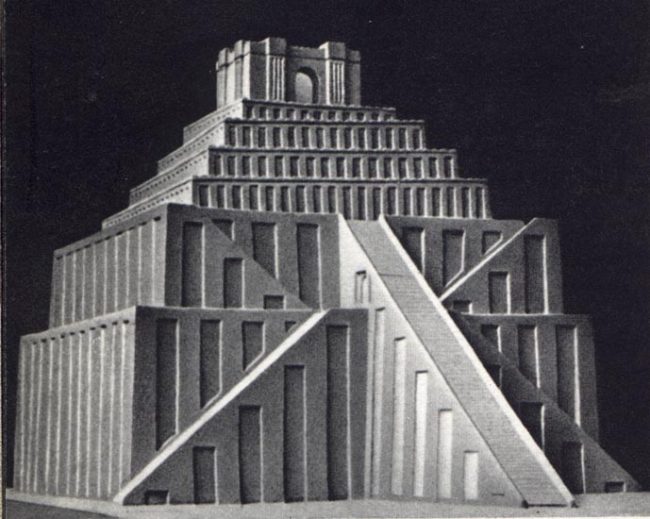
Sumerian Architecture Ziggurat
Sumerians Sculpture Studies, Statues
Beyond the general characteristic of Sumerian sculpture, two successive styles were distinguished in the middle and late subdivisions of the Early Dynastic period. A very remarkable group of figures from Tall al-Asmar (formerly Eshnunna) in Iraq shows a geometric simplification of ingenious and aesthetically acceptable forms from the first of these phases. On the other hand, the sculptures characteristic of the second phase, though technically more competently carved, show aspirations for naturalism, which is sometimes overly ambitious. In this latter style, some scholars occasionally see evidence of attempts at portraiture. Yet despite minor variations, all these numbers depend on the only formula to present the traditional features of Sumerian physiognomy. Its origins are not limited to the cities of Sumer in the south.
Deprived of stone, Sumerian sculptors made use of alternative materials. Fine metal casting specimens have been found, some of which provide insight into the cire perdue (lost wax) process, and copper statues larger than half are known to exist. In metalworking, however, the ingenuity of Sumerian artists is perhaps best judged by the invention of composite figures. Ur: a bull’s head adorning a harp made of gold-plated wood or bitumen and wearing a lapis lazuli beard; a goat in gold and lapis, supported by a golden tree; Compound headdresses of courtiers, or more simply, miniature wild ass figure cast in electrum (a natural alloy of yellow gold and silver) and mounted on a bronze bridle ring.

Sumerians Sculpture Studies, Statues
The inlay and enrichment of wooden objects reaches its zenith during this period, on which elaborate scenes of peace and war are depicted in a thin shell and semiprecious inlay, as can be seen in the pseudo-standard or double-sided panel from Ur. The fine metalwork is also evident on the famous golden wig-helmet belonging to a Sumerian prince, and on the weapons, tools, and utensils. Prominent among its subjects is its intricate depiction of Sumerian mythology and religious ritual. As it is still only partially understood, their talented adaptations to linear designs can be at least easily appreciated. Some of the best cylinder seals date from the Protoliterate era. After a slight deterioration in the First Early Dynastic period, the mythical scenes returned, when brocade patterns or running animal files were preferred. Conflicts between wild beasts and protective demigods or hybrid figures have been depicted by some scholars, associated with the Sumerian epic Gilgamesh. The monotony of animated motifs is sometimes removed by the addition of an inscription.
Sumerian Reliefs
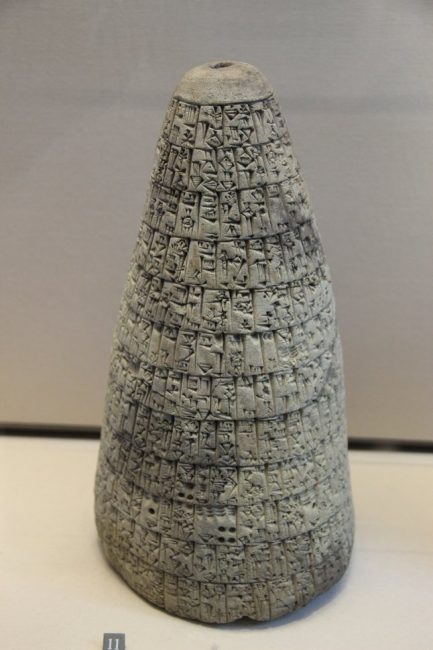
The stone-carved relief was a popular means of expression among the Sumerians and first appears in a rather crude form in Protoliterate times. In the final stage of the Early Dynastic period, his style became traditional. The most common form of relief sculpture was stone. Plates with holes or more squares in the middle for fastening to the walls of a temple, scenes are depicted in several registers (horizontal rows). The subjects often seem to be reminiscent of specific events, such as holidays or construction activities, but the representation is fairly standardized so that nearly identical plates have been found at locations up to 800 km away. Fragments of more ambitious memories have also been recovered on steles; The Stele of the Vultures (formerly Lagash) from Telloh, Iraq, is an example.
So a military victory in memory of him has a religious content. The most important figure is a patron deity, emphasized by his greatness rather than that of the king. The formal aggregation of figures marks the beginning of mastery in design, and a formula has been developed to reproduce identical figures such as chariot horses. In a slightly different category, Cylinder seals are currently very widely used. The cylindrical seal, used for the same purposes as the more familiar stamp seal and carved in the same way as the negative (pit print), was rolled on wet clay, on which it left a relief impression. Cylinder seals with miniature designs, elaborately carved into various stones or shells, rank as one of the highest forms of Sumerian art.
Sumerian Reliefs
by Arthipo | 16 September 2021 | Drawing Techniques
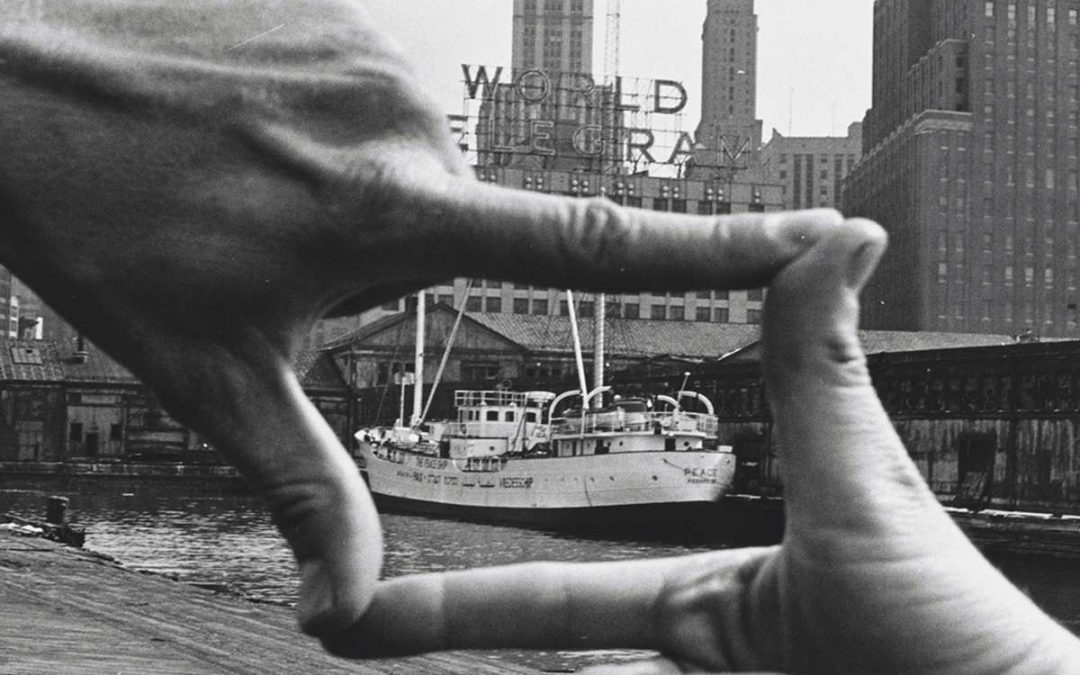
What is framing in art and photography? We will review it in the article.
Framing in Art and Photography, Framing Important Rules
What you look at in the discipline of photography turns into an image on the camera at the same time. Here, every image that appears on his camera is defined as a “framed image”. Therefore, the artist may not always be free to choose images. Framing is the selection of the image within the framework of the effect you want to describe and create. The image needs to be sorted out, made simple but interesting. Framing is where the photographer decides what to shoot. It’s about shooting what you want to see instead of shooting everything you see.
The Importance of Frame in Photography, What Frame Means for Professional Photographers
The image alone does not become an object of artistic activity. What turns it into an artistic object is the way it is created in the frame. The person takes the picture, not the machine. What is explained in the words of Henri Cartier-Bresson is what you bring to the frame with what consciousness. What is seen and shown in the frame is as important as how it is shown.
Every time the photographer looks through the viewfinder, there is an image in front of him. Worst of all, he may not always be able to remove an object he does not want from the frame. In this case, he must first choose the subject he wants. Will you use the frame horizontally or vertically? After making a decision, it is necessary to be able to separate the image from unnecessary details. To strengthen the effect, it should use the appropriate viewing distance, viewpoint and gaze height. While doing all these, he should choose the right time for the photo. We can also look at what the photographer actually does with his framing, as the visual arts transforming the depiction of literary arts into flesh and blood. He tells us what the author tells in his novel and the poet in his poem.
We can say that a photographer who is not deprived of compositional knowledge has the equipment to describe what and how in the frame. After the knowledge and experience that has turned into the behavior mentioned here, no one can claim that anyone with a camera can take good pictures. This is where the photographer differs from many people who have a camera. It would not be absurd to say that this distinction has become clearer, especially in today’s world where photography tools have become easier with mobile phones.

Framing in Art and Photography, Framing Important Rules, The Importance of Frame in Photography, What Frame Means for Professional Photographers
Important Rules of Framing
It is a knowledge that emerged from the investigation of the causes of the forms most liked by many people in ancient Greece. Based on this information, the surface is divided into three equal parts with two horizontal and two vertical lines. For a good composition, each of the points where the horizontal and vertical lines intersect is called the golden dot because of its importance in the composition.
These four dots indicate the location of the center of interest. According to the desired effect to be created with the photograph, the main and auxiliary elements are placed on these points. In order for this simple rule to be applied, it is important which element is placed where. However, it is not correct to say that anyone who abides by this rule will take good photos. After the reasons are well understood, it is possible to take good photos by violating these rules.
The frames that make up the image are removed, giving the impression that it continues outside the frame. It is felt that the image left to the spectator’s imagination continues outside the frame.
The center of interest can be in more than one position, depending on the photographer’s world view and understanding of art. The photographer can create systemlessness with the hidden system in his photograph. It should be understood that in this case the photographer meant something different.
Each image element and the way it is used in the composition has a separate emotional effect. The symmetrical balance established in the composition generally gives a feeling of stillness and creates a boring effect, while asymmetrical arrangements generally create a more dynamic effect on the viewer.