by Arthipo | 26 September 2021 | History of Art
Istanbul Archeology Museums
Istanbul Archaeological Museums contains an important and beautifully presented collection of Greek, Roman and Byzantine antiquities. Along with the nearby Museum of Turkish and Islamic Art, it is the city’s top museum attraction and should be high on the to-do list for history-loving tourists.
The Istanbul Archeology Museum, which is the first regular museum to appear in the history of the Ottoman Empire and in Turkey, has approximately one million artifacts from various cultures brought from the imperial lands.
Istanbul Archaeological Museums, History, Architectural Structure, Artifacts
The interest in collecting historical artifacts in the Ottoman period goes back to the reign of Mehmet the Conqueror, but the institutional emergence of museums coincides with the establishment of the Istanbul Archaeological Museums as Müze-i Hümayun (Imperial Museum) in 1869. The Museum-i Hümayun, which contains the archaeological artifacts collected in the Hagia Eirene Church, is the foundation of the Istanbul Archeology Museum. The Tiled Kiosk, which was built during the reign of Mehmet the Conqueror, was converted into a museum due to the inadequacy of Hagia Irene. Tiled Kiosk, which is still under the administration of the Istanbul Archeology Museum, was restored in 1880 and opened its doors.
Istanbul Archaeological Museums, History, Architectural Structure, Artifacts
The museums were first established as the Imperial Museum in 1891 by the Imperial Decree and formed a part of the Topkapi Palace outer gardens.
When Osman Hamdi Bey was appointed as the museum director in 1881, there was a breakthrough in Turkish museology. Osman Hamdi Bey made excavations in Mount Nemrut, Myrina, Kyme, other Alolia Necropolises and Lagina Hekate Temple, and as a result of his excavations in Sidon between 1887-1888, he reached the necropolis of King Sidon and went to Istanbul with many others. has returned. The famous one of the sarcophagi; It is Alexander the Great.
Istanbul Archaeological Museum Architectural Style, Interiors
Istanbul Archeology Museums is a museum complex consisting of three main units. Archeology Museum, Museum of Ancient Oriental Works and Tiled Kiosk Museum.
The oldest building (1472 AD) in the Istanbul Archeology Museum complex is the Tiled Kiosk. Tiled Kiosk Museum, where Turkish tiles and ceramics are still exhibited, is one of the oldest examples of Ottoman civil architecture in Istanbul.

Istanbul Archaeological Museum Architectural Style, Interiors
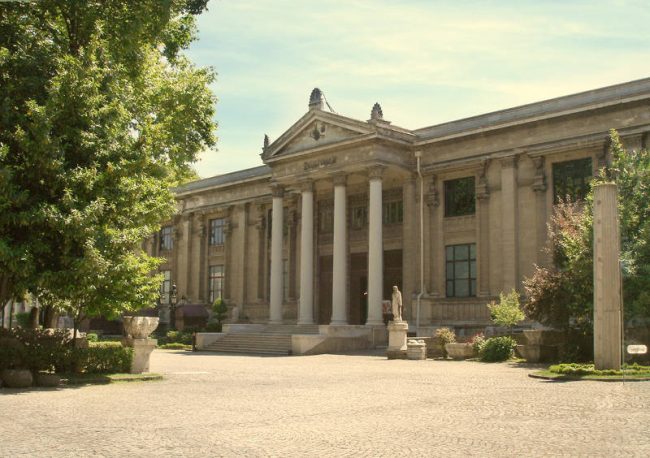
The Archeology Museum stands out as one of the rare structures built as a museum at that time in the world. It is one of the most beautiful and magnificent examples of neo-classical architecture in Istanbul. “Asar-ı Atika Museum” is written on the inscription in Ottoman Turkish found on the door pediments at the entrance of the museum. The tugra in the inscription, Sultan II. It belongs to Abdulhamid.
It was built by Osman Hamdi Bey between 1887-1888. Istanbul Archeology Museums Classical Building, built by the famous architect Alexandre Vallaury, opposite the Tiled Kiosk, was opened on 13 June 1891.
Halls 1, 16, 17, 18, 19, 20 on the lower floor of the Istanbul Archaeological Museums Directorate, all the halls on the upper floor, Assos Exhibition Hall and Istanbul Neighboring Culture: Thrakia, Bithynia – Biyzantium Exhibition Halls are located on the ground floor. The annex building is closed to visitors.
Istanbul Archeology Museum Important Artifacts
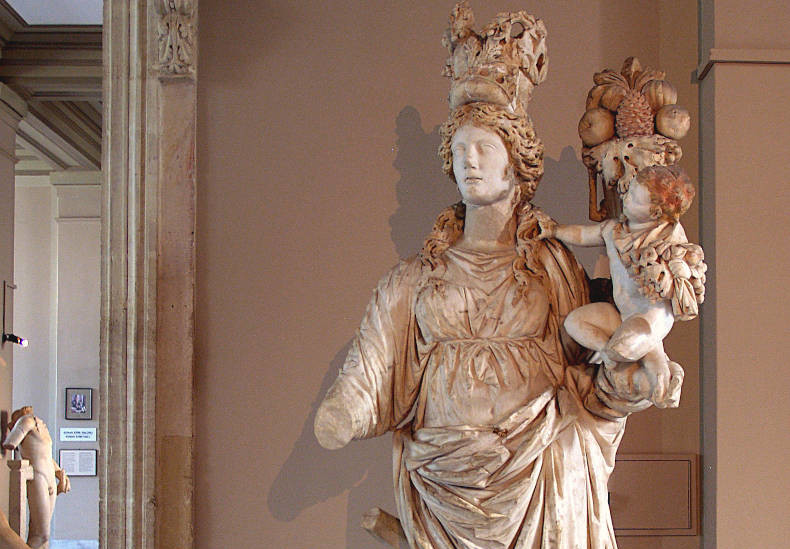
Alexander Tomb (Alexander Tomb), Crying Women Tomb (Mourning Women Tomb), Satrap Tomb, Lycian Tomb, Tabnit Tomb, Siloam Inscription, Sidamara Sarcophagus, Roman Empress statue in Pudicitia guise, brought to Istanbul from the Sidon King Necropolis excavation, Egypt-Hittite Peace Treaty Magnificent works such as. Sculptures of many pagan gods such as Zeus, Demeter, Aphrodite, Artemis, Hera, Apollo, and Eros are located in the museum. There are many sculptures specific to Hellenistic art and Roman art.

Istanbul Archeology Museum Important Artifacts Alexander Sarcophagus Tomb

Istanbul Archeology Museum Important Artifacts Aphrodite Statue Sculpts Artwork
Where is Istanbul Archaeological Museums, How to Go, Directions, Visiting Hours, Entrance Fee (Price)
Full address: Osman Hamdi Bey Yokusu Sokak, Gulhane, Istanbul, Turkey The complex is located in the Sultanahmet district, the historical peninsula of Fatih district; Osman Hamdi Bey, which connects Gülhane Park to the Topkapı Palace Museum, is on its slope. Istanbul Archeology Museums complex can be easily reached by walking downhill from the first courtyard of Topkapi Palace or by walking up the hill from the main gate of Gulhane Park.
To go to the museum, it is enough to get off at Gülhane Stop by using the Bağcılar- Kabataş Tram Line to reach the historical museum on foot. Those who want to come to the museum from the Anatolian Side can come to Eminönü or Kabataş piers from Kadıköy or Üsküdar ferry piers and switch to the tram line from these points.
Istanbul Archeology Museums, which are open every day of the week throughout the year, can be visited between 09:00 and 17:00. The Müzekart is valid in Istanbul Archeology Museums. Istanbul Archeology Museum entrance fee is 60 Turkish Liras.
Currently, the museum is partially open, but the annex building is closed to visitors due to restoration.

Where is Istanbul Archaeological Museums, How to Go, Directions, Visiting Hours, Entrance Fee (Price)

by Arthipo | 26 September 2021 | History of Art
Museum of Anatolian Civilizations
Museum of Anatolian Civilizations is a museum that was established in 1921 with the instruction of Atatürk. Where Anatolian civilizations’ artcrafts are exhibited and cultural activities are held. It is one of the few museums in the world where the works of all civilizations from the Paleolithic Period to the present are exhibited chronologically.
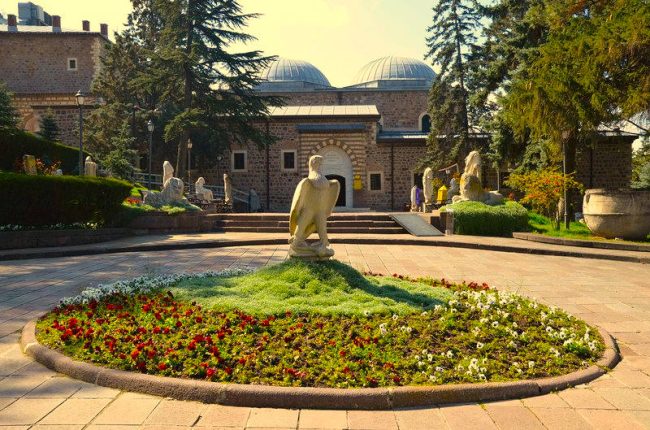
The Anatolian Civilizations Museum is in two Ottoman buildings near Ankara Castle. One of the structures is Mahmut Pasha Bedesten and the other is Kurşunlu Han.
Bedesten was built by Mahmut Pasha, one of the viziers of Mehmet the Conqueror, between 1464 and 1471. The building does not have any inscription. It is recorded in the sources that pure Ankara clothes are distributed here. The design of the building is of the classical type. There are 10 domes covering a rectangle designed to surround the space and 102 shops facing each other.
Anatolian Civilizations Museum, History, Architectural Structure, Artifacts
After the renovation and repair works were completed (1938-1968). The building was opened to visitors as the Ankara Archeology Museum. It is one of the richest museums in the world. Inside this Ottoman building, there are many exhibitions of Anatolian archeology in the museum. They start with the Paleolithic age and continue chronologically until the Neolithic, Early Bronze, Assyrian trade colonies, Hittite, Phrygian, Urartian, Greek, Hellenistic, Roman, Byzantine, Seljuk and Ottoman periods. There is also a large collection of works. The display of gold, silver, glass, marble and bronze works dates back to the second half of the 1st millennium BC. The coin collections, with examples ranging from the first minted coins to modern times, represent the rare cultural treasures of the museum.
Anatolian Civilizations Museum, History, Architectural Structure, Artifacts, Ankara, Turkey
The central hall features reliefs and sculptures, while the surrounding halls take you on an astonishing historical journey from the Paleolithic to the Classical period, from the Neolithic and Chalcolithic to the Bronze Age Assyrian and Hittite periods, to the Phrygian and Urartian periods of the Iron Age. The best place in the country to deal with the complex fabric of Turkey’s history, these exhibitions host artifacts collected from almost every major archaeological site in Anatolia.
Anatolian Civilizations Museum Interiors
Anatolian Civilizations Museum consists of 11 subsections and 3 main sections.
In one of the main sections called the upper hall; There are 8 subdivisions: Paleolithic Age, Neolithic Age, Chalcolithic Age, Old Bronze Age, Assyrian Trade Colonies Period, Hittites, Phrygians and Urartians. The upper hall has a variety of artifacts and breathtaking historical features.

Anatolian Civilizations Museum Interiors
The indoor space, called the Stone Works Hall, consists of the rectangular shape of Mahmut Pasha Bedesten, which is the foundation of the museum building, covered with ten domes. Stone artifacts from the Hittite and Late Hittite periods, each unique, are exhibited in this section.
The lower hall consists of two separate sub-sections of the museum for Ankara in the Ages and Classical Periods. In this section, starting from the second half of the 1st millennium BC; Gold, silver, glass, marble and bronze works belonging to the Archaic, Classical, Hellenistic, Roman, Byzantine and Ottoman periods are exhibited.
According to historical records and registry books, Kurşunlu Han was built as a foundation for Mehmet Pasha (Vizier of the Conqueror) to give alms in Üsküdar, Istanbul. It has no inscription. During the repairs made in 1946, II. Coins belonging to the Murat period were found. The finds show that the inn existed in the 15th century. The inn has the typical design of the inns of the Ottoman Era. It has a courtyard and portico in the middle and is surrounded by two-storey rooms. There are 28 rooms on the ground floor and 30 rooms on the first floor. There is an “L” type barn on the ground floor on the west and south sides of the rooms. There are 11 shops on the north side of the inn, 9 shops on the east side and 4 shops facing each other in the garden. The inn was built by Mehmet Pasha and in 1467, Mehmet Pasha was promoted to the vizierate. The vaulted bazaar was built by Mahmut Pasha, who continued his duty until 1470. These two structures that make up the museum today were abandoned after the fire in 1881.
Anatolian Civilizations Museum Important Artifacts, Ancient Ruins
Anatolian Civilizations Museum, which is among the exceptional museums with its unique collection, contains Anatolian archaeological artifacts and artifacts from the Paleolithic Age to the present.
Paleolithic Age (….8000), Neolithic Age (8000-5500), Chalcolithic (Copper-Stone) Age (5500-3000 BC), Old Bronze Age (3000-1950 BC), Hittites (BC. BC 1750-1200), Phrygians (1200-700 BC), Urartu (1200-600 BC), Late Hittites (1200-700 BC)
The Anatolian Civilizations Museum, which has survived to the present day with its historical structures and deep-rooted history, was selected as the first “Museum of the Year” in Switzerland on 19 April 1997.
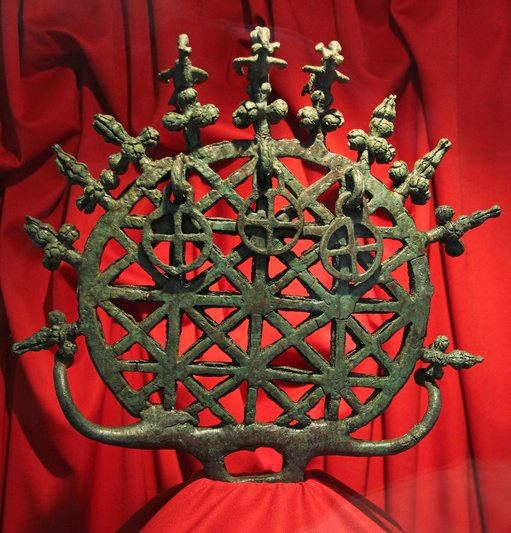
Anatolian Civilizations Museum Important Artifacts, Mother Goddess Statue

Anatolian Civilizations Museum Important Artifacts, Mother Goddess Statue, Ankara, Turkey
Anatolian Civilizations Museum Important Historical Artifacts, Ship Model
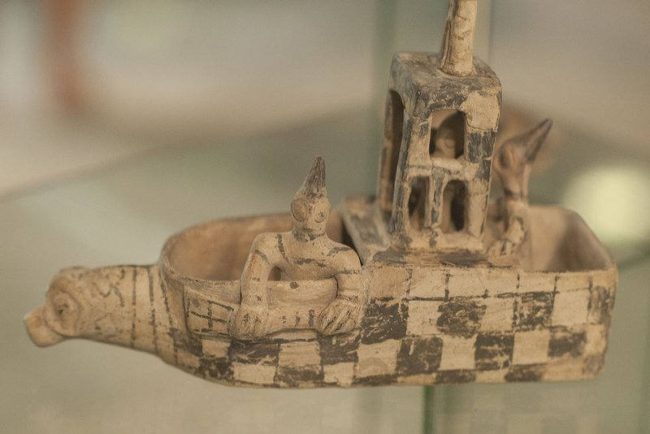
Museum of Anatolian Civilizations Ruins Aircraft, A Ship Model
Where is the Anatolian Civilizations Museum, How to Go, Directions, Visiting Hours, Entrance Fee (Price)
Full address: Kale Mahallesi (Neighborhood), Hisarpark Geçidi (Cadde), Gözcü Sokak (Street) No:2 06240, Ulus, Altındağ, Ankara, Turkey
The museum is located on the Ankara Castle road.
By taking the city bus; 10 minutes from Ulus Bazaar, Anafartalar, Ulus stops. on foot
Get off at Ulus station with Batıkent-Kızılay metro and take 10 minutes from Ulus Çarşı exit. Accessible on foot.
The museum is open from 09:00 to 17:00 every day throughout the year. It is closed only in the mornings of the first days of religious holidays. The entrance fee (price) is 45 Turkish Liras as of 2021. It is free for children under 8 years old.
Where is the Anatolian Civilizations Museum, How to Go, Directions, Visiting Hours, Entrance Fee Price, Ankara, Turkey
by Arthipo | 25 September 2021 | History of Art
Venus Goddess, Aphrodite
The Venus Goddess was a major Roman goddess primarily associated with fields and gardens as well as love, beauty and fertility. He was considered the ancestor of the Roman people through his mythological ancestor Aeneas and therefore played a very important role in many Roman religious festivals and myths. Venus is very similar to Aphrodite, the goddess of love in the Greek pantheon, as many of the figures in Roman mythology are largely taken from Greek tradition.
The Story, Birth and Other Names of the Venus Goddess
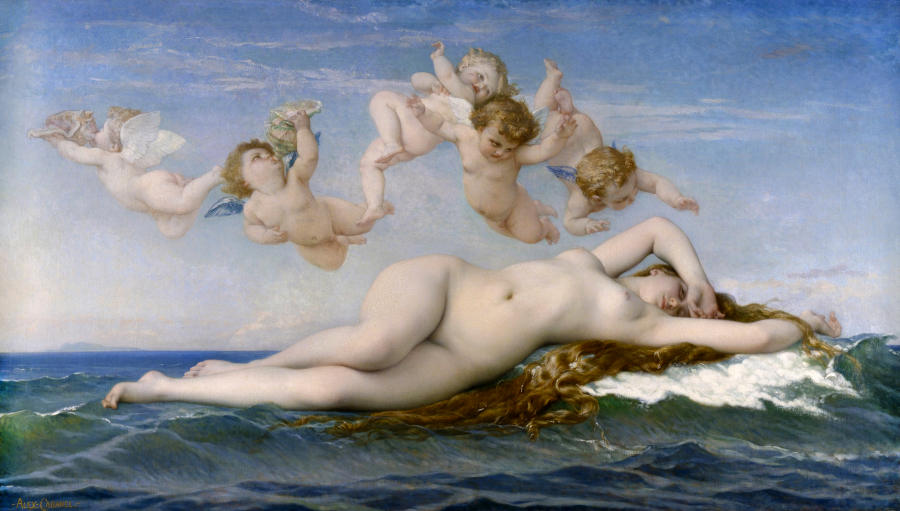
Venus, or first called Aphrodite in Ancient Hellenistic culture, was a primordial creature said to have been born from an eternal black night before the beginning of the world. Ancient Greek poets and mythmakers told this gruesome tale of its origins; The earth goddess Gaia, fed up with her eternal, joyless mating with her husband and son, the sky god Ouranos, persuaded one of her other sons, Kronos, to take action. Kronos frantically cut off his father’s phallus and testicles with a sickle, then threw them into the sea. When the bloody organs hit the water, the water began to boil with foams. And then something magical happened. From the bubbling sea smoke “a terrible and beautiful girl” rose, the goddess Aphrodite, the birth of Aphrodite. This scorching, bloody mass began to roam the Mediterranean, from the island of Kythera to the port of Paphos in Cyprus. But despite her violent and salty beginning, the young goddess witnessed a miracle as she emerged from the sea to the barren, dry land, green shoots and flowers sprouting from under her feet.
This is a story with some variations. This supreme power, born of abuse and suffering, is described to us not only as the goddess of mortal love, but also as the god of both the cycle of life and life itself. Associated with gardens and fields, she began as a minor agricultural god of ancient Italy. Temples were built for Venus in several Latin cities.
As the ancient Romans became familiar with the Greek myths of Aphrodite, they increasingly identified Venus with this goddess. They also associated Venus with other foreign goddesses such as the Babylonian Ishtar. One consequence of this connection was the naming of the planet Venus, which Babylonian astronomers previously associated with Ishtar.
Early in the Middle Ages, European Christians began to view Venus as a symbol on the dark side of sensual and sexual pleasure. But in the centuries that followed, a more balanced view of Venus emerged. Like literary and artistic works, Botticelli’s Birth of Venus (c. 1482) depicts her as the embodiment of feminine beauty and fertility.
Venus in Roman mythology, Aphrodite (Aphrodite) in Greek mythology, Turan in Etruscan mythology. Inanna in Sumer, Ishtar in Akkad, Astarte, the goddess of fertility of Canaan in Palestine, Asheret, Astorah and Asere in Israel are the names of Venus carrying the fertility cult in history.
The Story of Venus Goddess, Birth of Aphrodite and Other Names, The Importance of Venus and Its Effects on Art

Venus Goddess Aphrodite, The Story, Birth and Other Names of the Venus Goddess The Importance of Venus and Its Effects on Art
The Importance of Venus and Its Effects on Art
Although Venus is no longer widely worshiped, it has had a lasting impact on the Western world. As a goddess of love and lust, Venus remains in the Western consciousness as another important link in the historical chain of erotic female figures in ancient mythology, which includes the Scandinavian goddesses Frigg and Freyja, the Mesopotamian Ishtar, the Syro-Palestinian Astarte. As the personification of beauty, Venus has inspired a number of famous images throughout history as well as many contemporary ones, and as such has become one of the most identifiable images of the goddess in the western world.
Considering Venus is the personification of beauty and sexuality, it is not surprising that Venus is a common subject of classical, medieval and modern art. Roman and Hellenistic art produced many variations on the goddess, often based on Praxiteles’ most famous statue, Aphrodite of Cnidos. Many female nudes from this period of sculpture, whose original subjects are unknown, are traditionally referred to as “Venuses” in the history of modern art. Examples of such work include the famous Venus de Milo (130 BC), Venus de’ Medici, the Capitoline Venus, and Venus Kallipygos, a form of the goddess popular in Syracuse. Over time, the generic term venus came to refer to any post-classical artistic depiction of a nude woman, even when there was no indication that the subject was a goddess.
by Arthipo | 25 September 2021 | History of Art
Statue of Zeus at Olympia
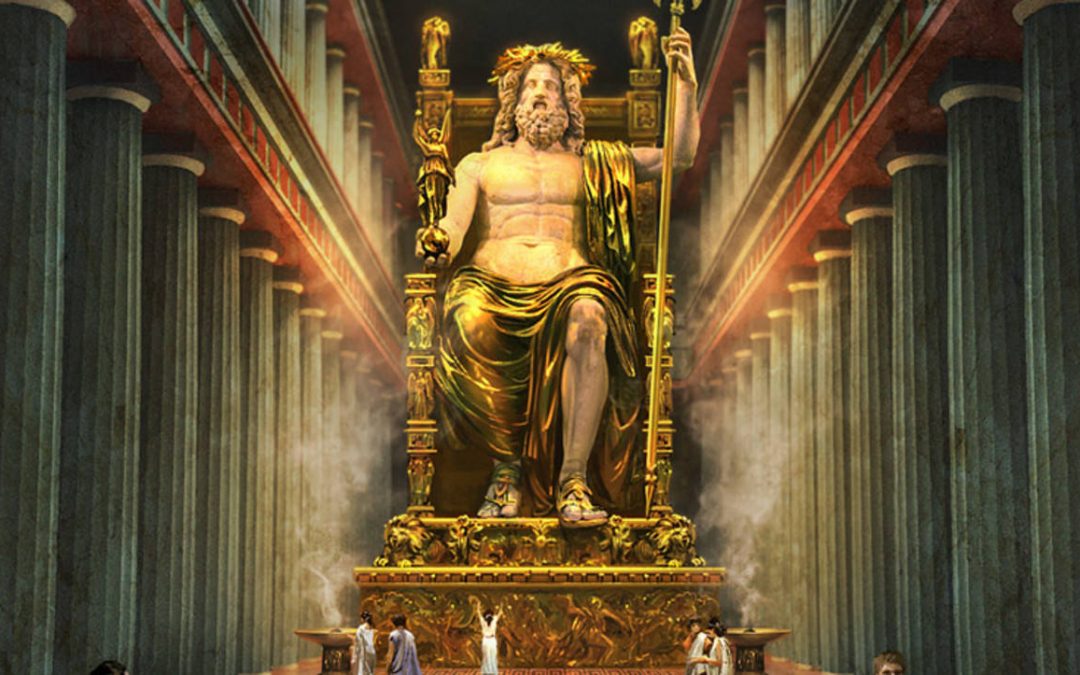
The Statue of Zeus is considered one of the seven wonders of the ancient world. It was carved by the famous sculptor Phidias around 400-450 BC in Olympia, Greece. It represented the greatness and veneration of the god Zeus, the king of all Greek gods.
Where is the Statue of Zeus, in which country, how did it perish?
The Statue was located in the temple of Olympia on the Greek Peloponnese Peninsula, near the west coast of southern Greece’s Peloponnese, near a point where the rivers Alpheus (Alfios) and Cladeus (Cladios) meet. The archaeological site of Olympia is of extraordinary cultural importance. It was designated as a UNESCO World Heritage site in 1989.
Olympia, near the town of Elis, was not a city and had no inhabitants except the priests who tended the temple. Instead, Olympia was a sanctuary, a place where members of warring Greek factions could come and take shelter. It was a place where they worshiped. It was also the site of the ancient Olympic Games. It was removed to Constantinople, then the capital of the Eastern Roman Empire, in 395 AD, where the statue and the temple or palace it was housed in were destroyed during an earthquake or fire in the 5th or more likely 6th century. As recorded in the works of historians Zonaras and Kedron, an alternative theory is that the statue was destroyed in a fire in 475 AD. Some parts of the Statue of Zeus, an important work of Hellenistic art, are exhibited in the Louvre Museum.
Where is the Statue of Zeus, in which country, how did it perish? What Civilization Does Belong to, Why Was It Made? Structural Features of Zeus Statue
What Civilization Does the Statue of Zeus Belong to, Why Was It Made?
The statue was made for Zeus, the chief god of the Greeks. It is an important work of Hellenistic sculpture art. Zeus was the king of the gods, the ruler of Mount Olympus. In Greek mythology, he was the bringer of thunder and lightning, rain and winds. He was the protector of cities, homes, foreigners and their worshipers. While statues of Zeus were found in the forecourts of houses in Greece, the temples on top of the mountain attracted pilgrims. The Statue of Zeus, located in a sacred grove between two rivers at Olympia, was the most revered object of Zeus’ worship. For centuries, the Statue of Zeus was meticulously cared for, but in AD 393, the Christian Emperor Theodosius I banned the Olympic Games. Three monarchs later, in the early fifth century AD, Emperor II. Theodosius ordered the Statue of Zeus to be destroyed. In fact, the conditions of eventual extinction are a source of debate; One theory suggests it was destroyed by a falling meteor. Others claim that it disappeared along with the temple in the fifth century BC. Still, others believe that he was taken to Constantinople because it was destroyed in the great fire of the Palace of Lauseion.
Structural Features of Zeus Statue
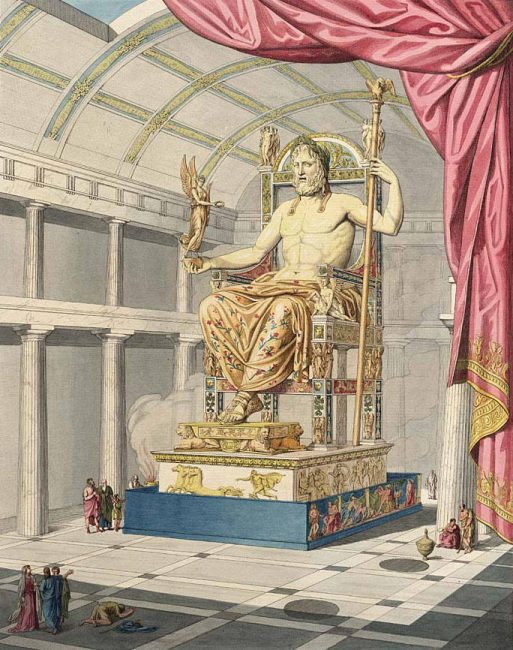
Statue of Zeus at Olympia spanned the entire width of the temple corridor built to house it. Zeus wore a robe and jewels made of gold. He held a glowing staff in his left hand, and above him was an eagle, ready to take off at any moment and do the god’s command. In his left hand was a statue of Nike, the goddess of victory. It represented a god seated on an elaborate cedar wood throne 12 meters (40 feet) high, decorated with ebony, ivory, gold, and precious stones.
The Greek philosopher Plutarch wrote in his Life of the Roman General Aemilius Paulus that the victorious general “was transported to his soul as if he had seen God himself” when he saw the statue, while the Greek rhetorician and philosopher Dio Chrysostom wrote that a single glance at the statue would make one forget his earthly troubles.
Although the statue itself has been lost, in 1958 an excavation discovered the workshop used to make the statue.
by Arthipo | 25 September 2021 | History of Art
Roman Bath
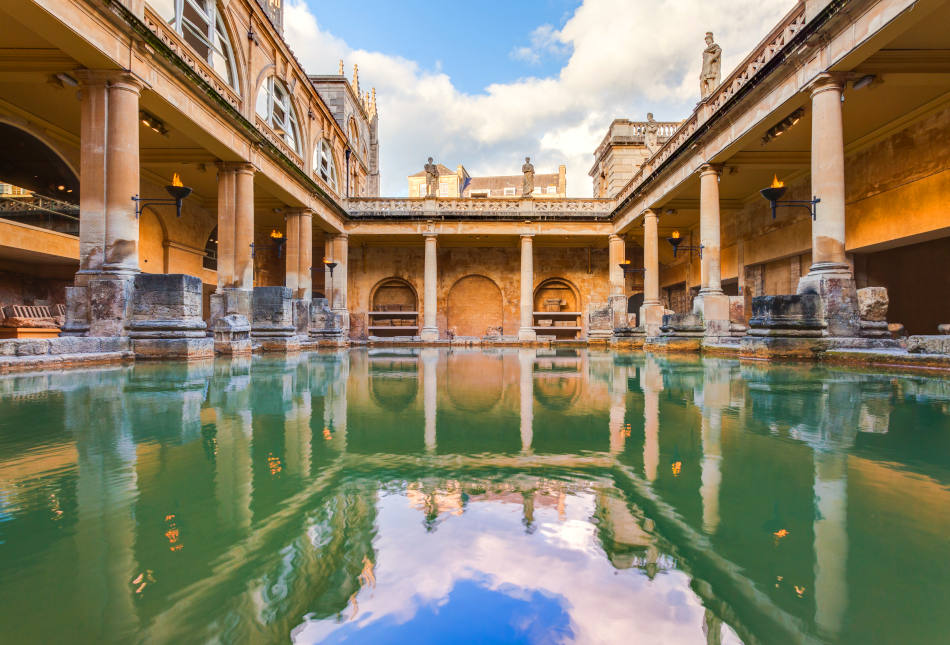
Roman Bath are some of the best preserved Roman architectural structures. It is a complex structure located in the famous spa town of Bath in the Somerset region of England. The original Roman Baths were built between 60-70 BC. But for the Romans it was more than a bath and spa complex. It was an important place of worship for them. Baths were popular with the Romans, they served as centers of entertainment and worship.
Roman Bath Features
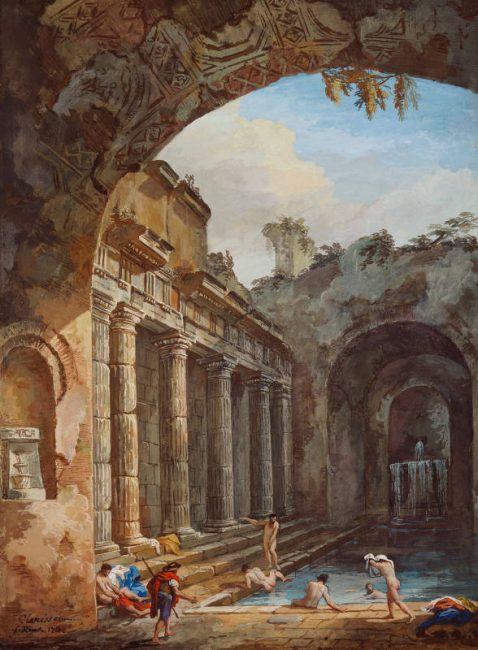
The Roman Bath was designed for bathing and relaxation and was a common feature of cities throughout the Roman empire. It contained baths, a wide variety of rooms with varying temperatures, as well as swimming pools and places to read, relax and socialize. Roman baths, with their large enclosed spaces, were important drivers of architectural innovations, especially in the use of domes. The baths were built using fireproof terracotta brick, and the finished buildings were often sumptuous works with fine mosaic floors, marble-clad walls, and decorative sculptures.
The Roman Bath Sections
The changing rooms, exercise rooms, open-air swimming pools, superheated dry and wet sweating rooms, heated and hot water pools, hot rooms with a heated and warm pool, usually monumental in size and domed, are an unheated and cold room with similar features to the Roman baths. cool rooms with bathrooms are the heart of the baths. Rooms like these are available for massage and other wellness treatments. In addition to these, additional structures such as cold water plunge pools, private bathrooms, libraries, conference halls and open gardens are included.
Where are the Roman Bath Features Sections Structures
Where is the Roman Bath?
Roman Bath were strategically built over the three hot springs of the famous spa town of Bath in Somerset, England, and are now below contemporary street level. This area includes the Sacred Spring, the Roman Bath House, the Roman Temple and the museum with period items.
Roman Period Baths Buildings
In Ancient Roman Architecture, both large and small Baths were located in the central part of the Villa, just northwest of Canopus. Much of its remains remain, making it easy to imagine what rectangular rooms with concave ceilings looked like in ancient times. It resembles the typical Roman baths of this time period, with separate rooms for various bathing activities. Before them were open, paved courtyards, palestras for exercises. Activities that require less space, such as boxing and wrestling, were also held here. There were several toilets scattered all over. After exercising in the palestra, the Romans would move on to the caldariums for a hot water bath. This process was followed by a warm Roman Bath in one of the rooms. Tepidarium rooms, for a while circular shaped saunas, laconicums and finally in the rooms known as frigidariums were rinsed with cold water.
Naturally, the quality of building materials differed for each type of building. While the large baths were paved with opus spicatum (herringbone masonry), a simple black and white mosaic, the smaller baths were built with higher quality marble in the opus sectile technique. The small baths, which are seen as noble, also exhibited a more elaborate architecture, such as the Octagon Hall, where the perspective view from other rooms creates the illusion of an endless space. Colorful fresco ceiling decorations can also be found in each.