Hittite State Civilization
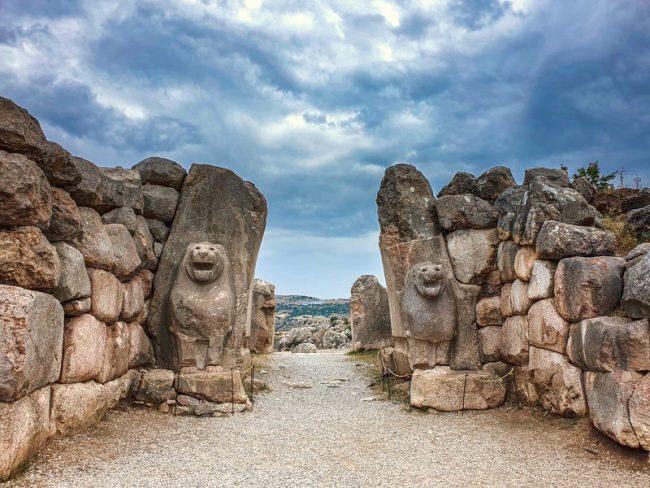
The Hittite State civilization, the Old Hittite kingdom, its capital, Hattusa (modern Boğazköy), was one of the few states in which Anatolia was divided in the second quarter of the 2nd millennium BC, at the Halys bend. Its most beautiful monuments date from the imperial period that followed. Strategically placed in a rocky passage, the capital has an inner enclosure that rises up to a high castle rock (Büyükkale). Expanding greatly during the imperial period, the outer city has a mighty four-mile cycle. The fortifications, defensive towers, and double walls of cyclopean masonry (large irregular blocks without mortar) stand on a stone-faced earthen rampart, itself protected by a stone apron wall. The lapped arches of its gates are flanked by portal statues such as lions or sphinxes that anticipate statues of Late Assyrian palaces. Carved on the stone door jamb of an arch, it is a famous relief of a warrior wearing a characteristic Hittite short skirt and conical helmet.
Elsewhere in the city there are four recognizable buildings as temples, the largest of which has been fully excavated. It is a huge structure surrounded by various store rooms, planned around a large colonnaded courtyard and a small independent temple at one corner. These features and the isolated location of the main sanctuary have no resemblance to Mesopotamian or Syrian temples.

Hattusas Hittite Bogazkoy
Hittites Hittite State Civilization Architecture Sculptures Reliefs
Hittite State Civilization Statues
The modern Hittite knowledge sculpture, first from the portal sculptures of Hattusa, and secondly, the rock sculptures, including those adorning the extraordinary temple called Yazılıkaya, is a little outside of the district. Here, deep fissures in the limestone open to the sky create a setting for the cult, reliefs carved into the vertical faces of the rock. One of the recesses or rooms is decorated with a display of deities, some standing on appropriate cult animals or identified by a hieroglyphic inscription. These figures are carved with only average mastery, and some of the iconography is borrowed from the Hurrians with whom the Hittite royal family married. The figures in the second or inner sanctuary are carved with a work of art inspired by religious fervor. The figure of a young king (Tudhaliyas IV) in the protective embrace of a god is less impressive than the symbolism of a large dagger stabbing into the rock in front of him. Rock reliefs from this period elsewhere in Anatolia – Sirkeli, Gavur Castle and Fraktin for example – are mainly of archaeological interest. They are inferior to contemporary reliefs and Iron Age carvings, of which there is a good example. The Ivriz Ruin in the Taurus Mountains shows a local ruler of the 8th century BC paying homage to a fertility god.
Hattusas Hittite Bogazkoy
Hittites Hittite State Civilization Architecture Sculptures Reliefs
Hittite State Civilization Statues
Monuments such as the İvriz Ruin represent an interesting aftermath of Hittite history. In about 1190 BC the empire was destroyed by the Phrygians, the Hittites exiled from their homeland on the Anatolian plateau, but in the 10th-8th centuries they reappeared as travelers in a small part of city-states such as Milid (modern Arslantepe-Malatya), Samʾal (modern chain) and Karkamış, Taurus or Northern In Syria, where they shared political authority with the native Aramaeans and other peoples. During this Syro-Hittite period, their art and architecture were hybrid and of a rather inferior character, heavily influenced by Assyria, to which the Hittites were often exposed, as well as Phoenicia and Egypt. Sculptures that stand out in their buildings, orthostats that flank the bases of the walls, often alternate from rough, black basalt to oddly white limestone. The columns are made of wood with stone bases and capitals, and larger-than-life monoliths are a common feature. Fortifications are still an important aspect of their city. The ones in Zincirli surround a round town half a mile in diameter, with a high-walled fortress in the middle containing a palace complex. Like all Syrian palaces, they contain one or more hilani units consisting of a colonnaded portico, a long reception room with a staircase adjacent to the roof, and a varying number of retirement rooms (see Art and architecture, Syro-Palestine). A striking example of these is the Bit hilani Kaparu Palace, a high Ḥalaf near the source of the Khābūr River. The almost barbaric array of statues indicates that the city is predominantly Aramaic. gave them an advantage over their competitors. Iron was a stronger material than items made of bronze used by many cultures before the advent of iron.
Hittite Art and Architecture
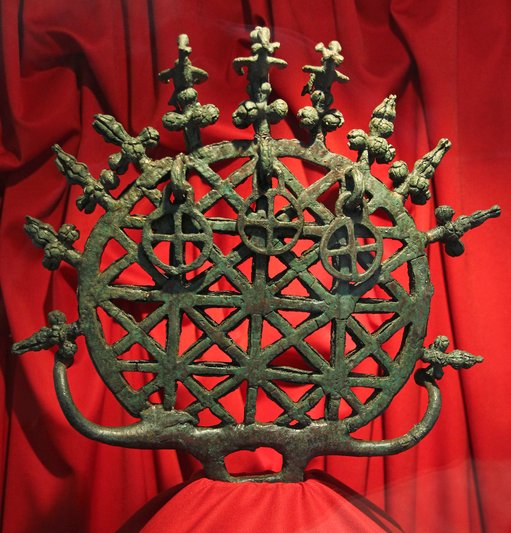
The Hittites were traders and developed excellent metalworking skills. In the 1400s, they began making objects such as iron tools and weapons, which gave them an advantage over their rivals. Iron was a stronger material than bronze items used by many cultures before it.
In Yazılıkaya, just outside the capital Hattusha, the open-air “rooms” made by adding barriers between natural rock formations are decorated with reliefs of Hittite gods. This area was apparently a sanctuary and possibly a burial ground in memory of the ancestors of the ruling dynasty. Unlike public roadside reliefs, it was perhaps a private site for a small group of dynastic and elite.
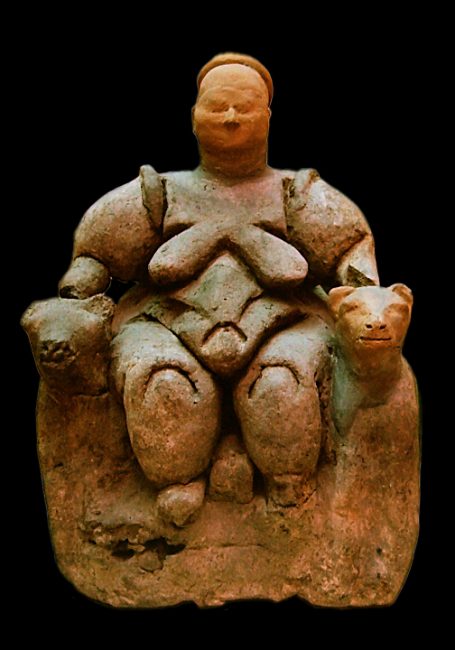
Çatalhöyük Archaeological Ruins
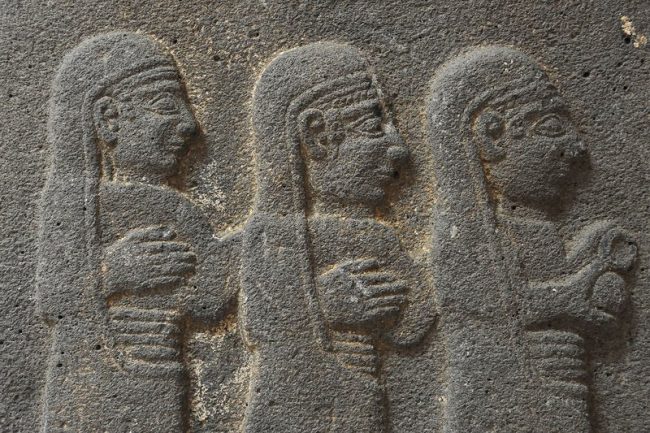
The Hittites were important producers of rock reliefs, which make up a relatively large part of the few artistic remains they left. They created works of art from metal and made pottery such as ritton, a type of drinking vessel. They also carved small cylinder seals from precious stones that, when printed, serve as official signatures for documents. However, the Hittites were very successful in stone carving, especially in relief sculptures where the figure was carved from a solid stone surface but remained attached to it. The reliefs included scenes of some kings, animals and warriors in chariots.
Hittite State Civilization Architecture Sculptures Reliefs
Because the Hittites lived on a rocky terrain surrounded by limestone cliffs, they had plenty of natural resources to build on. Much of their architecture has been lost, but what remains is defensive architecture made up of heavy stone structures. They were heavy double-walled ramparts, some with tunnels, surrounding Hattusha and other cities. As the city expanded over time, the walls grew too. The Hittites were always ready to defend themselves. Some walls had large arched gates with huge entrance statues of lions and sphinxes. The Hittites used a style of stonework called cyclopean masonry, structures built with large stones of many different sizes but not held together by a mortar-like binder (a mixture of sand, cement, and water). The Hittites created a kind of palace structure called bit-hilani, which was an entrance hall surrounded by columns. People approached the hall by climbing a columned staircase. The Hittites also built huge temple structures with numerous storage areas, central courtyards and surrounding rows of columns. Four great temples were built in Hattusha, of which only one has been excavated. Hittite State Civilization.