by Arthipo Author | 9 April 2023 | History of Art
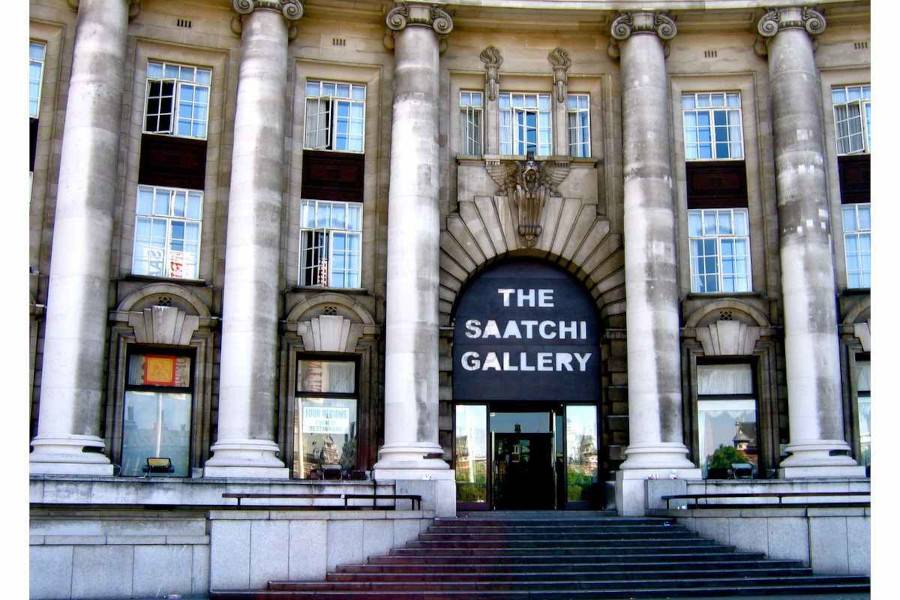
Since 1985, Saatchi Gallery has been presenting contemporary art exhibitions showcasing the work of emerging artists. Exhibitions drawing on Charles Saatchi’s collection have led to the Saatchi Gallery becoming a globally recognized authority in contemporary art. The gallery has built a strong reputation for promoting artists who would later gain worldwide recognition. In 2019, Saatchi Gallery became a registered charity and opened a new chapter in its history.
Saatchi Gallery History, Architectural Structure, Works
Born in Iraq in 1943 and raised in London, Charles Saatchi co-founded the successful advertising agency Saatchi & Saatchi with his brother Maurice.
The company grew into the world’s largest advertising company in the 1980s. The company’s success meant that Charles Saatchi could immerse himself in his passion for contemporary art collection.
In 1985, Saatchi opened a gallery to share his art collection with the public. The first gallery was in a former paint factory in St John’s Wood and featured works by American pop artist Andy Warhol on display.
For the first few years of its existence, the gallery predominantly showcased new American art, but that abruptly changed in 1992 when Saatchi launched the first of a series of shows featuring Young British Artists (YBAs).
The first show showcased an impressive work by Damian Hirst called ‘The Physical Impossibility of Death in the Mind of a Living Person’, featuring a shark preserved in formaldehyde.
In 2003 the gallery moved to County Hall on the South End of the Thames, then again in 2008, this time to Duke of York‘s headquarters on King’s Road, Chelsea. The historic building has been completely renovated with 15 equally sized gallery spaces.
Saatchi Gallery aims to provide an innovative forum for contemporary art, presenting works by largely unseen young artists or international artists whose work has rarely or never been exhibited in the UK.
With the development of general awareness and interest in contemporary art both in the UK and abroad, the audience for contemporary art exhibitions has increased greatly in recent years.
Saatchi Gallery Architectural Structure, Interiors
This iconic building was designed by John Sanders, who also built the Royal Military Academy in Sandhurst in 1801. It was designed as a school for the children of military widows and was called the Royal Military Asylum. In 1909 the school moved to Dover and the building became the Duke of York Barracks.
In WWII, it was the site of treason trials by high-profile German spies. The site was sold by the military and redeveloped as a mix of residence, school, shops and the Saatchi Gallery space. The building was built in 1998 due to its historical value. Listed in degrees.
The Saatchi Gallery has a philosophy of showing contemporary art that other London galleries do not. Or in other words, they’re looking for the next Damien Hirst! The gallery is the largest free exhibition space for contemporary art in the world.
The exhibits change regularly and there is always something new and exciting from different cultures around the world.
Sloane Square, the Duke of York’s headquarters, offers an ideal setting for viewing contemporary art, with its large, proportionate rooms and high ceilings. The gallery occupies the entire 70,000-square-foot building, providing the gallery with scope for a store, educational facilities, and a restaurant cafe/bar. In central London, Kings Road is ideally located in Chelsea.
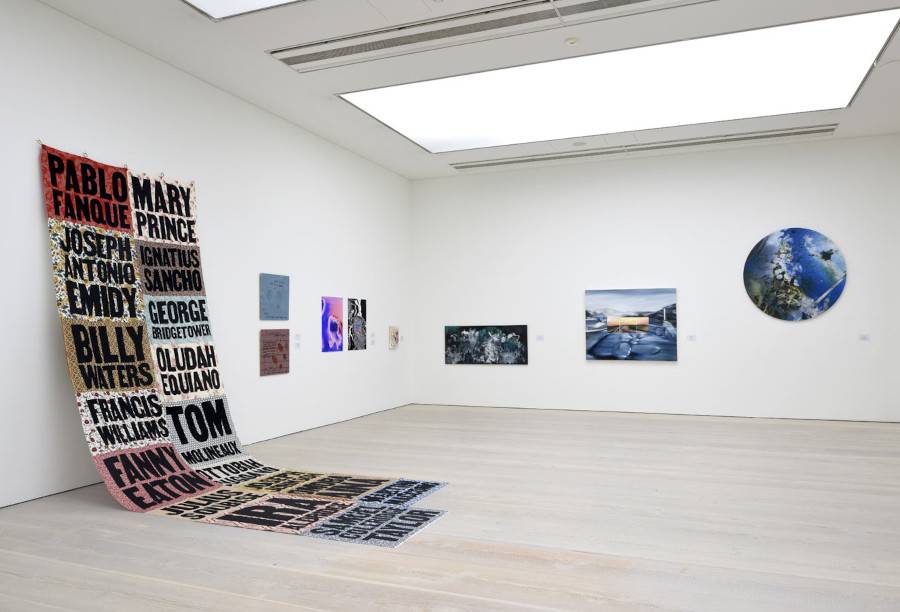
Saatchi Gallery Interior
Saatchi Gallery Notable Works
Andy Warhol – Triple Elvis, Marilyn x11, Atomic Bomb and 16 Jackies
Where is Saatchi Gallery, How to Get There, Directions, Visiting Hours, Entrance Fee
Address: Duke of York’s HQ, King’s Rd, London SW3 4RY, United Kingdom
Visiting the gallery is extremely easy. Sloane Square tube station is a very short walk to the north and the Gallery entrance is well signposted from The King’s Road.
Bus: 11.19,22.49.211.319 (King’s Road) 11.137,211 (Lower Sloane Street)
Train: The nearest mainline train station is Victoria. It is a 10-12 minute walk to the gallery.
Thursday – Sunday 10:00 – 18:00
Closed on Monday, Tuesday and Wednesday
The entrance fee differs at the exhibitions.
by Arthipo Author | 9 April 2023 | History of Art
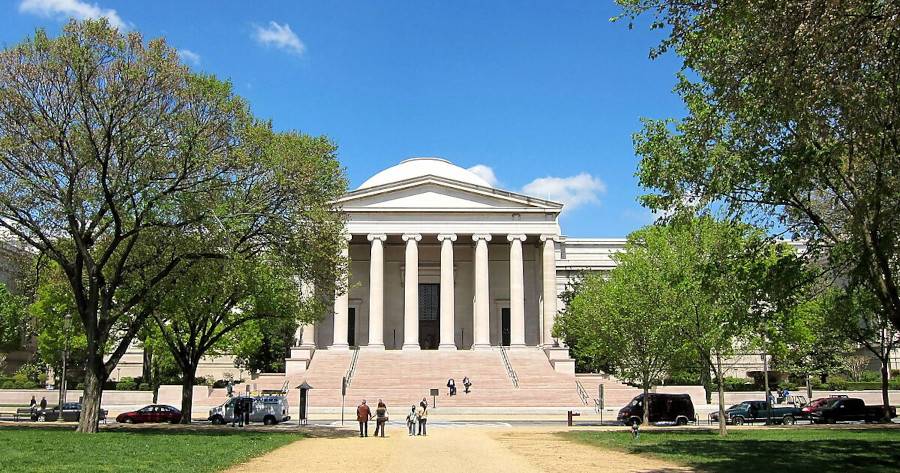
One of the world’s leading museums, the National Gallery of Art Washington preserves, collects, exhibits and develops works of art to the highest possible museum and scientific standards. The gallery’s collection includes approximately 141,000 paintings, drawings, prints, photography, sculpture, decorative arts and new media that trace the evolution of Western art from the Middle Ages to the present. Temporary exhibitions covering the world and art history, and free programs including lectures, tours, concerts, films and family events are offered throughout the year.
National Gallery of Art Washington History, Architectural Structure, Works
The National Gallery lacked a permanent building after a fire at Smithsonian Castle in 1865, causing the Smithsonian to be reluctant to have art collections there. Much of the collection is on loan to the Corcoran Gallery of Art and the Library of Congress. When the National Gallery was leased, the Smithsonian National Gallery was renamed the National Collection of Fine Arts and was renamed the National Museum of American Art again in 1980.
Before the National Gallery of Art was established, Washington had private collections that became public museums. By the 1930s, Washington was home to the Corcoran Art Gallery, the Phillips Collection, and the Smithsonian’s Free Gallery. But these collections were somewhat modest when compared to national art museums in London, Paris and Berlin. Andrew Mellon’s gift of his art collection in 1937 and the opening of the gallery in 1941 “gave the city an instant status in the museum world and helped draw attention to its growing cultural appeal.
National Art Gallery Architectural Structure, Interiors
Andrew Mellon chose American architect John Russell Pope (1874–1937) to design the building of the new museum. The building, now called the West Building, was designed in a neoclassical style, reflecting elements of the Pope’s designs for the nearby National Archives building and the Thomas Jefferson Memorial. The exterior was built with Tennessee pink marble, and Pope noted that skylights had to cover nearly the entire three-acre roof to illuminate and unify the galleries.
Mellon and Pope died within 24 hours of each other in August 1937, shortly after excavation for the foundations of the West Building began, but the museum was built according to their concept. The National Gallery was dedicated on March 17, 1941, when Paul Mellon presented the museum on behalf of his father to President Roosevelt, who accepted the gift for the nation.
When the National Gallery was first established, an adjacent plot of land was reserved for future use. On its 25th anniversary, expansion plans began to take shape. Architect IM Pei (1917-2019) was chosen to design it. The modernist structure he designed was inspired by the trapezoidal shape located between Pennsylvania Avenue and the National Mall and between Third and Fourth Avenues NW. To adapt to the unusual shape of the plot, Pei designed the East Building as two triangles. One houses a library, offices, and academic community, and the other houses the public gallery for permanent collections and exhibitions. Pei associated his design with John Russell Pope’s neoclassical design, requesting that the exterior be covered with the same Tennessee pink marble used for the West Building.
Construction of the East Building began in 1971. A newly formed Collectors Committee commissioned artists such as Henry Moore and Alexander Calder to produce works for the East Building. This committee has continued to give modern art gifts to the National Gallery ever since, including work by Joan Miró, Louise Bourgeois, Yayoi Kusama, Tony Smith, and others.
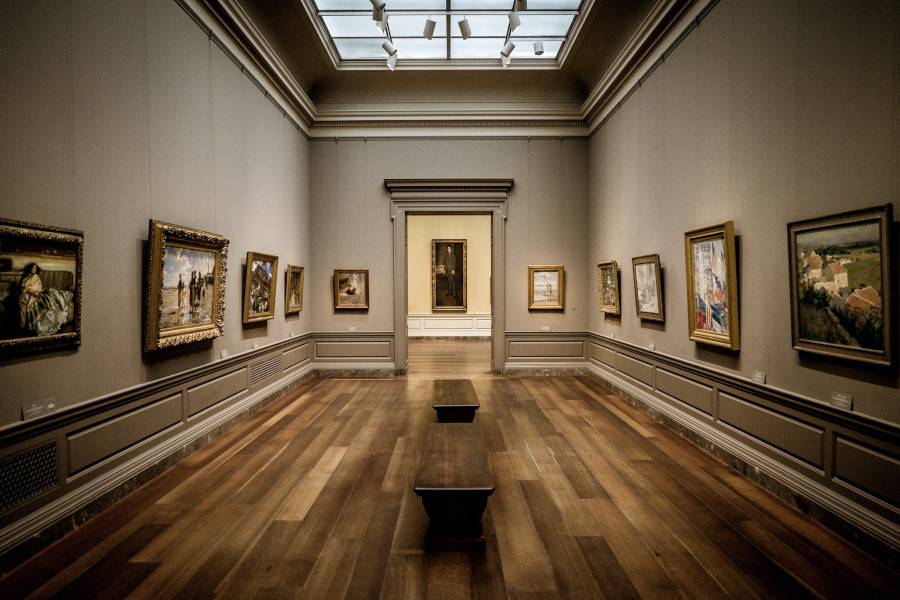
National Gallery of Art Washington Interiors
National Art Gallery Notable Works
When the National Gallery opened to the public, the core of its world-class collection were 126 paintings and 26 sculptures by Andrew Mellon – from Raphael‘s Alba Madonna to Francisco de Goya’s Marquesa de Pontejos and Giovanni Bologna’s Mercury, which now adorns the central fountain. .
The National Gallery has become a “collectibles collection” thanks to the generosity of its founding philanthropists. Samuel H. Kress, Rush Kress, PAB Widener, Joseph Widener, Lessing J. Rosenwald, Chester Dale, Ailsa Mellon Bruce and Paul Mellon.
In the years since Andrew Mellon’s first gift, the National Gallery’s collection has grown to more than 150,000 works, thanks to the generosity of other individuals and organisations.
Where is the National Gallery of Art, How to Get There, Directions, Visiting Hours, Entrance Fee
Located on the National Mall between Third and Ninth Avenues on Constitution Avenue, NW, the National Gallery of Art and Sculpture Garden is open Monday through Saturday from 10:00 am to 5:00 pm and Sunday from 11:00 am to 6:00 pm. Closed on 25 December and 1 January. Entrance is free.
by Arthipo Author | 9 April 2023 | History of Art
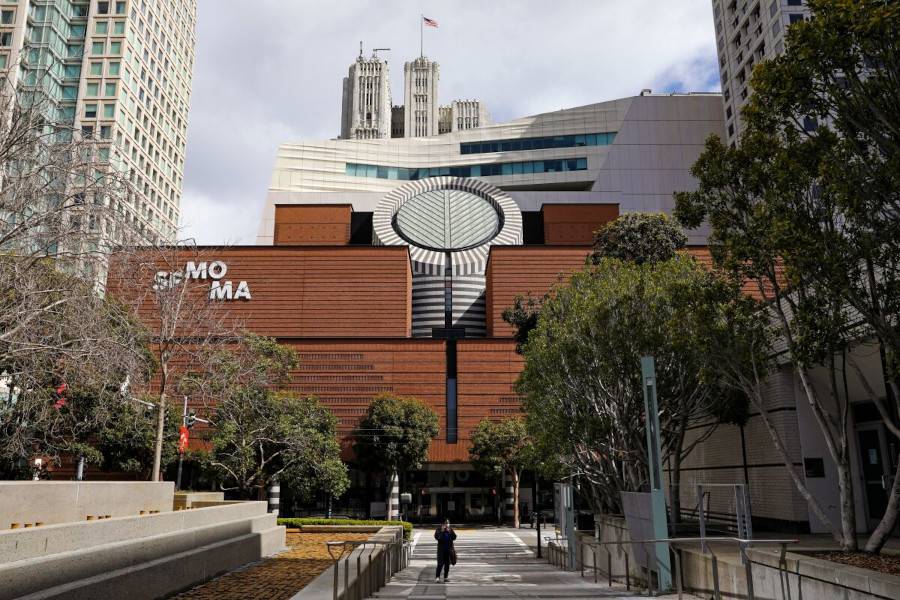
The San Francisco Museum of Modern Art is one of the largest modern and contemporary art museums in the United States and a thriving cultural hub for the Bay Area. The outstanding collection of painting, sculpture, photography, architecture, design and media arts is housed in a LEED Gold certified building designed by global architects Snøhetta and Mario Botta.
San Francisco Museum of Modern Art History, Architecture, Artifacts
Plans to expand the museum at its former location, on the upper floors of the Veterans Memorial Building at San Francisco’s Civic Center, were thwarted in the late 1980s. In the summer of 1988, architects Mario Botta, Thomas Beeby and Frank Gehry were announced as finalists in a competition to design the San Francisco Museum of Modern Art’s new Downtown structure. Among the semi-finalists were Charles Moore and Tadao Ando. The three finalists would submit site-specific design proposals later that year, but the museum canceled its architecture competition after just a month and went with the 45-year-old architect Botta.
Planned with architects Hellmuth, Obata and Kassabaum, the new museum was built on a 5,500-square-foot parking lot on Third Avenue between Mission and Howard streets. South of the Market, an area mostly made up of parking lots near the Moscone Convention Center, was targeted in a deal between the museum, the redevelopment agency, and the Olympia & York development firm. The land was provided by the agency and the developer, but the rest of the museum was privately funded. Construction of the new museum began in early 1992, with its opening in 1995, the institution’s 60th anniversary.
In 2009, SFMOMA opened its 1,340 square meter roof garden. Following an invitational competition held in 2006, the garden was designed by Jensen Architects in collaboration with Conger Moss Guillard Landscape Architecture. It features two outdoor spaces and a glass pavilion with views of the San Francisco skyline, along with the museum’s sculpture collection. It also serves as an indoor/outdoor gallery throughout the year.
Opened in May 2016, the nearly 235,000-square-foot expansion joins the existing building with a new addition stretching from Minna to Howard Streets. The expanded building consists of seven floors dedicated to arts and public programming, and three floors that house the enhanced support area for the museum’s operations. It offers approximately 13,200 square meters of indoor and outdoor gallery space, as well as approximately 1,400 square meters of free-access public space filled with art; art and provides almost six times more public space than the pre-expansion building.
San Francisco Museum of Modern Art Architecture, Interiors
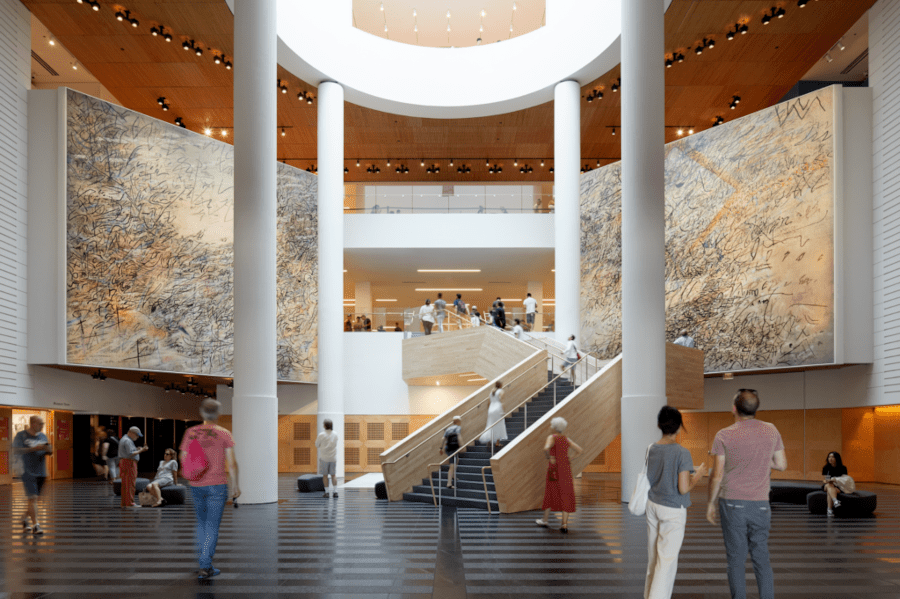
In addition to seven gallery floors, SFMOMA offers 45,000 square feet of free, art-filled public space open to the public. SFMOMA believes that the art of our time is vital and shares it with passion and purpose, and that art and the creative process can open minds and help build a better world. Therefore, it creates unique collections and exciting exhibits.
The extended building is a large-scale vertical garden on the third floor, claimed to be the largest public living wall of native plants in San Francisco; A free ground-floor gallery overlooking Howard Street, with 25-foot (7.6 m) high glass walls, places the art within sight of passers-by; a double-height “white box” area on the fourth floor with sophisticated lighting and sound systems; and state-of-the-art conservation studios on the seventh and eighth floors. The expansion facades are clad in lightweight panels made of Fiber Reinforced Plastic; When completed, it was the largest application of composite technology to architecture in the United States at the time.
San Francisco Museum of Modern Art Interior
San Francisco Museum of Modern Art Notable Works
Intermission by Edward Hopper
A Set of Six Self-Portraits by Andy Warhol
The Flower Carrier by Diego Rivera
Frieda and Diego Rivera by Frida Kahlo
Collection (formerly Untitled) by Robert Rauschenberg
1947-S by Clyfford Still
Ocean Park #54 by Richard Diebenkorn
Untitled, Memphis by William Eggleston
Video Quartet by Christian Marclay
Honey-pop by Tokujin Yoshioka
Where is San Francisco Museum of Modern Art, How to Get There, Directions, Visiting Hours, Entrance Fee
Monday: 10:00-17:00
Tuesday + Wednesday: Closed
Thursday: 13:00-20:00
Fri-Sun: 10:00-17:00
Visitor entrance is at 151 Third Street in San Francisco’s vibrant SoMA neighborhood. Yerba Buena Gardens is close to hotels, restaurants and public transport, and parking garage is next to the museum.
It is located close to the Powell Street and Montgomery Street BART and SF Muni Light Rail stations. You can enter the museum from Third Avenue between Mission and Howard.

by Arthipo Author | 9 April 2023 | History of Art
The Sistine Chapel in the Vatican, the official residence of the Pope, was built by the architect Giovanni dei Dolci by Pope IV. The papal chapel in the Vatican Palace, built for Sixtus. It is famous for its Renaissance frescoes by Michelangelo.
Sistine Chapel History, Architectural Structure, Artifacts
The Sistine Chapel, whose real name is Cappella Magna, is named after Pope IV, who restored the chapel by architect Giovanni dei Dolci between 1473 and 1481. From Sixtus. Since then, the chapel has been a venue for religious, artistic, and civic papal events. In a religious context, the Sistine Chapel is the site of major papal ceremonies and is used by the Holy College of Cardinals to elect a new pope when there is a vacancy. Beginning in 1492, the simple brick building hosted numerous papal meetings where cardinals met to vote for a new pope. A special chimney on the roof of the chapel broadcasts the results of the meeting, white smoke indicates that a pope has been elected, and black smoke indicates that no candidate has yet won a two-thirds majority.
Sistine Chapel Architectural Structure, Interiors, Important Artifacts
The frescoes we examine here introduce us to the world of the content of Revelation. The truths of our faith speak to us in every way here. Human genius took inspiration from them to dress them in unique beauty. Holy Father John Paul II, with these words pronounced in Homily during the Holy Mass celebrated on April 8, 1994, on the occasion of the completion of the restoration of the Last Judgment, Holy Father John Paul II, St. pictures, like pictures in a book, serve to make the truths expressed in the Scriptures more understandable.
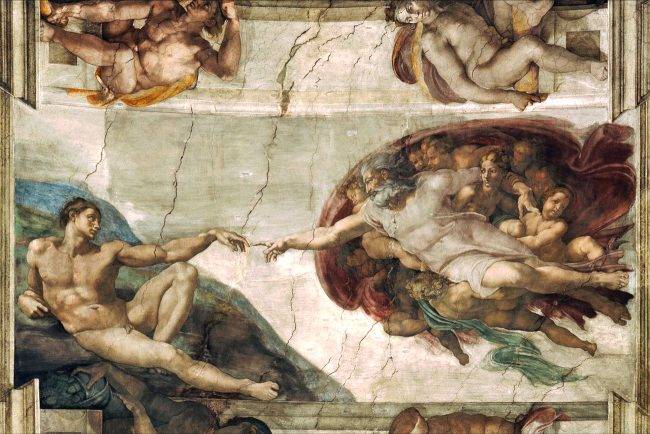
The Sistine Chapel takes its name from Pope Sixtus IV della Rovere (pope from 1471 to 1484), who restored the old Cappella Magna between 1477 and 1480. The 15th-century decoration of the walls includes: false curtains, Tales of Moses (south and entrance walls) and portraits of Jesus (north and entrance walls) and the Pope (north and south and entrance walls). It was originally made by a team of painters consisting of Pietro Perugino, Sandro Botticelli, Domenico Ghirlandaio and Cosimo Rosselli, supported by their own shops, and closer assistants among whom Biagio di Antonio, Bartolomeo della Gatta and Luca Signorelli stand out. On the Ceiling Pier Matteo d’Amelia painted a starry sky. Work on the frescoes began in 1481 and ended in 1482. This is also the history of the following works in marble: the screen, the choir stalls (where the choirmen took their places), and the papal crest door above the entrance. On August 15, 1483, Sixtus IV blessed the new chapel and dedicated it to Our Lady of the Assumption. Sixtus IV’s nephew, Julius II della Rovere (pope from 1503-1513), decided to partially change the decoration and entrusted the work to Michelangelo Buonarroti, who in 1508 painted the Ceiling and the lunettes at the top of the walls.
Michelangelo, Creation of Adam, Sistine Chapel
The work was completed in October 1512, and on the Feast of All Saints (November 1), II. Julius inaugurated the Sistine Chapel with a solemn Mass. Nine central panels show Stories of Creation from the Creation to the Fall of Man. The Flood and subsequent rebirth of humanity with Noah’s family. In it, the flood water is seen as a prophetic sign of the water of Baptism, from which a new humanity emerges from those saved by Christ. In the spaces between the corners, we see five Sibyls and seven Prophets seated on monumental thrones. On the pendentives at the four corners are the Miraculous salvation of Israel, and on the brackets and lunets (north and south and entrance walls) are the Ancestors of Jesus. Towards the end of 1533, Clement VII de’ Medici (pope from 1523 to 1534) commissioned Michelangelo to further alter the decoration of the Sistine Chapel by painting the Last Judgment on the altar wall. This resulted in the loss of 15th-century frescoes, namely the altarpiece of the Virgin, considered among the Apostles, and the first two parts of the Stories of Moses and Jesus painted by Perugino. In this fresco, Michelangelo wanted to show the glorious return of Christ in the light of the New Testament texts. The artist, to his powerful work, in 1536 III. It began during Paul’s pontificate and was completed in the autumn of 1541. Using his extraordinary artistic talents, Michelangelo sought to translate God’s unseen beauty and majesty into visible forms and was guided by the words of Genesis. He made the Sistine Chapel “the temple of the theology of the human body”.

Sistine Chapel Interior
The frescoes of the entrance wall were repainted in the second half of the 16th century: Hendrik van den Broeck repainted the Resurrection of Christ by Ghirlandaio, while Matteo da Lecce demolished the door in 1522. The frescoes of the Sistine Chapel underwent a complete restoration between 1979-1999. The intervention also IV. Marble pieces such as the cantoria, screen and coat of arms of Sixtus were also discussed. It is held in the Conclave Chapel for the High Pontiff selection.
Where is the Sistine Chapel, How to Go, Directions, Visiting Hours, Entrance Fee
Address: 00120, Vatican Museums, Vatican City, Rome
You can reach the Vatican museums on foot, by metro or by bus. Metro stops are Ottaviano and Cipro. The museum can be accessed with a short 8-10 minute walk.
Monday – Thursday 10:00 – 20:00, Friday – Saturday 10:00 – 22:00
closed on sundays
Entry: 17 Euro, you do not need to make a separate reservation for the Sistine Chapel ticket, you can enter the Sistine Chapel with the Vatican Museum ticket.
The Vatican has a strict dress code, no shorts, no hats, no cleavage, no bare shoulders. If you are there in the summer, there is no air conditioning and it can feel overwhelming.

by Arthipo Author | 9 April 2023 | History of Art
Chicago Art Institute is Founded in 1879, one of the largest museums in the world and houses an extraordinary collection of objects from different places, cultures and times. It is also a place of active learning for all who are committed to research, innovation, education and dialogue, constantly aiming for greater public service and civic engagement.
Chicago Art Institute History, Architectural Structure, Works
Chicago Art Institute was founded in 1879 as both a fine arts museum and a school; This was a critical period in Chicago history when civic energies were dedicated to rebuilding the metropolis destroyed by the Great Fire of 1871. The Institute found its permanent home in 1893, when it moved into a building that is now considered the traditional homelands of the Three Fires Council, the Ojibwe, Odawa, and Potawatomi peoples. Constructed in partnership with the city of Chicago for the World’s Columbian Exposition, at the intersection of Michigan Avenue and Adams Street, this building is flanked by two famous bronze lions and remains the museum’s “front door” even today.
Since its founding in 1879, the Art Institute of Chicago has shared its unique collections with the city and the world.
In line with the academic origins of the institution, a research library was built in 1901; This was followed by eight major expansions for the gallery and administrative space, the latest being the Modern Wing, which opened in 2009. The permanent collection has reached nearly 300,000 works of art in fields ranging from plaster moldings and Chinese bronzes to contemporary design, installation art and textiles. Together, the School of the Art Institute of Chicago and the Art Institute of Chicago museum are now internationally recognized as the two leading fine arts institutions in the United States.
Chicago Art Institute Architectural Structure, Interiors
Chicago Art Institute is an architectural monument that represents Chicago’s rich history of educating young artists and recalls the World’s Columbian Exposition of 1893.
The 1893 World’s Columbian Exposition was a celebration of the 400th anniversary of Christopher Columbus’ arrival in North America. But many in Chicago saw it as an exit party for the city. They were excited to host the exhibition as a way to showcase the city’s triumphant rebirth after the Great Chicago Fire of 1871.
Like many of the large, exclusive buildings in the White City, it was designed in the Beaux Arts style preferred by Burnham. Its masonry load-bearing walls are lined with limestone, and the building’s two-story central portico is surrounded by perfectly symmetrical, identical wings. The influence of ancient Greece and Rome can be felt in the ornamentation, which includes Corinthian columns, friezes copied from the Parthenon, a triangular pediment with acroter, and goddess statues on both the north and south façades.
Designed by Boston architecture firm Shepley, Rutan & Coolidge, the original Beaux Arts building has been augmented by eight additional buildings to house the Art Institute’s ever-growing collections, which now include close to 300,000 works of art.
Renzo Piano’s Modern Wing, the most recent building addition in 2009, increased gallery space by 30 percent and added another 264,000 square feet. The addition reflects 21st century technology and concerns about respect for the context and its own environmental impact. The east and west facades of the annex pay homage to the original structure with their limestone exterior, while the north-facing glass wall allows for complete views of Millennium Park.

Chicago Art Institute Interior
Chicago Art Institute Notable Works
The Bedroom– Vincent van Gogh
A Sunday Afternoon on the Island of La Grande Jatte – Georges Seurat
Nighthawks (Nightbirds) – Edward Hopper
American Gothic – Grant Wood
Water Lilies – Claude Monet
The Child’s Bath – Mary Cassatt
Where is Chicago Art Institute, How to Get There, Directions, Visiting Hours, Entrance Fee
Address: 111 S Michigan Ave, Chicago, IL 60603, United States
Use The Art Institute is located just one block east of the Loop and is easily accessible via the city’s “L” train system. The Brown, Green, Orange, Pink, and Purple lines all stop above ground at Adams/Wabash, one block west of the museum. The Red and Blue lines stop at the subway in Monroe, just a few blocks away. Numerous bus lines also stop in front of the museum. Currently, the “L” fee is $2.50 per adult.
Admission: $25, free for kids under 14.
Monday, members only 10:00 am to 11:00 am, public 11:00 am to 6:00 pm
Tuesday – Wednesday Closed
Thursday – Sunday, members only 10:00 – 11:00 am, public 11:00 – 18:00
Closed: Thanksgiving, Christmas, and New Year’s Day