by Arthipo Author | 9 April 2023 | History of Art
The Center Pompidou
Center Pompidou, full name Center National d’art et de Culture Georges-Pompidou (Georges Pompidou National Center for Art and Culture), is a complex building in the 4th arrondissement of Paris, in the Beaubourg district near Les Halles, rue Montorgueil. It was designed in the style of hi-tech architecture by the architectural team of Richard Rogers, Su Rogers, Renzo Piano and Gianfranco Franchini. It is named after the French president, Georges Pompidou, who was appointed under the museum’s management.
The Center Pompidou History, Architecture, Artifacts
Le Center Pompidou is a modern building in Paris that hosts a national modern art gallery, a library and other cultural performances and events.
In 1968, French president Charles de Gaulle first announced that Plato Beaubourg, near Les Halles and the Marais in the heart of Paris, would be the location of a new free public library. A year later, the new French President, Georges Pompidou, announced plans for the Beaubourg structure to include a contemporary art museum and that the new building would bear his name.
Architects from around the world were encouraged to submit designs for the new Center Georges Pompidou. Out of 680 designs submitted, the winning design came from Italian architect Renzo Piano, Italian-British architect Richard Rogers and British designer Su Rogers, who embraced the project with an innovative building that exemplifies high-tech modern architecture.
The building opened in 1977. Major renovations to the building began in 1997 and were completed in 2000. The Musée National d’Art Moderne has become one of the most popular art museums in France, and its permanent collection includes masterpieces and art collections by artists. As well as famous temporary exhibitions such as Pablo Picasso, Frida Kahlo, Wassily Kandinsky, Salvador Dalí and Henri Matisse. Le Center Pompidou’s second outlet was opened in 2010 in Metz, France.

The Center Pompidou Interior
The Center Pompidou Architectural Structure, Interiors
Le Center Pompidou is a modern building in the Beaubourg district of Paris, France. This modern architectural landmark sits next to the Eiffel Tower, Louvre and Notre Dame as one of the most recognizable buildings in Paris. The exterior of the building features a large, rectangular superstructure made of steel and glass. The side of the building is bisected diagonally by the “caterpillar”, which houses the escalators to transport visitors to each floor of the building.
The Pompidou Center’s structural, mechanical and air circulation systems are located on the exterior of the structure, earning it the title of an “inside-out” building. The building is most recognizable by the large tube called the “caterpillar” that cuts the building diagonally. Inside the building are a number of cultural attractions, including the galleries of the Musée National d’Art Moderne (the world’s largest modern art museum).

The Center Pompidou Interior 2
Notable Works of The Center Pompidou
Wassily Kandinsky « Mit dem schwarzen Bogen (Avec l’Arc noir) », 1912
Robert Delaunay « Manège de cochons », 1922
Otto Dix « Bildnis der Journalistin Sylvia von Harden (Portrait de la journaliste Sylvia von Harden) », 1926
Frida Kahlo « The Frame », 1938
Marc Chagall « Les mariés de la Tour Eiffel », 1938-1939
Henri Matisse « La Blouse roumaine », avril 1940
Piet Mondrian « New York City », 1942
Fernand Léger « Les Loisirs-Hommage à Louis David », 1948-1949
Joan Miró « Triptyque Bleu I, Bleu II, Bleu III », 1961
Yves Klein « SE 71, L’Arbre, grande éponge bleue », 1962
Martial Raysse « Made in Japan – La grande Odalisque », 1964
Jean Dubuffet « Le jardin d’hiver », 1968-1970
Where is The Center Pompidou, How to Get There, Directions, Visiting Hours, Entrance Fee
Place Georges-Pompidou 75004 Paris
Open every day except Tuesdays
Museums and exhibitions 11:00 – 21:00
Museums and exhibitions 14€
Metro Rambuteau 11, Hôtel de Ville 1, 11, Châtelet 1, 4, 7, 11, 14
Bus lines 29, 38, 47, 75
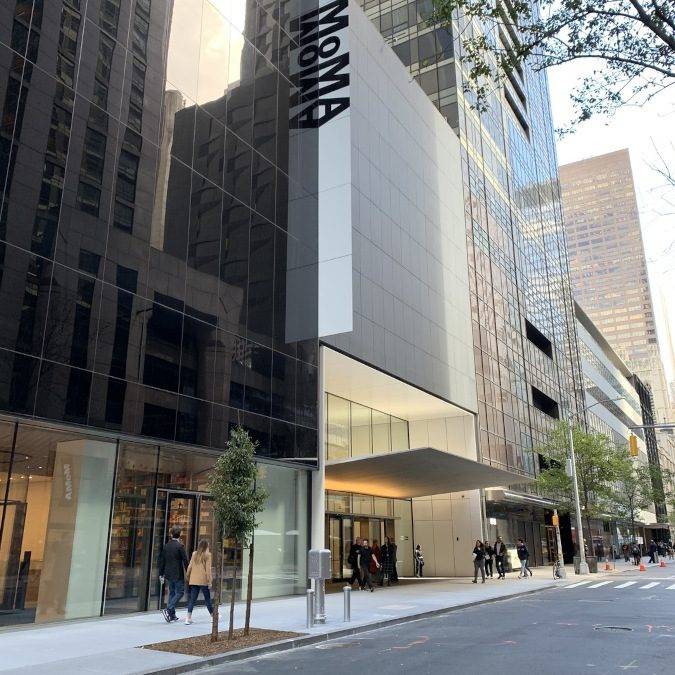
by Arthipo Author | 9 April 2023 | History of Art
The Museum of Modern Art (MoMa)
The Museum of Modern Art, “MoMa” for short, is an art museum in New York City. In the late 1920s, three progressive and influential patrons of the arts, Miss Lillie P. Bliss, Mrs. Cornelius J. Sullivan and Mrs. John D. Rockefeller, Jr. challenged the conservative policies of traditional museums and established an institution dedicated solely to modern art. It is seen by many as “the world’s largest modern art museum”. It is seen as a complement to the Metropolitan Museum of Art, which is close by.
The Museum of Modern Art (MoMa) History, Architectural Structure, Works
Established in 1929 in midtown Manhattan, the Museum of Modern Art (MoMA) was the first museum dedicated to the modern age. The Museum of Modern Art, founded in New York in 1929, with Alfred H. Barr as founding director, is a comprehensive collection of major American and European art from the late 19th century to the present. According to the museum’s founding trustees – particularly Lillie P. Bliss, Mary Quinn Sullivan and Abby Aldrich Rockefeller – the museum was to be dedicated exclusively to the most progressive trends in modern art. The museum’s Cubist, Surrealist, and Abstract Expressionist paintings are particularly extensive. Today, MoMA’s rich and diverse collection offers a panoramic view of modern and contemporary art, from innovative European painting and sculpture of the 1880s to today’s film, design and performance art. From the initial gift of eight prints and one drawing, the collection has grown to include more than 150,000 paintings, sculptures, drawings, prints, photographs, architectural models and objects of drawing and design; approximately 22,000 movies and four million frames; and its Library and Archives with more than 300,000 books, artist books and periodicals, and extensive individual files of more than 70,000 artists. Highlights of the collection include Claude Monet’s Water Lilies, Vincent van Gogh’s Starry Night and Pablo Picasso’s Les Demoiselles d’Avignon, as well as more recent works by Andy Warhol, Elizabeth Murray, Cindy Sherman and many more.
The museum offers an active program of modern and contemporary art exhibitions, more than 1,000 film screenings per year, and a wide range of educational programs from artist talks to family workshops. Architect Yoshio Taniguchi’s new MoMA building, opened in 2004, nearly doubled the space for the Museum’s exhibitions and programs and expanded the beloved Abby Aldrich Rockefeller Sculpture Garden. Today, the Museum welcomes approximately 3 million visitors each year and has more than 130,000 members.
The museum is affiliated with MoMA PS1, one of the oldest and largest non-profit contemporary art centers in the United States. music and performance programming.
The Museum of Modern Art (MoMa) Architectural Structure, Interiors
Alongside painting, sculpture, and graphic art, the museum was one of the first museums in the United States to include industrial design, architecture, photography, and motion pictures in its collection.
Constructed in 1939 by Philip Goodwin and Edward Durell Stone, the museum building was later expanded in 1953 with an addition designed by Philip Johnson, who planned the garden. A condominium tower and a west wing were completed in 1984, doubling the museum’s exhibition space. The expansion and restructuring of the museum – expanding the exhibition space, adding skylights, relocating the main entrance, and constructing an education and research complex – was designed by Yoshio Taniguchi and completed in 2004. Complete renewal of the collection. Rethinking the traditional model of exhibitions based on chronology, discipline, or region, the curators instead showcased works by themes, while also attempting to address diversity issues by integrating more art by women and people of color.
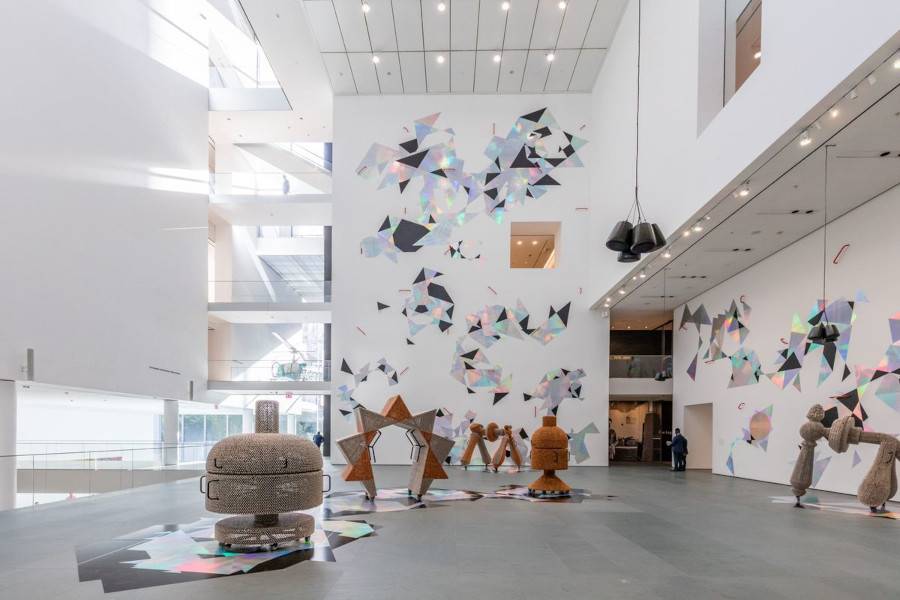
The Museum of Modern Art Interior
The Museum of Modern Art (MoMa) Notable Works
Les Demoiselles d’Avignon – Pablo Picasso
Starry Night – Van Gogh
The Persistence of Memory – Salvador Dali
I and the Village – Marc Chagall
One: Number 31, 1950 – Jackson Pollock
Campbell’s Soup Cans – Andy Warhol
Drowning Girl – Roy Lichtenstein
Water Lilies – Claude Monet
Woman I – Willem de Kooning
Where The Museum of Modern Art (MoMa) is, How to Get There, Directions, Visiting Hours, Entrance Fee
Address: 11 W 53rd St, New York, NY 10019, United States
Bus: BM2, BXM1, M103, M5, M7, S32, QM1, QM10, X63
Train: HARLEM, HUDSON, MONTAUK, ROAD, PORT JEFFERSON, PORT WASHINGTON, RONKONKOMA
Subway: 1, B, NS, E, m, r
It is open between 10:30-17:30 on Sundays and Fridays, and 10:30-19:00 on Saturdays.
Monday mornings are members only: from 10:30am to 1:00pm MoMA is open to members and their guests only. Closed for Thanksgiving and Christmas
Entry fee is $25, 16 and under are free.

by Arthipo Author | 11 March 2023 | Sales Paintings, Sculpt
What is Fine Art Print?
Fine art printing, also known as fine art printing, is a printing process that allows you to achieve much better image definition in photographs, illustrations, designs, collages and any other graphic presentation.
Giclee or fine art printing is done with an inkjet printer on cotton or natural fiber paper (such as rice paper or bamboo) with specially formulated inks. Printers typically create images with a mix of cyan, magenta, yellow, and black, while fine art or fine art printers use other colors such as light cyan, light magenta, the three types of gray, and less common hues such as orange or green. The exact mix depends on the type of printer.
Fine art prints are much cheaper than original works for obvious reasons. Availability of prints at more economical prices helps to create a collection that attracts attention. However, some of the more famous prints can be sold for good prices.
Part of the printmaking world has made fine art accessible enough to be wearable and useful day-to-day. Printmaking in ways that push the boundaries of where art can be seen, the recently launched Coach – Jean Michel Basquiat collection shows just how dynamic fine art can be, with prints on boots, luxury bags, scarves and more. This initiative has been much discussed on social media, but it certainly appeals to the idea that the versatility of fine art prints and reproduction is not for a monopoly. To that end, art prints of the iconic Pablo Picasso, Andy Warhol, and Henri Matisse combined have sold for over $11 million.
Features
Fine print is the term used to refer to professional photos that are usually printed on very high quality paper. This definition, which is definitely not a label, meets certain quality criteria sought by many photographers and printers, especially in paper. These elegant thick papers are acid-free because the acid content of other photo printing papers can make them brittle and crack over time. They also turn yellow when exposed to too much light.
Fine art prints made from acid-free paper have a lifespan of more than a hundred years and generally do not fade, crack or turn yellow. Thin paper must meet certain quality criteria to be considered thin paper. Fine prints are highly sought after by photographers and artists when they choose a paper for their clients.
Standard photo paper meets the needs of customers who use them for occasional viewing. In contrast, fine art paper provides the best light and excellent performance when displaying, and is made to last. Since thin paper is designed for printing high-quality photos, its quality must be ideal for acquiring ink and pigment. The composition of the surface layer should allow the ink to adhere well over time while offering a neutral pH to ensure the paper will stand the test of time.
Finally, fine art paper provides ideal support for intense colors and pronounced contrasts, allowing you to emphasize the composition of the image while also allowing a wide variety of gray tones.
Why Art Print is Preferred?
When the first fine art prints were made, the aim was to achieve the best possible results. This still holds true today. When artists, photographers, illustrators or gallery owners use this type of print, they use it so that the colors are clearer.
However, there is another compelling reason to print using fine art: cotton paper is often used as the printing medium, which means prints can last 150 years or more in good storage conditions.
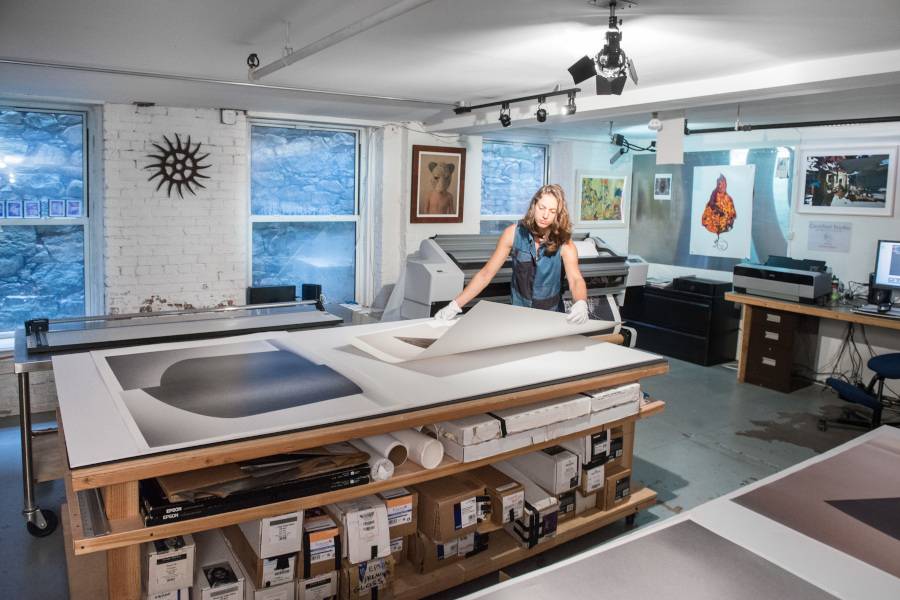
How to make fine art printing? Artistic print painting.
Printmaking as Art
Fine art printing was first used by Jack Duganne at the Nash Editions studio in the USA in the early 90’s, but the precursors of this type of print were made by Graham Nash at the same studio a few years ago. He used what is commonly known as the Iris printer (a machine for industrial-level prepress proofing, often used in packaging and publishing projects) and printed on cotton watercolor paper (traditionally reserved for engraving) with eight different inks.
The history of printmaking is the prints that will form the platform for the greatest paintings of the most famous painters, in fact prints made by printmakers. These paintings are so faithful to their original form that they once again won millions at auction. Often the ability and skill of printers and printmaking certifications are minimized, but printers act as ministers for the lay or wealthy art collector to maintain their collections.
Print as an editorial image produced by a reproduction process; this process is designed to reproduce the original painting and a print surface with wood, metal and/or stone materials. Sensor design creates ink impressions on paper, satin, vellum, glass, fiberglass, textile, ceramic, plastic or copper.
This sensitive process in printmaking provides significant perception to printmaking as its art formula. More than a simple copy of the drawings. However, it makes no distinction between original and print, each equally superior.
Before printmaking technology was used, all prints were made by hand circa 1800. During the engraving by “painter-diggers” during this period, these were viewed as originals, not reproductions. This distinction was redrawn between painter-engraver using photomechanical printing and printers using photomechanical reproduction, posters, pictures, drawings in sample books.