

Russian Art History
Russian art history; Visual arts in Russia developed more slowly than in Europe. With the exception of the portraitist Dmitry Levitsky, no great Russian painters of the 18th and early 19th centuries appeared. In the 19th century, Russia’s architecture flourished as the Slavic Revival focused on medieval art and affirmation of Russian heritage. New interpretive approaches came, in particular, with the massive construction of railway stations, such as the Moscow Train Terminal on Nevsky Prospect (1851) in St. Petersburg and by several of the old railway terminals dating from the second half of the 19th century in Moscow, including the Leningrad Station. The Cathedral of Christ the Savior (Moscow), consecrated in 1883, was a magnificent monument. It was destroyed by the Soviets in 1932 and rebuilt in the 1990s.
Developments in 20th Century Russian Art History
As with literature, the early 20th century saw a burst of creativity in the visual arts, and Russian painters played an important role in the European art scene. This period was considered a return from realism to primitivism, symbolism and abstract painting. Its members, the Jack of Diamonds artist group, defended Europe’s most advanced avant-garde movements in their paintings and exhibited works by European artists such as Albert Gleizes and Ernst Ludwig Kirchner. While Wassily Kandinsky created his highly influential lyrical abstractions during this period, Kazimir Malevich began to explore the rigid, geometric abstraction of Suprematism. Architecture has also often pushed the limits.
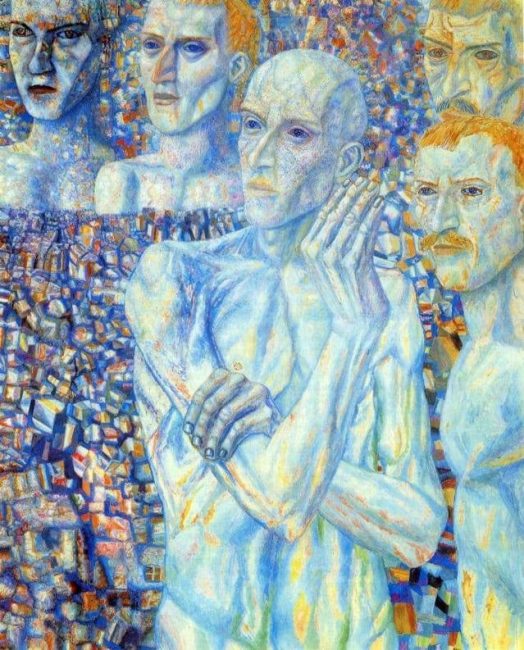
The 1920s were a period of continuous experimentation. Perhaps the most notable movement was Constructivism. Building on Tatlin’s previous experiments and led by El Lissitzky and Aleksandr Rodchenko, the Constructivists preferred solid geometric forms and clear graphic design. Many were also actively involved in the task of creating habitats and daily lifestyles. Non-Constructivist artists, including Pavel Filonov and Mariya Ender, also produced important works during this period.
Developments in 20th Century Russian Art History
But by the late 1920s, the same pressures that experimental writing faced moved into the visual arts. With the imposition of Socialist Realism, the great painters of the early 1920s found themselves increasingly isolated. Eventually their works were removed from museums, and in many cases the artists themselves were almost completely forgotten. Experimental art was replaced by numerous paintings of Vladimir Lenin (founder of the Russian Communist Party and first leader of the Soviet Union).
It wasn’t until the late 1980s that the greatest works of early 20th century Russian art were reintroduced to the public. A solemn, monumental Neoclassicism dominated architecture. It took longer for the visual arts to emerge from the Stalinist years than literature. A new group of artists emerged, all working “underground” until the 1960s and 70s. The main artists are Ernst Neizvestny, Ilya Kabakov, Mikhail Shemyakin and Erik Bulatov. They used various techniques such as primitivism, hyperrealism, grotesque, and abstraction. The architectural production of the post-war period was dominated by modest monumental housing projects. By the turn of the century, such structures were increasingly seen as standout structures, and a new generation of architects focused on creating buildings that fit their context, often combining elements of European and Russian traditions. Beginning in the mid-1980s, with the help of liberalization, artistic experimentation revived in Russia and many Russian painters enjoyed successful exhibitions both at home and abroad. A large number of Russian artists emigrated in the late 1980s, and most of them were well known in the world art scene. Particularly noteworthy was the team of Vitaly Komar and Alex Melamid, internationally acclaimed for a project in the 1990s where people around the world systematically and ironically documented what they value most in a painting.
Important Cultural Institutions for Russian Art History, National Galleries
Some of the most famous museums in the world are Moscow and St. It is located in St. Petersburg. The Pushkin Museum of Fine Arts in Moscow houses treasures of Western European art, while the Tretyakov Gallery has a strong collection of Russian art. The Moscow Kremlin palace, the home of communist power and the president of Russia, also contains a number of museums that include notable cathedrals. The Tolstoy Museum Estate in Moscow has an excellent literary collection. st. Petersburg’s Hermitage is one of the largest art museums in the world. The Russian Museum displays the world’s largest collection of Russian art, and the Russian Ethnographic Museum details Russian culture and daily life throughout history.
st. Petersburg is also home to the country’s oldest museum, the Kunstkammer (officially the Museum of Anthropology and Ethnography of Peter the Great), currently under the direction of the history department of the prestigious Russian Academy of Sciences. In addition, the former tsarist palaces in Pavlovsk, Pushkin and Peterhof in the suburbs of St. Petersburg were restored as museums. They are popular destinations for both Russians and foreign tourists. Elsewhere, there are also several important museums, many of which specialize in regional art, ethnography, and historical collections. For example, the Archangelsk State Museum, founded in 1737, houses collections focused on the history of the northern coast of Russia, and the State United Museum of the Republic of Tatarstan has a wide variety of decorative art and historical, archaeological and ethnographic resources. In addition, the Yaroslavl State Museum of History, Architecture and Art-Conservation Area presents a large collection focusing on Russian history and culture.
Peredvizhniki
The Traveling Art Exhibitions Association, founded in 1870, is commonly known as Peredvizhniki. It means “Travellers” or “Travellers”. He believed in representing everyday life with an accuracy and empathy that reflected their egalitarian social and political views. They worked in a variety of painting genres, from landscape and portrait to genre and historical painting, and by the end of the 19th century they had become the most famous art movement in Russia. In 1923 the group was disbanded, but its influence was felt in many subsequent genres of Russian art.
Russian Futurism
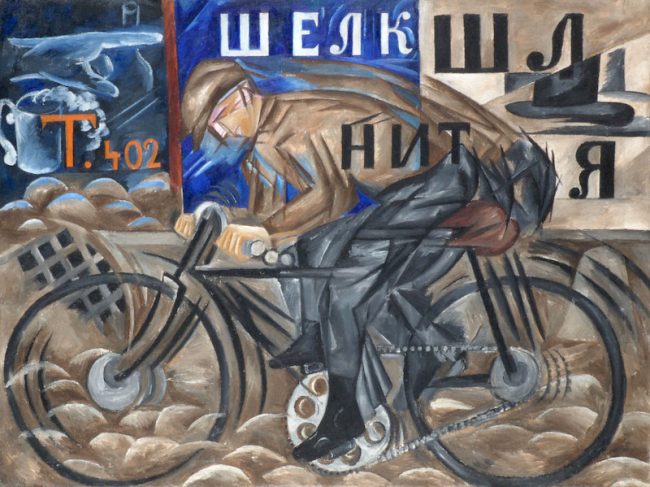
The phenomenon known as Russian Futurism is not an easily identifiable movement for Russian Art History and is completely separate from Italian Futurism, which was founded in Milan in 1909. As an ideological umbrella, Russian Futurism was deliberately flexible, and its diverse artists and practices spanned a roughly period from 1912 to 1916. st. Different collaborative Russian Futurist groups were formed in St. Petersburg and Moscow, publishing magazines, holding discussions and exhibitions of their work. Individuals who practiced futurists (whether self-defined or defined as such by critics and the press) shared a passion for exploring new modes of expression in poetry, visual art, music, and performance, while also breaking the divides between these mediums. Drawing on influences from the West and combining them with their own Russian heritage, the Futurists celebrated new concepts in psychology, color theory, and linguistics. One of its most unusual elements was a secret archaism, or devotion to Russian traditions, despite its heavy focus on new technologies and forms. The experiences of the First World War led many artists to movements such as Suprematism and Constructivism instead of Futurism.
Russian Futurism, Russian Art History
Arguably, since Russian Futurism first emerged as a predominantly literary movement, some of his most striking and original works are experimental books. These collaborations between poets and painters present his most distinctive legacy; this can be traced back to mid-century audio poetry artworks and Conceptual art.
In December 1911, artist and poet David Burliuk and his brothers Vladimir and Nikolai went to their childhood home in the countryside to spend the Christmas holidays. On this holiday, they became acquainted with the work of Pablo Picasso, where the brothers who discovered Cubism experimented with multiple perspectives on canvas, flattening objects into planes and using different color combinations to look for something new.
Suprematism
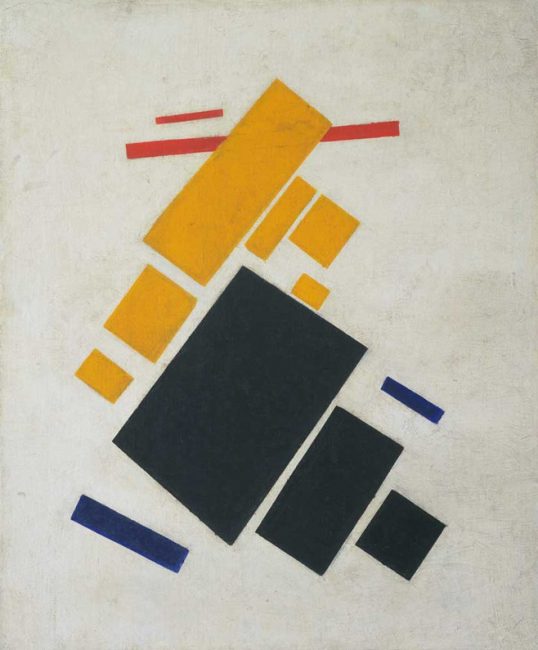
Suprematism, the invention of Russian artist Kazimir Malevich, was one of the first and most radical developments in abstract art. The name came from Malevich’s belief that Suprematist art would be superior to all the arts of the past, leading to “the superiority of pure emotion or perception in the pictorial arts”.
Suprematism, Russian Art History, Kazemir Malevich
Rayonism
Considered the pinnacle of avant-garde art by founders Mikhail Larionov and Natalia Goncharova, Rayonism developed new ways to express energy and movement. Rayonism drew on its insights as a subset of Russian Futurism, scientific discoveries, and theoretical concepts of the fourth dimension. Although the movement incorporated elements of traditional folk culture, it was consciously quite modern. The style and themes of Rayonism reflected contemporary scientific and metaphysical developments. The adoption of transparency and fragmented objects has been influenced by changing understandings of the material world through the discovery of x-rays and radioactivity. The world could no longer be considered completely solid and concrete. This strengthened the theories of fourth-dimensional space and experience as the continuum of our observable universe. By focusing on light as the subject, artists can dissolve objects into the space around them; these layers of transparency were thought to represent the fourth dimension.
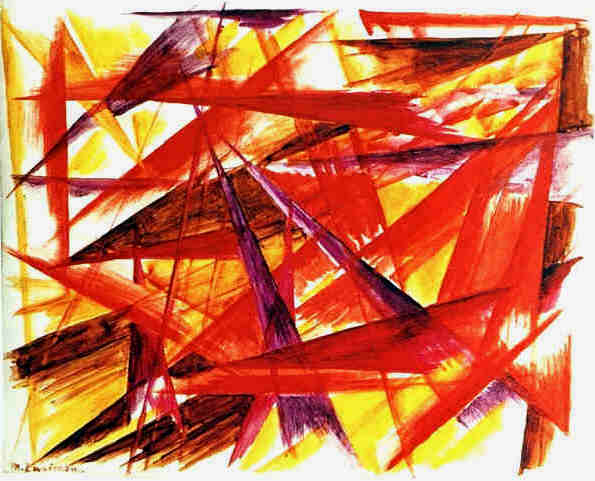
Rayonism, Russian Art History
Rayonists’ interest in popular culture and material (known as faktura) broke away from the expectations of the fine arts. Believing that their work addresses larger questions of existence and spirituality, Rayonists aimed to break down the boundaries between art and life. This would be reflected in the work of Suprematist and Constructivist artists who embraced faktura as a way to build spiritually charged spaces in the post-revolutionary years.
The brainchild of lifelong partners Mikhail Larionov and Natalia Goncharova, Rayonism deliberately synthesized elements of Russian avant-garde painting to create a modern style. Associated with the Diamond Knave (also known as the Diamond King) group, Russian Futurists experimented with Neo-primitivism, restoring traditional motifs in a style that sought to imitate the purity of Russian Cubic art. Futurism blending cubist distortion with movement depictions. In 1912, when Larionov and Goncharova left to stage the Donkey Tail exhibition with the group Knave of Diamonds, they rejected the idea of unity of style and included a wide range of works. This pluralism would remain part of Rayonism, even if artists began to define the general themes of the style.
Socialist Realism
Socialist Realism generally refers to the formally realistic, thematically artificial painting style that emerged in Russia in the years following the 1917 Communist Revolution, particularly after Josef Stalin came to power in 1924. The term also encompasses much of the visual art produced. Related movements in other communist nations from this period, as well as in sculpture, literature, theater and music. Russia had a history of realistic painting as social criticism, particularly through the work of Peredvizhniki artists such as Ilya Repin, and was also at the forefront of developments in avant-garde art. But the realities of socialist rule led him to present positive, propaganda images of cultural icons and everyday conditions in the Soviet Republic.
Like every art movement in history, Socialist Realism promoted artists with technical skills and vision. By the 1940s and 1950s, the younger generation of artists, many of whom were born under Soviet rule, were producing a more sober imagery. However, some continued to innovate in every way open to them, turning to lighting effects, such as the Impressionist technique, as ways to stamp individuality into their work. Russian Art History.
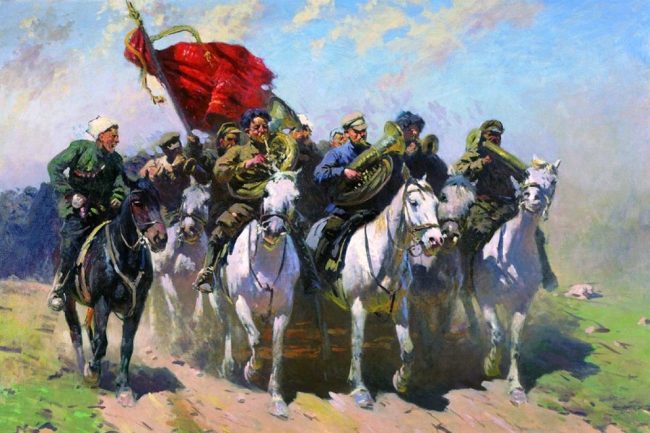
Socialist Realism, Russian Art History