

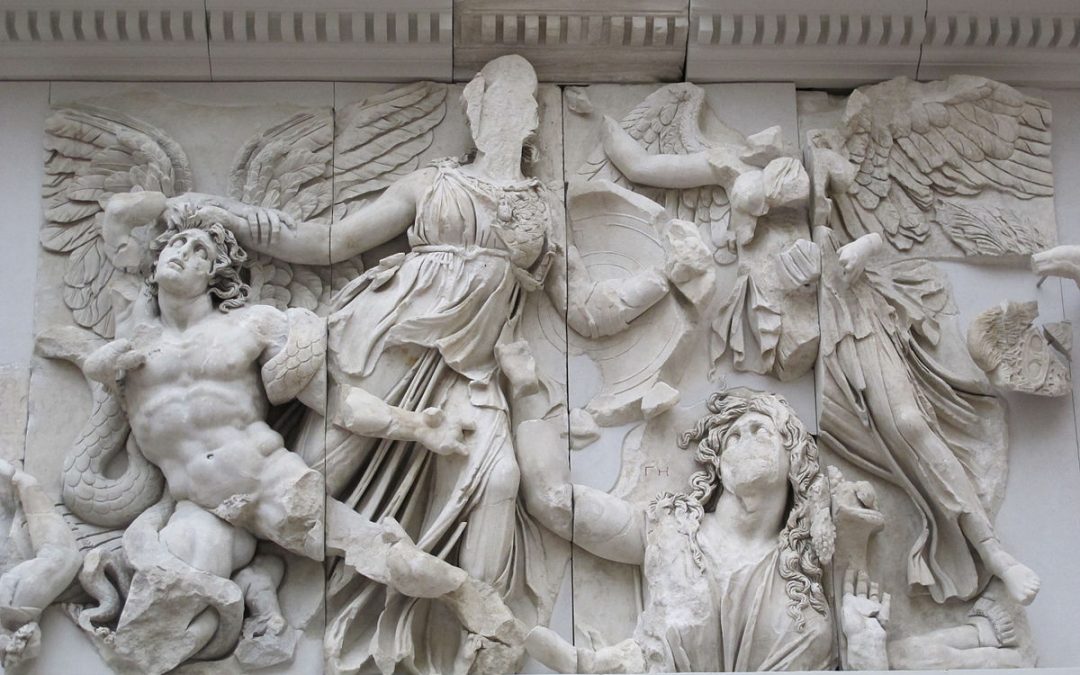
In order to understand the understanding of art in the first age, it is necessary to look at several different periods, Ancient Art Period Characteristics: Hellenistic period, Roman period and Christianity.
Ancient Art Period Characteristics, How Was the Artistic Conception in Ancient Times?
Early antiquity begins in the fifth millennium BC, around 4,500 BC. It is associated with the gradual beginning of civilization in the West. the first “united peoples” or cultures (Sumer, Persia, Akkad, Babylon, Hittite, and Assyria) and the first city-states such as Uruk in Mesopotamia. Increased social organization and cohesion, typically such as Ziggurats, Pyramids, and other elaborate burial types, and the development of metallurgy, such as the use of Copper. Mesopotamia was the first cradle of civilization, followed by Egypt and the lands on both sides of the Nile. The artistic traditions produced by these two cultures (especially Egyptian stonework) had a great influence on successful cultures, especially Ancient Greek cultures. Mesopotamian civilization (Sumerian, Akkadian, Babylonian, Hittite, and Assyrian) spread across Asia Minor, the Levant, and the eastern Mediterranean, and across the Aegean to Crete, the Cyclades, and Mycenae. Aegean art in general is characterized by innovative ceramic art, while Cretan or Minoan art is exemplified by Palace architecture in Knossos, Akrotiri, and elsewhere. It is famous for its goldsmithing and jewellery, exemplified by Mycenaean art from the Protopalatial period and Neopalatial period, Vapheio Trophies, and jewelery carvings (seals). Meanwhile, Egyptian art continued to develop southward.
Ancient Art Period, History of Classical Antiquity
The main influence on the development of art in ancient times was Hellenistic culture and Roman culture. Let’s examine these parts now.
Art of the Archaic Period of Ancient Greece (800-500 BC)
After a period of upheaval in the eastern Mediterranean, triggered by immigration from southern Europe and the Black Sea region, from about 800 BC Ancient Greece began to experience a gradual increase in prosperity and power. So, for example, we see evidence of the first Greek alphabet around 750, while in 776 the first Olympic Games were held in Olympia. In the Archaic era, Ancient Greece was on the border of the Neo-Assyrian Empire and continued to take on elements of its own culture, as well as other Middle Eastern countries, art, as well as religion and mythology. The Archaic period is traditionally said to end with the overthrow of the last tyrant of Athens and the beginning of Athenian Democracy (508 BC). Greek pottery, particularly in the Geometric, Oriental, and Black Figure styles. Sculptures from this period are represented by statues in rigid, hieratic poses, such as the standing naked youth (kouros) and the standing draped girl (korea).
Ancient Greek Classical Art (500-323 BC)
During this period of Classical Antiquity, known as “Classical Greek Culture”, we see the zenith of Greek Civilization, the foundation of all Western Civilization. Classical Greek culture was extremely influential on the Romans, who exported versions of it to all parts of their empire. As a result, Ancient Greek ideas and values had a great influence on the art and architecture of the modern world, especially during the Renaissance art period in Europe and later Neoclassical art and Neoclassical architecture. in 18th Europe and 19th century America. In fact, the humanistic aesthetic and high technical standards of Greek art continued to dominate academic art values in the West until the late 19th century. The Classical Period, which began with the military defeat of the Persians, was dominated by Athens and the League of Delos until about 400 BC. After that, Sparta dominated for a while before hegemony passed to Thebes and the Boeotian League. The final stage was dominated by the Macedonian-led Corinthian League.
Classical Greek art was prominent, along with the colossal chryselephantine statue of Athena Parthenos, the Temple of Zeus at Olympia, the Temple of Hephaestus, the Temple of Athena Nike, and the Theater at Delphi.
Ancient Art Period Characteristics, Hellenistic Period (323-27) BC
The Hellenistic period of Classical Antiquity spans from the death of Alexander the Great in 323 BC to the defining victory of the Romans at the Battle of Actium in 31 BC and the subsequent conquest of Ptolemaic Egypt. He witnessed the spread of Greek culture throughout the Mediterranean Basin and into Europe, Africa, and Asia. For example, Roman art in the West was mostly based on Greek models, while in the East it was the conquests of Alexander the Great. Over the centuries, the Levant led to Greek influence on Central Asian and Indian cultures, leading to forms of Greco-Buddhist art with chain effects as far as Japan. Although the period is often considered inferior to the brilliance of the Greek Classical period, Hellenism ushered in a new, often frustrated, expressionism. Architecture in the ancient city of Ephesus
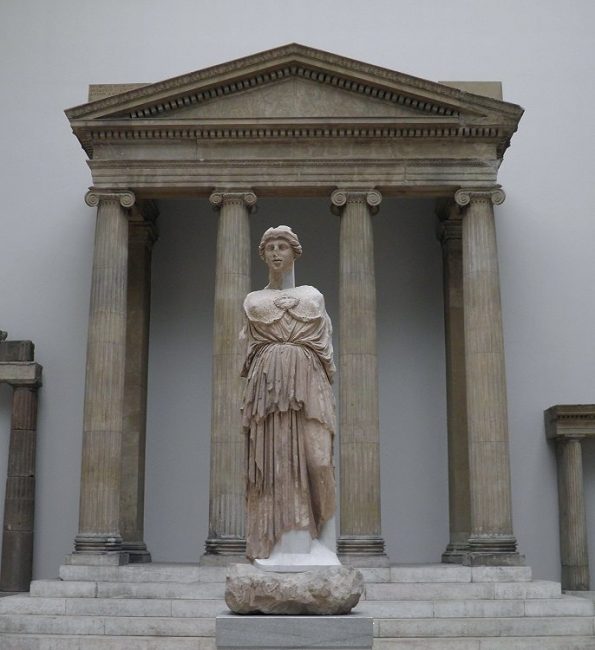
Ancient Art Period Characteristics, Hellenistic Period
Art in the Roman Period (27 BC – 330 AD)
This period spans from the Roman defeat of the Egyptians to the establishment of Byzantium (Constantinople) in 330 AD by Constantine, the new Eastern capital of the Roman Empire. The glorification of Rome through the manufacture of the Pax Romana, covering the entire period of imperial Rome, and tens of thousands of portrait busts of Roman emperors and other notables. Culturally, this period is characterized above all by outstanding Roman architecture ( Pont Du Gard Aqueduct, Titus Arch, Trajan’s Baths, Trajan’s Bridge, Diocletian’s Baths, Arch of Constantine, Roman relief sculptures, Augustan Peace Altar, Trajan’s Column, Antoninus Pius’ Column , and the Column of Marcus Aurelius).
Laocoon and His Son
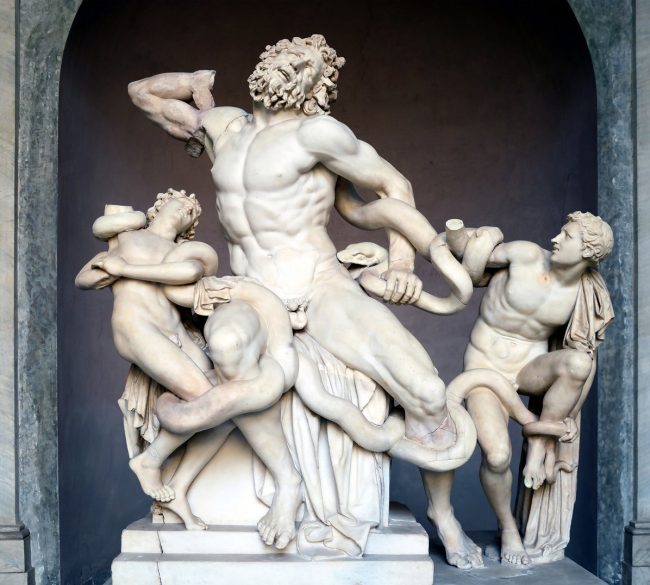
Ancient Art Period Characteristics, Hellenistic Period, Laocoon and Sons
s, Art in Ancient Rome
Art of the Christian Era (330-472)
The final period of Classical Antiquity covers the period of Christianization until the death of Anthemius, the last Roman Emperor in the West. After the fall of Rome, Ravenna became the new Western capital of the Roman Empire. In fact, the European continent would experience four centuries of cultural stagnation, known as the Dark Ages, as the borders of the empire were gradually overrun by the Barbarians. Almost all of our knowledge of early Christian culture and artefacts comes largely from archaeological discoveries.
Unfortunately, very few sacred artworks or designs have survived from the Christian faith of the first three centuries, mostly because the bulk of the early Christians were poor people or slaves. Because of the links between early Christianity and Judaism, and because of the Jewish opposition to images and idolatry due to the Second Command, all images of Christ and the Holy Family would have been banned. However, this Order was not strictly enforced among the Hellenized Jews in the Diaspora. Yet the first examples of this art form appeared around 150 AD, long before Constantine’s Edict of Milan legalized Christianity in 313 AD. Nearly all of these early Christian artifacts were found in the West and were originally based on pagan forms and customs. Cultural highlights of the Christian Period of Classical Antiquity include the magnificent Ravenna Mosaics, as well as architectural masterpieces such as the Basilica of San Vitale, the Chora Church in Constantinople. Ancient Art Period Characteristics.