by Arthipo Author | 2 May 2023 | Actual Art, Art Career
Understanding the Price of Art: For Both Artists and Collectors
Emerging artists want to know how to get started when they don’t have a track record, and established artists wonder if their prices are where they should be. Conversely, are collectors able to Understanding the Price of Art? And are these prices affordable? wants to know.
It may seem to collectors that artists are all over the map when it comes to pricing, causing them to wonder if what they’re buying is worth it.
Collectors buy an item—yes, a piece of art they fall in love with—but it’s a luxury, so they also compare your prices to other things they need or want. Once collectors start doing some mental math and making comparisons, you can bet they’ll second guess you and themselves.
So how do you keep collectors from second-guessing themselves right after a purchase?
There’s a lot to cover in pricing, but here are a few tips to help you understand how to price your artwork (or why a piece of art is priced a certain way).
Make pricing meaningful to collectors (and non-collectors).
The art world is notoriously opaque. Let’s face it, we love to surprise. The art world provides an endless well of secrets that can be exploited.
Artists, Here’s the Method
Collectors are smart people. We know they are smart because they like art. Their friends also know that they are smart. Their friends are also smart, but they do not need to be interested in art, which means they are not as smart as collectors.
So these non-collectors are trying to hide that they are not interested in art and prefer to spend their money selfishly on themselves (joking… sort of… they don’t actually read this, they’re not kidding). And non-collectors who do not devote time and energy to learning art try to hide this lack of understanding by making fun of the art chosen by their collector friends.
It’s not nice. But it always happens.
Besides the obvious solution to making new friends, the collector needs access to more information about you and what you do, as well as solid intelligence on how to price your work.
Basic rules for pricing your artwork
In summary, please comply with the following:
It is impossible to understand the price of art based on the time it took you. Some parts take a ridiculous amount of time, others just flow. This is the life of an artist; You learn to win victories through struggles.
DO NOT judge what you just produced by how much you like it. You will produce something you love even more. Maybe not tomorrow or next week, but you will. Let go and trust the process.
DO NOT price according to what other artists of the same age, socio-economic or educational level have priced their work. This is not a race. Wish them well and get back to work.
NOW, price consistently by the square inch. (Dead artists, wait, we haven’t reached you yet.)
Here’s Mathematics…
Yes, we hear you, you went to school for art, not math. Don’t worry, it’s not fancy here.
Here are a few steps to figuring out how to price your artwork per square inch:
Calculate the square inches of your image (height x width). For example, 8 x 10 = 80 square inches. Simple.
Assign a dollar amount. (From now on we also help you figure it out).
Here’s what happens when you choose a quantity for each size image you create and stick with it.
8 x 10 inches = 80 x $5/in² = $400
16 x 20 inches = 320 x $5/in² = $1,600
30 x 40 inches = 1200 x $5/in² = $6,000
The small ones are a little low, the big ones are a little high.
Consider a sliding scale when pricing your artwork by square inch
As you adjust your pricing by assigning a higher square inch price to smaller jobs and reduce that amount as you grow, you begin to feel a fairer computation.
And for many artists, this comes a little closer to paying an hourly wage, because it takes time to produce art no matter what size you’re working in.
For example, setting pricing on a sliding scale looks like this:
8 x 10 inches = 80 x $10/in² = $800
16 x 20 inches = 320 x $7/in² = $2,240
30 x 40 inches = 1200 x $5/in² = $6,000
How to start pricing your artwork when you’re an emerging artist.
What’s our best advice for those who haven’t started selling your work?
(And no, sales to friends and family don’t count, sorry).
Sell fast at low prices and use the revenue to buy more supplies.
That’s how easy it is to understand the price of art with mathematics.
Here’s Why
When you overvalue your first work – yes, it took you a long time and you are proud of groundbreaking pieces – buyers don’t understand why beginner’s work is so expensive compared to established artists.
The next thing you know is doing collector comparisons. Result: no sale.
Same with resellers and curators. If you price your work too high, your work will be judged by what’s out there, but when you check your achievements and see if they match the asking price, we know you have an unrealistic understanding of your work – and it will. We’ll probably be offended if we bring up the subject of prices. So we have a tough pass.
The other really important thing about selling business at affordable prices when you’re just starting out is that you won’t have a backlog of inventory.
That means you won’t be holding on to that great job, the greatest of all time. Because when you hold on to the best thing you’ve ever done, he’ll stand in your studio and mock you. It will whisper: You will never do anything better. Give up. It won’t work to continue.
TIP: Instead of getting hung up on your favorite pieces, document them thoroughly. Protect them with high quality photos, setup shots, detail shots and multiple angles. Pictures are often more valuable than business as you can save and use these photos for publicity. You can store all your high-quality photos along with information about them, so you can capture your artistic legacy and track your progress throughout your art career.
When is it time to give yourself a raise for your artwork?
There are a few factors to consider before raising your prices.
Consider getting a 10% increase every 1-2 years. This is a small enough amount to go unnoticed and not scare people away, but large enough that collectors can see their “investment” in you increase.
Check the economic forecasts. If we go into a recession, maybe we can delay it for another year.
Can I set gallery commissions?
Simply put, it’s a big no.
Think of your business and the prices you quote like any other commodity. There is a price he trades for, which is listed on shows, wall stickers, and websites, so it can be verified.
Collectors will verify your prices. If they find that prices are higher in one place and less in another, two very bad things will happen.
First, buyers will browse your galleries and exhibitions and call you directly. Dealers hear this all the time and you’ll say, “Oh, I was warned about that!” They kick you out of their world faster than you can say. On top of that, you are now in a position to market and sell yourself when you really have to make art in the studio.
Second, you have devalued your work to the lowest number listed wherever your work is for sale. Why would anyone pay more?
Remember, collectors don’t always know why something is priced, but they are smart enough to know when something looks suspicious. There are too many great artists that are consistent with their prices; collectors don’t have to go through the hassle of finding a pricing system that doesn’t make sense.
Framing and other considerations for pricing your artwork
Instead of setting your prices by frame, choose frames that are roughly 10-15% of your retail price for that job.
For example, a $1000 table should have a frame that costs you $100-$150.
Supply and Demand
Among all the works of the artist, was this work an important piece, that is, a seminal piece that was an important turning point in the artist’s career?
The quality of the work. Is there any damage, has it been maintained etc.
Prestige.
Exhibitions, awards, honors, etc. for the work and the artist.
Collectors considering purchasing historically significant works are advised to work with an art consultant or go to a trusted gallery. There are too many fakes. A consultant can help you find and buy jobs within your budget and with the pedigree you want for your investment.
Artists create a post-art life insurance policy through documents
Artists, this is important;
When you are disconnected from this life, dealers and collectors will be the judge and jury of your work using the criteria above.
In the Artworks Archive you can keep records of your artworks, including all high-quality images, information about that art, and the origin of each work of art (including exhibition date, sales, collections, and publications). Cataloging your own artwork ensures that the value of the work is maintained over time.
Things that hurt the secondary market valuation of art:
Bad auction sales.
Lack of visibility at national demonstrations.
There is no catalog or other critical writing about your work.
Here are some things you should do now to support the evaluation of your business and increase your prices:
Write something about the job that is important to you. You can do this on the arthipo.com platform.
Try to get your best work into major exhibitions so these pieces have a record.
Work with galleries to ensure leading collectors have access to important works purchased.
Look for museums to collect your work, even if it means a discount or donation.
Understanding the Price of Art

by Arthipo Author | 2 May 2023 | Actual Art, Art Philosophy, History of Art
Art and Public Health: Unifying Force and Healing Impact
Although initially seeming like two disciplines that appear unrelated, the combination of these two fields contributes significantly to the social and emotional well-being of societies. The therapeutic aspects of art and its positive effects on people’s mental and physical health are increasingly being recognized. In this article, we will examine the relationship between art and public health and demonstrate how these two fields can come together to improve the overall health and quality of life of societies.
Therapeutic Aspects of Art
The therapeutic aspects of art have been used since ancient times to support people’s mental and emotional health. Artistic activities such as painting, music, dance, and theater have served as essential tools for coping with stress and expressing emotions. Additionally, these activities can assist in treating mental health issues and provide support for people coping with traumas.
Art and Physical Health
Art also has positive effects on people’s physical health. For example, dance and movement-based artistic activities improve participants’ physical parameters such as cardiovascular health, flexibility, and balance. Furthermore, regularly engaging in artistic activities enhances the quality of life and reduces the risk of chronic diseases.
Art and Society
The relationship between art and public health has significant effects at the societal level as well. The organization and popularization of artistic activities promote social cohesion, cultural understanding, and tolerance within communities. This helps people communicate better with each other and show respect for different life experiences. As a result, the overall peace and health of society are supported.
Art and Public Health Policies
The integration of art and public health policies is an essential strategy that should be adopted by governments and local administrations. Implementing these policies plays a significant role in reducing the physical and mental health burdens of communities and improving the quality of life. The integration of art and public health policies can be accomplished in the following ways:
- Art Therapy Programs: Governments and local administrations can organize or support art therapy programs to provide psychological support and treatment. These programs should specifically target vulnerable groups, such as trauma victims, individuals with disabilities, and the elderly.
- Art and Culture Centers: Expanding and increasing the accessibility of art and culture centers contribute to the social and cultural life of communities. These centers provide positive effects on people’s social and mental health by offering art education, exhibitions, events, and workshops.
- Art Education in Schools: Art education should have a significant place in school curricula. Art classes that develop children’s and adolescents’ creativity and emotional intelligence contribute to the development of mental and social skills.
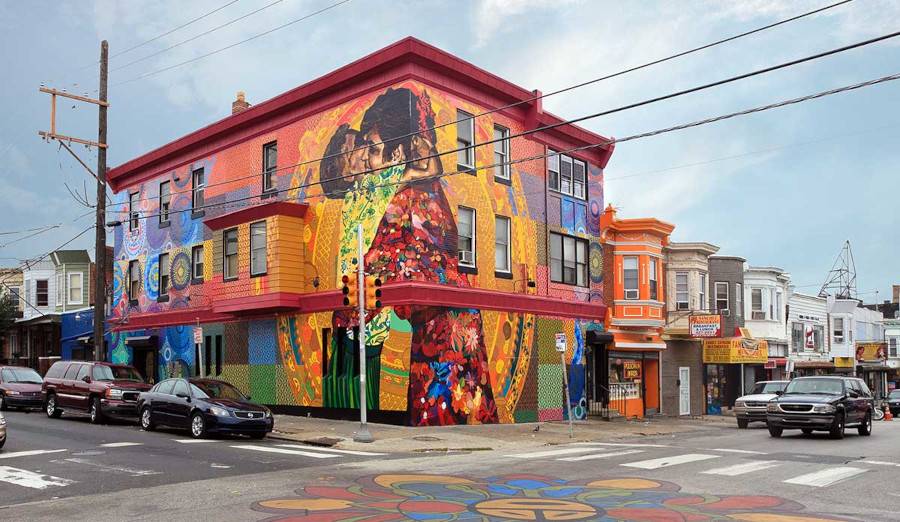
- Art in Public Spaces: Displaying art pieces and organizing events in public spaces expose communities to artistic and cultural values. This positively impacts people’s social and emotional well-being and contributes to public health.
- Art in Public Health Campaigns: Using art in public health campaigns helps deliver messages more effectively. Visual and auditory arts can be used as powerful tools to raise health awareness and guide people toward healthier lifestyle choices.
In conclusion, the integration of art and public health policies has the potential to improve the overall well-being and quality of life of communities. Therefore, governments and local administrations should prioritize integrating art and public health policies and collaborate in these areas. This will not only lead to positive effects on people’s mental and physical health but also enrich the social and cultural life of societies.

by Arthipo Author | 2 May 2023 | Actual Art, Art Career
Seven Rules for Pricing Your Artwork
Seven Rules for Pricing Your Artwork article provides 7 fundamental rules to help artists determine the ideal pricing strategies. Learn tips for creating a successful business model and recommendations for optimizing market value.
There’s a famous quote by Oscar Wilde: “When bankers get together for dinner, they discuss art. When artists get together for dinner, they discuss money.”
As an artist, you know the production side of your work like the back of your hand. You can probably paint with your eyes closed and find a piece that looks decent. You’ve spent thousands of hours mastering your craft. What we often struggle with is the part that comes after putting the finishing touch on an artwork – pricing.
Pricing is strange. Putting a price on something that is extremely personal and has no specific market value is even stranger.
Especially at the beginning of your career or without a reliable nest, you want (and need) to make sales, but you don’t want to undersell yourself.
So, how do you start determining the prices of your artwork to earn the salary you deserve? If you have no consistent history of selling your art within a specific price range or market, follow these Seven Rules for Pricing Your Artwork to get started.
Research Comparable Artworks
Thanks to the internet, we now have access to a wealth of data that makes it a little easier to determine our prices. Put on your research hat and start looking for artists with work similar to what you’re currently producing.
How much do these artists charge for their work? Is there a pattern in this pricing?
Searching for artists with similar work will give you a better idea of what you can and should charge. Make sure you evaluate your work honestly and then compare it to artists with a similar style, working in a similar medium, with a similar amount of experience, and selling in the same geographic region.
Next time you’re at a dinner party with artist friends, lean into the money-talking artist cliché and pick the brains of your successful peers. Ask them how much they sell their work for and why. Open and honest discussions about money will guide you and ensure pricing goes smoothly.
Pay Yourself a Livable Wage
There’s no quicker way to overwork and undervalue yourself.
Producing artwork is not cheap. There are expensive materials, equipment, and studio space to consider.
Of course, when you’re just starting out, something may take you much longer than a master in your field. On the other hand, once you’ve mastered a discipline, it may take you much less time to complete a job and you can demand a much higher price for it.
In short, this is not a foolproof method, but it’s a good way to start measuring the value of your work.
Be Consistent Once You Agree on a Price
If you’re not currently working with a gallery, make sure you compare your work to artwork sold directly by the artist.
Galleries invest time and energy in sales and generally aren’t happy to learn that you’re selling work much cheaper.
Furthermore, other galleries may find out and be less inclined to work with you. Make sure you set the same prices for your studio and your galleries. This way, people can buy your work from your studio or gallery and maintain a positive relationship with your galleries.
However, with more and more people buying artwork online and directly from artists, you may not need to take this commission into account if you’re breaking into the online sales market.
Separate Emotions from Facts
This is a difficult thing. However, it’s not easy to justify your prices to a potential buyer by simply saying that you really like it. If there is a specific piece that you feel really strongly about, especially one that has a personal meaning or emotional value for you, consider keeping those pieces for yourself.
It’s easy to connect with the time, creative effort, and emotion you’ve invested in your work. Take a step back from your work to gain perspective after finishing it. Then, approach your pricing as you would with other products. Some artists like to use a sizing formula. The pricing of your work should be based primarily on its physical properties, not its personal value.
Work at Multiple Price Points
Some new customers may be hesitant to buy higher-priced art pieces. Smaller, cheaper pieces are more accessible. They are also more accessible for buyers who can’t afford the more costly works. For example, a young buyer may not have the money for a $3,000 painting but can afford a $300 painting. They still get a piece of your artwork, and they fall in love with your work. When they have a higher art budget in the future, your art will already be on their minds.
The more people who buy your art, the more exposure it gets. More people will see it, talk about it, and want to learn more about you. This means there is a higher chance that more people will want to buy your work. A good range of prices can encourage goodwill – people will be happy to bring home one of your art pieces, and sales will come back to you.
Be Transparent About Your Prices
Asking for a price is an automatic red flag in collectors’ minds. It signals alarms that you may be changing your prices depending on who’s asking, perceived interest level, and perceived wealth level. Having your prices available, current, and ready on your sales platforms shows your honesty.
Additionally, if you hate talking about money, it helps you avoid many potentially uncomfortable conversations. Putting this information upfront allows the buyer to do all the heavy lifting of decision-making. It gives them time to decide which piece fits their budget, and they can then approach you for an easy transaction.
An easy way to showcase your work and instill confidence in your buyers is through Arthipo’s public portfolio page. It allows you to control what information you make public, connect with your most up-to-date inventory, and offer potential buyers direct communication options with you.
Stand Behind Your Prices with Evidence
Whether you sell a lot of work or are just starting out, have confidence in yourself and your prices. If you don’t, buyers will quickly pick up on it.
The next time someone asks you why a piece is so expensive (which they always will), have a ready answer. Show them that you regularly sell similar art pieces for the same amount. Talk about or print out records of similar sales you’ve made from galleries, dealers, and your studio. People want to justify their purchases with cold, hard evidence. They want to know they’re spending their money wisely.
Reassure them by showing that others have made similar purchases, that your work is valuable, and that your pricing method is methodical and based on facts.
When you’ve taken the time to price your work accurately and realistically, you can stand behind the price. If the buyer wants to go lower, you’ll be prepared to justify your price. Confidence works wonders and helps you bring home the money you deserve.
by Arthipo Author | 1 May 2023 | History of Art
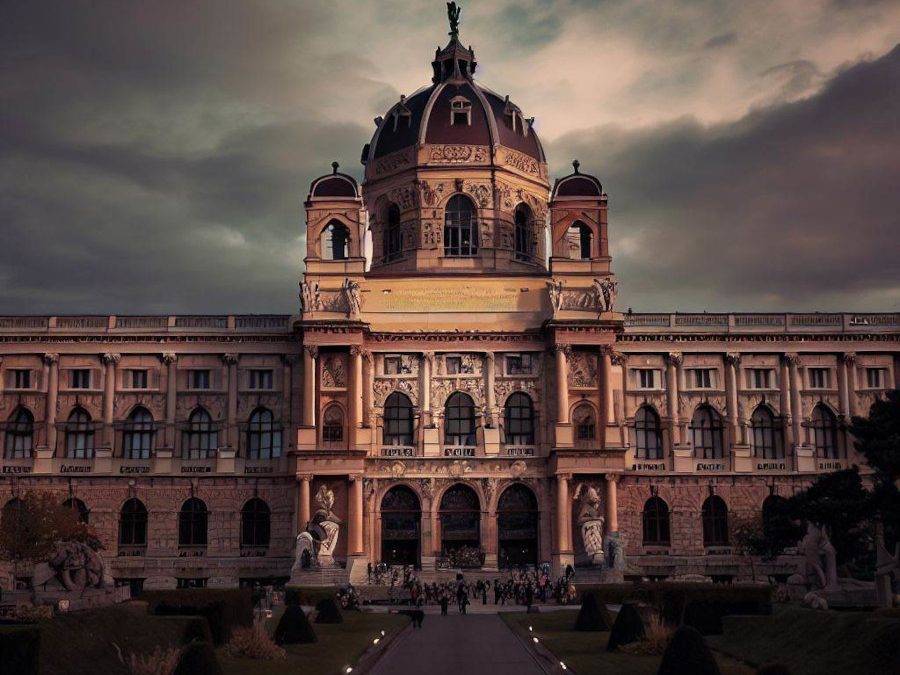
Kunsthistorisches Museum Wien
Kunsthistorisches Museum (Art History Museum) is the art museum in Vienna. The museum contains important collections of sculpture, Oriental art and decorative art, as well as many famous paintings.
The museum’s achievements are mainly the result of the rich accumulation of treasures by successive Habsburg monarchs from the 16th century, particularly by Archduke Leopold William in the mid-17th century. The painting collection draws attention especially with Renaissance and Baroque paintings of Italian, German, Flemish and Spanish schools.
Kunsthistorisches Museum Wien History, Architectural Structure, Artifacts
Planning for the Ringstrasse began in 1857 and included the project of bringing together and displaying the imperial collections in a large new building with state-of-the-art technical and display facilities; However, another ten years passed before the actual holding of the competition to design new museums. The architects involved in 1867 were Hansen, Löhr, Ferstel and Hasenauer, all working in Vienna. After months of jury and patron unable to determine the winner, Gottfried Semper, an internationally renowned architect known for his museum designs, was called in as consultant in 1868. Thereupon, the Emperor initially decided to appoint Semper to modify and complete the plans. Presented by Hasenauer. But it also expanded them.
The museum building took 20 years to complete and was officially opened in 1891. The original purpose was to house art collected over the centuries by various imperial personalities. Considering the interests, wealth, and influence of the Habsburg dynasty, it included a great deal of painting, sculpture, and the like. Such high caliber art deserved a building that was worthy of it. Unfortunately, the proposals initially proposed by various architects were met with little enthusiasm. In the end, the design of the museum was dictated within a larger project prepared by the approval of Emperor Franz Joseph by Gottfried Semper and Karl Freiherr von Hasenauer. The same couple also designed the Burgtheater, another notable building that surrounds the Ringstraßen. This larger project was the Kaiserforum, or Imperial Forum, designed as an impressive complex of buildings and arches spanning the Ring boulevard. The art and natural history museums formed a section designed as mirror images of each other and separated by a landscaped square.
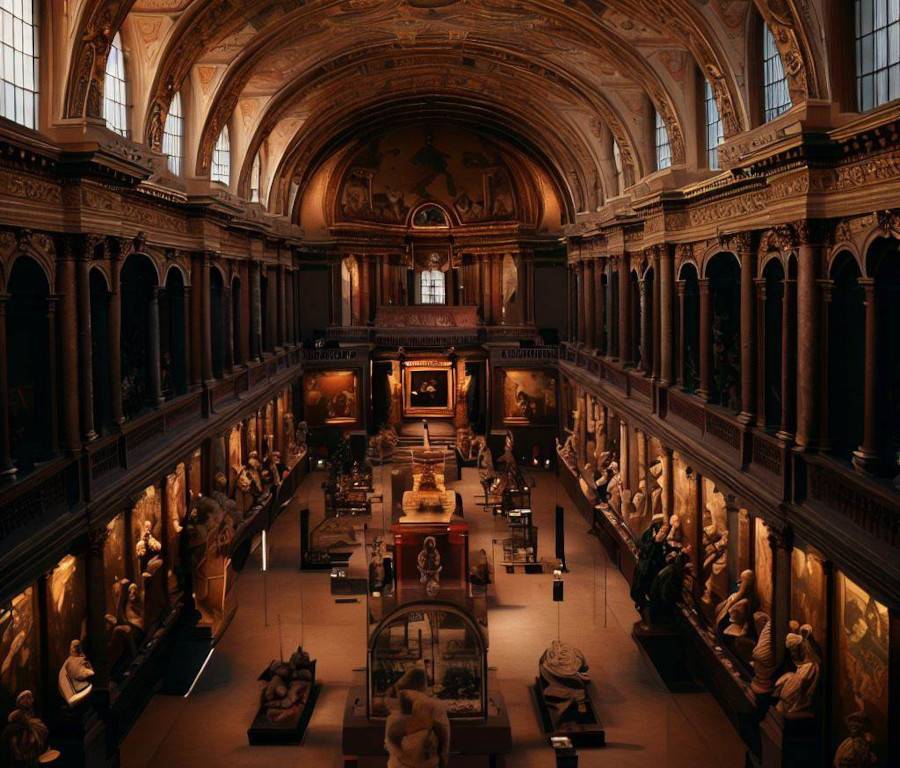
Kunsthistorisches Museum Vienna Interior
Vienna Museum of Art History Architecture, Interiors
The interior of the building combines two architectural traditions: the entrance hall, staircase and dome hall form a dramatic unit celebrating the imperial patron and his predecessors. An additional elegant feature is the circular opening in the ceiling of the entrance hall, which allows visitors to see the dome hall for the first time. Climbing the stairs, visitors pass by Antonio Canova’s painting “Theus Slaughtered the Centaur” on their way to the dome hall, the pinnacle of imperial display. Along this central axis, the wealth of neo-baroque decorations forms one of the most magnificent and magnificent interiors of late nineteenth-century Vienna, probably unrivaled in any other European museum.

Kunsthistorisches Museum Vienna Interior II
Vienna Museum of Art History Important Artifacts
“The Crowning with Thorns” by Caravaggio
“Madonna del Prato” by Raphael
“The Tower of Babel” by Pieter Brueghel
“Infanta” by Velázquez
“The Art of Painting” by Johannes Vermeer
“Hunters in the Snow” by Pieter Brueghel
“The Village Wedding” by Pieter Brueghel
Where is the Vienna Kunsthistorisches Museum, How to Get There, Directions, Visiting Hours, Entrance Fee
Address: Maria-Theresien-Platz, 1010 Wien, Austria
To reach the museum from Westbahnhof, take the U3 underground train to Volkstheater station.
To reach the museum from the Hauptbahnhof, take the D tram to the Burgring/Kunsthistorisches Museum stop.
Public transport: U2, U3, D, 1, 2, 2A, 57A
Every day: 10:00 – 18:00, Thursday: 10:00 – 21:00
Admission is 18 Euros, under 19 is free.
by Arthipo Author | 1 May 2023 | History of Art
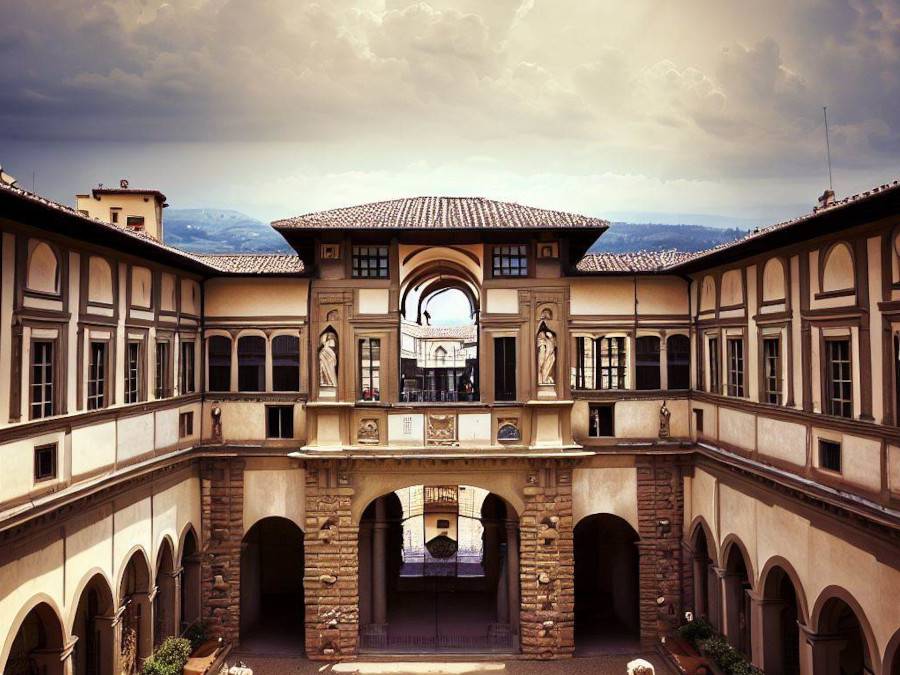
The Uffizi Gallery is considered the most important Italian museum and one of the most beautiful art collections in the world. It is home to masterpieces by some of the greatest artists of all time, including Botticelli, Leonardo da Vinci, Michelangelo, and Raphael. The Uffizi sees around 2 million visitors each year and is Italy’s most visited museum. It’s the kind of place you can’t miss if you love Florence and art.
Uffizi Gallery History, Architectural Structure, Works
Although the Uffizi is known today as a premier art museum, it was not originally intended for use. This magnificent building was founded by Cosimo I de’ Medici to house his offices in Florence, also called the uffizi, from which the museum is named. When Cosimo’s son, Francis I, came to power, he commissioned the architect Bernardo Buontalenti to add a gallery to the top of the building to store his valuable paintings and sculptures. The collection grew under the government of Ferdinand I, who added new pieces to the original collection. After the Medici dynasty, the Lorraine family made a significant contribution to the Uffizi by adding artifacts and reorganizing the gallery. It was under their direction that the Uffizi opened to the public in 1769 and became an art museum. Over the centuries, the gallery has played an important role in Florence city life and was also the seat of the Italian Senate when Florence was the capital of the Italian Republic for five years, from 1865 to 1870.
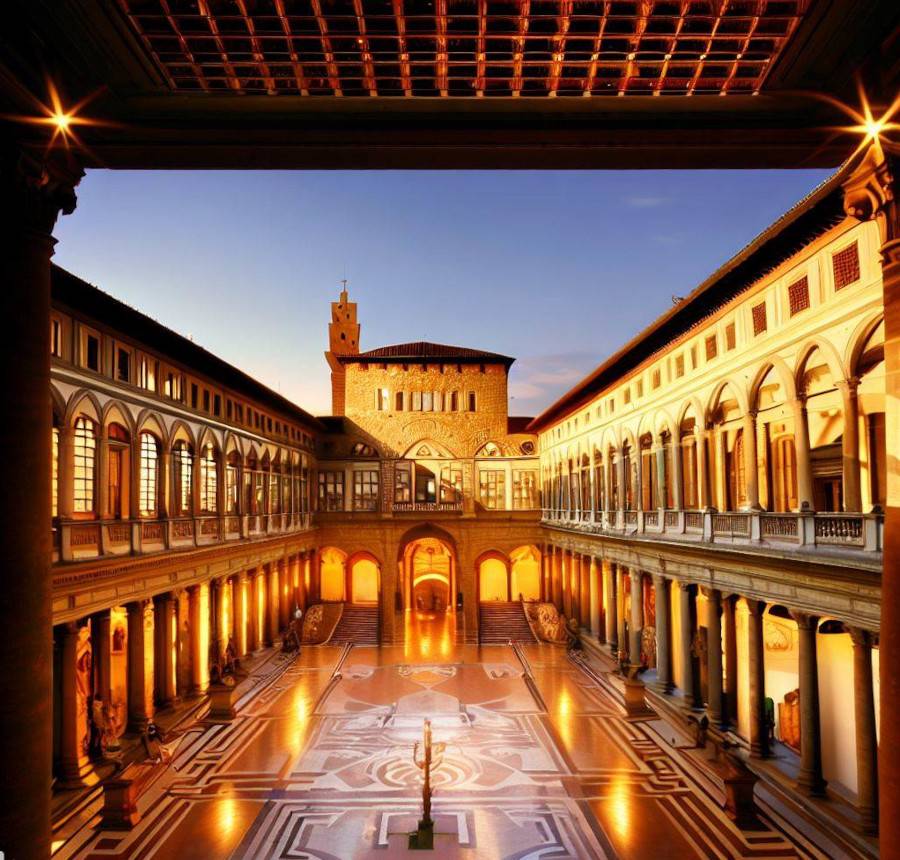
Uffizi Gallery Architectural Structure, Interiors
The Uffizi Galleries first brought together three extraordinary museum complexes in 2014. Together, these three structures contain the core of art collections, valuable artisan-made objects, books, and plants belonging to the Medici, Habsburg-Lorraine, and Savoy families. It is a stunning collection of treasures from Antiquity to the 20th century, and over the years has contributed to the fame of the Uffizi, Pitti Palace and Boboli Gardens. Since the Renaissance, these three museum spaces have been linked by the ingenious Vasari Corridor, and together they form one of the most important, most visited cultural centers in the world.
Historically, the integration of these three structures, which have connected the two banks of the Arno River since the 16th century, is part of the bizarre visions of the life, culture, power and traditions of the ruling families that have marked and influenced the history of this region. The “Di qua d’Arno” palace, commissioned by Cosimo I de’ Medici, was built in the mid-16th century to concentrate all the power of public power and built an administrative center called the Uffizi offices for the Courts, Guilds, Companies and Courts of Florence.
The great architect Giorgio Vasari was responsible for the design of a magnificent building “on the river and almost in the air”. For nearly two hundred years it was meant to house the art collections of the Grand Dukes of Tuscany, and in 1769 it was opened to the public in the modern sense of the word as a museum at the request of Peter Leopold, Grand Duke of Tuscany.
There are 93 rooms in the Uffizi Gallery. The visit starts from the second floor (1-45 halls) and continues to the first floor (46-93).
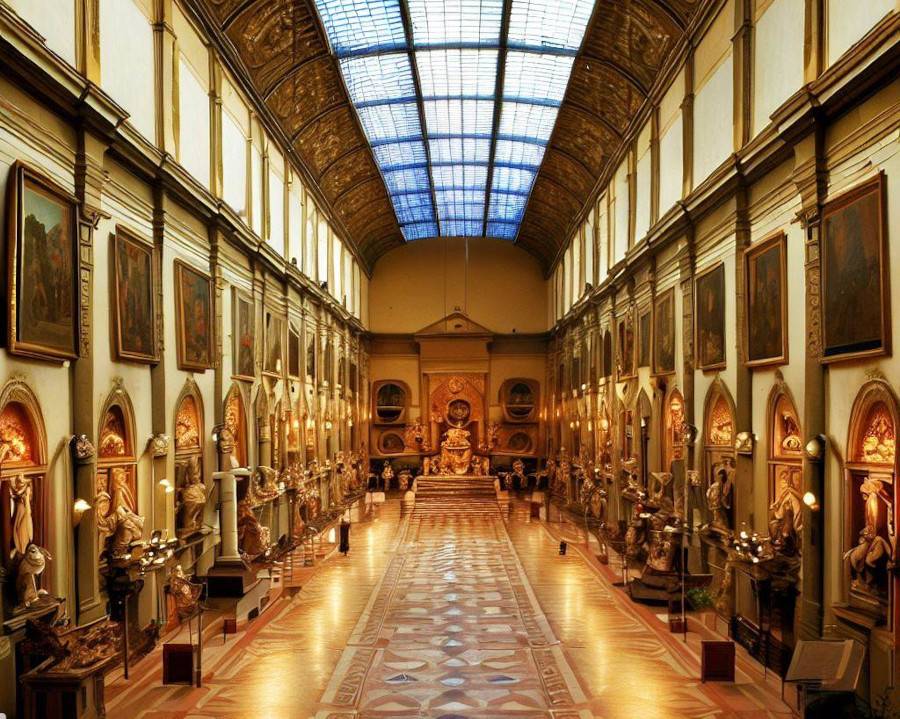
Uffizi Gallery Important Artifacts
In fact, as a museum, the Uffizi is a parade of minds, a gallery of wonders, a compendium of absolute masterpieces from western painting, with the addition of an archaeological collection of ancient Greek and Roman sculptures, in chronological order from the 13th to the 18th centuries. The works are displayed in the frescoed rooms and corridors of the building’s historic second floor with grotesqueries; It has been exhibited on the first floor for several years, and is organized as a museum using contemporary architectural examples in accordance with modern criteria. The building also includes: the Drawings and Prints Department on the first floor, which contains works on paper by some of the greatest artists from the Renaissance to the present; The Library with its rich collections of ancient and modern books, including the first printed edition of The Lives of Vasari; and since 2016, a new large space on the ground floor dedicated to temporary exhibitions, Aula Magliabechiana.
The museum contains some of the most famous paintings in the world – Titian’s Venus of Urbino, Michelangelo’s Tondo Doni, Caravaggio’s Bacchus – and the building itself is a work of art. Probably the most famous are rooms 10-14, completely renovated and reopened in October 2016, home to Botticelli’s masterpieces, The Birth of Venus, La Primavera and the Annunciation.
Uffizi Gallery, How to Go, Directions, Visiting Hours, Entrance Fee
Tuesday to Sunday | 8.15 -18.50; closed Monday
A reservation fee of €4.00 for the Uffizi, €3.00 for the Pitti Palace and €3.00 for the Boboli Gardens will be added to the online and standard ticket price. Reservations can be made online and at the ticket offices of the Uffizi, Pitti Palace, Orsanmichele Museum and Florence National Archaeological Museum.
Piazzale degli Uffizi, 6, Firenze – 50122 Florence, Italy – Phone: +39 055 238 8651
If you come by train, you will arrive at the station in the center of Santa Maria Novella.
Once you arrive in Florence’s historic centre, including the SMN train station, you can easily reach the Uffizi Gallery on foot in around 10 minutes or by taxi if you have any mobility issues.