

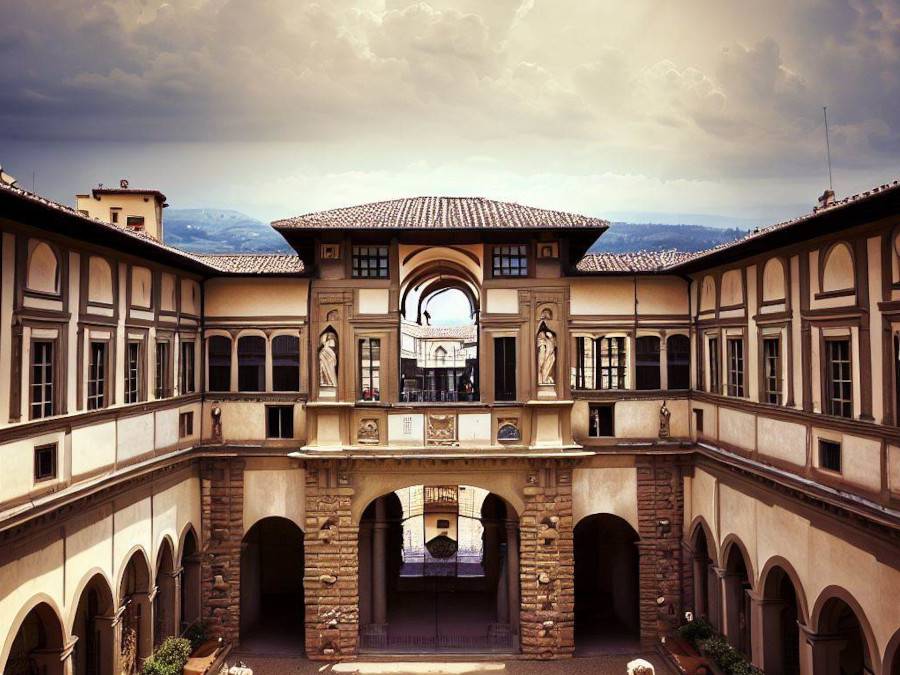
The Uffizi Gallery is considered the most important Italian museum and one of the most beautiful art collections in the world. It is home to masterpieces by some of the greatest artists of all time, including Botticelli, Leonardo da Vinci, Michelangelo, and Raphael. The Uffizi sees around 2 million visitors each year and is Italy’s most visited museum. It’s the kind of place you can’t miss if you love Florence and art.
Uffizi Gallery History, Architectural Structure, Works
Although the Uffizi is known today as a premier art museum, it was not originally intended for use. This magnificent building was founded by Cosimo I de’ Medici to house his offices in Florence, also called the uffizi, from which the museum is named. When Cosimo’s son, Francis I, came to power, he commissioned the architect Bernardo Buontalenti to add a gallery to the top of the building to store his valuable paintings and sculptures. The collection grew under the government of Ferdinand I, who added new pieces to the original collection. After the Medici dynasty, the Lorraine family made a significant contribution to the Uffizi by adding artifacts and reorganizing the gallery. It was under their direction that the Uffizi opened to the public in 1769 and became an art museum. Over the centuries, the gallery has played an important role in Florence city life and was also the seat of the Italian Senate when Florence was the capital of the Italian Republic for five years, from 1865 to 1870.
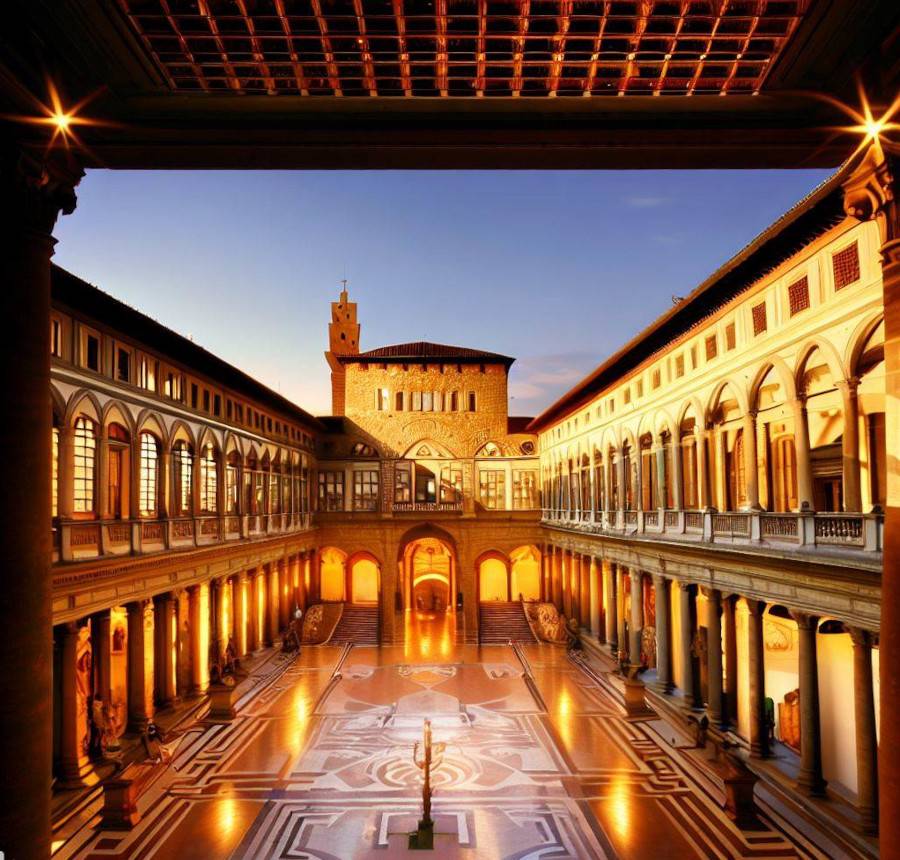
Uffizi Gallery Architectural Structure, Interiors
The Uffizi Galleries first brought together three extraordinary museum complexes in 2014. Together, these three structures contain the core of art collections, valuable artisan-made objects, books, and plants belonging to the Medici, Habsburg-Lorraine, and Savoy families. It is a stunning collection of treasures from Antiquity to the 20th century, and over the years has contributed to the fame of the Uffizi, Pitti Palace and Boboli Gardens. Since the Renaissance, these three museum spaces have been linked by the ingenious Vasari Corridor, and together they form one of the most important, most visited cultural centers in the world.
Historically, the integration of these three structures, which have connected the two banks of the Arno River since the 16th century, is part of the bizarre visions of the life, culture, power and traditions of the ruling families that have marked and influenced the history of this region. The “Di qua d’Arno” palace, commissioned by Cosimo I de’ Medici, was built in the mid-16th century to concentrate all the power of public power and built an administrative center called the Uffizi offices for the Courts, Guilds, Companies and Courts of Florence.
The great architect Giorgio Vasari was responsible for the design of a magnificent building “on the river and almost in the air”. For nearly two hundred years it was meant to house the art collections of the Grand Dukes of Tuscany, and in 1769 it was opened to the public in the modern sense of the word as a museum at the request of Peter Leopold, Grand Duke of Tuscany.
There are 93 rooms in the Uffizi Gallery. The visit starts from the second floor (1-45 halls) and continues to the first floor (46-93).
Uffizi Gallery Important Artifacts
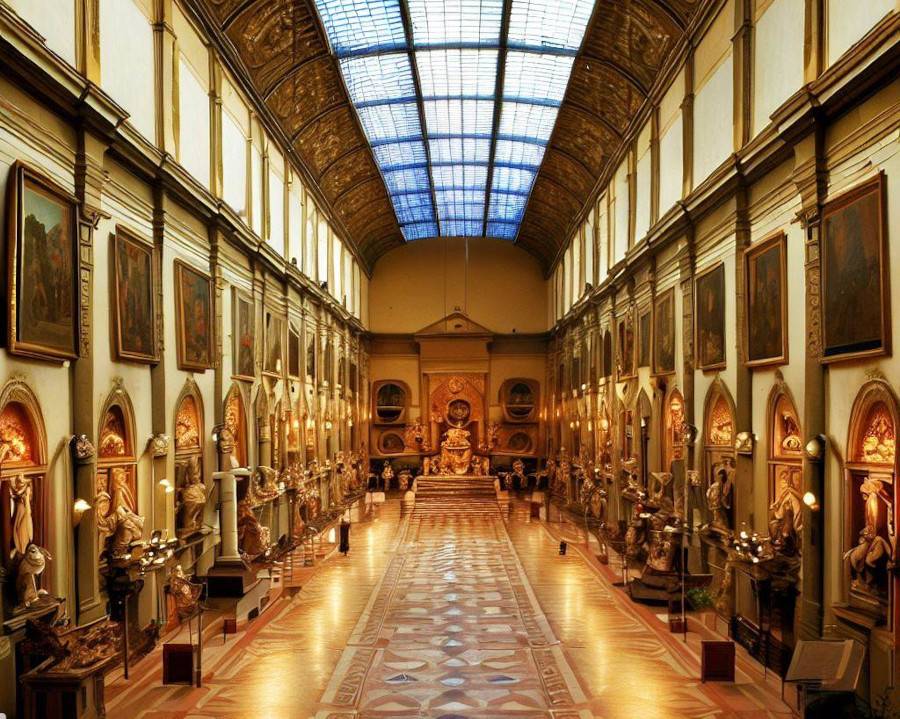
In fact, as a museum, the Uffizi is a parade of minds, a gallery of wonders, a compendium of absolute masterpieces from western painting, with the addition of an archaeological collection of ancient Greek and Roman sculptures, in chronological order from the 13th to the 18th centuries. The works are displayed in the frescoed rooms and corridors of the building’s historic second floor with grotesqueries; It has been exhibited on the first floor for several years, and is organized as a museum using contemporary architectural examples in accordance with modern criteria. The building also includes: the Drawings and Prints Department on the first floor, which contains works on paper by some of the greatest artists from the Renaissance to the present; The Library with its rich collections of ancient and modern books, including the first printed edition of The Lives of Vasari; and since 2016, a new large space on the ground floor dedicated to temporary exhibitions, Aula Magliabechiana.
The museum contains some of the most famous paintings in the world – Titian’s Venus of Urbino, Michelangelo’s Tondo Doni, Caravaggio’s Bacchus – and the building itself is a work of art. Probably the most famous are rooms 10-14, completely renovated and reopened in October 2016, home to Botticelli’s masterpieces, The Birth of Venus, La Primavera and the Annunciation.
Uffizi Gallery, How to Go, Directions, Visiting Hours, Entrance Fee
Tuesday to Sunday | 8.15 -18.50; closed Monday
A reservation fee of €4.00 for the Uffizi, €3.00 for the Pitti Palace and €3.00 for the Boboli Gardens will be added to the online and standard ticket price. Reservations can be made online and at the ticket offices of the Uffizi, Pitti Palace, Orsanmichele Museum and Florence National Archaeological Museum.
Piazzale degli Uffizi, 6, Firenze – 50122 Florence, Italy – Phone: +39 055 238 8651
If you come by train, you will arrive at the station in the center of Santa Maria Novella.
Once you arrive in Florence’s historic centre, including the SMN train station, you can easily reach the Uffizi Gallery on foot in around 10 minutes or by taxi if you have any mobility issues.