

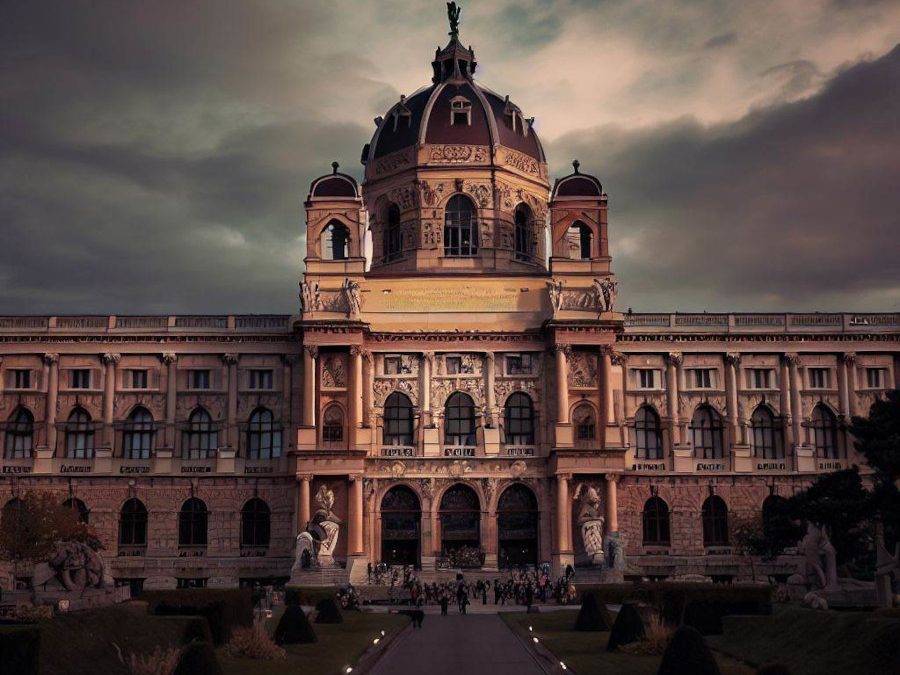
Kunsthistorisches Museum Wien
Kunsthistorisches Museum (Art History Museum) is the art museum in Vienna. The museum contains important collections of sculpture, Oriental art and decorative art, as well as many famous paintings.
The museum’s achievements are mainly the result of the rich accumulation of treasures by successive Habsburg monarchs from the 16th century, particularly by Archduke Leopold William in the mid-17th century. The painting collection draws attention especially with Renaissance and Baroque paintings of Italian, German, Flemish and Spanish schools.
Kunsthistorisches Museum Wien History, Architectural Structure, Artifacts
Planning for the Ringstrasse began in 1857 and included the project of bringing together and displaying the imperial collections in a large new building with state-of-the-art technical and display facilities; However, another ten years passed before the actual holding of the competition to design new museums. The architects involved in 1867 were Hansen, Löhr, Ferstel and Hasenauer, all working in Vienna. After months of jury and patron unable to determine the winner, Gottfried Semper, an internationally renowned architect known for his museum designs, was called in as consultant in 1868. Thereupon, the Emperor initially decided to appoint Semper to modify and complete the plans. Presented by Hasenauer. But it also expanded them.
The museum building took 20 years to complete and was officially opened in 1891. The original purpose was to house art collected over the centuries by various imperial personalities. Considering the interests, wealth, and influence of the Habsburg dynasty, it included a great deal of painting, sculpture, and the like. Such high caliber art deserved a building that was worthy of it. Unfortunately, the proposals initially proposed by various architects were met with little enthusiasm. In the end, the design of the museum was dictated within a larger project prepared by the approval of Emperor Franz Joseph by Gottfried Semper and Karl Freiherr von Hasenauer. The same couple also designed the Burgtheater, another notable building that surrounds the Ringstraßen. This larger project was the Kaiserforum, or Imperial Forum, designed as an impressive complex of buildings and arches spanning the Ring boulevard. The art and natural history museums formed a section designed as mirror images of each other and separated by a landscaped square.
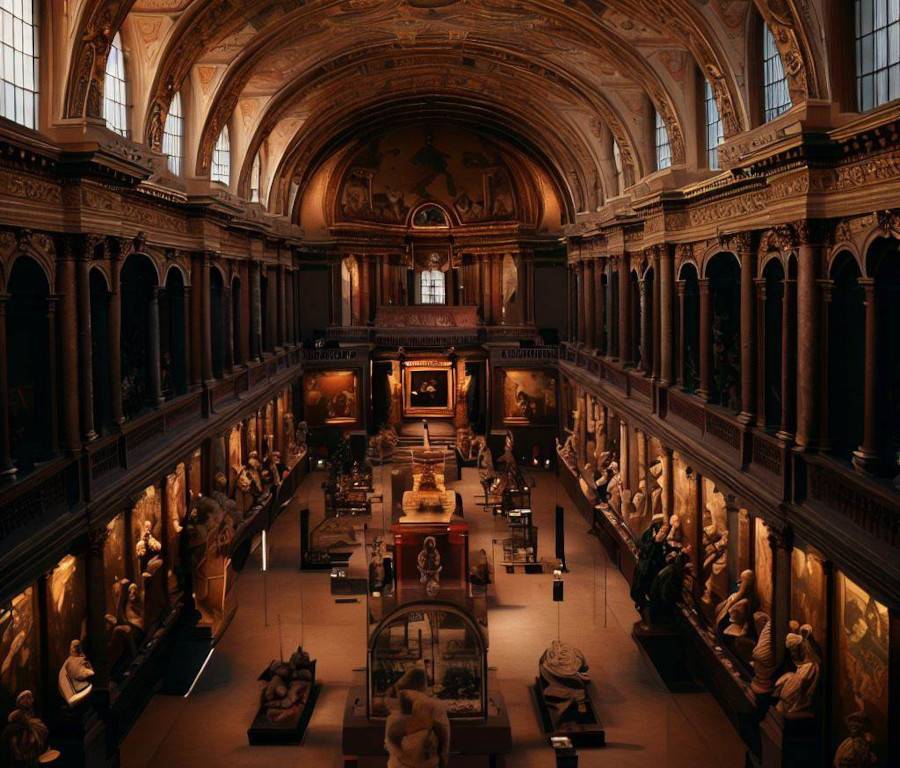
Kunsthistorisches Museum Vienna Interior
Vienna Museum of Art History Architecture, Interiors
The interior of the building combines two architectural traditions: the entrance hall, staircase and dome hall form a dramatic unit celebrating the imperial patron and his predecessors. An additional elegant feature is the circular opening in the ceiling of the entrance hall, which allows visitors to see the dome hall for the first time. Climbing the stairs, visitors pass by Antonio Canova’s painting “Theus Slaughtered the Centaur” on their way to the dome hall, the pinnacle of imperial display. Along this central axis, the wealth of neo-baroque decorations forms one of the most magnificent and magnificent interiors of late nineteenth-century Vienna, probably unrivaled in any other European museum.

Kunsthistorisches Museum Vienna Interior II
Vienna Museum of Art History Important Artifacts
“The Crowning with Thorns” by Caravaggio
“Madonna del Prato” by Raphael
“The Tower of Babel” by Pieter Brueghel
“Infanta” by Velázquez
“The Art of Painting” by Johannes Vermeer
“Hunters in the Snow” by Pieter Brueghel
“The Village Wedding” by Pieter Brueghel
Where is the Vienna Kunsthistorisches Museum, How to Get There, Directions, Visiting Hours, Entrance Fee
Address: Maria-Theresien-Platz, 1010 Wien, Austria
To reach the museum from Westbahnhof, take the U3 underground train to Volkstheater station.
To reach the museum from the Hauptbahnhof, take the D tram to the Burgring/Kunsthistorisches Museum stop.
Public transport: U2, U3, D, 1, 2, 2A, 57A
Every day: 10:00 – 18:00, Thursday: 10:00 – 21:00
Admission is 18 Euros, under 19 is free.