by Arthipo | 12 September 2021 | History of Art
Nemrut Mountain Statues, Kingdom of Commagene and Mount of Gods
Nemrut Mountain Statues is an archeological site that is among the archaeological hits of Asia Minor, and at the same time still keeps many secrets. Until now, it has not been possible to pinpoint what the artificial embankment at the top of the mountain hides. The colossal statues on Mount Nemrut are an excellent example of religious syncretism and Antiochus’ attempt to introduce a new state cult combining Greek, Persian and Armenian influences.
Mount Nemrut Sculptures History and Art
Crowning one of the highest peaks of the Eastern Taurus mountain range in southeast Turkey, Mount Nemrut is the Hierotheseion (temple-tomb and home of the gods), built by the late Hellenistic King Antiochos I of Commagene (69-34 BC). The mausoleum of Antiochus I (69-34 BC), who ruled on Commagene, a kingdom established in the north of Syria and the Euphrates after the collapse of Alexander’s empire, is one of the most ambitious structures of the Hellenistic period. The syncretism of its pantheon and the lineage of its kings, which can be traced through two series of legends, Greek and Persian, is evidence of the dual origin of the culture of this kingdom.
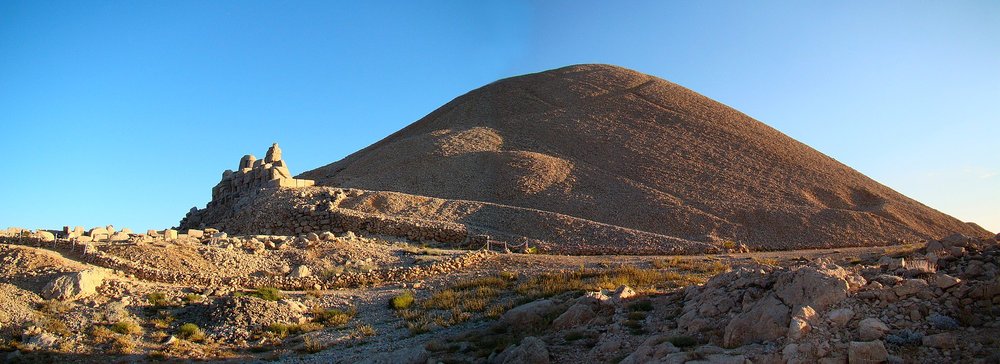
The stone chip mound with a diameter of 145 m and a height of 50 m is surrounded by terraces on three sides in the east, west and north directions. Two separate antique ceremonial paths radiate from the east and west terraces. On either side of these are a pair of guardian animal statues, a lion and an eagle. The heads of the statues fell on the lower floor, which houses two rows of sandstone stelae mounted on pedestals with an altar in front of each stele. One row carries relief sculptures of Persian ancestors by Antiochos’ father, and the other of Macedonian ancestors. Inscriptions on the back of the obelisk record genealogical links. A square altar platform is located on the east side of the east terrace. On the west terrace, an additional row of stelae representing the special significance of Nemrut, handshake scenes (dexiosis) showing Antiochos shaking hands with a god, and a stele with a lion horoscope believed to show the date of construction of the cult site. The north terrace is long, narrow and rectangular and is home to a series of sandstone plinths. There are no reliefs or inscriptions on the stelae located next to the pedestals on the north terrace. It is believed to indicate the date of construction of the cult site. The north terrace is long, narrow and rectangular and is home to a series of sandstone plinths. There are no reliefs or inscriptions on the stelae located next to the pedestals on the north terrace.
Antiochus I Hierotheseion is one of the most ambitious structures of the Hellenistic period. Its intricate design and immense scale came together to create a project unique in the ancient world. A highly advanced technology was used to construct the colossal statues and orthostats (stellars), the equivalent of which could not be found anywhere else for this period. The syncretism of its pantheon and the lineage of its kings, which can be traced through two series of legends, Greek and Persian, is evidence of the dual origin of the culture of this kingdom. The tomb of Antiochos I of Commagene is a unique artistic achievement. The landscaping of the Mount Nemrut natural site is one of the most gigantic undertakings of the Hellenistic period (some of the stone blocks used weigh up to nine tons). The tomb or Hierothestion of Nemrut Dag is a unique witness to the civilization of the Commagene kingdom. Antiochos is represented in this monument by his father Mithridates, a descendant of Darius, and by his mother, Laodice, a descendant of Alexander. This semi-mythical lineage translates in genealogical terms the ambition of a dynasty trying to remain independent from the forces of both the East and the West.

Nemrut Mountain Statues, Tumulus, History Art, Kingdom of Commagene and Mount of Gods
Mount Nemrut Tumulus
The tumulus at Nemrut Dag represents an important, historical period through the liberal syncretism of an original pantheon rather than the tombs at Karakus and Eski Kahta. The assimilation of Zeus with Oromasdes (Persian god Ahuramazda) and Heracles with Artagnes (Persian god Verathragna) finds its artistic counterpart in a sincere blend of Greek, Persian and Anatolian aesthetics in sculptures and reliefs.
It is expressed as value. Important cult areas of Commagene still exist, the structures are original structures and their original relationships can still be observed and perceived. Although the property boundary includes the tumulus and the east, west and north terraces, it does not cover all the ceremonial paths. The greatest threat to the integrity of the property is property damage caused by environmental conditions such as severe seasonal and daily temperature variations, freeze and thaw cycles, wind, snow accumulation and sun exposure. In addition, this region is located in the first degree seismic belt and is very close to the seismically active East Anatolian Fault. For this reason, the tumulus, statues and stelae are sensitive to earthquakes.
King Antiochos ordered that the nomos (inscription) be written in his will. Nomos contains detailed information on the legal and historical aspects of the creation of the hierothesis (sacred space) on Mount Nemrut and the establishment of a new religious cult. The inscription is located on both the East and West Terraces and has the same wording, with minor spelling differences. To get a general idea of the tone and message of Antiochus’ inscription, all you have to do is read the following excerpt, “The honors sanctioned by an immortal judgment will uncompromisingly pursue him the wrath of demons and all gods, both himself and his descendants, with any punishment. ”
By Who Made The Nemrut Mountain Sculptures, History, Art
When the entire text of Nomos was translated, it turned out that the mausoleum was built while the king lived “the life of many years”. Nomos also contains instruction that the new cult should be celebrated throughout the Kingdom, particularly on Mount Nemrut. The text of the inscription also gives instructions on how to celebrate festivals in honor of the gods, including Antiochus himself. Specially designated days are the “king’s body” and the birthday of the coronation. Antiochus devoted these two days to the revelations of the demons), guiding him during the successful reign of the kingdom. At this point, it is worth noting that in ancient times the term “demon” was ambiguous, describing both positive and negative superhuman beings; in this sense, demons often served as guardian spirits and the role Antiochus clearly refers to.

By Who Made The Nemrut Mountain Sculptures, History, Art Who Does the Mount Nemrut Statues Represent
Who Does the Nemrut Mountain Statues Represent?
Looking from left to right, the group of figures sitting monumental statues on Mount Nemrut are: Antiochus, goddess of Commagene, Zeus-Orosmasdes-Ahura Mazda, Apollo-Mithras-Helios-Hermes and Artagnes-Bahram-Herakles-Ares. The complex nomenclature of these gods is due to the syncretic character of the religion promoted by Antiochus, which combined elements of Zoroastrianism and the classical Greek pantheon. The statues of the gods are seated, on huge thrones, and their feet rest on the pedestals between the legs of the thrones. It is worth noting the contrast between the relatively clumsy performance of the statues’ bodies and the precision and care that characterizes their heads. The figures of the gods consist of horizontally arranged layers of limestone blocks.
The clothing of the monumental statues is barely marked and lacks detail. Male figures wear costumes in oriental style: shoes, trousers, long-sleeved tunics and coats; The goddess of Commagene is dressed in Greek style with Chiton and himation. The goddess’ hair is parted and combed back, and her head is adorned with a braided wreath of poppies and fruits. Antiochus, Zeus and Apollo hold bundles of branches, called barom, in their left hands, which serve ritual purposes in Zoroastrianism. Heracles supports a stick on his shoulder and Commagene has the blessing. There was a terrace in front of the monumental statues, probably for cult purposes. Its dimensions indicate that it can hold an important meeting. Its sides are marked by rows of blocks set on stone plinths, each with altars in front. The row bordering the northern boundary of the East Terrace consisted of 15 blocks decorated with low reliefs depicting the Persian, Armenian and Commagene ancestors of King Antiochus. The southern row, on the other hand, consisted of 17 steles with depictions of their ancestors of Greek origin.

Nemrut Mountain Statues West Terrace Material Used
Nemrut Mountain Statues West Terrace
The appearance of the West Terrace actually almost mirrored the East Terrace. Also the most important element was the group of monumental figures of seated deities, guarded on either side by a pair of an eagle and a lion. Looking closely at the statues, it is possible to see a few minor differences in their appearance and clothing. Zeus and Heracles wrinkle their foreheads and, with their impressive beards, give them a much older and nobler look than Apollo and Antiochus, who were portrayed as youthful and neatly shaved. Also on the West Terrace there are two rows of steles with pictures of the ancestors of King Antiochus. The south row, consisting of 15 blocks, showed the eastern ancestors of Antiochos. The second row, which marked the western boundary of the terrace, depicted the king’s ancestors from the West. The north side of the terrace remained open to provide access to the North and East terraces. Additionally, on the West Terrace, there was the main entrance to the area of the hierothesis for guests arriving via the main gateway from the direction of Arsameia. The secondary ceremonial route led directly to the East Terrace. There is an additional North Terrace along the path from the West Terrace to the East Terrace. Visitors can see 42 unfinished blocks lying on the hillside. They are probably accompanied by the 57 bases on which they were originally fixed. Because these blocks are perfectly smooth and do not have any decorations, researchers tend to assume that they served as a windbreak for pilgrims.
However, it is not the figures of Antiochus, his ancestors and gods that have fascinated researchers and amateur astrologers the most since the discovery of the tumulus on Mount Nemrut. The relief, which depicts a lion whose body is adorned with nineteen stars, most likely reflecting the constellation Leo, caught their attention. A sickle hanging from the lion’s neck probably symbolizes the moon. Moreover, three more stars can be seen on the back of the animal, often interpreted as examples of three planets when viewed from the left: Mars, Mercury and Jupiter. The idea that the diagram depicted in the relief could reflect the real situation in the sky has long caused immeasurable excitement and has been the subject of much speculation, guesswork and interpretation.
Material Used
The monuments on Nemrut Mountain Statues were built using two main types of rock materials; the first was a gray-green rock called tufite, consisting of a pyroclastic material containing a significant mixture of sedimentary material. These include steles with pictures of ancestors on the two main terraces, several small sculptures and minor architectural elements. The other material was the much more durable white and yellow limestone rock, which was also the main building material and from which huge statues and altars were carved.
by Arthipo | 12 September 2021 | History of Art
Italian Art History
Consisting of some of the world’s most famous works of art and architecture, Italian art has long been the focus of world history. The exchange of cultural progress and popular “boots” has remained consistent over the centuries, resulting in the continuous production of monumental and magnificent works in all fields of culture and art. From classical times and ancient people who created the first civilization in the Apennine peninsula, the great Roman Empire, the leading cultural, political and religious center of the Western world, the glorious periods of the Renaissance and Baroque periods and the important Italian avant-garde movements of the last century, Italian art represents one of the greatest treasures of humanity. Its artists, museums, galleries and trends have always been closely associated with intellectual and religious movements, reflecting the concepts of their time and shaping an exceptional, inexhaustible legacy. A country where life itself is considered an art form, Italy continues to contribute to the diversity and enrichment of its own and world culture by celebrating the abundance and importance of its tradition.
Roman And Etruscan Art
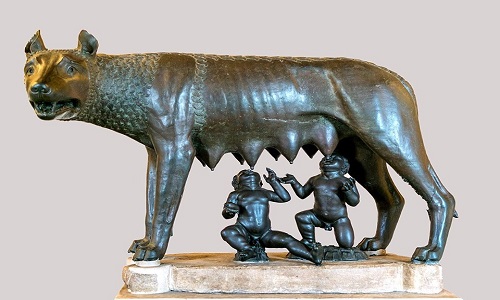
The central role in the history of Italian art has always been played by Rome, starting from the 9th century BC and the Etruscan arts. When the capital began to build the empire on the Apennine peninsula; bronze figures, terracotta reliefs, paintings and frescoes were standard in the style and technique that would be followed in the centuries to come. Etruscan frescoes found on tomb walls are still considered the most important examples of pre-Roman figurative paintings known to scholars. It was made of fresh plaster and natural colors, mostly from stones and minerals, and was applied with brushes made of animal hair. These works mostly depicted everyday life landscape and traditional mythological scenes. In the middle of the 4th century, the famous chiaroscuro technique began to be used to depict volume and depth.
Roman And Etruscan Art, Italian Art History
Etruscan also had a great influence on Roman architecture, one of the backbones of the great empire that emerged later in the 1st century AD. With civilization came culture and art, Rome became the most developed city in the world. The works have become symbols of wealth and abundance, with murals adorning the houses and statues placed in every corner of the house and garden. The Romans decorated the floors with mosaics depicting historical everyday scenes, often events from Greek and Roman mythology. He was influenced by Eastern art and religion, especially the Byzantine empire, and in the capital city of Constantinople, Roman art began to incorporate Christian motifs and developed the production of mural painting, mosaic ceiling and floor work, as well as funerary sculptures.
The trend continued into the Middle Ages, when Byzantine art in Italy developed into highly formal and elegant decoration, with standardized calligraphy and the admirable use of gold and color. At this point, art in Italy was highly regional, influenced by external European and Eastern currents. Another important style was the Gothic style, which marked the transition from the medieval to the Renaissance period. During religious debates within the church, the Franciscan orders of priests wanted to bring the Catholic Church back to its foundations, introducing Gothic architecture first into northern Europe and then southwards into Italy.
Renaissance Period in Italy
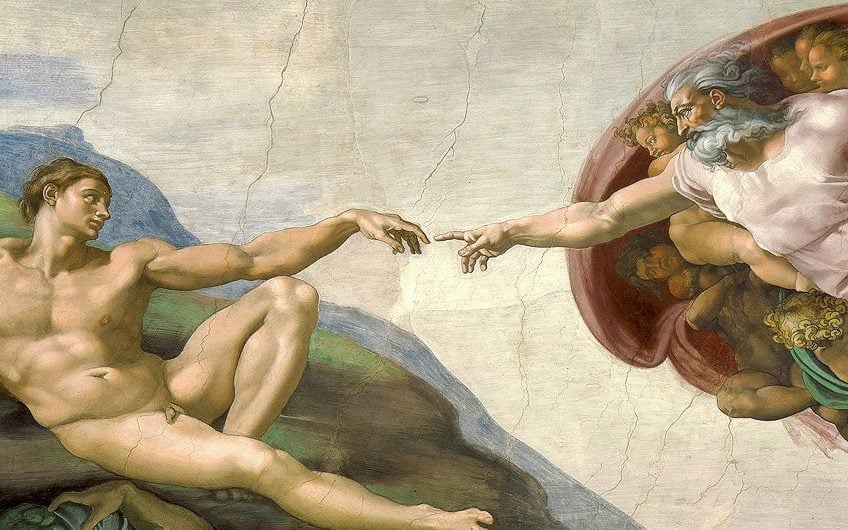
Certainly the most famous period in Italian art history, the Renaissance marked the period between the end of the 13th century and the end of the 16th century. He started with painters and sculptors who wanted to give their works a spiritual quality and evoke a deep religious meaning. They also wanted to portray people and nature realistically. This was also reflected in Renaissance architecture, where architects designed colossal cathedrals to highlight the glory of God and bring the human spirit into humility.
by Arthipo | 12 September 2021 | History of Art
Renaissance
The Renaissance was a fiery period of the cultural, artistic, political and economic “rebirth” of Europe after the Middle Ages. The Renaissance, broadly defined as the period from the 14th to the 17th centuries, encouraged the rediscovery of classical philosophy, literature, and art. Some of the greatest thinkers, writers, statesmen, scientists and artists in human history lived in this era. Global discoveries were opening up new lands and cultures to European trade. He is credited with bridging the gap between the Renaissance, the Middle Ages and modern day civilization.
From Darkness to Light with the Renaissance
During the Middle Ages, which passed between the fall of ancient Rome in AD 476 and the early 14th century, Europeans made little progress in science and art. Also known as the “Dark Ages”, this age is often referred to as the era of war, ignorance, famine, and epidemics such as the Black Death. However, some historians believe that such brutal depictions of the Middle Ages are greatly exaggerated. But many agree that there was relatively little respect for ancient Greek and Roman philosophies and learning at the time.
Humanism
In the 14th century, a cultural movement called humanism began to gain momentum in Italy. Humanism promoted the idea that man is the center of his universe and should embrace his achievements in education, classical arts, literature, and science.
Gutenberg invented the printing press in 1450!. It was now possible to rapidly disseminate thought in written text: Here is the revolution. Books emerged from the monopoly of the aristocracy. It allowed improved communication and a faster spread of ideas across Europe. As a result of this advance in communication, little-known texts by early humanist writers such as Francesco Petrarch and Giovanni Boccaccio were published, promoting the renewal of traditional Greek and Roman culture and values. It was then distributed to the masses. Many scholars believe that developments in international finance and trade influenced European culture and laid the groundwork for the Renaissance.
Medici Family
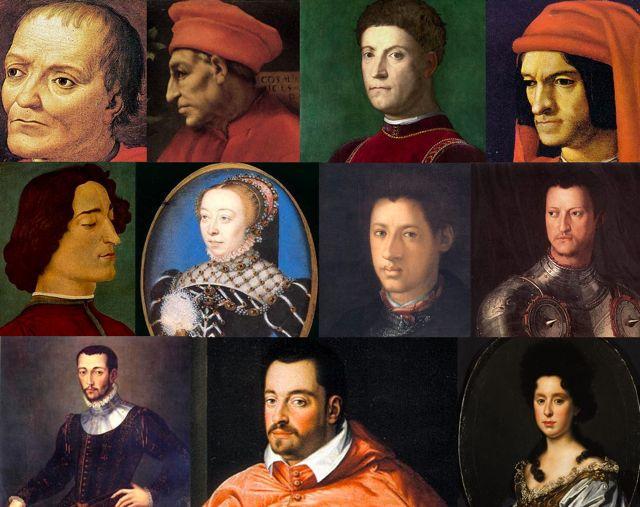
The Renaissance began in Florence, Italy. Florence was a city-state. Florence was a place with a rich cultural history where aristocrats could support emerging artists. The Medici family was the biggest supporter of the artists. Members of the powerful Medici family, which ruled Florence for 60 years, were famous supporters of the movement. Great Italian writers, artists, politicians and others: Leonardo da Vinci, Sandro Botticelli… They declared that they were participating in an intellectual and artistic revolution very different from the one they experienced in the dark ages. The movement first spread to other Italian city-states such as Venice, Milan, Bologna, Ferrara and Rome. Later in the 15th century, Renaissance ideas spread from Italy to France and from there to Western and Northern Europe. Although other European countries experienced the Renaissance later than Italy, its effects were still revolutionary.
Medici Family
Renaissance and Religion
Humanism, which emerged with the Renaissance, encouraged Europeans to question the role of the Roman Catholic church. More people learned to read, write and interpret ideas. They began to closely examine and criticize the religion they knew. In addition, the printing press allowed texts, including the Bible, to be easily reproduced and read widely by the public for the first time.
In the 16th century, Martin Luther, a German monk, led the Protestant Reformation, a revolutionary movement that caused a split in the Catholic church. Luther questioned many of the church’s practices and whether they were compatible with the teachings of the Bible. As a result, a new form of Christianity known as Protestantism was created.
Renaissance Art, Architecture and Science
During the Renaissance, art, architecture and science were closely linked. In fact, it was a unique time when these fields of work merged seamlessly. For example, artists like Leonardo da Vinci incorporated scientific principles such as anatomy into their work. So they could recreate the human body with extraordinary precision.
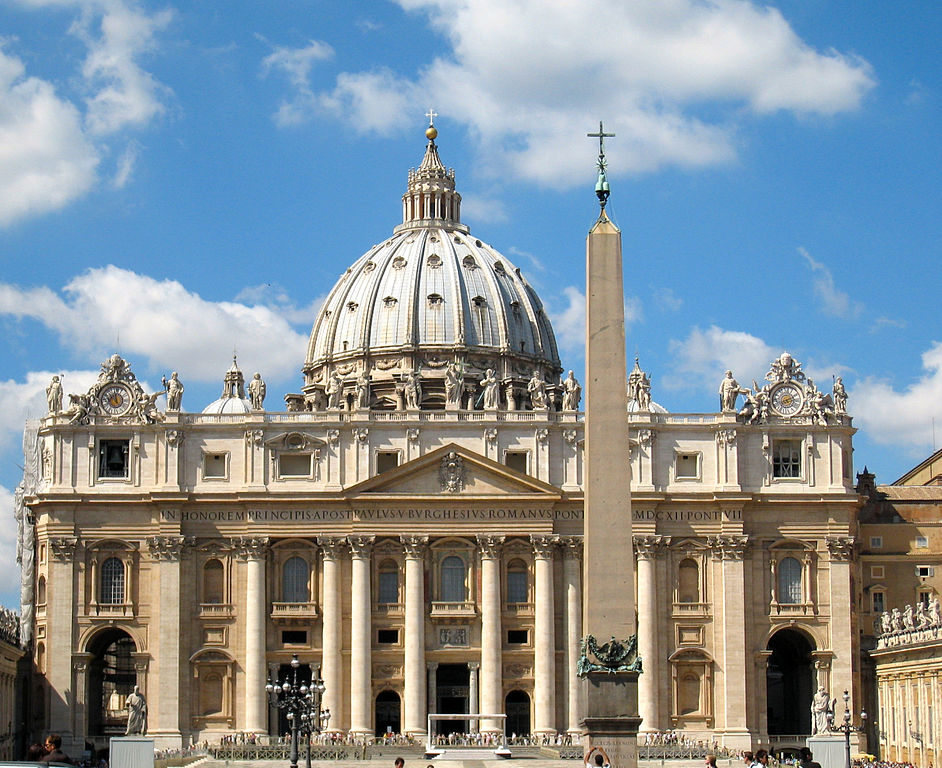
Renaissance Architecture
Architects like Filippo Brunelleschi studied mathematics to accurately design huge buildings with large domes.
Scientific discoveries led to great changes in thinking. Galileo and Descartes offered a new perspective on astrology and mathematics. Copernicus and Galileo proved that the earth is not the center of the solar system, but the sun is the center of the system. Of course, this thought caused an earthquake in the church. Galileo was put on probation for life. Lenorda da Vinci Leonardo da Vinci did a lot of anomatic research. He secretly removed the newly buried corpses from the cemetery and examined them.
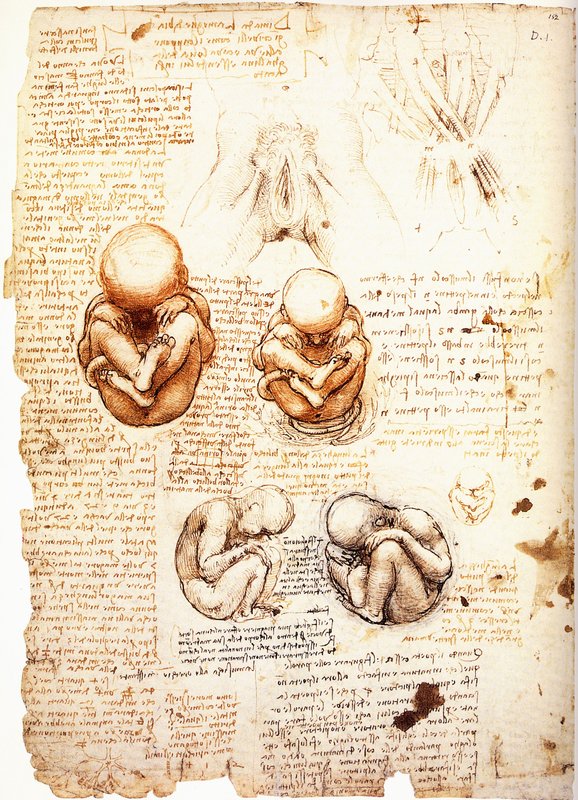
Renaissance Science, Lenorda da Vinci Fetus Models
Renaissance art was characterized by realism and naturalism. Artists tried to portray people and objects in a lifelike manner. They used techniques such as perspective, shadows and light to add depth to their work. Emotion was another quality that artists tried to instill in their pieces.
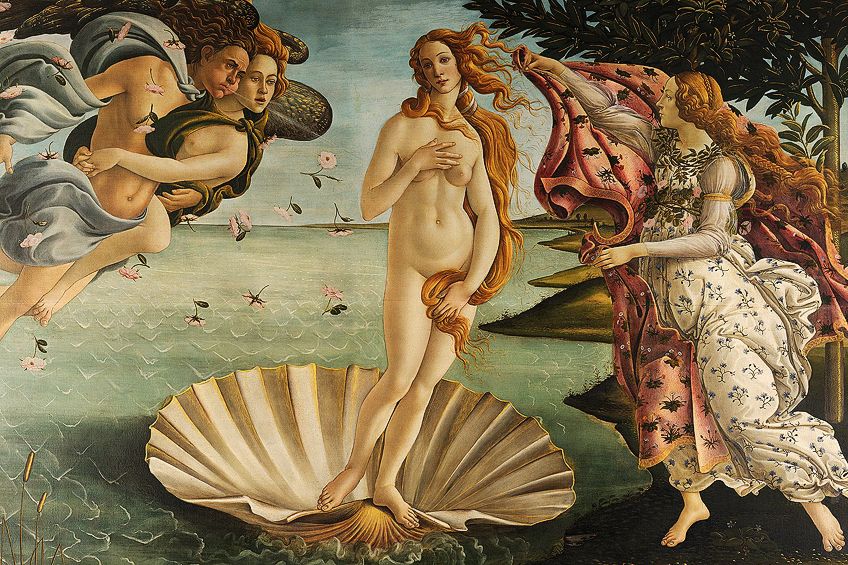
Renaissance Art, Sandro Botticelli, The Birth Of Venus
Here are some of the most famous works of art produced during the Renaissance:
Mona Lisa (Da Vinci)
The Last Supper (Da Vinci)
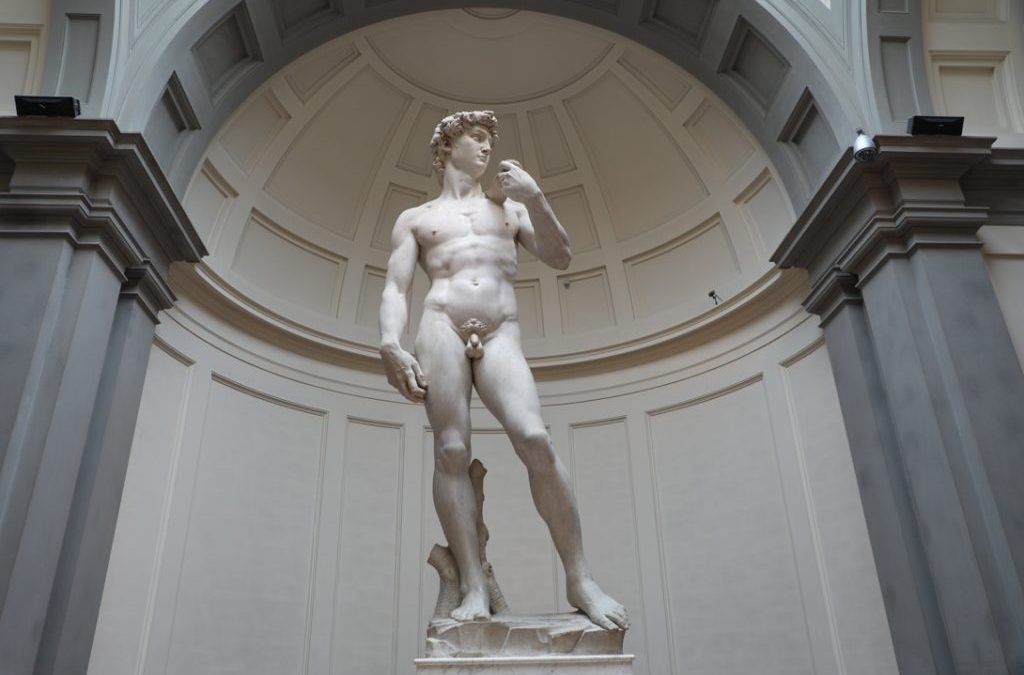
Statue of David (Michelangelo)
The Birth of Venus (Botticelli)
The Creation of Adam (Michelangelo)
Geniuses of the Renaissance
Leonardo da Vinci (1452–1519): Italian painter, architect, inventor and “Renaissance artist” responsible for the “Mona Lisa” and “The Last Supper” paintings.
Giotto (1266-1337): Italian painter and architect whose more realistic depictions of human emotions influenced generations of artists. He is best known for his frescoes in the Scrovegni Chapel in Padua.
Titian (1488–1576): Italian painter, Pope III. He was celebrated with portraits of Paul and Charles I and his later religious and mythical paintings, “Venus and Adonis” and “Metamorphoses”.
Donatello (1386–1466): Italian sculptor, awarded for lifelike sculptures such as “David” commissioned by the Medici family.
Sandro Botticelli (1445–1510): Italian painter of “The Birth of Venus”.
Raphael (1483–1520): Italian painter who took lessons from da Vinci and Michelangelo. He is best known for the Madonna and the “School of Athens” paintings.
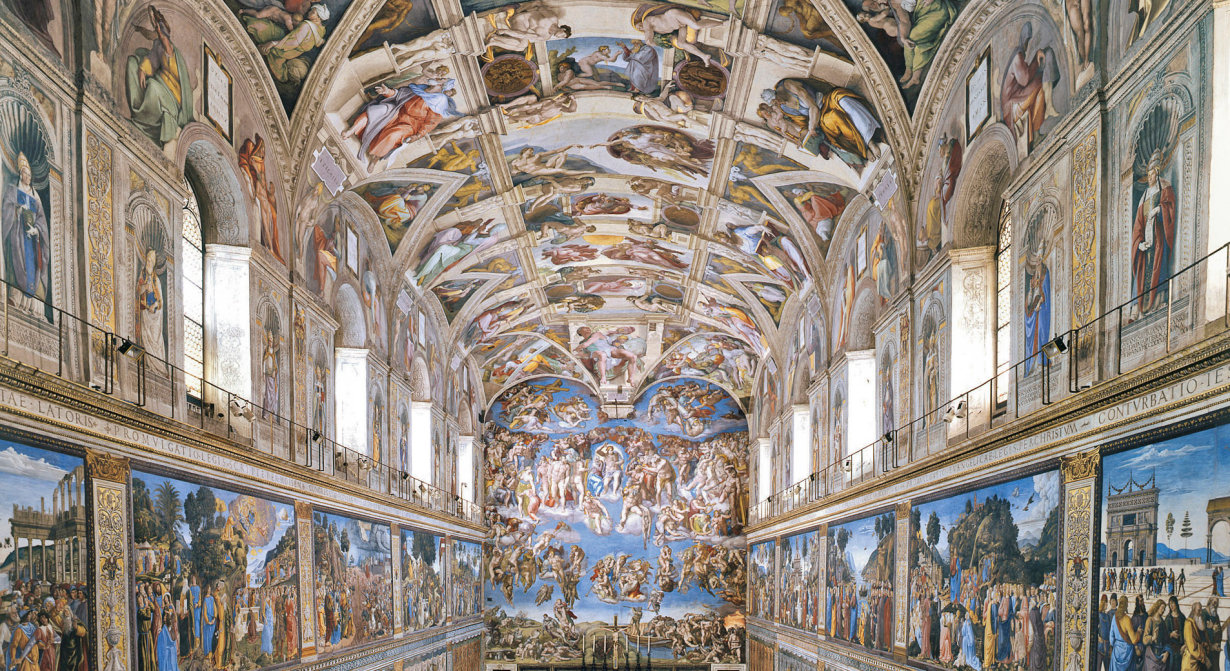
Michelangelo (1475–1564): Italian sculptor, painter, and architect who carved “David” and painted the Sistine Chapel in Vatican in Rome.
by Arthipo | 11 September 2021 | History of Art
History of the Ancient City of Hattusa, Capital of the Hittite State
Hattusa is located in Boğazkale District of Çorum Province, in a typical landscape of the Northern Central Anatolia Mountain Region. Hattusha was the capital of the Late Bronze Age kingdom of the Hittites. The history of this kingdom, which is referred to as the Land of Hatti in ancient texts, dates back to BC. It covers a period of almost five centuries, from the 17th to the early 12th centuries. At the southern end of the Hattusha Budaközü Plain, on a slope rising approximately 300 m above the valley, it is divided into two as the lower city in the north and the upper city in the south.
Hattusa was discovered in 1834 by the French architect Charles Texier. This can be perceived not only as the discovery of Hattusha, but also as the discovery of the Hittites, who had been completely forgotten.

hattusas hittite bogazkoy
Hattusa Architecture and Art
The best preserved remains of a 13th-century BC Hittite Temple known as the Great Temple are in the Lower City. Other temples of similar history and shape, albeit generally smaller, are located in the Upper City, which consists mostly of a temple city for the gods and goddesses of the Hittite and Hurrian pantheon.
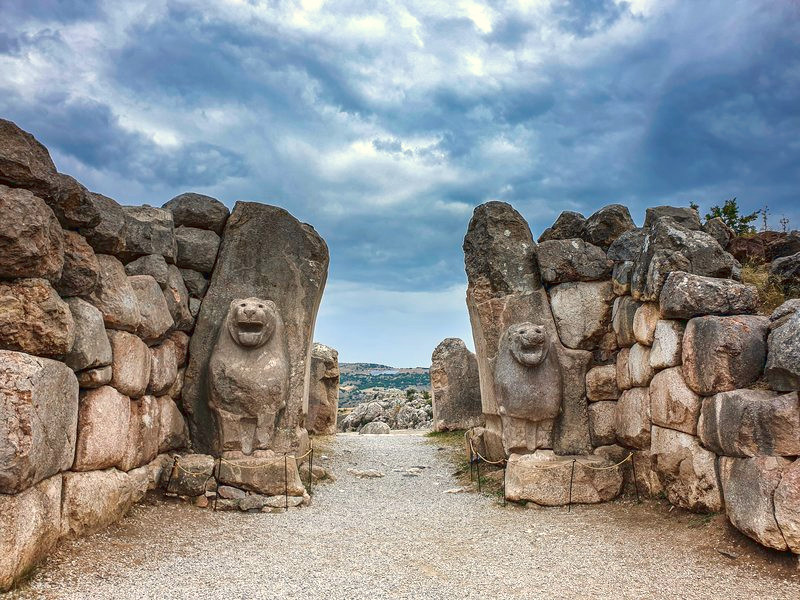
A monumental perimeter wall longer than 8 km surrounds the entire city. Around the lower city are the remains of the old city walls and partition walls dividing the large city area into separate quarters. The remains of the upper city’s fortifications form a double wall of more than a hundred towers and five gates as far as is known today: two to the west, the Lion’s Gate to the southwest, the King’s Gate to the south-east, and a gateway, the Sphinx Gate to the south of the city. The second is located at the top of a high artificial bastion with stone plastered slopes; There are two stairs leading to the gateway at the top and an arched stone tunnel underneath.
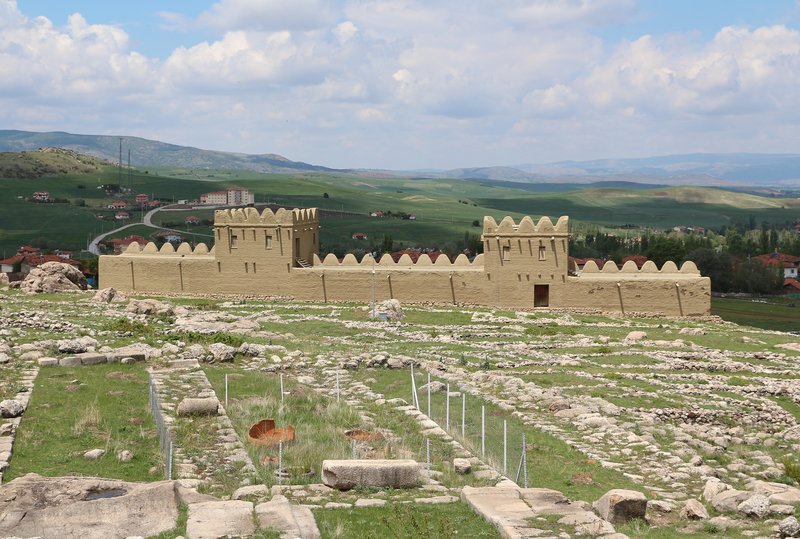
Hattusa, Hittite Capital Bogazkoy
Rock Temple
The famous rock temple of Yazılıkaya, an open-air temple with two natural chambers carved into the bedrock, is located on the slope of a mountain barrier, 2 km northeast of the capital. The walls of the rock chambers are covered with the richest and most striking examples of Hittite relief art, the gods and goddesses and the Great King IV. It contains the figures of Tuthaliya. First mentioned in cuneiform inscriptions, Kayalı Boğaz is a large fortified settlement located 1.5 km east of the King’s Gate. It may have served as one of the outposts and forts in the countryside to monitor and control the main roads leading to the city. Ibikcam Forest is one of the last remaining examples of a dense forest that covered the mountains south of the capital during the Hittite period.
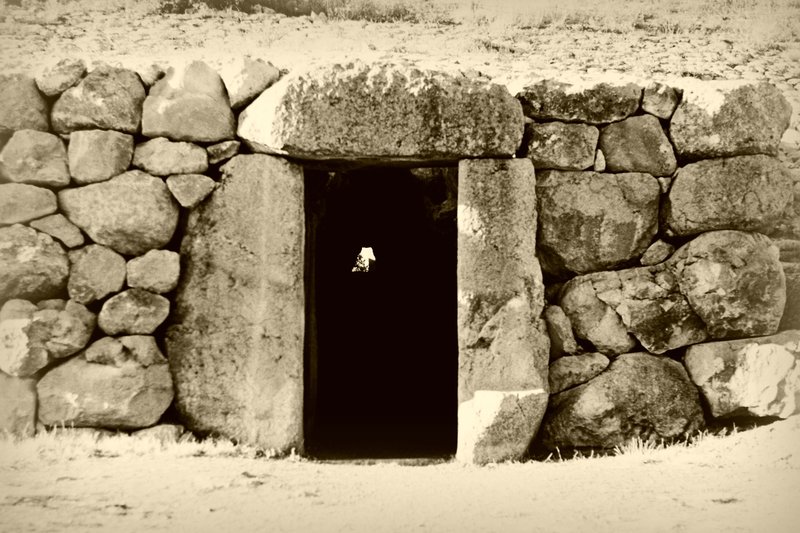
Rock Temple
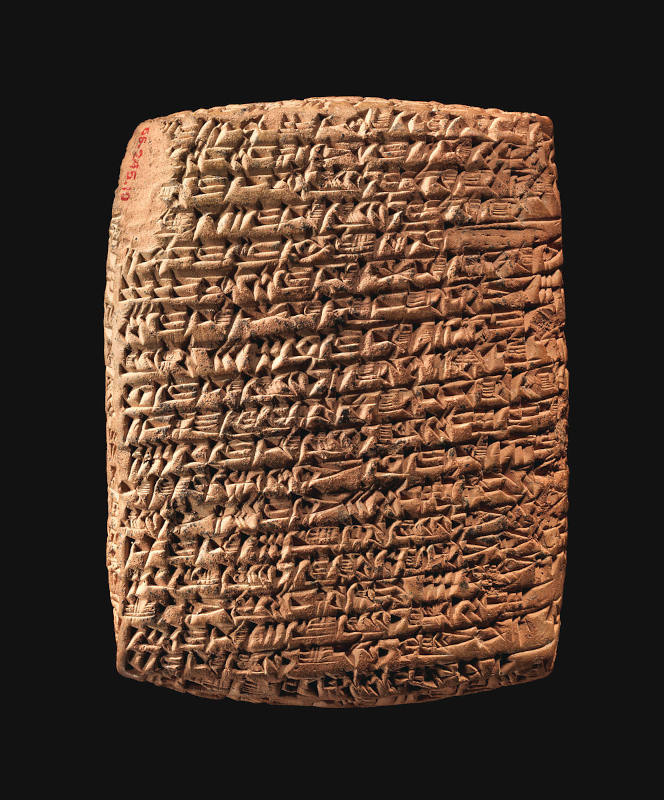
One of the most important discoveries in the region are the cuneiform royal clay tablets known as the Boğazköy Archive, which consists of official correspondence and contracts, as well as legal codes, cult ceremonial procedures, prophecies and literature of the ancient period.
Famous for its Gates, Hattusha, Lion Gate, Sphinx Gate, King’s Gate, Lion Gate, Yerkapi (The Gate of Secret Exit of the People in Case of Siege of the City). Hattusas is a remarkable archaeological site in terms of its urban structure, preserved construction types and rich ornaments, and its rock art collection.
by Arthipo | 10 September 2021 | History of Art
Göbeklitepe Mound! A discovery: There has been a major shift in the way we know about human history. An ancient city in southeast Turkey: Şanlıurfa. The land where the prophet Abraham was thrown into the fire. Thousands of years older than Abraham. A big surprise!
History of Göbeklitepe
Göbeklitepe is approximately 22 km northeast of Şanlıurfa city centre. It is the oldest and largest known settlement in the world, located near the village of Örencik. Göbeklitepe dates back to approximately 12 thousand years ago. For this reason, it overturned a lot of information about the Prehistoric Period and the transition to settled life. Until recently, we assumed that Çayönü and Çatalhöyük were the oldest settlements. With the discovery of Göbeklitepe, the need to rewrite the history of civilizations and religions arose. We also thought that the first temple from the Prehistoric Period, dating back to 5000 BC, was located on the Island of Malta. Excavations at Göbeklitepe changed this information, revealing that the first temple was built in Anatolia in a much earlier period.
Göbeklitepe Architectural Structure and Features
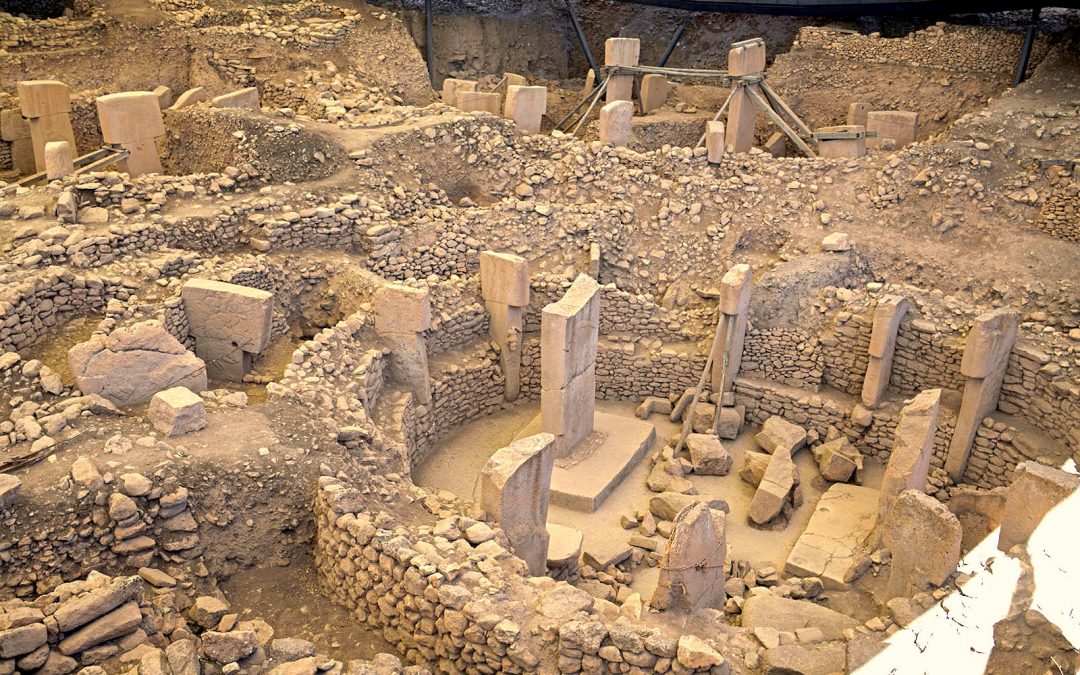
Göbeklitepe consists of an arrangement of four monolithic columns connected by fragments of rough dry stone walls to form a series of circular or oval structures. At the center of each complex are two large columns facing inwards, surrounded by slightly smaller stones. Archaeologists believe these pillars could once have supported roofs. The structures range in size from about 33 to 98 feet and have floors made of terrazzo (burnt lime).
43 megaliths have been discovered in Göbeklitepe so far. They are mostly T-shaped columns of soft limestone up to about 16 feet high. It was excavated and transported from a quarry on the southwest lower slope of the hill. Geophysical surveys at the top have shown us that there are as many as 250 megaliths buried around the site. It shows that there were 16 more complexes at Göbekli Tepe at one time.
What Do Vulture Depictions and Reliefs Tell in Göbeklitepe?
The depictions of vultures at Göbekli Tepe have parallels at other Anatolian and Near Eastern sites. The walls of many temples at the Neolithic site of Çatal Höyük in south-central Turkey were decorated with large skeletal depictions of vultures.

One theory put forward to explain the importance of vultures in the Early Anatolian Neolithic period is as follows. It is in the context of possible exclusion practices that point to a funerary cult. After death, corpses were deliberately left out. Perhaps their skeletons would have been uncovered on some kind of wooden frame from which their flesh had been stripped by vultures. This practice still continues in the Himalayan and Asian steppes. The skeletons were then buried elsewhere. Perhaps the exclusion ritual was the focus of a cult of the dead practiced by the inhabitants of Göbekli Tepe. Because it certainly appears to have been found elsewhere in Anatolia and the Near East in the Pre-Pottery Neolithic.
Art in Göbeklitepe
Some of the standing stones in Göbeklitepe are empty. Some have elaborately carved reliefs and statues. They have extraordinary artifacts in the form of foxes, lions, bulls, scorpions, snakes, wild boars, vultures, waterfowl, insects and spiders. There are also abstract shapes and a relief of a nude woman posed in a front-seated position. Some T-shaped stones have depictions that look like weapons on their sides. It may indicate that the stones represent stylized humans or perhaps gods. The pictograms in Göbekli Tepe do not represent a writing style. However, they may have functioned as sacred symbols, the meanings of which were implicitly understood by the local population at the time.
The excavations in Göbeklitepe revealed monumental architecture, large stone sculptures, symbolic motifs and stylized animations as a cult center. It shows that the communities in the region should have a highly developed and versatile social structure. All these finds unearthed at Göbekli Tepe tell us this. In order to carry out such activities, it is necessary to bring large groups together: In other words, a good organization was needed. It seems that in ancient times: It reveals the existence of personal artistic skills and ritual impulses, a kind of understanding and search for art.
Man is a creature full of surprises! How far back does our history go? Where did it all start? Discoveries raise new questions.
references
Photos : By Dick Osseman