

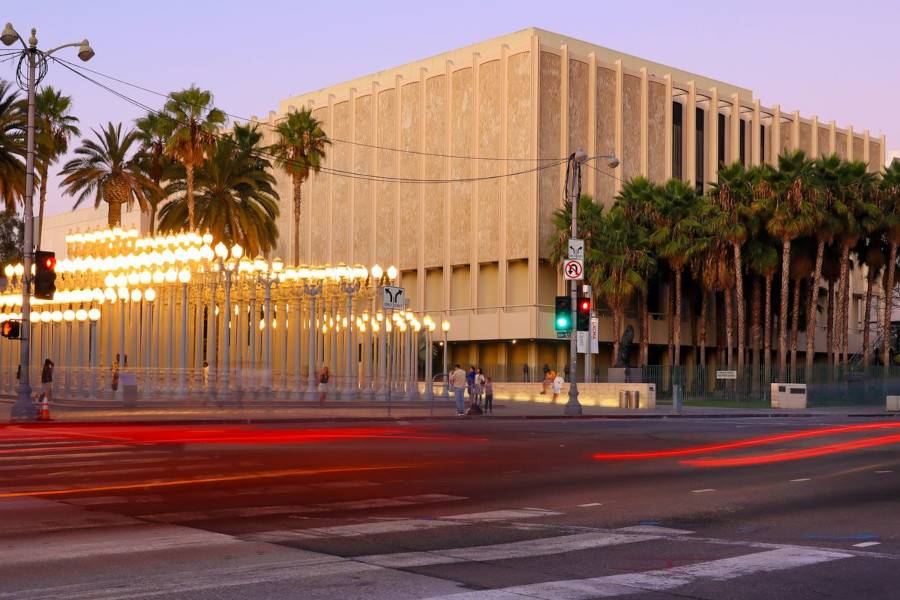
Los Angeles Museum of Art (LACMA), museum campus in Los Angeles with outstanding collections of Asian (Indian, Tibetan and Nepalese), Islamic, medieval, Latin American, European and modern art. At the beginning of the 21st century, LACMA had approximately 147,000 works of art.
Los Angeles Museum of Art, History, Architectural Structure, Artifacts
Founded in 1910, the museum was part of the Los Angeles County Museum of History, Science and Art until 1961, when it became an independent institution. It was moved to its present location in 1965. It consists of three buildings originally designed by William L. Pereira Associates. The largest of these was the four-story Ahmanson Building, which houses the museum’s permanent collection. Also in 1965 was built the adjacent Hammer Building, where special exhibits are displayed, and the Bing Center, which includes a research library, a children’s gallery, a 600-seat auditorium, and a cafeteria. The Art of the Americas Building (formerly the Robert O. Anderson Building, 1986) was designed by Hardy Holzman Pfeiffer Associates. It housed the museum’s collection of modern and contemporary art. Architect Bruce Goff’s Pavilion for Japanese Art opened in 1988. 21st century additions to the museum complex designed by Renzo Piano include the Broad Museum of Contemporary Art (BCAM; 2008) and the Resnick Pavilion (completed 2010). one-story 45,000 square feet (4,180 square meters) of space, as well as a number of utility structures. In 2013 the museum announced a controversial plan to raze the original 1965 Pereira buildings and the Art of the Americas Building to construct a new space designed by Swiss architect Peter Zumthor. The plan was approved in 2019 and demolition began in 2020.
Dutch paintings purchased by LACMA were chosen by Edward and Hannah Carter as a promised gift to the museum to complement the collection created between the late 1960s and 1985. Exhibited in Los Angeles, Boston and New York in 1982-1983, the collection of 36 Dutch landscapes, still lifes, seascapes, architectural interiors and cityscapes amaze with the high quality of his paintings and the incredible state of preservation. Edward Carter died in 1994; Following the death of his widow, Hannah, in April 2009, the paintings became part of LACMA’s permanent collection.
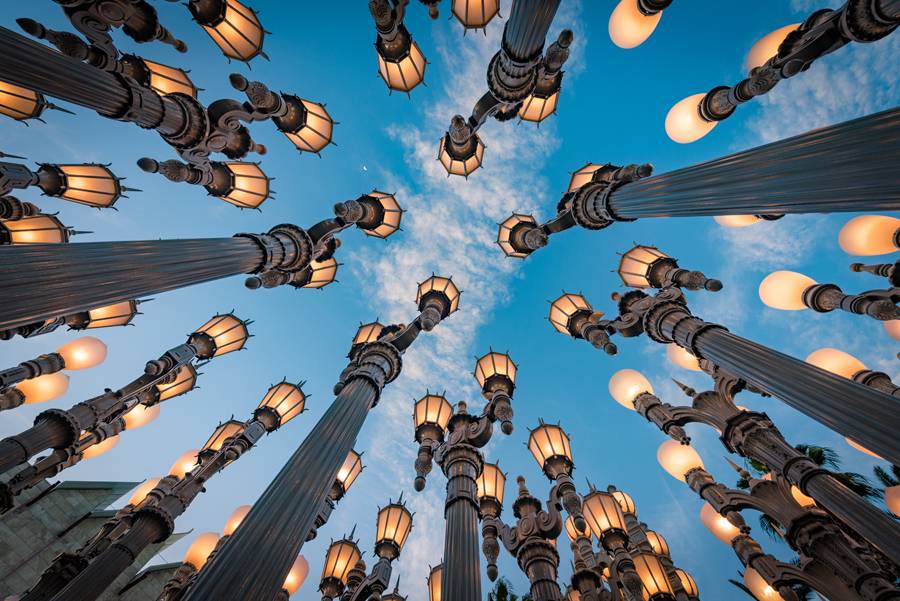
Los Angeles Museum of Art City Lights
Los Angeles Museum of Art Notable Works
LACMA’s more than 120,000 objects are divided among its numerous departments by region, media and time period, and are spread over various museum buildings.
Modern and Contemporary Art
Not to be confused with The Broad, another Broads-funded contemporary art museum in Downtown Los Angeles.
The Modern Art collection is displayed in the Ahmanson Building, which was renovated in 2008 to feature a new entrance with a grand staircase, designed as a meeting place similar to Rome’s Spanish Steps. The atrium at the base of the staircase is filled by Tony Smith’s colossal statue Smoke (1967). The galleries at the plaza level also house a gallery highlighting African art and the Robert Gore Rifkind Center for German Expressionist Studies.
The modern collection at the plaza level displays works from 1900 to the 1970s, largely populated by the Janice and Henri Lazarof Collection. In December 2007, Janice and Henri Lazarof produced LACMA 130 mostly modernist works estimated to be worth more than $100 million. The collection includes 20 works by Picasso, watercolors and paintings by Paul Klee and Wassily Kandinsky, and a significant number of sculptures by Alberto Giacometti, Constantin Brâncuși, Henry Moore, Willem de Kooning, Joan Miró, Louise Nevelson, Archipenko and Harp.
Modern Art galleries
Gallery of works by Alberto Giacometti
The Contemporary Art collection is on display at the 60,000-square-metre (5,600 m2) Large Museum of Contemporary Art (BCAM), which opened on February 16, 2008. BCAM’s inaugural exhibition featured 176 works by 28 artists from post-war Modern art from the late 1950s to 2008. Now. All but 30 of the works originally on display came from Eli and Edythe Broad’s collection (pronounced “brode”). Long-time trustee Robert Halff donated 53 contemporary artworks in 1994. Components of this gift include Joan Miró, Jasper Johns, Sam Francis, Frank Stella, Lari Pittman, Chris Burden, Richard Serra, John Chamberlain, Matthew Barney and Jeff Koons. He also provided LACMA with initial drawings by Claes Oldenburg and Cy Twombly.
Edward Kienholz’s Backseat Dodge ’38 (1964) is a sculpture depicting a couple engaged in sexual activity in the backseat of a truncated 1938 Dodge automobile chassis. The piece brought Kienholz instant notoriety in 1966 when the Los Angeles County Supervisory Board tried to ban the sculpture for being pornographic and threatened to withhold funding from LACMA if the piece was included in a Kienholz retrospective. A compromise was reached that the door of the statue’s car should remain closed and guarded so that it could only be opened at the request of a museum patron over the age of 18 and only if there were no children in the gallery. The turmoil led to more than 200 people lining up to see the job on the day the show opened. Since then, the Back Seat Dodge ’38 has drawn crowds.
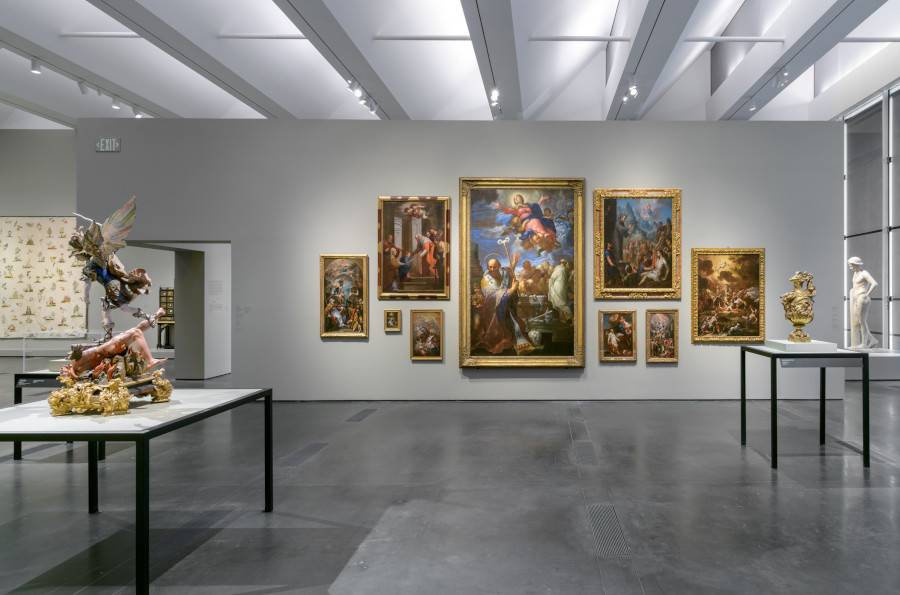
Los Angeles Museum of Art Exhibition Hall
Where is Los Angeles Art Museum, How to Get There, Directions, Visiting Hours, Entrance Fee
Address: Wilshire Blvd, Los Angeles, CA 90036, United States
Watches:
Tuesday 11:00–18:00
Wednesday Closed
Thursday 11:00–18:00
Friday 11:00–20:00
Saturday 10:00–19:00
Sunday 10:00–19:00
Monday 11:00–18:00
Metro Local 20 and Rapid 720 buses on Wilshire Blvd. and Fairfax Ave. Metro Local 217 and 218 and Rapid 780 buses stop half a block from the museum.
Wilshire/Western Station on the Purple Tube Line is 3 miles east of LACMA. From there, Wilshire Blvd. You can easily transfer to the westbound Local 20 and Rapid 720 buses on and get off half a block from LACMA.
La Cienega/Jefferson Station on the Metro Expo Line is 3 miles south of LACMA. From there, it’s Fairfax Ave, half a block from LACMA. and Local 217 northbound to Wilshire Blvd.
Entrance fee:
There is an entry fee of $20 for adults and free for teens (18+ students $16), LA residents $25 for non-LA residents, and $10 for teens (18+ students $21).
0-2 years old is free.