

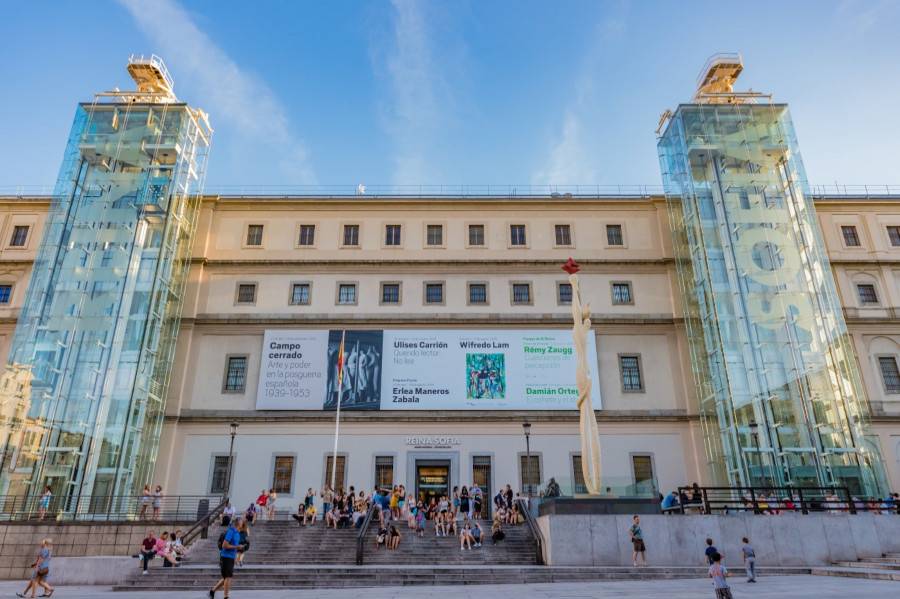
The Queen Sofia National Art Museum is a contemporary art museum in Madrid, the capital of Spain, where 20th century artworks are exhibited. Opened in 1990, the museum has a collection of more than 22,400 works. It is divided into three chapters covering the 20th century, entitled Raids of the 20th Century.
Queen Sofia National Museum of Art, Museo Nacional Centro de Arte Reina Sofía History, Architectural Structure, Works
When the Museo Nacional Centro de Arte Reina Sofia opened its doors in 1990, it stood as a modern, contemporary Spanish museum of international scale. However, his building went through many difficulties to achieve this goal.
King II. Felipe first established the San Carlos Hospital, the current headquarters of the museum, in the sixteenth century. It was here that all the hospitals scattered across the court were centralized. In the eighteenth century, III. Carlos decided to build another hospital as these facilities did not meet the city’s needs. The current building is the work of architects José de Hermosilla and Francisco Sabatini, who were responsible for much of its construction.
The death of Carlos III in 1788 brought the building’s construction to a halt. Although only a third of Sabatini’s project was completed, the hospital was set up and operational as originally planned.
From this date on, various changes and additions were made until the hospital was closed in 1965. Its functions have been transferred to the Madrid Provincial Health Service. Despite many rumors of demolition, due to its historical and artistic value, the building’s survival was guaranteed when it was declared a national monument by royal decree in 1977.
Restoration began in 1980 under the direction of Antonio Fernández Alba and in April 1986 the Reina Sofia Art Center was opened. The ground and first floors were used as temporary exhibition galleries. Towards the end of 1988, architects José Luis Iñiguez de Onzoño and Antonio Vázquez de Castro made final changes, for which the three steel and glass elevator towers designed in collaboration with British architect Ian Ritchie deserve special attention.
Museo Reina Sofia, an autonomous organization under the Spanish Ministry of Culture, was created by Royal Decree 535/88 of May 1988. Headquartered at the San Carlos Hospital, the Collection consisted of artifacts preserved by the Spanish at that time. Contemporary Art Museum. On September 10, 1992, His Majesty King Juan Carlos and Queen Sofia inaugurated the Permanent Collection of the Museo Nacional Centro de Arte Reina Sofia, which until then held only temporary exhibitions. Now a true museum, the goals of the museum – as stated in the above-mentioned decree – are to preserve, expand and display its collections; promoting the public’s knowledge and access to contemporary art in its various manifestations; to organize exhibitions at international level and to offer education, training and evaluation activities related to their holdings.
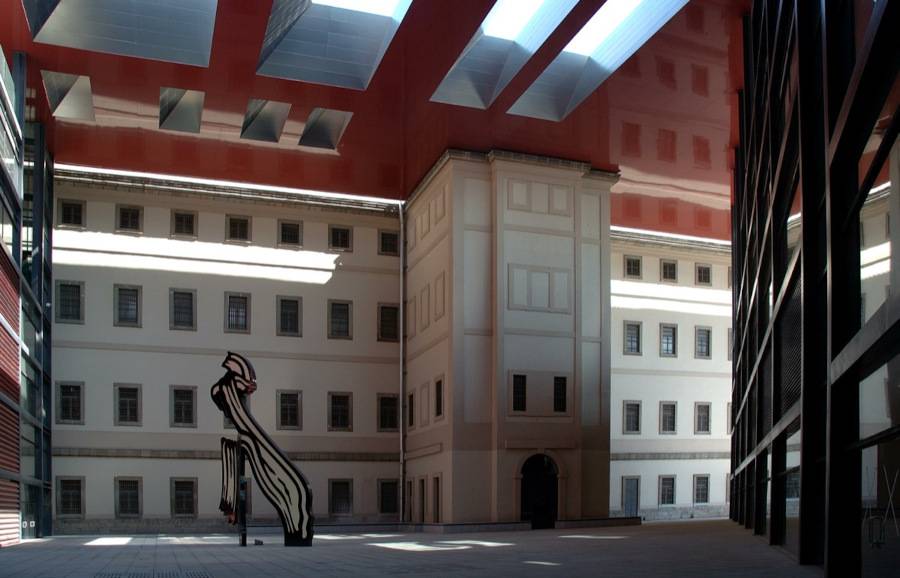
Queen Sofia National Museum of Art Interior
Queen Sofia National Art Museum Architectural Structure, Interiors
Reina Sofia Museum, II. It is housed in a neoclassical building located in Atocha, formerly a hospital facility (Hospital San Carlos) from the 16th century when Philip decided to centralize the various hospitals scattered throughout the Palace. In the 18th century, Charles III expanded the building, working with architects José de Hermosilla and, above all, Francisco Sabatini.
The building underwent various modifications and additions until the hospital was closed in 1965. After it was declared a Historic-Art Monument in 1977, restoration work began in 1980. In 1986, the Reina Sofia Art Center was opened, the 1st and 2nd floors hosted temporary exhibitions. The latest changes were made at the end of 1988, including the creation of three glass and steel elevator shafts designed by British architect Ian Ritchie.
The Permanent Collection opened on September 10, 1992 and officially became a museum.
The museum was expanded between 2001 and 2005 by architect Jean Nouvel to create a larger exhibition space, as well as to add a library and an auditorium.
The museum has two other locations in Madrid, the Velázquez Palace and the Crystal Palace, both located in Retiro Park, that host temporary exhibitions and art installations created for these spaces.
It is divided into three chapters covering the 20th century, entitled Raids of the 20th Century.
Utopia and Conflict (1900-1945), Is the War Over? Art in a Divided World (1945-1968) and From Rebellion to Postmodernity (1962-1982).
The museum’s dynamic curatorial program offers six or more simultaneous exhibitions, including solo exhibitions by important emerging artists, as well as provocative engagements with issues that have shaped international art over the past 100 years.
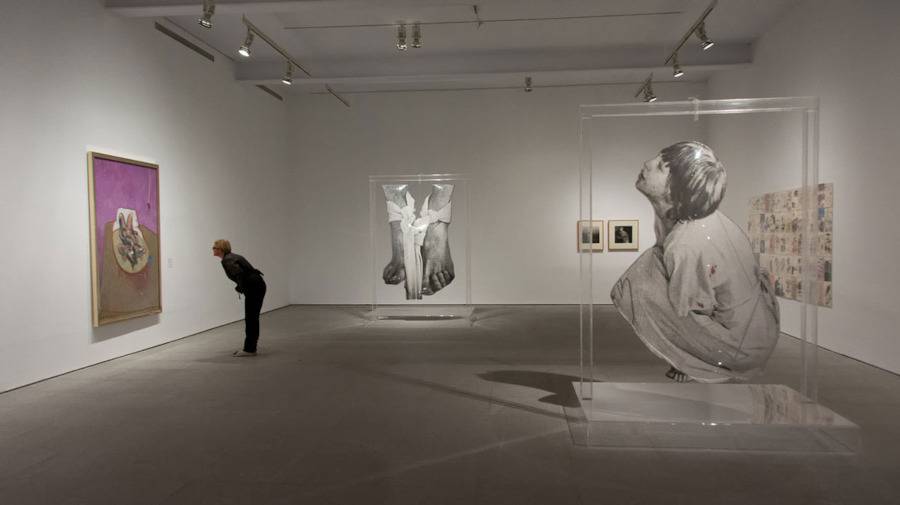
Queen Sofia National Art Museum Interior (2)
Queen Sofia National Museum of Art Important Artifacts
Here, the country’s most respected painters such as Pablo Picasso, Salvador Dalí and Joan Miró are showcased, as well as other international legends.
Among the great masterpieces on display is Guernica, Picasso’s legendary testament to the tragedies of the Spanish Civil War.
Clyfford Still – 1951-D , PH 131, George Brecht – Perchero, Juan Gris – Anis Bottle,
Philip Guston – Confrontation are highlights in the collection.
Where is Queen Sofia National Art Museum, How to Get there, Directions, Visiting Hours, Entrance Fee
Address: Calle de Santa Isabel 52 – Madrid 28012 Spain
By metro from Estación del Arte (formerly Atocha) (L1), Lavapiés (L3) stations
You can reach by train from Madrid-Atocha – RENFE station.
Open Wednesday – Monday 10:00 – 21:00 Sunday 10:00 – 19:00.
It is closed on public holidays and Tuesdays.
The entrance fee is 10 Euros, free for children under 18, the elderly, students, the disabled, the unemployed, teachers and journalists.