Wayne Thiebaud
Wayne Thiebaud
Wayne Thiebaud: A Master of Everyday Delight in Contemporary Art
Early Life and Education
Wayne Thiebaud, born on November 15, 1920, in Mesa, Arizona, is celebrated for his vibrant depictions of commonplace objects. Growing up during the Great Depression, Thiebaud's family moved frequently, finally settling in Long Beach, California. His early artistic interests were nurtured by a stint working in the animation department at Walt Disney Studios during high school, where he drew "in-betweeners" for cartoon sequences.
Thiebaud’s formal art education began at the Frank Wiggins Trade School (now Los Angeles Trade-Technical College) and continued at the California State University, Sacramento. His education was briefly interrupted by World War II, during which he served as an artist in the United States Army Air Forces.
Early Career and Influences
After the war, Thiebaud completed his education and began his teaching career at Sacramento City College. It was during this period that he began to develop his distinctive style, drawing inspiration from a variety of sources including comic strips, commercial art, and the works of earlier American realists.
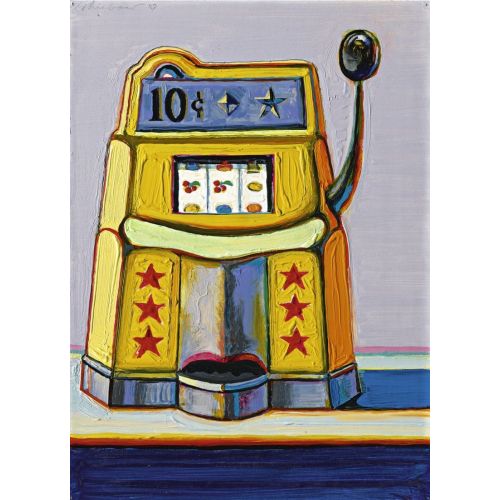
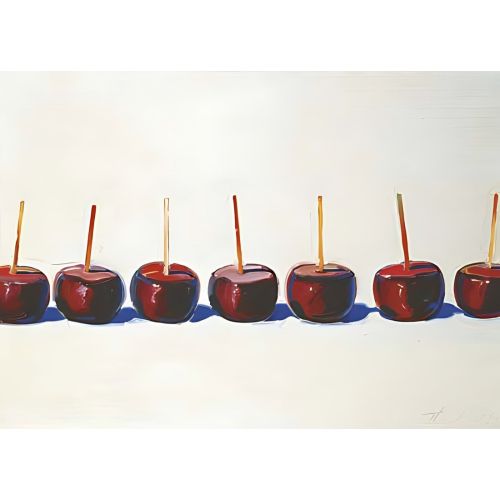
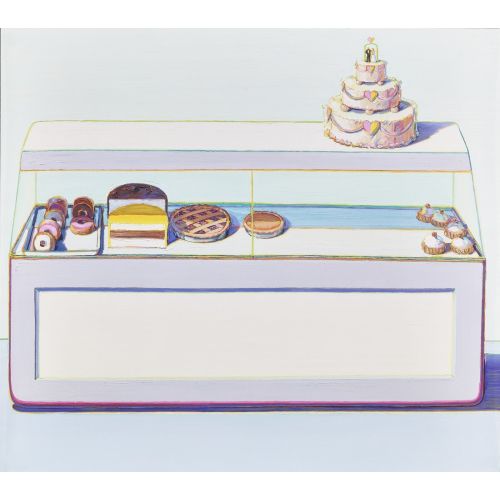
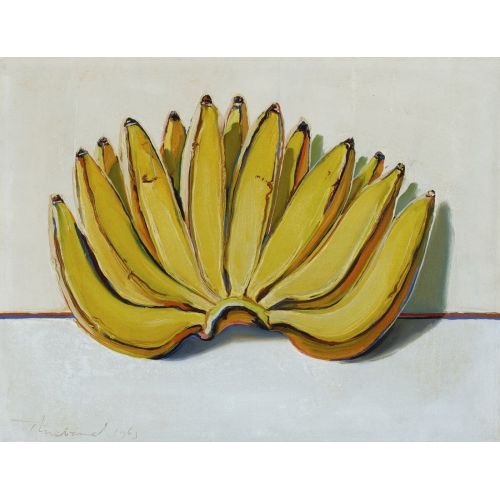
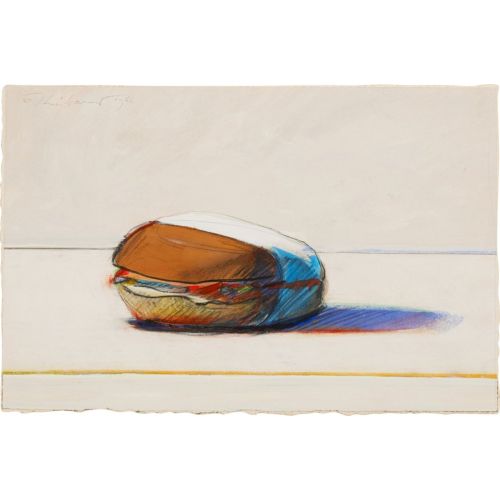
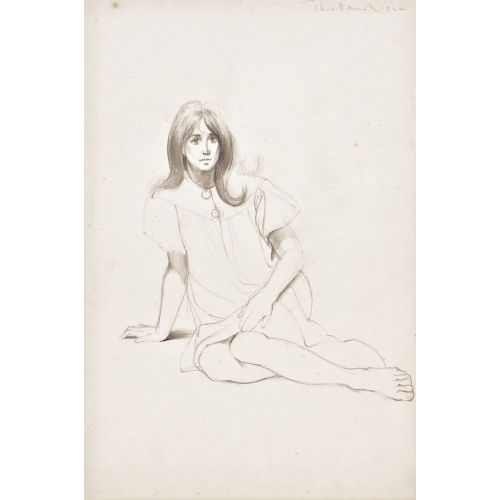
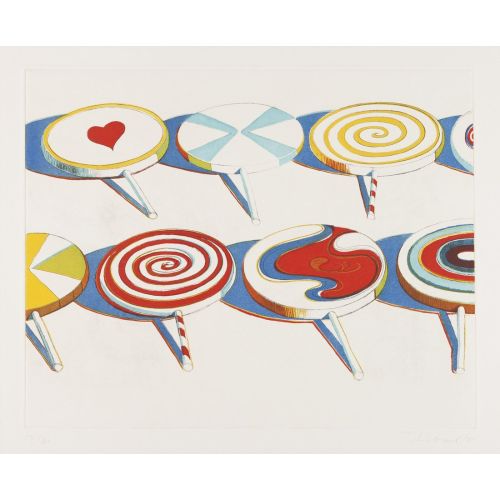
Thiebaud's early works, primarily executed in the 1950s and early 1960s, focused on traditional subjects such as portraits and still lifes. However, it was his series of paintings featuring everyday food items like cakes, pies, and ice cream cones that brought him national recognition. These works, characterized by their thick impasto, bold colors, and dramatic shadows, placed him within the Pop Art movement, although he himself resisted this classification.
Signature Style and Themes
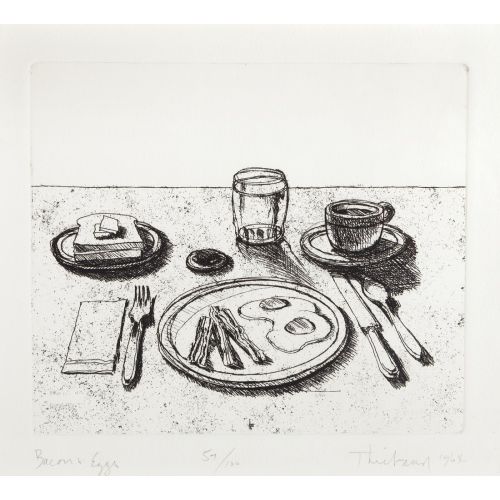
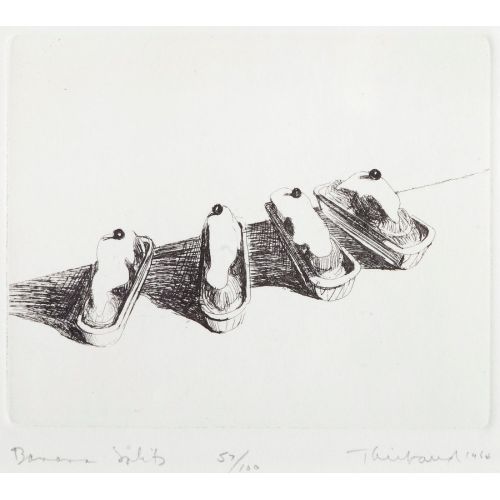
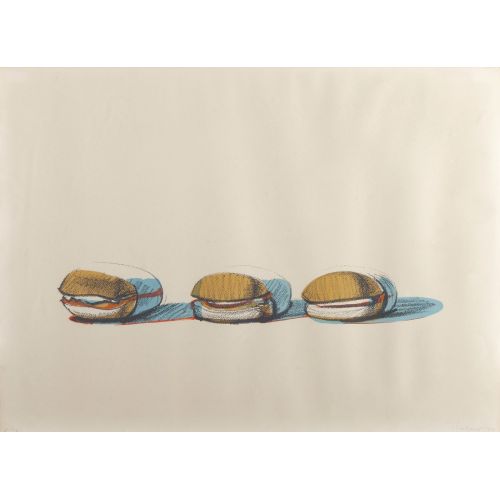
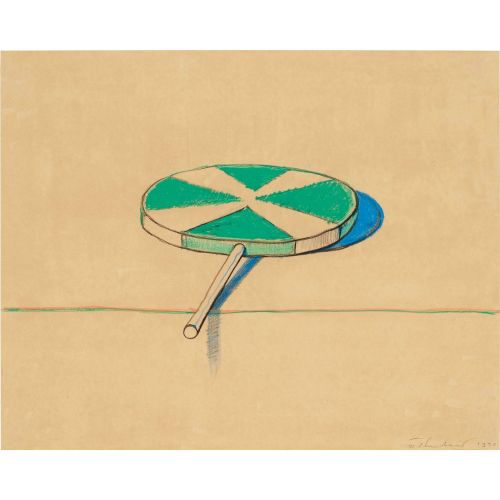
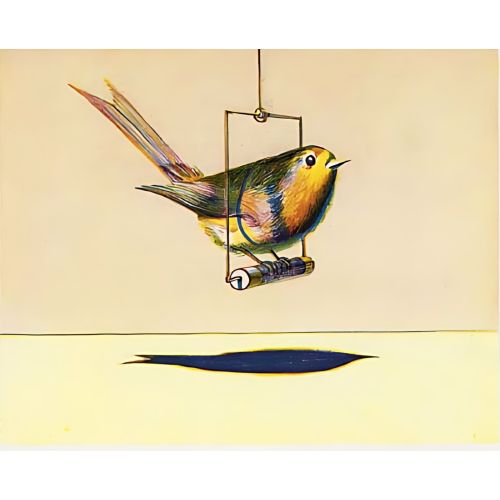
Thiebaud's signature style is marked by the meticulous depiction of ordinary objects, rendered with a sense of playfulness and nostalgia. His use of vibrant, saturated colors and thick, sculptural brushstrokes gives his subjects a tantalizing, almost edible quality. He often painted his subjects with exaggerated shadows and in compositions that emphasize repetition and pattern.
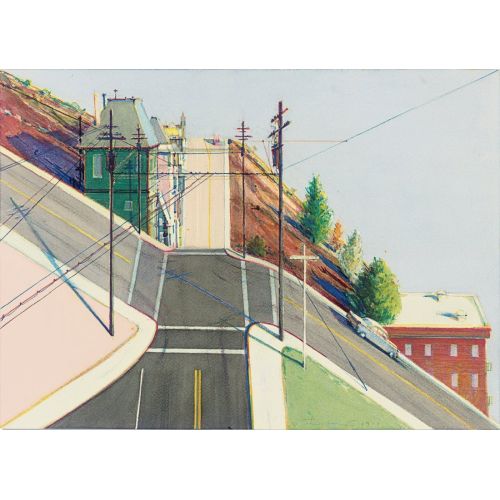
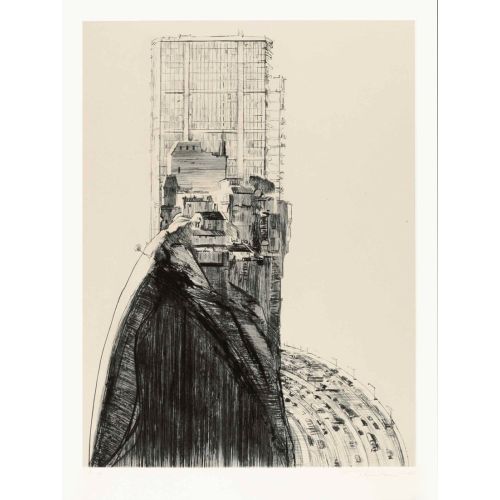
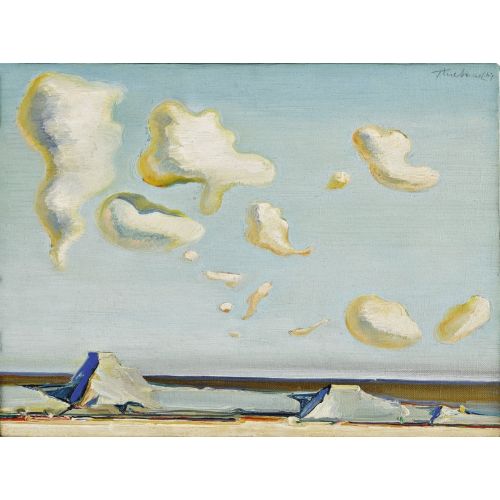
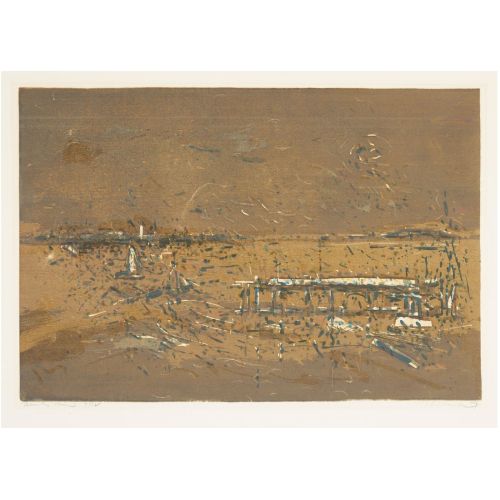
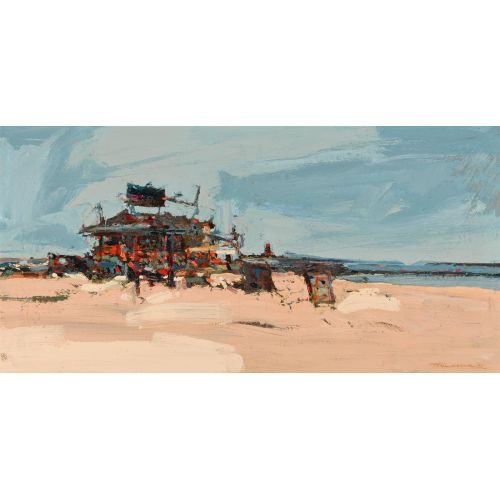
In addition to his iconic food paintings, Thiebaud also explored other themes such as figures, landscapes, and cityscapes. His cityscapes, particularly those of San Francisco, are notable for their steep streets and vertiginous perspectives, evoking a sense of whimsical distortion.
Later Work and Legacy
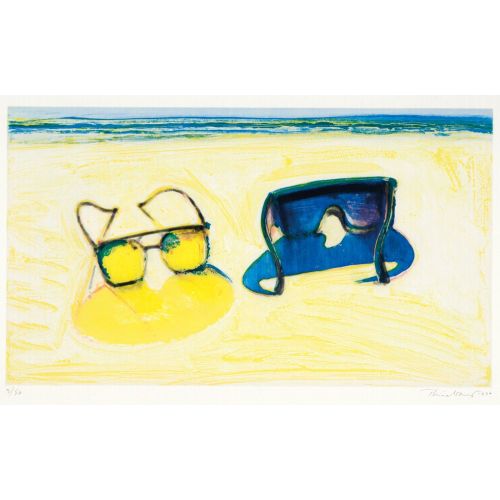
Throughout his career, Thiebaud continued to evolve, exploring new subjects and techniques while maintaining his distinctive style. His work has been widely exhibited in major museums and galleries, including the San Francisco Museum of Modern Art, the Whitney Museum of American Art in New York, and the National Gallery of Art in Washington, D.C.
Thiebaud's influence extends beyond his paintings; he was also a highly respected teacher. He spent much of his career as a professor at the University of California, Davis, where he mentored generations of artists.
Despite his association with Pop Art, Thiebaud's work is deeply personal, reflecting his own experiences and memories. His paintings evoke a sense of time and place, capturing the essence of mid-20th century American life.
Personal Life and Reflections
Wayne Thiebaud married twice and had five children. He balanced his family life with a prolific career, often painting early in the morning before his teaching duties began. Known for his humility and dedication to his craft, Thiebaud once remarked, "Painting is more than a vocation for me. It is a lifelong pursuit, a way of being in the world."
Even into his later years, Thiebaud remained active as an artist, continuing to paint and exhibit his work. His enduring passion for art and his ability to find beauty in the mundane have left a lasting impact on contemporary art.
Conclusion
Wayne Thiebaud’s career spans over seven decades, marked by a consistent exploration of everyday subjects rendered with extraordinary skill and sensitivity. His unique ability to transform ordinary objects into compelling works of art has secured his place as a master of contemporary art. As an artist who found joy and wonder in the simple pleasures of life, Thiebaud’s legacy continues to inspire and delight audiences around the world.