
Vincent Van Gogh, The Parsonage In Nuenen
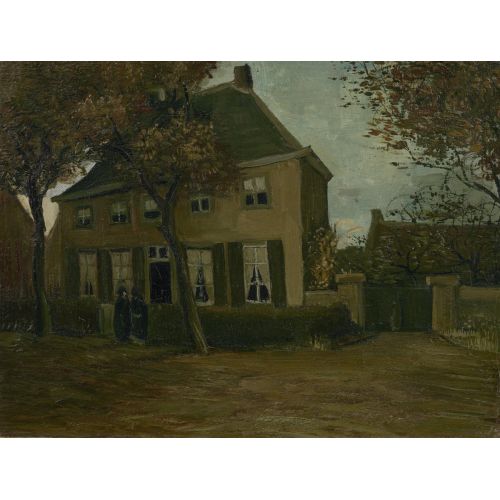
Vincent Van Gogh, The Parsonage In Nuenen
$10.80
Ex Tax: $9.00
- Categories: Art Movements, Post Impressionism
- Stock: In Stock
- Model: vg506-ht3525
- MPN: 340000350566

Available Options
Vincent Van Gogh, The Parsonage In Nuenen
Vincent Van Gogh's masterpiece "The Parsonage in Nuenen" is one of his early works from the period 1883-1885. It captures a unique blend of precise detail and intense emotion. This piece portrays the parsonage where Vincent's father served as a pastor, reflecting his personal connection to the subject.Completed using graphite on paper, he utilized soft shading techniques alongside intricate detailing to add depth and realism. His expertise lies in capturing realistic representations with an emotional undertone.
Van Gogh used mainly dark color tones - blacks, grays and deep greens that reflect melancholy while showcasing simplicity through minimalistic colors leading towards realism rather than romanticism. Furthermore, his use of thick strokes communicates heavy emotions onto this still-life representation.
Interestingly enough there has been no particular type of paint associated with “Parsonage”. Instead it was brought to life by pencil strokes on watercolor paper which later became its own style known as 'Nuenen', named after the small Dutch village where this artwork originated from.
This fascinating piece can be enjoyed not only at museums but also at home by acquiring canvas prints or oil painting reproductions for your personal collection.
Style
"The Parsonage in Nuenen" represents Vincent Van Gogh’s early Realist phase before transitioning into Post-Impressionism; however signs inclining towards Impressionistic handling are evident.Influenced heavily by Dutch artists such as Rembrandt, he adapted chiaroscuro technique (an effect of contrasted light and shadow), lending dramatic effects onto mundane objects like a simple house here.
Among other things what separates him from fellow realists would be how effortlessly he blends reality within artworks showcasing magnificent expressiveness mixed along every curve that stands testimony to impending transformation about to shape Western Art.
Thus, "The Parsonage in Nuenen" provides a prime example of the early style and techniques that would evolve into Van Gogh's unique post-impressionistic voice.