
Vincent Van Gogh, Asnieres
Vincent Van Gogh, Asnieres
$10.80
Ex Tax: $9.00
- Categories: Art Movements, Post Impressionism
- Stock: In Stock
- Model: vg124-ht3525
- MPN: 340000347304

Available Options
Vincent Van Gogh, Asnieres
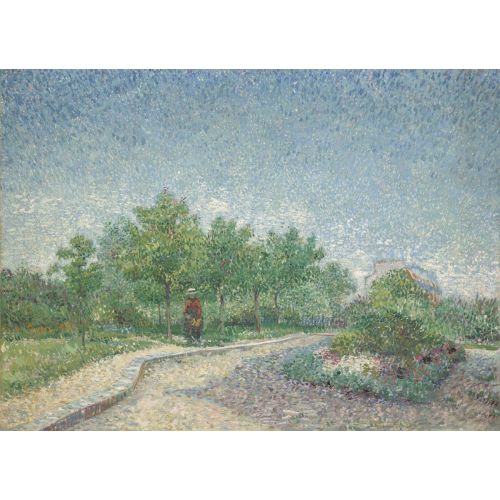
Vincent van Gogh created the painting "Asnières" when he lived in Paris between 1887 and 1888. This work is an excellent example of his drawing technique at that time, showcasing refined use of color and texture.The subject matter stems from a region north-west of Paris known as Asnière-sur-Seine where suburban landscapes were popular among artists. Van Gogh's depiction captures the natural elements within an industrialized setting - terraced houses along railway lines meet greenery under large skies with floating clouds.
Van Gogh employed a vibrant color palette for this work: blues, greens, yellows, and reds came together to create beautiful contrasts by using complementary colors side by side on canvas.
The artwork was completed using oil paints which allowed him to play around with various brushwork techniques; broad strokes combine smoothly alongside dotted detailing achieved through pointillism – indicative of Impressionist influence seen during his time spent in France.
Through "Asnières", Vincent showcases not just technical ability but also offers glimpses into life during the late-19th century; it reflects a transitional era that merges rural tranquility with urban expansion.
This famous piece can be purchased today as premium quality canvas prints or posters. Alternatively, custom reproductions are available made meticulously adhering to original methods used by Van Gogh himself!
Style
Art historians identify this period (during VanGogh's stay in Paris) under Post-Impressionism movement where Vincent experimented significantly expanding beyond traditional artistic conventions.Besides cherishing Japanese ukiyo-e woodblock prints aesthetics evident via bold outlines & distinct planes/color segments, there’s noticeable inspiration derived from fellow contemporaries Seurat & Signac too. Thus despite maintaining a distinctive style characterized often times by emotional depth & fervid dynamism displayed later works — his Parisian stint allowed him to explore pointillism & impressionistic methods effectively marrying both under umbrella of 'Neo-Impressionism'.