Marcel Duchamp
 Marcel Duchamp
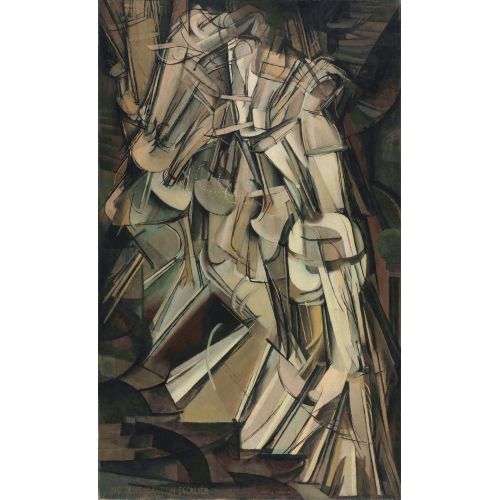
Marcel Duchamp, literally Henri-Robert-Marcel Duchamp, (28 July 1887, Blainville, France - 2 October 1968, Neuilly) was a French artist who broke the boundaries between works of art and everyday objects. Nude Descending the Ladder, No. After the feeling that 2 (1912) created, he did a few more paintings. His disregard for traditional aesthetic standards led him to design his famous ready-made products and heralded an artistic revolution. Duchamp was friendly with the Dadaists and helped organize Surrealist exhibitions in the 1930s. He became a US citizen in 1955.
Although Duchamp's father was a notary public, the family had an artistic tradition stemming from his grandfather, a shipping agent who practiced engraving seriously. Four of the six Duchamp children became artists. Born in 1875, Gaston later became known as Jacques Villon, and Raymond, born in 1876, named himself Duchamp-Villon. The youngest of the boys, Marcel, and his sister, Suzanne, born in 1889, retained the Duchamp name as artists.
The first years
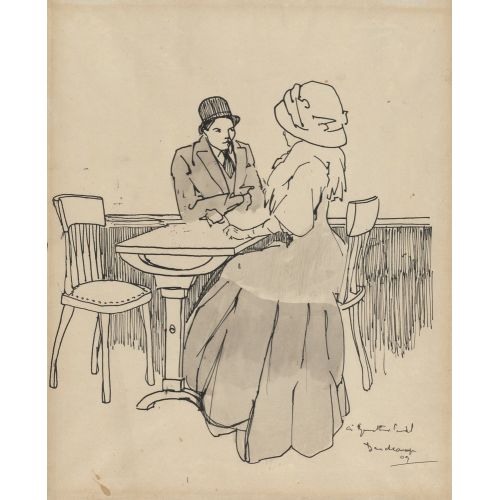
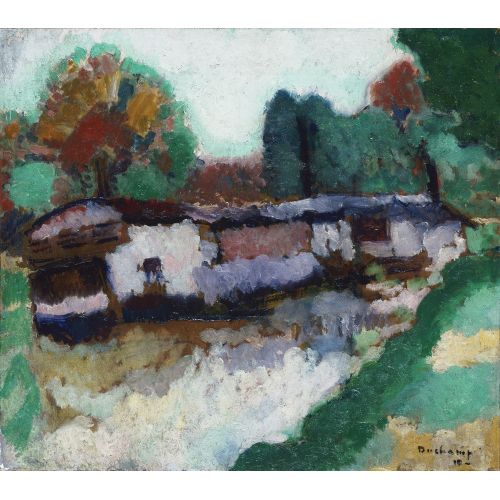
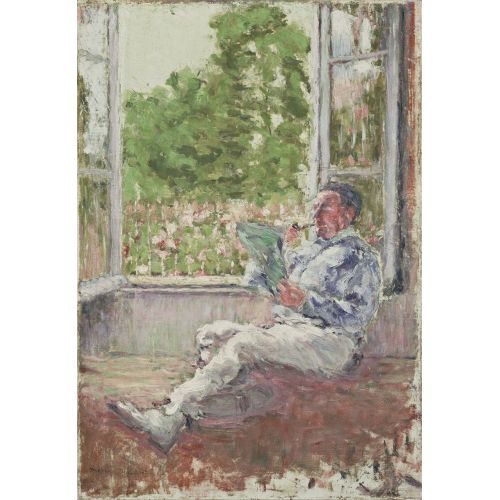
When Marcel arrived in Paris in October 1904, his two older brothers were in a position to assist him. He did some painting at home, and Portrait of Marcel Lefrançois shows that he already had a style and a technique. Over the next few years, while drawing cartoons for comics magazines, Duchamp quickly moved on from major contemporary trends in painting - Post-Impressionism, the influence of Paul Cézanne, Fauvism, and finally Cubism. He was just experimenting, seeing no merit in making any style habitual. He was outside the artistic tradition, not only by avoiding repetition, but also by not engaging in a productive output or frequent exhibition of his work. Marcel painted some of his best early works in the Fauvist style three or four years after the Fauvist movement itself died. The Portrait of the Artist's Father is a notable example. However, in 1911 he began to paint in a style bearing the imprint of Cubism. He later became a friend of the poet Guillaume Apollinaire, a strong supporter of Cubism and all things avant-garde in art. Another of his close friends was Francis Picabia, who was himself a painter in the most orthodox Impressionist style until 1909, when he felt the need for complete change. Duchamp shared with him the feeling that Cubism was too systematic, too static, and "boring". Both went directly from "semi-realism" to an "unobjective" expression of movement. There they met "Futurism" and "Abstractionism", which they knew only by name.
To an exhibition in 1911, Duchamp sent the Portrait (Dulcinea), a series of five superimposed silhouettes in almost monochrome. In this juxtaposition of the successive phases of the motion of a single body, Nude Descending the Ladder No. Two ideas arise. The main difference between the two works is that kangaroo-like silhouettes can be distinguished in the previous work. There is no nudity in the nude, just a descending machine, an unobjective and almost cinematic effect that is completely new to painting. When the nude was brought to the 28th Salon des Indépendants in February 1912, a committee of friends of the Duchamp family refused to hang the painting. These men were not reactionary and used to Cubism, but could not accept the new vision. At the Armory Show in New York City a year later, the painting was re-selected from among hundreds that were equally shocking to the public. Whatever made the work so scandalous in Paris and such a success in New York prompted Duchamp to stop painting at the age of 25. A widespread belief was that Duchamp's work had a dimension of irony, almost mockery of the painting itself, that was more than anyone could bear and undermined his belief in painting. The title alone was a joke that got pissed off. Even the Cubists did their best to stand out, but Duchamp's sole motive seemed to be provocation.
Farewell to Art
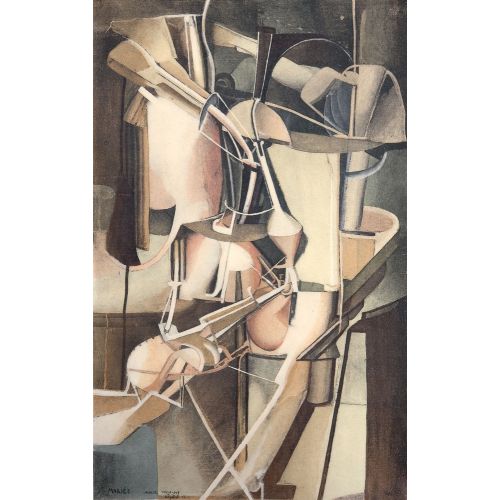
After Nude in 1912, Duchamp did a few more paintings. Some of these, notably Le Passage de la Vierge à la Mariée and Mariée, made in Munich, are among the best works of the period. Again they were neither Cubist nor Futurist nor Abstract, but they expressed Duchamp's typical vision of the body as perceived in his innermost impulses.
As a painter, there was no doubt that Duchamp was on the same level as the most talented. What was missing was faith in art itself, and he sought to replace aesthetic values in his new world with an aggressive intellectualism against the so-called common sense world. As early as 1913, he began work on an extremely odd piece: The Bride, Even The Bride Stripped Naked by Her Bachelorette (Big Glass). For this, he completely rejected what he called retinal art and adopted the geometrical methods of industrial design. It became like the blueprint of a machine, albeit symbolically, embodying his ideas about men, women and love.
Like the nude, the Big Glass would be unique among modern paintings. Between 1913 and 1923, Duchamp worked almost exclusively on preliminary studies and actual painting of the painting. His farewell to painting was certainly not goodbye to work.
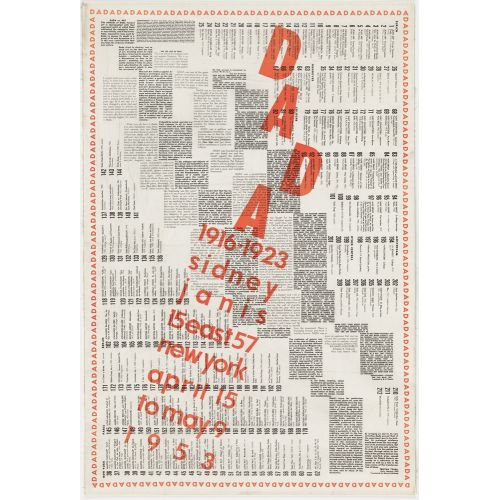
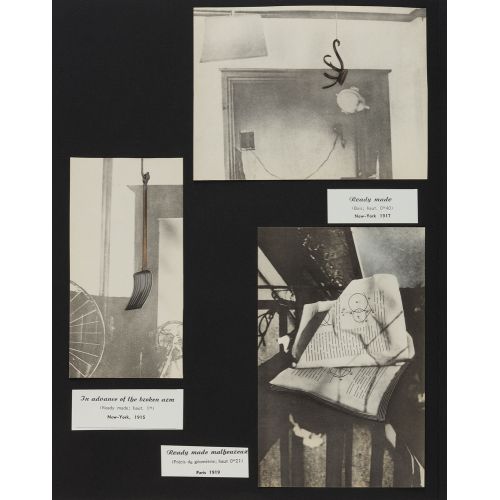
Besides Big Glass, which Duchamp worked on for eight more years until he left it in 1923, he made only a few other readymades. In 1917, he sent a urinal called Çeşme to the first exhibition of the Independent Artists Association. Despite being a founding member of this society, “R. Mutt” and therefore rejected. His ready-made products anticipated the Dada movement several years earlier, which Picabia introduced to New York City in the magazine 291 (1917). As an echo of the movement, Duchamp, Arensberg, and H.P. Roché decided to release only two issues of The Blind Man and only one issue of Rongwrong. Later, together with the artist Man Ray, he published a single issue of New York Dada in 1921.
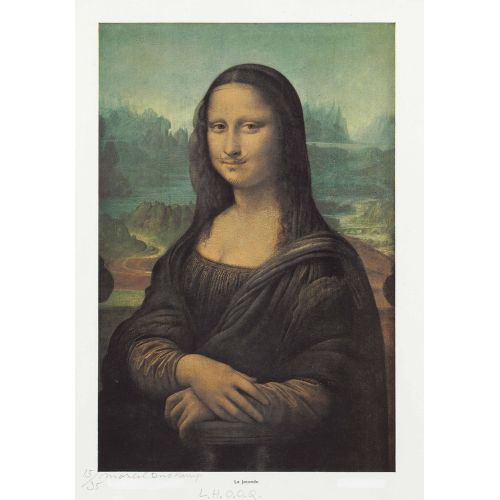
In 1918 he sold the unfinished Big Glass to Walter Arensberg. With the money from this and his last painting, he spent nine months in Buenos Aires, where he heard about the armistice and deaths of his brother Raymond Duchamp-Villon and Apollinaire. He stayed at Picabia in Paris in 1919 and made contact with the first Dada group. A photograph of the Mona Lisa with a mustache and goatee was added to her most famous ready-to-wear on this occasion. The act expressed the Dadaists' contempt for the art of the past, which in their eyes was part of the disgrace of a civilization that brought about the horrors of the war that had just ended.
Although Duchamp diligently avoided art circles, he remained in contact with the Surrealist group in Paris, which consisted of many of his former Dadaist friends. When the Surrealist poet André Breton published The Green Box, a series of documents on the Great Glass, in 1934, he understood the importance of painting and wrote Duchamp's first comprehensive work, which appeared in the Paris magazine Minotaure in 1935. Since then, there has been a closer relationship between the Surrealists and Duchamp, who helped Breton organize all the Surrealist exhibitions from 1938 to 1959. II. reproductions of his works. When the Nazis invaded France, he smuggled his material across the border on several trips. He eventually moved it to New York, where Breton joined a number of Surrealists in exile, including Max Ernst and Yves Tanguy. He was instrumental in organizing the Surrealist exhibition in New York in October and November 1942.
Legacy of Marcel Duchamp
As an artist and anti-artist, Marcel Duchamp is considered one of the leading spirits of 20th century painting. However, No. With the exception of the Nude Descending Ladder No. 2, his works were ignored by the public for most of his life. Until 1960, only avant-garde groups such as the Surrealists claimed he was important, while to "official" art circles and sophisticated critics he seemed just something eccentric and unsuccessful.
He was over 70 when his completely new attitude towards art and society, far from being negative or nihilistic, emerged in the United States as the occult master that led to Pop art, Op art and many other things. movements adopted by young artists everywhere. It not only changed the visual arts, it also changed the mind of the artist.