Ilya Repin
 Ilya Repin
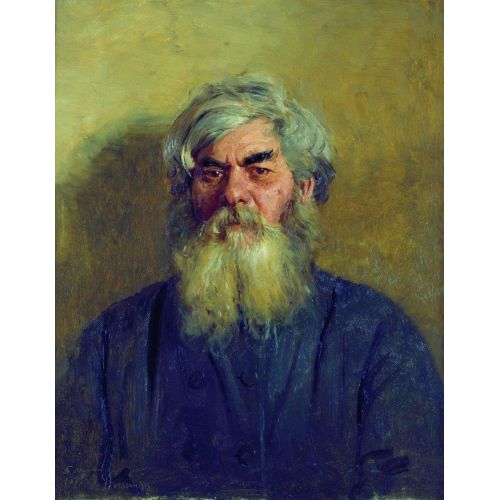
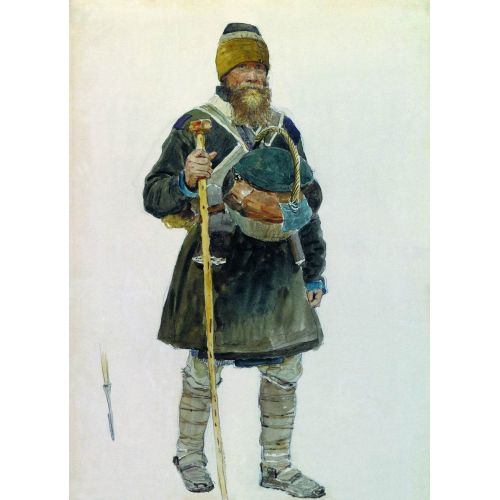
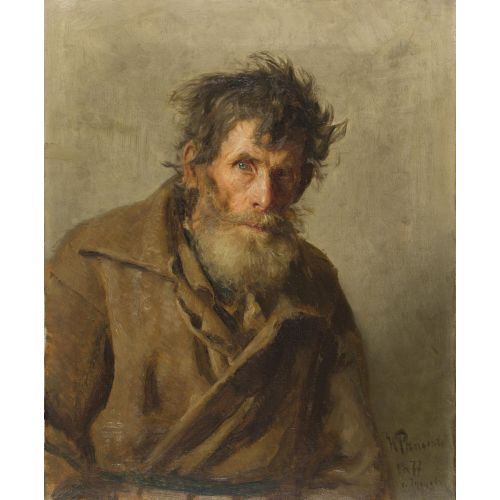
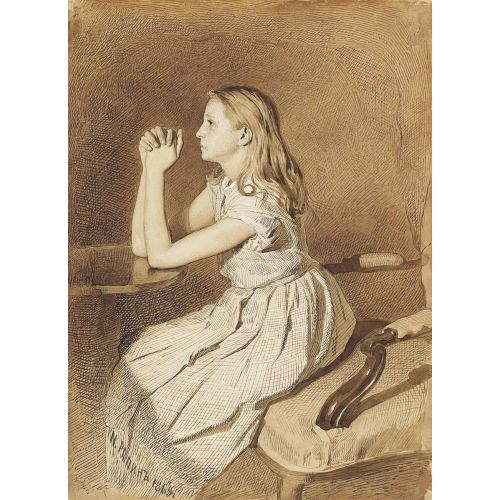
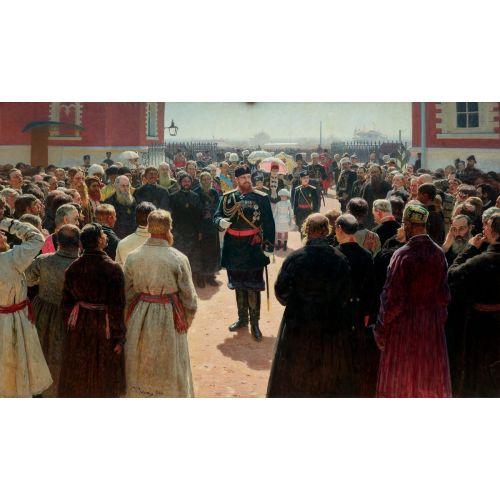
Ilya Yefimovich Repin (August 5, 24 July 1844 – 29 September 1930) was a Ukrainian-born Russian painter. He became one of the most famous artists of Russia in the 19th century. His major works include Barge Carriers on the Volga (1873), Religious Procession in the Kursk Province (1880–1883), Ivan the Terrible and his Son Ivan (1885); and the Response of the Zaporozhian Cossacks (1880–1891). He is also known for his illustrative portraits of prominent literary and art figures of the period, such as Mikhail Glinka, Modest Mussorgsky, Pavel Tretyakov and especially Leo Tolstoy, with whom he had a long friendship.
Repin was born in Chuguev, in the Kharkov Governorate of the Russian Empire. His father had served in a Uhlan Regiment in the Russian army and later sold horses. Repin started drawing icons at the age of sixteen. He failed in his first attempt to enter the Imperial Academy of Fine Arts in Saint Petersburg, but nevertheless went to the city in 1863, studied courses and won first prizes in 1869 and 1871, and his drawings were transferred to St. Presented at the Academy of Arts in St. Petersburg. Grand Duke Alexander Alexandrovich gave him a commission for The Barge Carriers of the Volga, a large-scale painting that launched his career. He spent two years in Paris and Normandy, seeing the first Impressionist exhibitions and learning the techniques of painting in the open air.
The historical portrait of Ivan the Terrible, who killed his own son in anger in 1885, caused a scandal when the painting was removed from exhibition. But this was followed by a series of great successes and new commissions. In 1898, he and his second wife hosted Russian society in St. He bought a cottage called The Penates in Kuokkala, Finland (now Repino, Saint Petersburg), near St. Petersburg.
In 1905, after street demonstrations were suppressed by the Imperial government, he left his teaching position at the Academy of Fine Arts. He welcomed the February Revolution of 1917, but was horrified by the violence and terror unleashed by the Bolsheviks in the wake of the October Revolution. Finland separated from Russia in 1917. His house is now a museum and a UNESCO World Heritage Site.
Early Years and Works
Repin was born on July 24, 1844, in the town of Chuguev in the Kharkov Governorate of the Russian Empire, in the heart of the historic district of Sloboda Ukraine. His father, Yefim Vasilyevich Repin (1804-1894), served in the Uhlan Regiment of the Russian Imperial Army. He fought in the Russo-Persian War (1826-1828), the Russo-Turkish War (1828-29) and the Hungarian campaign (1849). When his father retired from the army after twenty-seven years of service, he became a traveling merchant selling horses.
Repin's mother, Tatiana Stepanovna Repina (née Bocharova) (1811-1880), was also the daughter of a soldier. He had family ties to nobles and officers; The Repins had six children and were moderately wealthy. In 1855, at the age of eleven, he enrolled in the local school where his mother taught. He showed a talent for drawing and painting, and at the age of thirteen his father enrolled him in the workshop of icon painter Ivan Bunakov. He restored old icons and painted portraits of local notables. At the age of sixteen, his skill was recognized and he became a member of an artel or artists' cooperative, the Association for the Promotion of Artists, who traveled around the Voronezh province to make icons and murals.
Repin had much bigger goals. In October 1863 he competed for admission to the Imperial Academy of Arts in the capital, Saint Petersburg. He failed on his first try, but persevered, renting a small room in the city and taking academic painting lessons. He succeeded in January 1864 and was allowed to attend lectures for free.
At the academy, he met the painter Ivan Kramskoi, who was his professor and mentor. When Kramskoi founded the first independent union of Russian artists, Repin became a member. In 1869 he was awarded a second class gold medal for his painting Job and His Brothers. He met the influential critic Vladimir Stasov and painted a portrait of his future wife Vera Shevtsova.
First Success
In 1870, along with two other artists, Repin went to the Volga River to paint landscapes and works of barge carriers (the Repin House in Tolyatti and the Repin Museum on the Volga commemorate this visit). Returning to Saint Petersburg, the quality of the Volga boatman drawings earned him a commission from Grand Duke Vladimir Alexandrovich for a large-scale painting on the subject. The painting Barge Carriers on the Volga was completed in 1873. The following year he was awarded a first class gold medal for his painting The Resurrection of the Daughter of Jairus.
In May 1872 he married Vera Alexeievna Shevtsova. (1855-1917). She joined him on his travels, including a trip to Samara, where their first child, Vera, was born. They had three more children; Nadia, Yuri and Tatyana. The marriage was difficult, as Repin had numerous relationships while Vera took care of the children.
Style and Technique
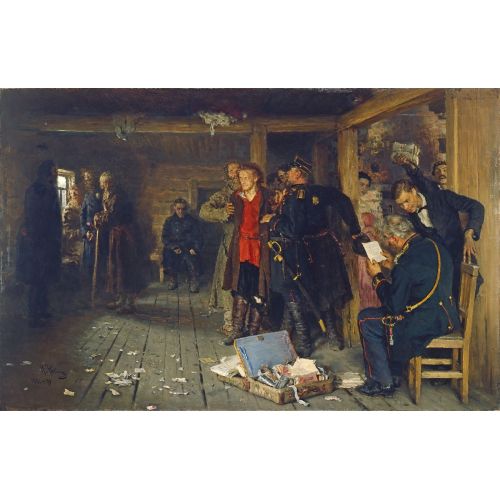
Repin persistently sought new techniques and content to add more fullness and depth to his work. Repin had a number of favorite subjects and a limited circle of people he portrayed. But her aesthetic had a deep sense of purpose and she had a great artistic talent to feel the spirit of the age and its reflection in the lives and characters of individuals. Repin's pursuit of truth and ideal was influenced by the hidden aspects of social and spiritual experiences as well as national culture, which led him artistically in various directions. Like most Russian realists of his time, Repin often bases his work on dramatic conflicts drawn from contemporary life or history. He also used mythological imagery with a strong sense of purpose; Some of his religious paintings are among the greatest.
His method was the opposite of the general approach of impressionism. He produced works slowly and carefully. They were the result of close and detailed study. He was never satisfied with his work and often drew multiple versions over the years. It has also constantly changed and rearranged its methods in order to achieve more effective organizing, grouping and coloring power. Repin's portrait style was unique, but owed something to the influence of Édouard Manet and Diego Velázquez.
Legacy
Repin was the first Russian artist to gain fame in Europe using specifically Russian themes. Radically different from previous Russian paintings, his 1873 painting Barge Carriers on the Volga made him the leader of a new critical realism movement in Russian art. He chose nature and character over academic formalism. The triumph of this work was widespread and was praised by contemporaries such as Vladimir Stasov and Fyodor Dostoyevsky. The paintings show a sense of personal responsibility for the difficult life of ordinary people and the fate of Russia.