

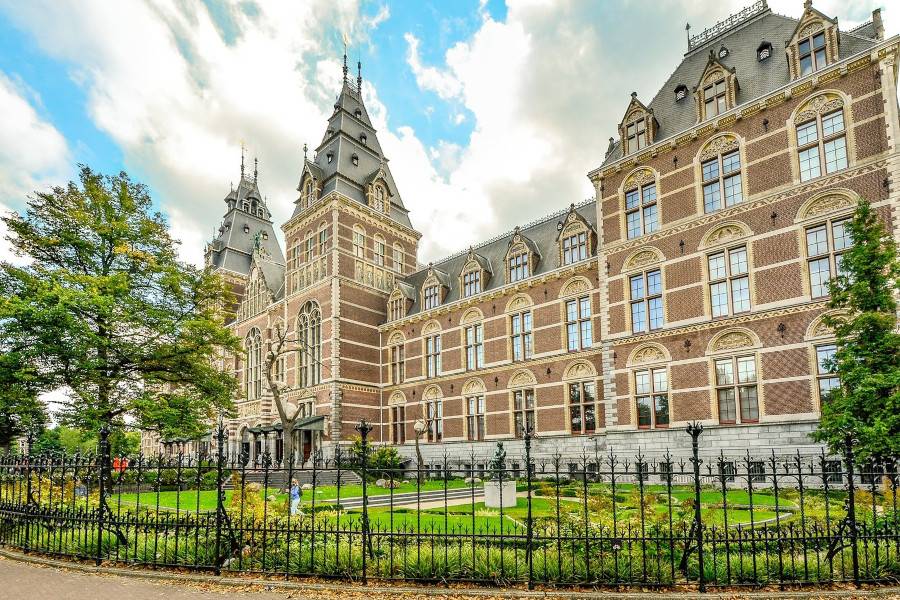
The Rijksmuseum (National Museum) in Amsterdam is the premier State-owned Dutch museum dedicated to Dutch art and history.
World-famous masterpieces from the Dutch Golden Age include Vermeer’s The Milkmaid and Rembrandt’s The Night’s Watch. The Rijksmuseum itself is also a masterpiece. The collection is presented in a stunning building with magnificent interior design. 8,000 objects in 80 galleries tell the story of 800 years of Dutch art and history, from the Middle Ages to Mondrian. More than 2.5 million visitors visit through the ages each year and experience a sense of beauty and time.
Rijks Museum History, Architectural Structure, Artifacts
To preserve their national heritage, the Dutch government established another older museum in 1795, modeled after the Louvre. While headquartered in The Hague, this institute was known as the Nationale-Kunst Gallerij and displayed around 200 pieces of art, predominantly belonging to wealthy, influential Dutch citizens. Over the next 60 years, the museum’s collection moved between locations in The Hague and Amsterdam due to political developments and other curatorial issues.
Eventually, the Dutch government decided to build a specially built museum in Amsterdam to house the collection permanently and held two design competitions. Although the first event was unsuccessful, the famous Dutch architect Pierre Cuypers won the second round and was commissioned to design the building. Its Gothic, classically inspired design was completed in 1885 after nearly a decade of construction work. By this time, Rembrandt’s masterpiece The Night Watch was added to the collection, posing additional challenges due to its enormous size. A special hall was built to host The Night Watch in 1906, allowing patrons to experience the painting in all its glory. Since then, many other wings and rooms have been added to the Rijksmuseum, including the Asian Pavilion, which opened in 2013.
The Rijksmuseum organizes temporary exhibitions of modern and contemporary art, including lectures, seminars and guided tours. It is currently able to present and display around 8,000 objects at any given time and changes its exhibits regularly throughout the year.
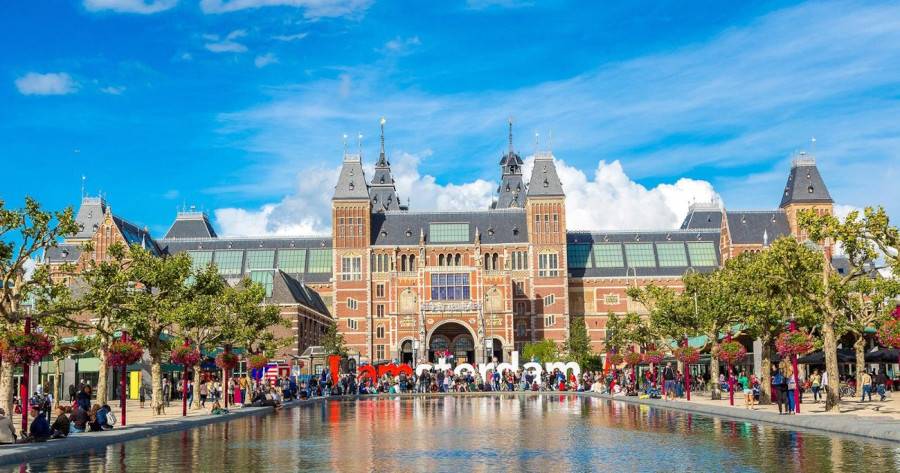
Rijks Museum Amsterdam
Rijks Museum Architectural Structure, Interiors
The museum is located on the Museumplein (Museum Square), close to the Van Gogh and Stedelijk museums.
Founded in 1800, the museum has been housed in a Gothic-Renaissance revival building since 1885, enlarged and renovated over time. A major expansion and renovation project was carried out from 2001 to 2013 on a design by Spanish architects Cruz y Ortiz.
The original architect of the building, Pierre Cuypers, began designing this neogothic cathedral according to Dutch art in 1876; It opened in 1885 and has stood guard over Amsterdam’s Museumplein ever since.
Over the centuries, the building has experienced a series of poorly executed ‘upgrades’: intricately frescoed walls and ceilings were whitewashed, precious mosaics were broken, plastered decorative surfaces and suspended ceilings hung from the walls. It developed worse in the mid-20th century, with efforts to disguise the original building. Cruz y Ortiz, who won the competition to redesign Rijks in 2003, adopted the existing architecture, returning as much as possible to the original volumes of the spaces.
For Cruz y Ortiz, choosing what to preserve and what to restore, what to remodel and what to disregard, balancing these over time was difficult. Cruz y Ortiz meticulously implemented a clear visual approach that favors clarity over confusion. The original, the restored, and the new melt together in a crucible of solid, understated architectural elements.
Cruz y Ortiz began by comparing this “Scandinavian temple” to a Venetian palace. On one side of the site is the water, the Singelgrachtkering canal and on the other side the street.
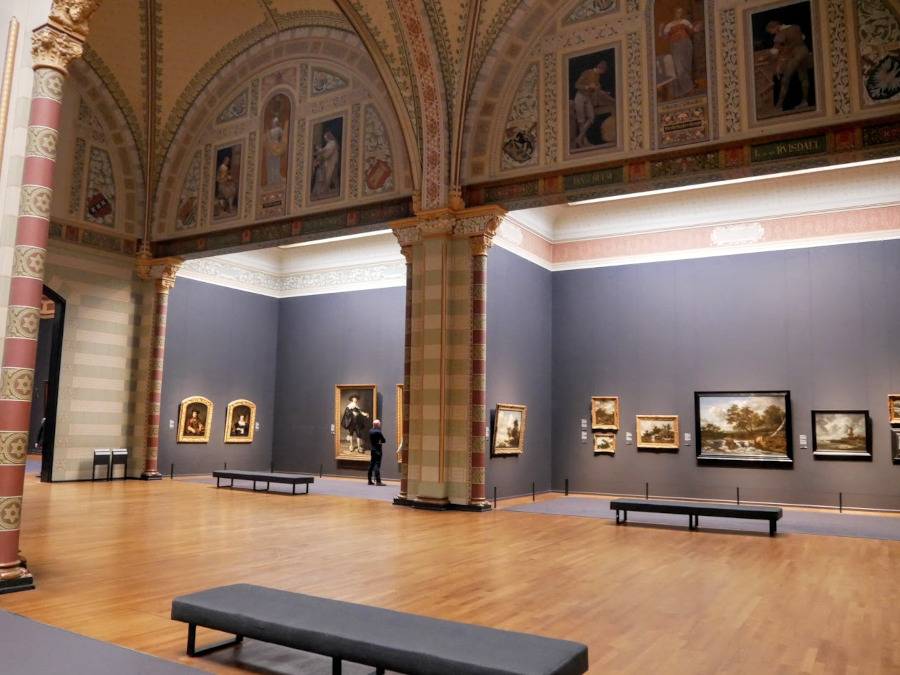
Rijks Museum Interior
Rijks Museum Important Artifacts
Although the Rijksmuseum is famous for its art collection, it is actually a museum focused more broadly on Dutch history; therefore, different kinds of arts and crafts are not presented in separate galleries as usual, but are displayed side by side in a chronological order aimed at depicting the creative history of the Netherlands.
The Rijksmuseum collection, which consists of one million pieces dating from the Middle Ages to the 20th century, consists of paintings, sculptures, drawings, applied art, clothing and historical documents.
The collection features many world-famous artworks, including The Night Watch, Johannes Vermeer‘s The Milkmaid, and several important paintings by Vincent van Gogh, and is on permanent display at the museum. It also includes works by international authors such as Goya and Fra Angelico.
Sculptures by Verhulst and Van der Schardt, among others, are displayed alongside exquisite objects of applied arts.
The museum also has a notable collection of Asian art.
Where is Rijks Museum, How to Get There, Directions, Visiting Hours, Entrance Fee
Full address: Museumstraat 1, 1071 XX Amsterdam, Netherlands
Open daily from 9 am to 5 pm
Adults: 20 €
Free for 18 and under