

German Art History
German art history has an important place in world art history in fields such as visual arts, architecture and literature. In order to understand German thought, a deep study is required.
Visual arts
Germany has a strong and rich tradition in the visual arts. Gothic-style paintings and sculptures, popular in France and Germany, were often made to decorate churches, and illuminated manuscripts and stained glass were also created. XV. The design of altarpieces combining the arts of painting, sculpture, and architecture in the 19th century became a popular pursuit, and the rise of book printing led to the design of many fine engraving illustrations. XV. and XVI. In the late 19th century, a generation of German artists emerged, including Albrecht Dürer, Lucas Cranach, Matthias Grünewald, and Hans Holbein the Younger, working in a style influenced by the Italian Renaissance, and their work represented a golden age in German art. During this period, the Protestant Reformation of the 1520s led to the destruction of some arts that were considered pagan, as seen in Dürer’s numerous self-portraits, giving rise to more secular subjects.
The next generation of artists explored French and Italian variations on the Baroque and Rococo, but German art remained in the XVIII century of a calm Neoclassicism championed by the theorist Johann Winckelmann and a number of new art academies. It did not develop a definite national character until the middle of the century.
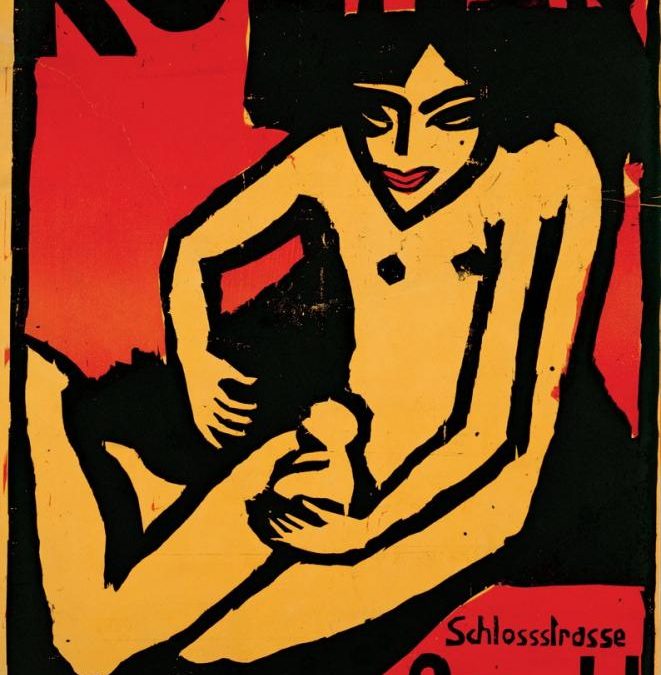
German painters of the 20th century, particularly groups such as Die Brücke (“The Bridge”) and Der Blaue Reiter (“The Blue Rider”), developed a new Expressionist trend in European art. From 1916, Kurt Schwitters, George Grosz, Hannah Höch, John Heartfield, and others explored Dada’s more theoretical concerns, while in the 1920s artists such as Otto Dix and photographer August Sander worked in the realistic, socially critical style known as Neue.
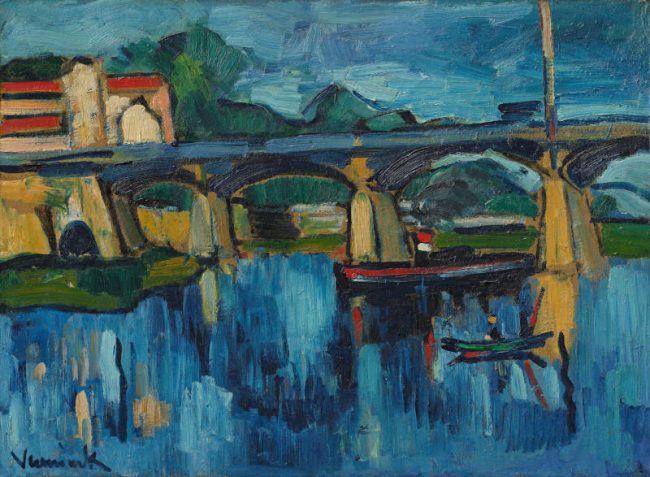
Museum Barberini, Maurice de Vlaminck: Die Brücke von Chatou
These and other developments stopped with the rise of the National Socialists in 1933. Hitler and the Nazi regime condemned modern art by staging the “Entartete Kunst” (Degenerate Art) show in 1937 in an attempt to ridicule artists such as Wassily Kandinsky, Emil Nolde, and Ernst Ludwig Kirchner. Conservative German landscape art was instead promoted as an ideal art form.
After the Second World War, a form of Socialist Realism artistic practice dominated East Germany. However, in West Germany, many artists tried avant-garde movements such as Abstract Expressionism, Pop art, minimalism and Op art. In the 1960s, Joseph Beuys created sculpture, performance art, and installation art that challenged the definition of “high art.” Combining materials such as oil and felt, Beuys’ work represented an individual approach to Pop art’s aim to bring art into the realm of everyday experience. Perhaps the most notable German of the 1970s, known for his figure-based paintings, Gerhard Richter’s beautifully rendered work blurring the lines between photography and painting media envisioned challenging the traditional forms that would characterize postmodern art. German art was again at the center of the international art world. Neo-Expressionism became the dominant international trend of the 1980s.
German Architecture, German Art History Architectural Features
Throughout its history, German architecture has combined influences from elsewhere in Europe with its national character. In the Middle Ages, it was the Romanesque style that dominated. In the 13th century, as the Gothic style prevailed, some of Germany’s most notable buildings were built, including the cathedrals in Cologne (begun 1248) and Strasbourg (planned in 1277). Variations of Gothic and Renaissance styles predominated in the 15th and 16th centuries, but commissions for elaborate religious buildings declined for a time after the Protestant Reformation. XVII. In the 19th century, the revival of Gothic began as an increasing amount of ornamentation became the main feature of churches and palaces. He embodied the romanticly colored Neoclassicism of Karl Friedrich Schinkel, the state architect of Prussia, in 1815. German Art History: While radical architecture was generally suppressed during this period, some architects inspired in part by the Jugendstil movement, figures such as Henry van de Velde and Peter Behrens, questioned the validity of architecture that seemed so disconnected from modernity at the turn of the century; this type of inquiry, XX. It opened the door to the radical experiments that characterized German architecture in the 19th century.
Contemporary German architecture was the Bauhaus school that emerged in Weimar in the 1920s and is associated with the names Walter Gropius and Ludwig Mies van der Rohe. In the postwar years, there was a puritanical disdain for decorativeness alongside the dogmas of the Bauhaus school – the strict harmony of style with function and the insistence on the intrinsic beauty of materials. Yet in West Germany, as elsewhere in the 1960s and 1970s, the strict Bauhaus style began to yield to a freer postmodernism, which was regarded as “not only function but also fiction.” Prominent representatives of this school include Josef Paul Kleihues, Oswald Mathias Ungers and brothers Rob and Leon Krier.
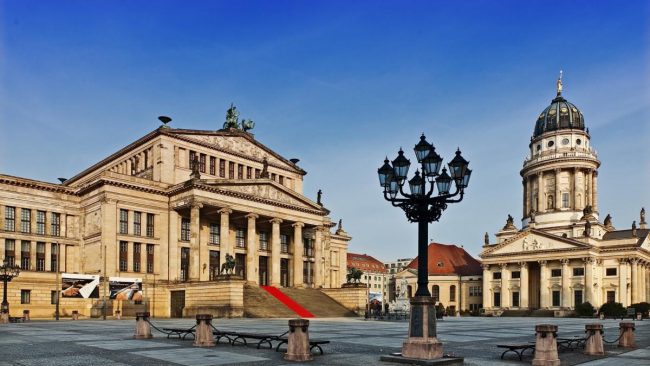
German Architecture, German Art History Architectural Features
Architectural developments in East Germany reflected the influence of Soviet ideological principles and models. Buildings in the eastern region differ from those in West Germany in the multiplicity of their proportions. The main showpieces in the east are Berlin, along Unter den Linden, Marx-Engels-Platz, Alexanderplatz and Karl-Marx-Allee, witnessing government buildings, apartment blocks, hotels and public spaces, and the surprisingly elegant Leipziger-Strasse and their extravagant decorations. Architecture under the communist regime is immediately recognizable not only by the extreme dimensions, whether horizontal or vertical, but also by the monotonous white facades that are lightened by the occasional color clipping. Except where ideological factors intervened (as with the destruction of the Berlin Palace), the East German government had a reasonable record of preserving historic buildings.
Long quiet after the reunification of East and West Germany, Potsdamer Platz in the heart of Berlin was once one of the focal points of Berlin’s economic and administrative life, a series of public and private works by internationally renowned architects such as Renzo Piano, Helmut Jahn and Richard Rogers. revived with the construction of buildings. After some fierce artistic and political debate, a Holocaust memorial designed by Peter Eisenman was unveiled in the area.
German Art History Museums and Galleries
With thousands of museums, Germany houses some of the world’s largest collections of paintings and sculptures or archaeological and scientific exhibitions. Among the important museums and galleries; The Prussian Foundation for Cultural Heritage in Berlin – namely, the Pergamon Museum, the Old (Altes) Museum, the New (Neues) Museum, the National Gallery (Nationalgalerie) and the Bode Museum-Zwinger Museum and Picture Gallery (built by Gottfried Semper) in Dresden, Bavaria The State Picture Galleries and Deutsches Museum in Munich, the German National Museum in Nuremberg, the Roman-Germanic Central Museum Mainz, the Senckenberg Museum of natural sciences in Frankfurt am Main, and the State Gallery in Stuttgart. Some museums are highly specialized, dedicated to a single artist, school, or genre, but most combine natural science with the fine arts. There are many ethnological museums such as the Linden Museum in Stuttgart, the East German Gallery Museum in Regensburg and the Ethnological Museum in Berlin-Dahlem, and many more libraries, archives, castles, cathedrals, churches and monasteries. The Berlin-Dahlem Botanical Garden and Botanical Museum is the oldest German botanical garden, founded in the XVII century. German art history is full of various works.
Die Brucke (Bridge)
In 1905 a group of German expressionist artists founded “Die Brücke” in Dresden. Die Brücke is sometimes compared to Fauvism.
Both movements were interested in primitive art and expressing extreme emotions through their unconventional use of colour. Both Die Brucke and Fauvism gravitated towards rough drawing, and yet they rejected abstraction altogether because it was important to them that their paintings show emotion. However, Die Brücke artists’ paintings of city streets and sexually explicit scenes tame Fauvism by comparison.
The founding members of Die Brucke were Fritz Bleyl (1880–1966), Erich Heckel (1883–1970), Ernst Ludwig Kirchner (1880–1938) and Karl Schmidt-Rottluff (1884–1976). Later in 1906 Emil Nolde (1867–1956) and Max Pechstein (1881–1955) joined. Otto Mueller (1874–1930) joined in 1910. The group had a strong influence on the evolution of modern art and Expressionism in the 20th century.
The four founding members were Jugendstil architecture and met through the Königliche Technische Hochschule (technical university) in Dresden, where Kirchner and Bleyl began working in 1901 and became close friends in their early years. They discussed art, nature and radical ideology.
Die Brücke artists aimed to reject the traditional academic art style and to find a bridge (hence the name) between past and present artistic movements. They paid tribute to Albrecht Dürer, Matthias Grünewald and Lucas Cranach the Elder, but wanted to incorporate new ideas from contemporary international avant-garde movements.
Die Brucke (Bridge)
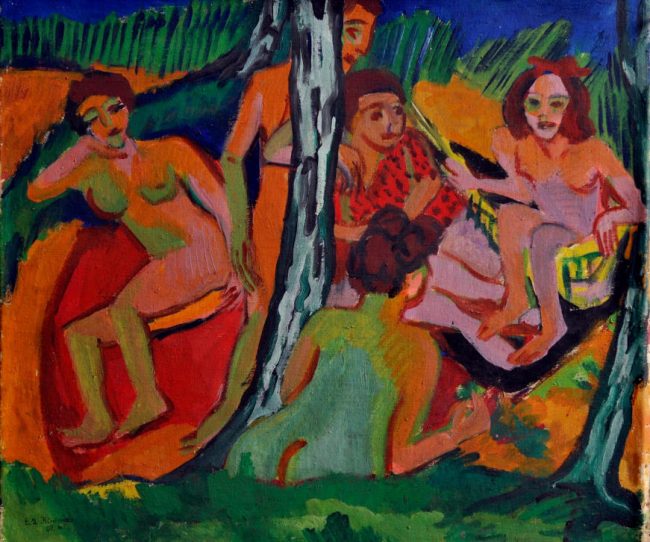
The group revived ancient media such as gravure prints and invented the linocut printing technique, but at the time defined their work as traditional engraving. They developed a common style based on vibrant colours, emotional tension, violence/sexual imagery, and drew influences from primitivism. They initially focused on the urban issue in Dresden, but thanks to Mueller’s excursions, they began making expeditions to southern Germany. These trips produced quite a few nude and rural scenes.
Group members initially sought to “isolate” themselves from their Dresden bourgeois past and surround themselves with the working class and bohemians. Erich Heckel rented an empty butcher’s shop on Berlinerstrasse in Friedrichstadt as a studio. Fritz Bleyl described the studio as: “A true bohemian filled with ubiquitous paintings, drawings, books and artist’s stuff.
They used models from their social circles, often lovers rather than professionals. They used 15-minute poses to encourage speed and spontaneity. Fritz Bleyl described one such model, Isabella, a fifteen-year-old girl from the neighborhood, as “very lively, well-built, cheerful, undeformed by the silly fashion of the corset, and fully suited to our artistic demands. in case it blooms.”
The Die Brücke artists prepared a manifesto (mostly written by Kirchner), which was then carved into wood so they could mass-produce it. The Manifesto proclaimed a new generation that “wants freedom in our work and in our lives, independence from old, established forces.”
jugendstil
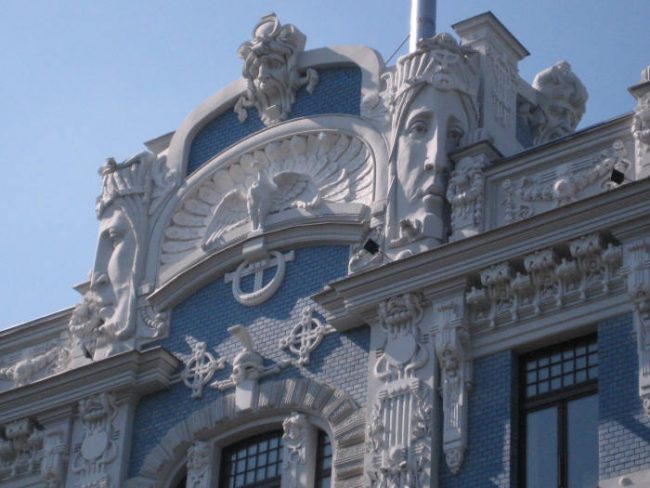
In the mid-1890s, an artistic and architectural style known as Jugendstil emerged. It was originally the German branch of the Art Nouveau movement. The style continued until 1910. The style is named after the Munich magazine “Die Jugend”.
Art historians agree that there were essentially two phases in the Jugendstil movement.
jugendstil
Novembergruppe (November Group)
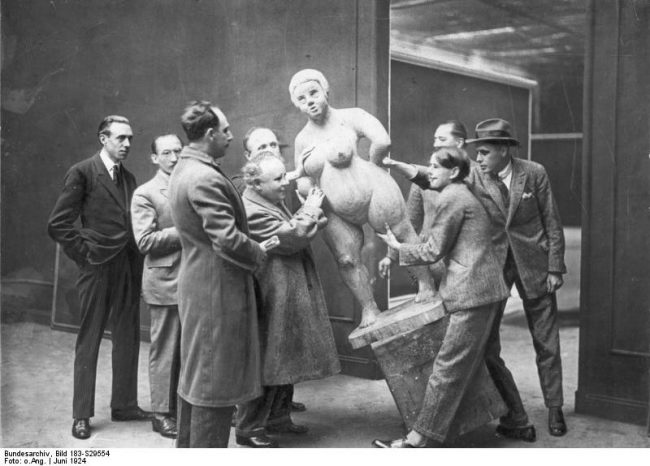
Novembergruppe was a group of German expressionist artists and architects. Founded on December 3, 1918, they got their name from the month of the German Revolution, as they wanted to be considered revolutionary and insurgent. Novembergruppe artists have described themselves as radical and revolutionary, seeking to change how art is taught and how laws affect artists. Radical artists campaigned for more say in the organization of art schools and new laws on artists. It is one of the prominent groups in German art history.
The abundance of styles among artists makes it difficult to classify as any style. Formally, the group was a fusion of Cubism, Futurism and Expression.
Expressionist art styles, mostly founded by painters César Klein and Max Pechstein (two ringleaders), also incorporated their shared socialist ethic. Other founding members included painters Georg Tappert, Moriz Melzer and Heinrich Richter.
Novembergruppe (November Group)
Karl Jakob Hirsch, Bernhard Hasler, Richard Janthur, Rudolf Bauer, Bruno Krauskopf, Otto Freundlich, Wilhelm Schmid, sculptor Rudolf Belling and architect Erich Mendelsohn attended the first Novembergruppe meeting on 12 March 1918. This was their first working committee.
As its aims were similar to the Arbeitsrat für Kunst, Novembergruppe aimed to support a socialist revolution in Germany.
Their main goal was to bring art to the people by influencing the public and cultural aspects of German society. They frequently organized art festivals, costume parties, studio tours, literary and musical events, as well as the Great Berlin Art Exhibition in June 1924.
Divisions within the Art Movement
In 1921 artists from the extreme left wing of the Novembergruppe called for an end to the “bourgeois development” of artists.
They believed that some artists, namely the right Novembergruppe, made too much money. Left-wing members signed a statement. The signatories were Otto Dix, George Grosz, Raoul Hausmann, John Heartfield, Hannah Höch, Rudolf Schlichter and Georg Scholz.
By 1922 this split in the group led to the group becoming separate groups and the formation of new smaller groups, including the Kartell fortschrittlicher Künstlergruppen in Deutschland (a cartel of advanced arts groups in Germany). As the movement grew, it attracted people from other art fields, including musicians Max Butting and Hans Heinz Stuckenschmidt.
German art history carries with it great masters and great social pains.