

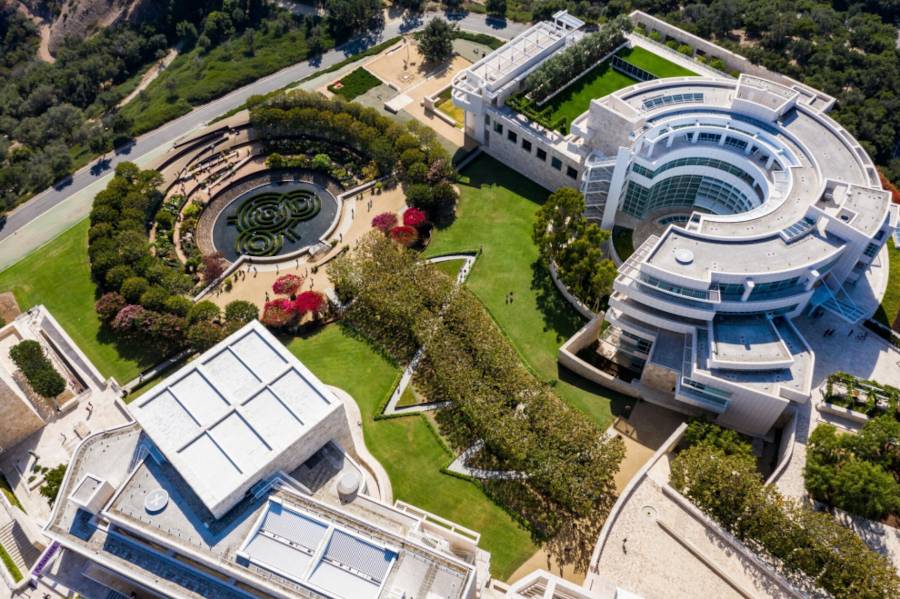
The Getty Center is the name given to one of the two venues of the J. Paul Getty Museum. The J. Paul Getty Museum is a museum and research center established by oil tycoon J. Paul Getty to house his art collections. It consists of two locations in Los Angeles: Getty Villa and Getty Center. The first houses a collection of antiques, while the second showcases European art and international photography.
Getty Center History, Architectural Structure, Artifacts
The original museum opened in 1954 and occupies an added wing to Getty’s farmhouse in the Pacific Palisades section of Los Angeles. However, their collection eventually outgrew that location, so they moved to a new building nearby in 1974. Known as the Getty Villa, this museum is a lavish reconstruction of the Villa Papyri, an ancient Roman house unearthed in Herculaneum.
With Getty’s death, the museum became the richest foundation in the world. After years of planning, the Getty Center, a larger complex of six buildings designed by Richard Meier in the Brentwood neighborhood, opened with great publicity in 1997. The museum at Getty housed J. Paul Getty’s collection of European paintings. Sculpture, drawings, illuminated manuscripts and decorative arts from the Middle Ages to the 20th century. He also has international photographs dating from the late 1830s to the present day. The collections reflect the preference for paintings and French furniture from the Renaissance and Baroque periods. Getty also houses the Getty Research Institute, the Getty Conservation Institute, and the Getty Foundation.
The Getty Villa was closed for renovations in 1997 and reopened in 2006 to a design by Boston-based architects Rodolfo Machado and Jorge Silvetti. It housed a research center and Getty’s collection of ancient Greek, Roman and Etruscan art. The collection was re-established chronologically in 2018 after decades of thematic display.
Getty Center Architectural Structure, Interiors
The Getty Center is one of the most impressive architectural achievements in the United States and also contains some of the world’s finest works of art. The circular concrete and steel structure was designed by renowned architect Richard Meier and houses numerous works of art from various eras and nationalities. Here, you’ll find Renaissance paintings, 20th-century American photography, Baroque sculptures, historical manuscripts, and more, all housed within a large modern campus in the middle of the Santa Monica Mountains. The museum also offers great views of Los Angeles on clear days.
The entire complex consists of 11 buildings surrounded by beautiful open spaces, fountains and sculptures. Getty’s art collection is so large that the 4 exhibit spaces in the Getty Center only display a portion of its collection. But many people come not only for the art, but also for the unusual architecture. Architect Meier combined their distinctive smooth white surfaces with more traditional materials to reflect the feel of the Getty collection. Horizontal lines and square forms dominate. Special architectural tours are made that highlight the architect’s vision and technique in great detail.
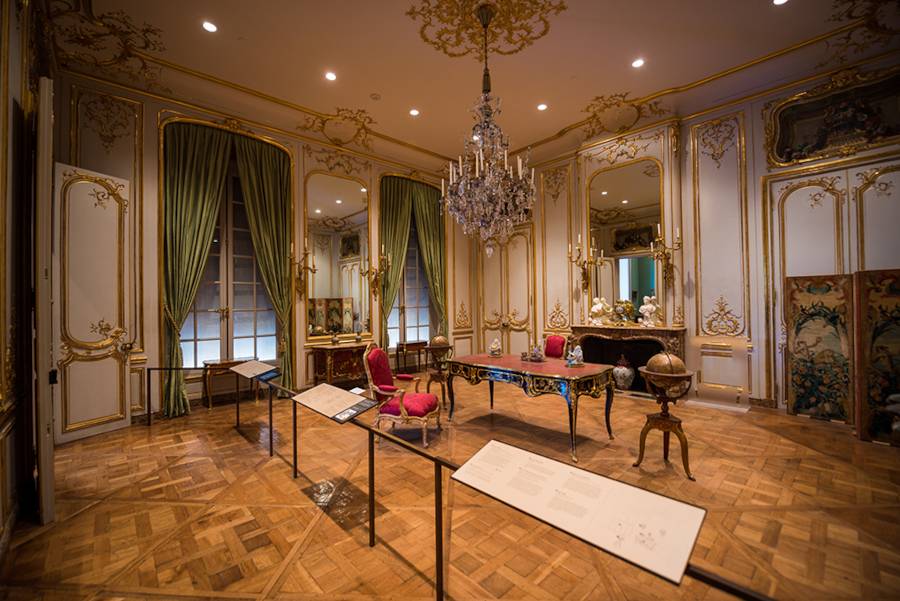
Getty Center Interior
Getty Center Notable Artifacts
The Virgin Mary with Saints Thomas Aquinas and Paul – Bernardo Daddi
The Annuciation – Dieric Bouts
Portrait of a Halberdier – Potormo (Jacopo Carucci)
Lor and His Doughters – Orazio Gentileschi
The Calydonian Boar Hunt – Peter Paul Rubens
The Abduction of Europa – Rembrandt Harmensz. Van Rijn
The Fountain of Love by Jean-Honoré Fragonard
Modern Rome – Campo Vaccino – Joseph Mallord William Turner
Still Life with Apples – Paul Cézanne
Irises – Vincent van Gogh
Where is Getty Center, How to Get There, Directions, Visiting Hours, Entrance Fee
Address: 1200 Getty Center Dr, Los Angeles, CA 90049, United States
Subway bus 761 stops at the Getty Center entrance at the intersection of Getty Center Drive and Sepulveda Avenue.
Get full route information from Metro (Los Angeles County Metropolitan Transportation Authority): call (323) GO-METRO ((323) 466-3876 or use the Metro Trip Planner.
Tuesday – Sunday 10:00 – 17:00
It is closed on Mondays.
Entry is free.