


London’s best-known and most loved building is a museum of national and international modern art, located in the capital of the United Kingdom.
Since the Tate Modern opened in 2000, it has become a symbol of London, not just for the art it houses.
They are also called simply Tate, along with Tate Britain, Tate Liverpool, Tate St Ives and Tate Online.
Tate Modern Museum History, Architecture, Artifacts
In 1889, Henry Tate, an industrialist who made his fortune as a sugar refinery, presented his collection of British nineteenth-century art to the nation and provided funds for the first Tate Gallery.
Tate was a major patron of Pre-Raphaelite artists and bequeathed 65 paintings to the National Gallery, including John Everett Millais’ Ophelia 1851–2 and JWWaterhouse’s The Lady of Shalott 1888. The will was rejected by the trustees as it was not sufficient. space in the gallery.
A campaign was launched to create a new gallery dedicated to British art. With a £80,000 donation from Tate himself, the gallery in Millbank, now known as Tate Britain, was built and opened in 1897. Tate’s original testament, along with works from the National Gallery, formed the founding collection.
Art and antiques dealers Sir Joseph Joel Duveen (1843–1908) and his son Lord Joseph Duveen (1869–1939) made significant financial contributions to the original gallery in Millbank. With their support, major extensions were added to the gallery in 1910, including seven new rooms to showcase the Turner Bequest, and the Duveen Sculpture Galleries, the first galleries built specifically for sculpture in England.
Tate Fellows were founded in 1957 as Friends of the Tate Gallery to purchase artwork and raise money to support and promote the gallery’s work.
Their fundraising efforts made it possible to purchase nearly 400 masterpieces for the gallery, including notable works such as Henry Moore’s The King and Queen, Henri Matisse’s The Snail, and Pablo Picasso’s The Weeping Woman.
More than 40 million people have visited the Tate Modern since it opened in May 2000. It is one of the UK’s top three tourist destinations and provides London with an estimated £100m annual economic benefit.
In 2009 Tate embarked on a major project to develop Tate Modern. Working again with Herzog & de Meuron, the converted Tate Modern takes advantage of the power station’s magnificent redundant oil tanks to increase gallery space and provide much improved visitor facilities.
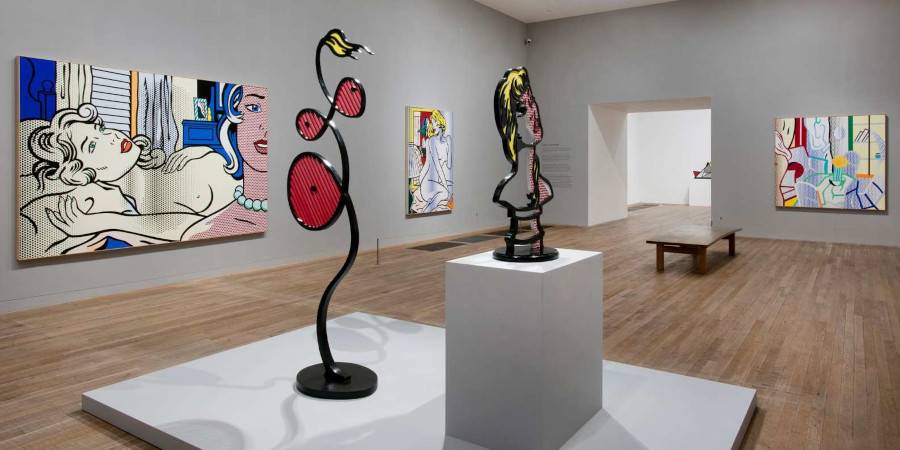
Tate Modern Museum Interior
Tate Modern Museum Architectural Structure, Interiors
In 1995, Swiss architects Herzog & De Meuron were commissioned to convert the Bankside Power Station for this purpose; Their vision was structured around the original features of the building – a magnificent turbine hall 35 meters high and 152 meters long, as well as a boiler room and central chimney.
The great success of the gallery meant that by 2004 it was struggling to control the number of people who wanted to visit. Plans to transform the adjacent switch house were once again made by Herzog & De Meuron.
The new ten-story extension was completed in 2016, increasing the size of Tate Modern by 60 percent. The gallery can now showcase more of its collection and offer dedicated spaces for live art performances. It also has an observation deck with panoramic views of London.
The redevelopment means that the Turbine Hall is now located at the heart of the museum, flanking both sides of the Boiler Room and Key House.
Tate Modern Museum Notable Artifacts
The Turbine Hall stretches throughout the entire building and you can see for free the magnificent work of artists such as Cézanne, Bonnard, Matisse, Picasso, Rothko, DalÍ, Pollock, Warhol and Bourgeois.
In the Natalie Bell Building, you can see how artists come up with new ideas and how they respond to mass media and social change. Along the way you’ll see the work of artists such as Henri Matisse, Dia al-Azzawi, and The Guerrilla Girls. There are also room-sized installations by artists such as Yinka Shonibare CBE, Cildo Meireles, and Sarah Sze.
In the Blavatnik Building you can explore underground Tanks dedicated to performances, installations and video work. You can see the Artist and Contributor exhibition, which looks at artists breaking down barriers between art and real life, including Paul Neagu and Ana Lupas.
Where is Tate Modern Museum, How to Get There, Directions, Visiting Hours, Entrance Fee
Address: Bankside, London SE1 9TG, United Kingdom
By subway from Blackfriars station
You can reach by bus by using the lines 15, 344, 381, 4, 40, 63.
The museum is open Sunday – Thursday 10:00 – 18:00 Friday and Saturday 10:00 – 22:00 and is closed on 24, 25 and 26 December.
Entry is generally paid for everyone, except for some exhibitions.
Disabled visitors pay a concessional fee and admission is free for companions.