

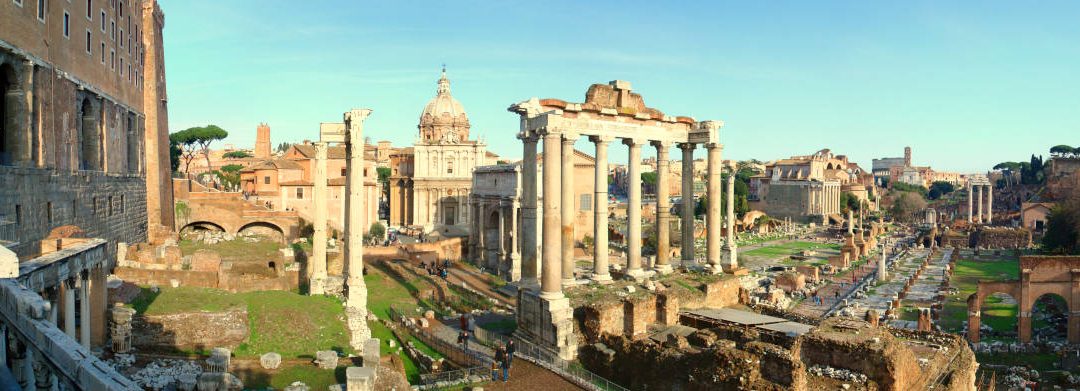
Roman Forum
The Roman Forum or in Latin Forum Romanum was the bustling religious, administrative and commercial heart of Ancient Rome from the 7th century BC. Increasingly more majestic and ceremonial in its function during the imperial period, the Forum had become a monumental stone and marble symbol of Roman power and arrogance, with temples of deified emperors, dedicated pillars and colossal triumphal arches celebrating military victories from far corners of the empire. In a nutshell, it reminds us that the Forum Romanum was the political, ritual and civic center in the city of Rome.
Roman Forum Architecture
The Roman Forum was rebuilt many times during its existence. This allowed various architectural forms from different eras to come together. The influence of each era can be seen in the design and construction of buildings. Clearly demonstrating both elite function and investment in temples and sacred buildings, the architecture is adorned with terracotta painted plaques. It developed from the rough structures in the early stages to the stone-built architecture in the later stages. Roman architects were heavily influenced by classical Greek designs. But the Romans also created their own signature structures, such as basilicas, triumphal arches, domes, Roman baths, and amphitheaters, and the architecture became more imposing and ceremonial in function.
The reign of Augustus (27 BC – 14 AD) is the period when the Forum was repaired using marble and the sewers below were cleaned. In 10 AD, the Temple of Concordia Augusta, occasionally used for Senate meetings, was rebuilt, and the sum of this work was intended to create a shimmering new monumental Forum, surrounded by marble pillars with regular additions of temples, columns, and statues. The arches advertised the power, wealth and military achievements of the Roman emperors.
Today, the Roman Forum is a popular tourist attraction. Visitors can get a first-hand look at the ancient ruins and architectural pieces left behind. Excavations continue in and around the Forum to restore and preserve the remains. Historians are still trying to uncover new findings about the exact age of Ancient Rome that could answer them.
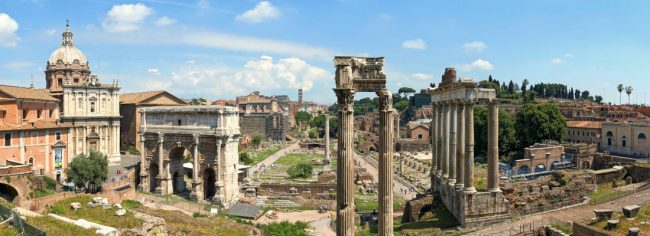
Roman Forum Romanum
Roman Forum Features
Historians believe that people first began meeting in public at the open-air Forum, where the Roman Republic was founded around 500 BC. During the Republic it was the scene of public meetings, courts and gladiator fights, as well as surrounded by shops and open-air markets. Located in the low land between Palatine Hill and Capitoline Hill, the rectangular area was home to many of the ancient city’s most impressive temples and monuments.
Today, the Roman Forum is one of the most famous tourist attractions in the world, attracting more than 4.5 million visitors annually.
Palatine Hill
Legend has it that Roman mythology speaks of the cave where the she-wolf Luperca lived, overlooking Romulus and Remus, located on the Palatine Hill. Legend has it that when the brothers grew up, they decided to establish a city on the riverbank, but when they could not agree on some points of the decision, Romulus killed Remus and founded the city of Rome.
On the Palatine Hill you can see the remains of hundreds of imposing structures built for high Roman society in ancient times. Some of these spots are: Domus Flavia, House of Livia, House of Augustus, Farnese Gardens, Racecourse of Domitian, Palatine Museum. From the Palatine Hill, you can enjoy the best view of the Roman Forum from above.
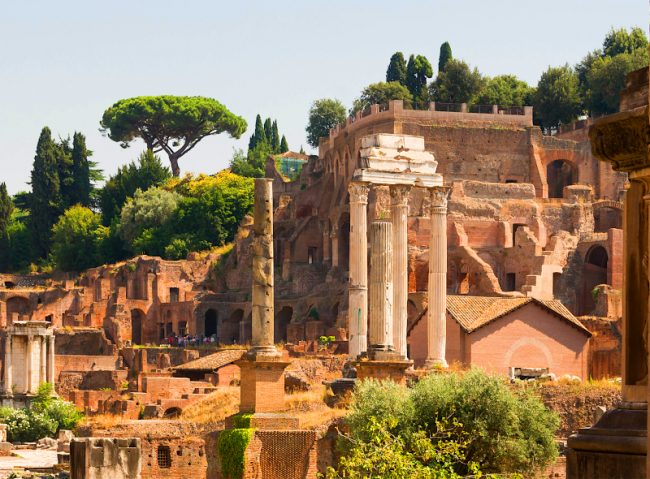
Roman Forum Romanum Architecture Features Palatino Hill