

Japanese Art History
Japanese art history dating back to the 10th century BC, the first peoples who settled on the island produced different arts. Japanese art has been heavily influenced by war over the centuries; The invaders introduced new artistic techniques and styles. Historically, the Japanese have also borrowed heavily from the Chinese. But as Japanese art developed, it also developed its own styles and traditions. Japanese art covers a wide spectrum, with mediums and genres including painting, origami, woodblock prints, literature, ceramics, sculpture, calligraphy, architecture, and manga.
Historically, Japan has been subject to sudden invasions of new and foreign ideas (regarding its geographical and cultural characteristics, the country has almost always been a “world unto itself”), followed by periods of minimized prolonged contact with the outside.
The first examples of complex art in Japan were produced in the 7th and 8th centuries in connection with Buddhism. In the ninth century, as the Japanese began to break free from Chinese cultural influence and develop local forms of expression, the secular arts became increasingly important. By the end of the fifteenth century, both religious and secular art flourished. After the Onin War (1467 – 1477), Japan entered a period of social and economic political disintegration that lasted more than a century. In the state organization that emerged under the leadership of the Tokugawa shogunate, the religion factor began to play a much less important role in people’s lives.
While its elaborate and stylized architectural forms are a cornerstone of Japanese art, painting was also important to the Japanese since the late Heian period around 1000 AD. Artists hand painted scrolls and panels to reflect stories such as The Tale of Genji. Painting styles often changed as governing groups changed. Like the Chinese, many Japanese paintings reflect calligraphy as part of the design. Landscapes, portraits and life scenes are traditional subjects associated with Japanese painting.
Edo, Ukiyo-e, Quarters of Pleasure, Japanese Art History Painting Techniques
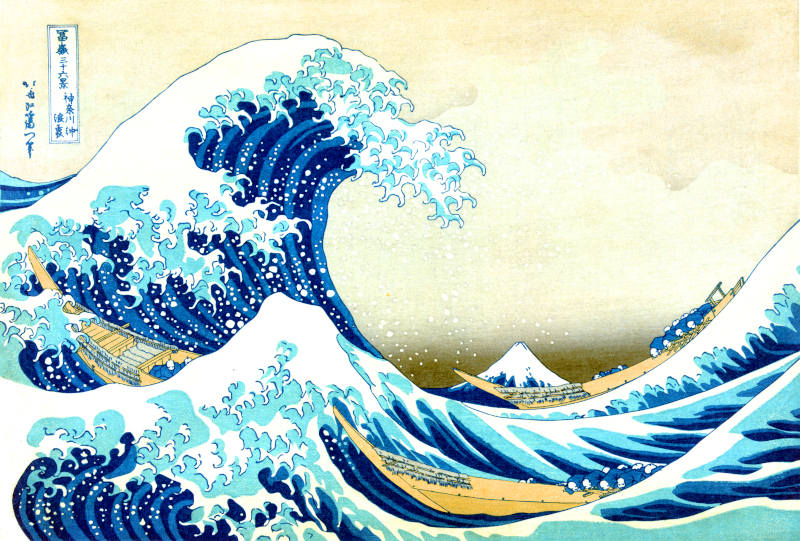
While various periods in Japanese history are famous for their particular art styles and contributions to the development of Japanese art and aesthetics, the Edo period is particularly famous for its Ukiyo-e woodblock prints and the art of Kyoto’s Pleasure Quarries. courtesans of the “floating world”. Many of these works are on display in the best museums in the world as well as in Japan.
Amateur and professional painting is the preferred artistic expression in Japan. Even today, as in ancient times, the Japanese wrote with a brush rather than a pen, and their familiarity with the use of brush techniques has made them particularly sensitive to the aesthetic values of painting. With the rise of popular culture during the Edo period, the ukiyo-e style of woodblock prints became an important art form, and its techniques were developed to produce color prints of almost any subject, from the daily news to the topics of schoolbooks. The Japanese have always thought of sculpture as a much less empathetic means of artistic expression: the use of sculpture in Japan has almost always been the prerogative of religion, and its use has waned with the declining importance of traditional Buddhism.

Ukiyo-e, Japanese Art History, Traditional Painting
The ceramics, which are among the best in the world, represent the first known works of Japanese culture. In architecture, the Japanese have always clearly expressed their ancestors’ preference for natural materials and harmonious interaction between interior and exterior.
Japanese Art History Formative Period
The arrival of Buddhism in Japan in the mid-6th century CE, and the iconography accompanying it serve as a dramatic dividing line in the history of Japanese visual expression. With the advent of Buddhism, a large number of already matured iconography and artistic techniques were assimilated at a comparative speed. This moment determined the course of the development of Japanese art. What preceded the emergence of Buddhism is a matter of the complex and constantly revised archaeological record. The new interest in collecting and categorizing data was due in part to the influence of Neo-Confucian thinking and the introduction of European methodology mainly through contacts with the Dutch. For the most part, however, Edo, like previous eras, was uncomfortable with the relative objectivity required to interpret archaeological findings. Indeed, an important intellectual trend of the period was kokugaku (national learning), a movement mainly of natives devoted to interpreting phenomena to underline Japan’s unique origins.
Statue
Except for the Shaka Triad, which was dedicated in 623 BC, the statue at the Horyu Temple was made sometime between 650 and 711. Created from the mid-century, the sculpture begins to reflect the influence of the Chinese Northern Qi dynasty (550-577) styles. While the structures of these temples have not survived, some important statues have survived and these images are often referred to as Kuratsukuri Tori (also known as Tori Busshi). Like her grandfather, who had immigrated from China, and her father, who was an ardent Buddhist, Tori was saddled up.
Japanese Painting Technique
Buddhist temples were decorated not only with statues, but also with religious paintings, tapestries and other objects. Most of such artifacts from the Asuka period have not survived. One exception is the Tamushi Shrine kondo made of Miniature, affixed to a rectangular pedestal or base. This ensemble of wood, metal, and lacquer provides an excellent view of what a conduit of the period looked like, and perhaps more importantly, it is decorated with the only known painting from the Asuka period.
Japanese Painting Technique Japanese Art History
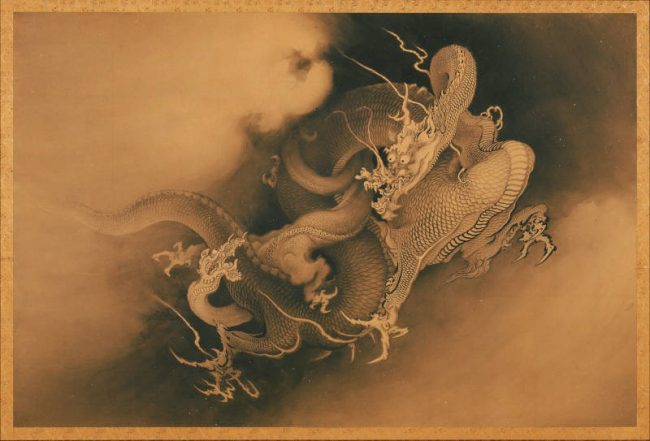
Apart from that, the Japanese painting style was a steady renewal process that took place in traditional painting, parallel to the intensive and systematic study of Western painting methods. Fenollosa was particularly influential in reorienting and rescuing the careers of two important late 19th century painters. Kano Hagai and Hashimoto Gaho. Fenollosa had specific ideas about how these traditional Kanō school painters could adapt their techniques to create a product that was more exciting and perhaps more marketable to Western eyes. Chiaroscuro encouraged the use of bright palettes, Western spatial perspective, and dramatic atmosphere, and these techniques were truly effective in arousing new interest in previously moribund forms of traditional Canoe painting.
Inspired by the success of Hogai and Gaho, a generation of painters sought to expand upon these masters’ technical adaptations. Shimomura Kanzan, Yokoyama Taikan, and Hishida Shunso, the nihonga (Japanese painting) movement that used traditional Japanese pigments but expanded a thematic repertoire. The format was no longer limited to scrolling or screen and included occasional Western framed pictures.
The Development of Western Painting in Japanese Art History
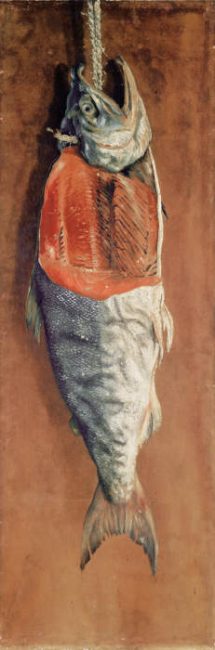
As early as 855, before the Meiji Restoration, the Japanese established a bureau. To study Western painting as part of an effort to master Western technology. Technical drawing is emphasized in the curriculum. Takahashi Yuichi, who graduated from this office, was the first Japanese artist of the period to express an artistic rather than strictly technical interest in oil painting. Through self-education and British illustrator Charles Wirgman intellectual discussions, he increased his mastery level. One of Takahashi’s seven known essays on the subject, Still Life with Salmon (1877), elevates this mundane subject to a magnificent study of form and color.
Takahashi Yuichi Somon, The Development of Western Painting in Japanese Art History
In 1876, a fine arts school was established and a team of Italian artists was recruited to teach Western techniques. The most influential among them, Antonio Fontanesi, the painter of the Barbizon school, who has been teaching in Japan for only a year, has built an extremely loyal following among Japanese students.
In general it can be observed that during the Meiji period there was an initially calculated strategy to study Western representational methods for the greater purpose of bringing Japan to a level of perceived modernity. However, a small but influential group of painters became involved in a cross-cultural exchange that could not be controlled by government planning.
Japanese Ceramic Art
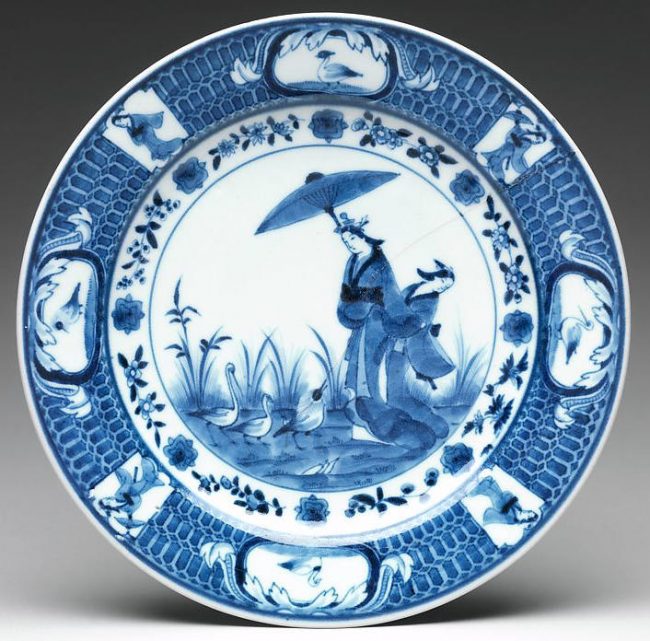
In addition to the continuation of various traditional lineages, the most important development in modern ceramics was the return to folk tastes. Yanagi Soetsu embraced anonymity, functionality, and simplicity as a corrective to the industrialization and self-aggrandizement of the age. Along with potters such as the British artist Bernard Leach, Hamada Shoji and Kawai Kanjiro created a robust, attractive type of pottery reminiscent of products that appealed to the tea masters of the Yanagi, Muromachi and Momoyama periods. Kitaoji Rosanjin was the most important representative of highly ornate work in the Kutani and later kyoyaki traditions.
Japanese Ceramic Art, Japanese Art History
Contemporary Japanese ceramics follows both traditional and abstract lines. Advances were marked by extensive experience in form and a general movement from traditional, functional pieces to works of “art” or sculpture. The line between sculptor and ceramicist became increasingly blurred. Japanese Art History.