

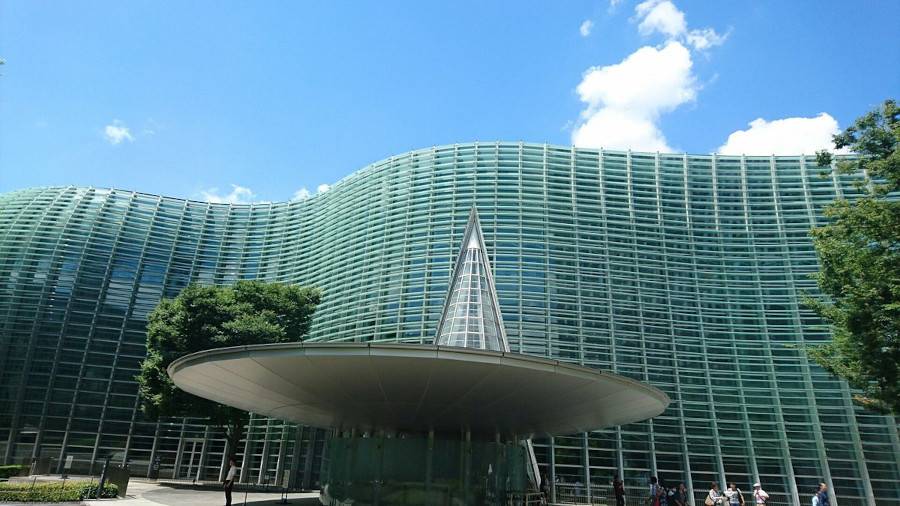
The National Arts Center Tokyo has established itself as one of the country’s most important arts venues. One of the five arts institutions organized by the Japanese government in 2001 under the Japanese government’s effort to increase access, research and preservation of the arts, the gallery operates under three main ideologies: to offer artistic creative perspective, to collect art materials from important historical moments for public use, and to provide outreach, education and interaction. .
National Art Center Tokyo Museum History, Architectural Structure, Artifacts
The National Center for the Arts, Tokyo is the fifth art institution organized under the National Art Museum, an Independent Administrative Authority of the National Government. Five other art institutions include the Tokyo National Museum of Modern Art; National Museum of Modern Art, Kyoto; National Film Archive of Japan; the National Museum of Western Art; and the National Museum of Art, Osaka.
The Tokyo National Art Center (NACT) is a unique and innovative art exhibition facility: instead of maintaining a permanent collection, it makes the most of a total of 14,000 square feet of exhibition space, one of the largest in Japan, and serves as a venue for a variety of art exhibitions. NACT also promotes outreach activities through education programs, and the Art Library serves to collect and disseminate art-related information.
Located in Tokyo, an international city that attracts people and ideas from all over Japan as well as the rest of the world, NACT will provide opportunities for people to experience a variety of creative expressions through the idea of mutual understanding and partnership, and contribute to the emergence of a grounded new culture. mutual understanding and partnership idea.
While the four national institutions hold large collections, crowds at blockbuster traveling exhibitions of masterpieces by domestic artists (Hokusai) or foreign artists (Monet) have hurled Tokyo and Japan to the forefront of museum engagement. Tokyo hosted five of the 10 most visited art exhibitions in the world last year, according to Japanese national museum sources. The National Center for the Arts, which recently opened in Tokyo, serves this bloated audience of museum visitors in a unique way.
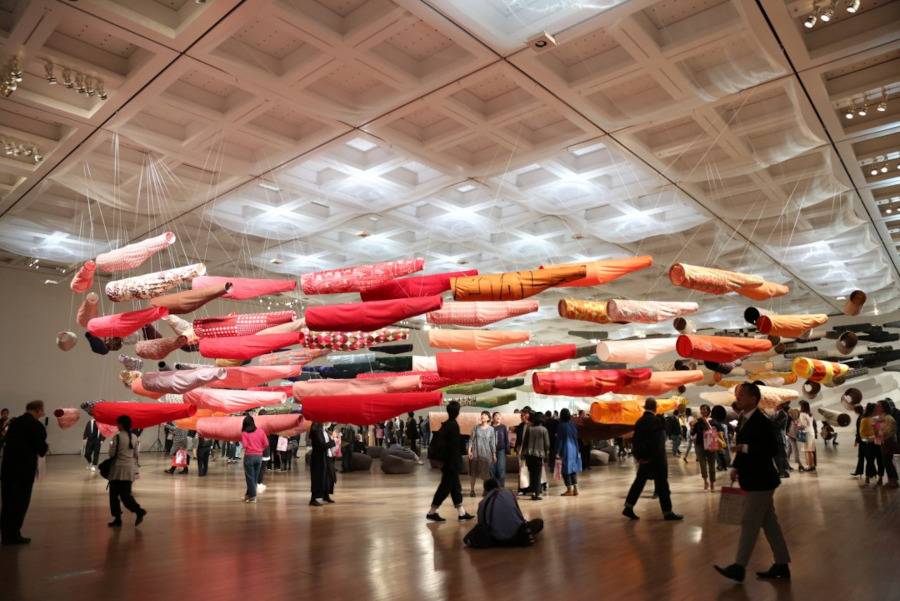
National Art Center Tokyo Museum Interior
National Art Center Tokyo Museum Architecture, Interiors
The National Center for the Arts in Tokyo has a total exhibition space of 14,000 square meters, one of the largest in Japan. In addition to the twelve exhibition galleries, the NACT Art Library is equipped with an auditorium and three lecture rooms. Additional facilities include a restaurant, three cafes and a museum shop.
Designed with the concept of “An Art Center surrounded by green spaces”, NACT’s façade is a beautiful undulating glass wall that creates a unique appearance with its conical main entrance. From this curtain wall from the first floor (1F) lobby you can enjoy the view of the many plants and trees that thrive in the surrounding areas such as Aoyama Park. In addition, safety measures in case of earthquakes and energy and resource saving measures such as seismic isolation devices, rainwater reuse and underfloor air conditioning, Universal design and direct access from Nogizaka Subway Station are conscious examples of NACT. designs.
Where is the National Art Center Tokyo Museum, How to Get there, Directions, Visiting Hours, Entrance Fee
Address: 7 Chome-22-2 Roppongi, Minato City, Tokyo 106-8558, Japan
Roppongi Station (Exit 7) on the Hibiya and Oedo Subway Lines
Nogizaka Station on the Chiyoda Subway Line (Exit 6)
10:00-18:00 (until 20:00 on Fridays), closed on Tuesdays.
Admission is free, tickets may be required for some exhibits.