

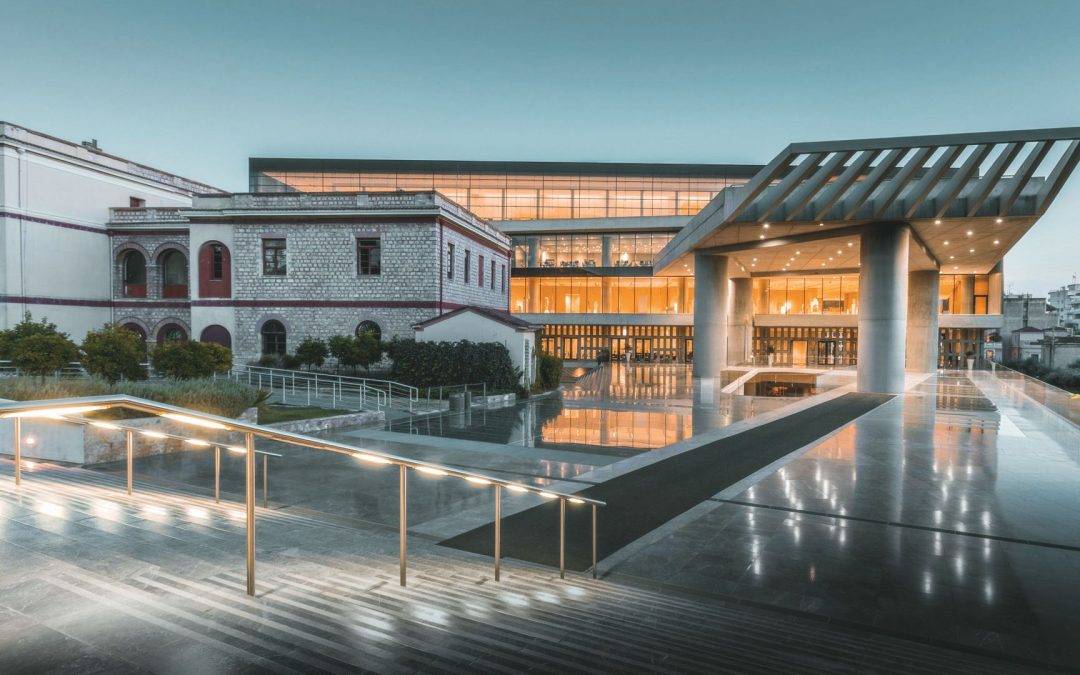
The Acropolis Museum, also known as the New Acropolis Museum, is the museum that houses the archaeological remains of the ancient Acropolis site in Athens, Greece.
Acropolis Museum, History, Architectural Structure, Artifacts
The original Acropolis Museum was founded in 1865 and opened in a building on the archaeological site in 1874. To house its growing collection of discoveries, the museum built another annex in 1888 and after World War II. Plans to build an even larger site away from the site began in the late 20th century, and in 2009 a 226,000-square-foot (21,000-square-meter) building opened at the foot of the Acropolis slope. Designed by Swiss-American architect Bernard Tschumi, the structure was intended to resemble the nearby Parthenon. Tschumi’s design included seismic technology that predicts the area’s frequent earthquakes, in addition to adjusting dimensions and modeling the pillars to accurately reflect those of the Parthenon. Among the many treasures of the museum are artifacts from the Archaic, Classical and Roman periods. All were found in the Parthenon, on the slopes of the Acropolis, or other existing structures in the area. Notable artifacts in the collection include the original caryatids, the Nike Adjusting Her Sandal relief, and parts of the Parthenon frieze. There are hundreds of marble sculptures in the museum.
Acropolis Museum Architectural Structure, Interiors
Although the Acropolis Museum was scheduled to be completed in time for the Athens Olympic Games in 2004, a number of archaeological discoveries at the site (including those of early Christian private houses containing artifacts such as marble busts, mosaic floor amphorae) have delayed its construction. The design plan has been altered so that visitors can see the artifacts beneath their feet through the transparent floor panels. In addition, an excavation site with the remains of an ancient village can be seen near the entrance of the museum.
Discussions continued over the ownership of the Elgin Marbles, a collection of ancient Greek sculptures unearthed from the Parthenon by the British ambassador, Thomas Bruce, 7th Lord Elgin, at the turn of the 19th century. The Elgin Marbles are currently in the British Museum in London, but the Greek government frequently requests their return. The Acropolis Museum was built largely to house these treasures, and in anticipation of their return, the gallery on the top floor of the museum, called the Parthenon Hall, was reserved for display.
Important Artifacts of the Acropolis Museum
Parthenon west frieze
Parthenon south area
Caryatids of Erechtheion
Head of Alexander the Great statue
Antenor Korea Statue
Kritios Boy Statue
Calf Carrier Statue
Parthenon west pediment: Kekrops and Pandrosos
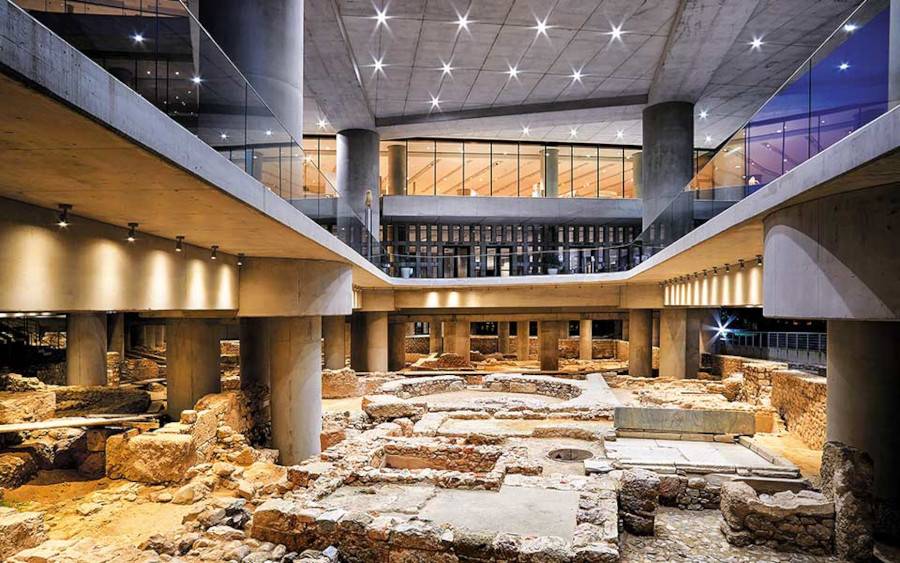
Acropolis Museum Underground Hall
Where is the Acropolis Museum, How to Get There, Directions, Visiting Hours, Entrance Fee
Transport
From the airport
By Metro: Take the blue line for Syntagma station and then the Red line (one stop) for the Acropolis station.
By car or taxi: 35km, 40 minutes
from the port of Piraeus
By Metro: Take the green line to Monastiraki station and walk 750 meters to the Acropolis via the Ancient Agora or Plaka site
By car or taxi: 15km, 30 minutes
Museums are open all year round and open earlier in the winter months.
It is closed on some public holidays.
It’s helpful to visit early to avoid crowds (before 10:00) or after 16:00 (just watch out for early midweek closing times during winter).
If you are in Athens on a Friday, take advantage of the 22:00 closing time. You can even combine it with a dinner at its restaurant, which is open until midnight. It usually has a three-piece orchestra accompanying the lighting scene of the Acropolis.
Ticket prices are between 5-10 € depending on the season (excluding the tour guide).
Some pre-bought tickets allow you to avoid long queues at peak times.