

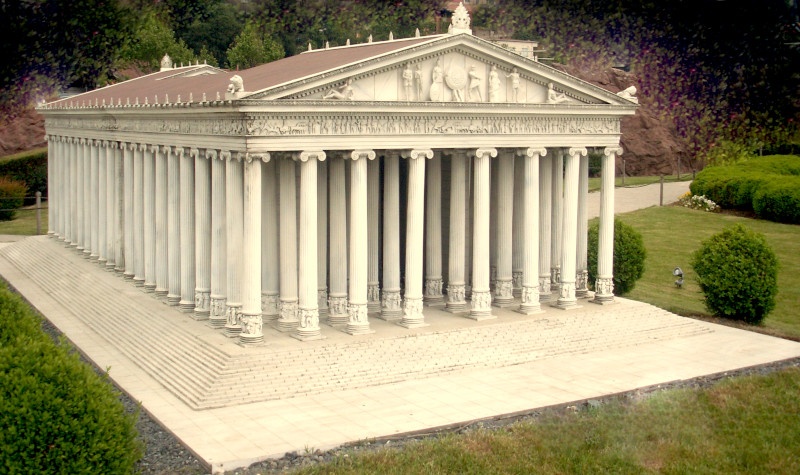
The Temple of Artemis (Artemis Temple) was a magnificent place of worship dedicated to the Greek goddess of the hunt, Artemis, in the city of Ephesus in modern-day Turkey. Previously destroyed and rebuilt, it was completed around 550 BC under the Achaemenid dynasty in the most famous phase of the Persian Empire. It was rebuilt several centuries later and survived until the end of the fourth century AD. It is considered one of the Seven Wonders of the Ancient World.
Features of the Temple of Artemis
Destroyed by a deliberate fire in the 4th century BC and later rebuilt, the great Ionic temple dates back to Late Antiquity and was rebuilt once again in 267 BC, the last time it was destroyed by a Christian mob in 401 AD. Today only the foundations and a single column stand as a reminder of where the ancient Mediterranean’s largest temple once stood.
Artemis Temple is known to be 377 feet (115 meters) long and 180 feet (55 meters) wide, made almost entirely of marble. The temple consists of 127 Ionic-style columns, each 60 feet (18 meters) high.
The Temple of Artemis has hosted many beautiful works of art. Statues and paintings by the well-known Greek sculptors Polyclitus, Pheidias, Cresilas and Phradmon adorned the gilded columns of gold and silver. Sculptors often competed to create the best sculpture. Most of these statues belonged to the Amazons, who are said to have founded the city of Ephesus.
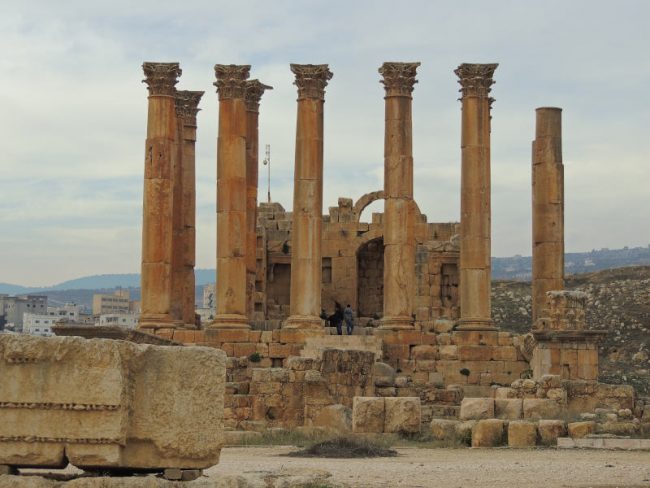
Features of the Temple of Artemis, Artemis Temple
It was located in an economically sound area. The temple was influenced by many faiths and was seen as a symbol of faith for many different peoples. The Ephesians worshiped Cybele and combined many of their beliefs with the worship of Artemis. Several versions of the temple already existed in Ephesus over the centuries, and Herodotus describes how the Ephesians tied a 1243 meters (4,081 ft) long rope between the old temple and the city, dedicating themselves in despair and in vain hope. The passing of the whole city to Artemis would save them from the Lydians.
The legendary splendor of the Temple of Artemis was such that it was the first ancient site in the 19th century AD that western archaeologists began deliberately excavating. It was discovered by John Turtle Wood in 1869. Excavations, which began under the auspices of the British Museum in London, discovered many important artifacts, such as the fine marble figures of Artemis Ephesia, dating to the 1st and 2nd centuries AD. Remains of the great temple were also found, and more details were uncovered during another series of excavations in 1904 AD. While several capitals and column fragments were discovered from the 6th century AD version of the temple, one of the best finds was the magnificently carved column drum from the Hellenistic version. Hades, Persephone and Hermes are now in the British Museum. Today all the ruins of the temple are its foundations, and a single pillar was erected from the compound ruins that gave the site once one of the greatest wonders of antiquity an air of melancholy instead of giving the impression of lost grandeur.
The Story of the Temple of Artemis
Artemis Temple had become a center of worship for people of all faiths from many countries, including an Ephesian sect that worshiped the Greek Mother Earth goddess Cybele. It was also known as the Temple of Diana, the Roman goddess equivalent to Artemis. The temple was said to be a fantastic structure made of marble, gold and silver decoration as well as fine art and age sculptures. The most beautiful building in the world was destroyed in BC by agents of a man named Herostratus, who sought worldwide fame. It was later rebuilt several times. Its final destruction was in AD 401, when the then archbishop of Ephesus, St. It took place by a Christian mob led by John Chrysostom.

The Story of the Temple of Artemis
The new and most famous temple was built around 550 BC by the Cretan architect Chersiphron and his son Metagenes. It is made of marble, with rows of columns that double to accommodate a wide ceremonial passage around the central structure of the classical temple. A new statue of Artemis was made of ebony or grapewood, and a small classical temple was erected to house her to the east of the open-air altar. This enriched reconstruction was supported by Croesus, the wealthy king of Lydia. The temple became a tourist attraction, visited by merchants, kings and tourists, many of whom paid homage to Artemis in the form of jewelry and miscellaneous goods. It was also a widely respected sanctuary, a tradition tied to legend with the Amazons who reportedly sought refuge there from both Heracles and Dionysus.
Artemis Temple entered the established list of the Seven Wonders because of its size and beauty; The location right next to the sea also added to the building’s enchanting effect. He was often referred to as the greatest of the seven wonders by those who saw him. The Story of the Temple of Artemis.