

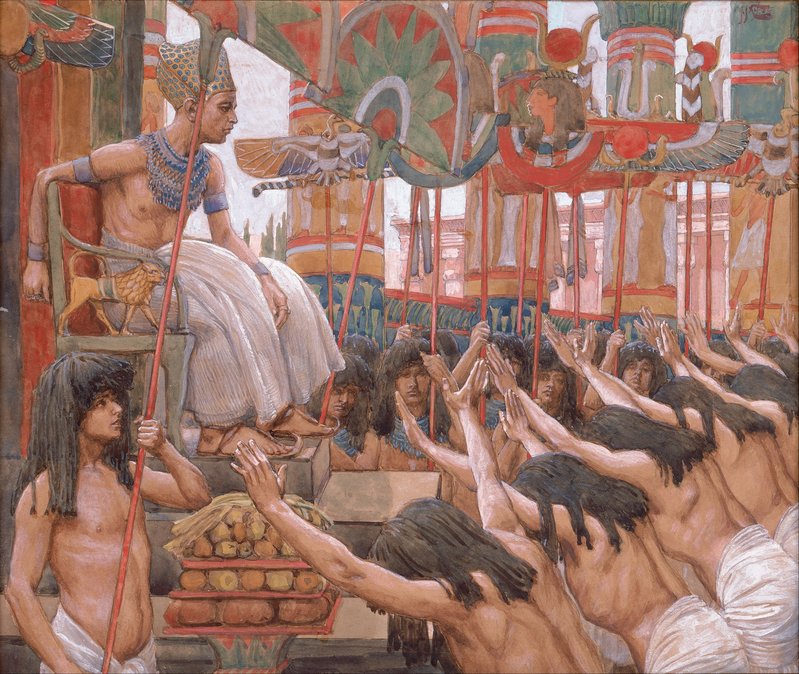
Ancient Egyptian art and architecture is one of the popular subjects in the world. The ancient Egyptian culture, which has been the subject of many movies, has attracted the attention of many people.
Ancient Egyptian Art and Architecture
Ancient Egyptian art includes painting, sculpture, architecture, and other forms of art such as drawings on papyrus, created between 3000 BC and 100 AD. Much of this art was highly stylized and symbolic. Most surviving forms come from tombs and monuments and therefore focus on the afterlife and the preservation of knowledge. Symbolism meant order in the pharaoh’s clothing or the use of certain colours. In Egyptian art, the size of a figure indicates its relative importance. The paintings were often made on stone, and the tombs depicted delightful afterlife scenes. The ancient Egyptians created both monumental and smaller sculptures using the sunken relief technique. The tile was a surface vitrified sintered quartz ceramic used to create relatively inexpensive small objects in many colors.
Glass was originally a luxury item, but became more common and was used to make small jars for perfume and other liquids to be placed in tombs. Vases, amulets and images of gods and animals are made of steatite. The pottery was sometimes coated with enamel, especially of a blue color. Papyrus was used for writing and painting, and was used to record every aspect of Egyptian life. The architects planned carefully, aligning the buildings with astronomically significant events such as solstices and equinoxes. They mostly used sun-baked adobe, limestone, sandstone and granite. The Amarna period (1353-1336 BC) represents a break in the ancient Egyptian art style, the subjects were represented more realistically, and the scenes included depictions of love among the royal family.
Ancient Egyptian art includes painting, sculpture, architecture, and other forms of art, such as drawings on papyrus created between 3000 BC and 100 AD. Much of this art was highly stylized and symbolic. Most surviving forms come from tombs and monuments and therefore focus on the afterlife and the preservation of knowledge.
Ancient Egyptian Art and Architecture
Symbolism in Ancient Egyptian Art
Symbolism in ancient Egyptian art conveyed a sense of order and the influence of natural elements. Pharaoh’s reign symbolized his power to rule and maintain the order of the universe. Blue and gold denoted holiness as they were rare and associated with precious materials, while blacks denoted the fertility of the Nile River.
Hierarchical Scale
In Egyptian art, the size of a figure indicates its relative importance. This meant that the gods or pharaoh were often larger than other figures, followed by figures of high officials or tombholders; the smallest figures were servants, amusements, animals, trees and architectural details.
Painting
Before painting a stone surface, it was whitewashed and sometimes covered with mud plaster. The pigments are made of mineral and can withstand strong sunlight with minimal fading. The binding environment is unknown; the paint was applied to the dried plaster in a “fresco a secco” style. Later, a varnish or resin was applied as a protective coating that protected the painting very well with the dry climate of Egypt. The purpose of the tomb paintings was to create a pleasant afterlife for the deceased, with themes such as a journey into the afterlife or gods providing protection. Generally, the side view of the person or animal is shown, and the pictures are usually made in red, blue, green, gold, black and yellow.
Sculpture in Ancient Egyptian Art and Architecture Statues
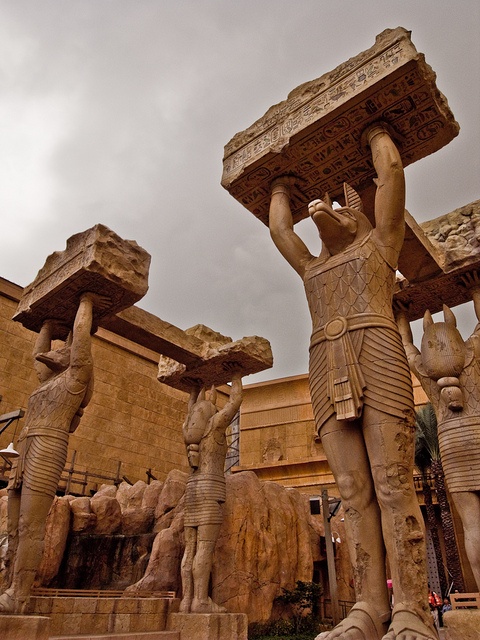
The ancient Egyptians created both monumental and smaller sculptures using the sunken relief technique. In this technique, the image is made by cutting the relief sculpture onto a flat surface placed within a sunken area that is shaped around the image. In strong sunlight, this technique is very visible, emphasizing outlines and forms with shadow. The figures are shown with the torso facing forward, the head in side view and the legs apart, with the males sometimes darker than the females. Large statues of gods (with the exception of the pharaoh) were not common, but deities were often depicted in paintings and reliefs. The colossal statue to the scale of the Great Sphinx of Giza was not repeated, but smaller sphinxes and animals were found in temple complexes.
The most sacred cult image of a temple’s deity was supposedly kept in small boats in the naos, carved from precious metals, but none have survived. Ka statues, which are intended to provide a resting place for the ka part of the soul, IV. It has been in tombs since the Dynasty (2680-2565 BC). These were usually made of wood and were called replacement heads, which were flat, hairless, and naturalistic. The first tombs had models of small slaves, animals, buildings, and objects to provide life for those who died in the afterlife. Later, uhabti figures existed as funerary figures who would act as the deceased’s servants if the deceased were called to do manual labor in the afterlife.
Tiles, Pottery and Glass
The tile was a sintered-quartz ceramic with surface vitrification used to create relatively inexpensive, small objects in many colors, but most commonly blue-green. It was often used for jewellery, scarabs and figurines. Glass was originally a luxury item, but became more common and was used to make small jars, perfume and other liquids to be placed in tombs. Vases, amulets and images of gods and animals are made of steatite. The pottery was sometimes coated with enamel, especially of a blue color. In burials, pottery was used to represent organs of the body removed during mummification or to create cones about ten inches long, carved with legends of the deceased.
Papyrus
Papyrus is very delicate and has been used for writing and painting; however, it survived for a long time when it was buried in tombs. Every aspect of Egyptian life is found recorded on papyrus, from literary documents to administrative documents.

Ancient Egyptian Art and Architecture
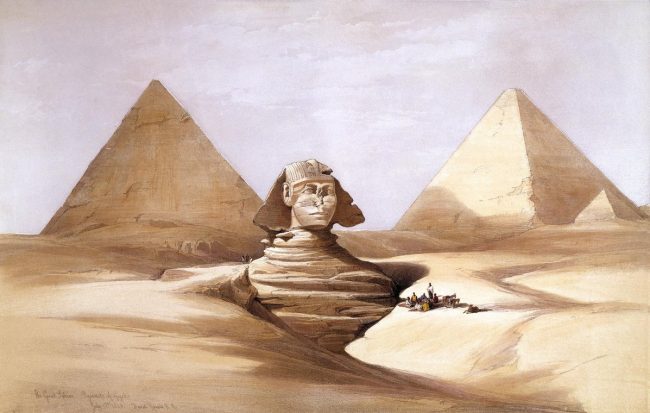
The architects carefully planned the buildings by aligning them with astronomically significant events such as the solstices and equinoxes, and they often used sun-baked adobe, limestone, sandstone and granite. Stone was reserved for tombs and temples, while other buildings such as palaces and castles were made of brick. The houses are made from the mud of the Nile River, which hardens in the sun. Many of these houses were destroyed or dismantled by the flood; Examples of preserved structures include the village of Deir al-Medinah and the fort at Buhen. Egyptian Pyramids; Built during the Fourth Dynasty, the Giza Necropolis features the Pyramid of Khufu (also known as the Great Pyramid or the Pyramid of Cheops), the Pyramid of Khafre, and the Pyramid of Menkaure, along with the smaller “queen” pyramids and the Great Sphinx. Karnak Temple was first built in the 16th century BC. About 30 pharaohs contributed to the buildings, creating an extremely large and diverse complex. It includes the Regions of Amon-ra, Montu and Mut, and the Temple of Amehotep IV. Luxor Temple, 14th century BC III. It was built by Amenhotep in the ancient city of Thebes, now Luxor, in the 13th century BC. It was built by Ramesses with a great expansion. The 79-foot-tall First Pylon includes friezes, statues, and columns.
Representing a discontinuity in the style of ancient Egyptian art and architecture, during this period the subjects were represented more realistically and the scenes included depictions of love among the royal family. There was a sense of movement in the paintings, with overlapping figures and large crowds. In style, it reflects Akhenaten’s conversion to monotheism, but disappeared after his death.
Ancient Egyptian Art and Architecture Features
Ancient Egyptian Art and Architecture, ancient architectural monuments, sculptures, paintings, and applied crafts produced mainly during the dynastic periods of the first three thousand BC in the Nile valley regions of Egypt and Nubia. The course of art in Egypt largely paralleled the country’s political history, but it also depended on a deep-rooted belief in the permanence of a natural, divinely ordained order. Artistic achievement, both in architecture and in representational art, seeks to preserve the forms and conventions held to reflect the perfection of the world in the early days. To embody the right relationship between the moment of creation and the pantheon of humanity, king and gods. Egyptian art therefore seems outwardly resistant to development and the application of individual artistic judgments, but Egyptian artisans of each historical period have found different solutions to the conceptual difficulties posed to them.
Geographical factors predominated in creating the special character of ancient Egyptian art and architecture. Providing Egypt with the most predictable agricultural system in the ancient world, the Nile river provided a stability of life in which arts and crafts flourished easily. Likewise, the deserts and sea that protected Egypt from all sides contributed to this stability by protecting it from serious invasion for nearly 2000 years. In general, the search for useful and valuable material determined the direction of foreign policy and the establishment of trade routes, ultimately leading to the enrichment of Egyptian material culture.
Predynastic Period
The term predynastic refers to the period of emerging cultures before the establishment of the dynasty in Egypt. In the 6th Millennium BC. Patterns of civilization began to emerge, displaying characteristics that deserved to be called Egypt. The accepted ordering of predynastic cultures is based on the excavations of the English archaeologist. Sir Flinders Petrie deNaqadah, enAl-Amirah (Al-Amra) and Al-Jizah (Al-Giza). Another early stage of predynastic culture, El-Badari, in Upper Egypt. Evidence of a relatively rich and developed artistic and industrial culture was obtained from the tombs at Al-Badari, Dayr Tasa and Al-Mustaqiddah. The pottery, made of a fine red polished ware with blackened tops, already shows distinctive Egyptian shapes. Copper has been worked into small embellishments, and steatite beads (soapstone) show traces of glass. Later Naqadah 1 and Naqadah 2 stages, predynastic civilization developed steadily. Pottery remained a distinctive product, demonstrating the intricacies of technique and the evolution of adventurous decoration. Figures already found in Badarian tombs were crafted with superior skill at Naqdah I and decorated with geometric designs of white-filled lines and even depictions of animals. Later, new clays were used and fine buff colored products were used in deep red pigment, decorated with ship scenes, figures and a wide variety of symbols.
The processing of hard stones also began in earnest in the late predynastic period. At first, artisans were devoted to the shaping of fine vessels and jewelry made of semiprecious stones, based on existing pottery forms.
The basic techniques of two-dimensional art, drawing and painting, are exemplified in the Upper Egyptian rock drawings and the painted tomb at Hierakonpolis, which is now lost. Scenes of animals, boats, and hunting (common subjects of rock drawings) were more elaborately painted in the tomb, and those found in heraldic art became additional themes, possibly related to conquest.
Egyptian Statues, Dynastic Period
Evidence shows that the unification of Upper and Lower Egypt brought together the various threads that would become the rich tapestry of Egyptian culture and initiated intricate weaving on the loom of the time. Most of the new artistic developments undoubtedly date back to Nakade’s 2nd period; however, the abundant evidence from the great 1st dynasty tombs at Abydos and Aqqarah far outweighs that found in the modest tombs of earlier times. This impression is certainly one of the extraordinary flowering of civilization. The motif of conquest is dramatically characterized in the scenes depicted in the painting. The Narmer Palette is where Narmer (better known as Menes), possibly the last ruler of predynastic Egypt, is depicted as the victorious ruler.
Narmer depictions display many of the features typical of Dynastic Egyptian art. Here is the characteristic image of the king striking his enemy, depicted by the conventions that separated the two-dimensional art of Egypt. The head is shown in profile, but the eye is full; the shoulders are represented from the front, while the torso is three-quarters in view; legs in profile again. Presenting every single part of the human form from its most characteristic point of view was the artist’s main intention, and to show that they knew it was there, not just what they could see from one perspective.
Conservatism in artistic matters was nurtured by a relative coherence of culture, reinforced by a strong tradition of writing education, and tempered by a canon. Ratio for the representation of the human figure, walls prepared for decoration in the Old Kingdom were marked with red horizontal lines; vertical lines were added in later times. For most of the dynastic period, a grid of 18 rows of squares was used to hold a standing man figure; Of the 26 dynasties, 21 rows of squares were used for the same purpose. In different eras, differences in the placement of certain body features produced interesting and subtle nuances. Ancient Egyptian art and architecture.
Architectural
The two main building materials used in Ancient Egypt were unbaked adobe and stone. From the Old Kingdom, stone was often used for the eternal abodes of the gods in tombs, the eternal dwellings of the dead, and temples. Mud brick remained the native material used even for royal palaces; it was also used for forts, great walls of temple districts and towns, and auxiliary buildings in temple complexes.
Tomb architecture
Mortuary architecture in Egypt was highly developed and often splendid. The tomb was a place where a corpse could be protected from desecration and material objects could be provided to ensure its survival after death. Part of the tomb is adorned with scenes appropriate to the individual’s earthly existence and magically following a similar afterlife.